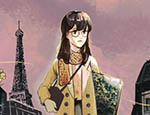


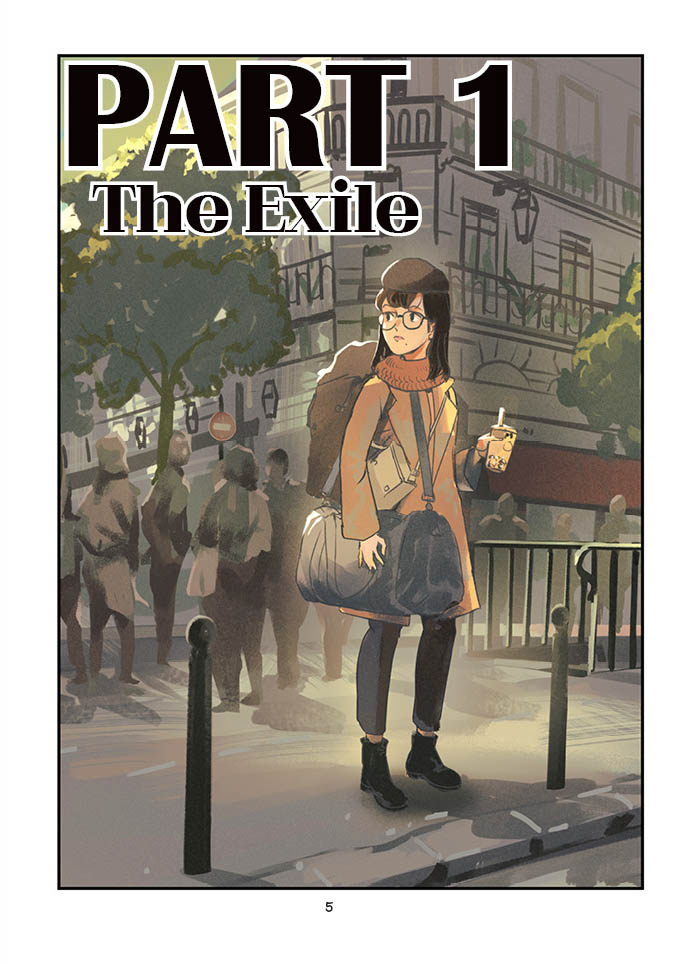
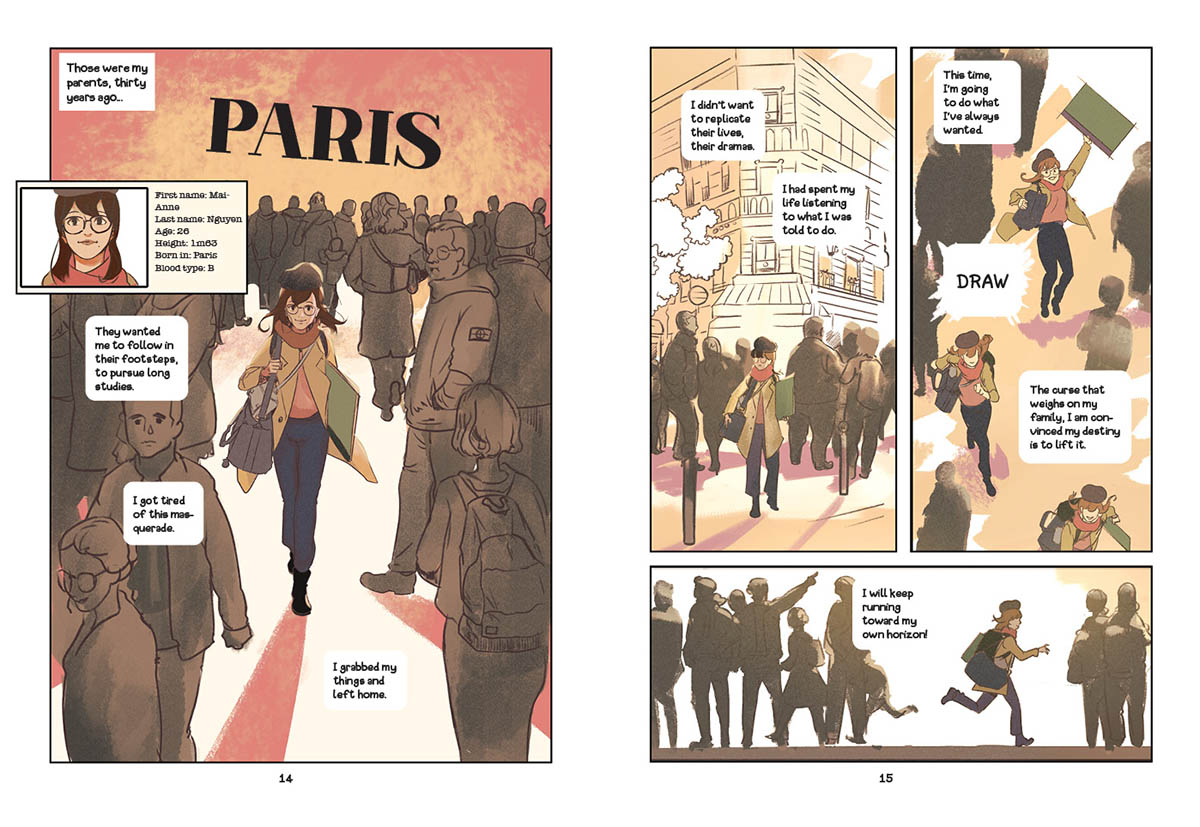
THOUGHT BUBBLE MONTH 2026! Nayth’s My Little Saigon is a complex and layered narrative combining family history, a coming-of-age story, and managing loss. Mai-Anne Nguyen is 26 and has spent years meeting her parents’ expectations. An exceptional student who obtained a PhD in mathematics, Mai became a good piano player and an Aikido practitioner. And then, she takes the brave decision to stop pleasing her parents and take up drawing, which has always had her heart, much to her parents’ dismay.
She walks away from a prescribed future, and enters the Paris art community. But she has another goal in mind too. She is also searching for her brother Minh, who disappeared after leaving home to pursue his own artistic ambitions. Mai joins a group of young artists and their informal drawing sessions, and follows signs of Minh through their community. Her investigation eventually leads her to his sketchbook and, with it, the revelation about what happened to him.
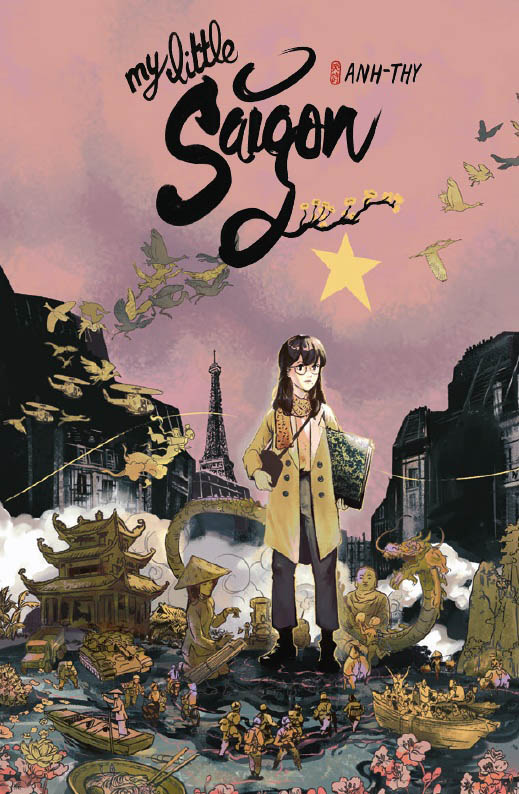
My Little Saigon, however, goes beyond Minh’s absence to understanding the family and the past that both Mai and Minh were trying to escape. The book traces their parents’ lives in Vietnam, how they met, their flight to France after the fall of Saigon, and the extraordinary pressure placed on immigrant families to survive and succeed in everything they do. Gradually, Mai’s childhood reveals a melange of contradictory experiences as traditional Asian style parenting can be. Affection that’s never expressed in words but through food, lofty expectations with emphasis on academic excellence, unquestioning participation in family rituals, and so on. Here, the book’s title becomes more meaningful. “Little Saigon” is not only memories of the Vietnam the parents left behind but also the immigrant neighbourhood near Paris where Mai grew up.
Nayth intersperses Mai’s quest for Minh as well as her own search for independence with several panels documenting Vietnamese food, customs, games, television shows, festivals, and everyday rituals. These sections are among the most enjoyable ones and a clever way to bring cultural memories alive. And so we see an array of seemingly ordinary things like a bag of rice, Tiger Balm, instant noodles, family recipes, or common phrases used in the family.
Nayth extends this accumulation of memory to the entire book as she uses conventional comic panels alongside illustrated character sheets, recipes, maps, pages from diaries and sketchbooks. She constructs Minh’s life entirely through these loosely drawn illustrations while devoting pink, bold lined and bordered frames to depict the cultural ones. This brilliantly reflects the free and uninhibited life of Mai’s present with the structured one of her past.
Nayth does an excellent job of connecting the experiences of one family to overarching themes of migration, cultural identity, artistic ambition, and inherited trauma. It also means that at times this sheer volume of information can be a bit overwhelming and also detract from the main thread of Mai’s search for her brother.
“The world will only be happy when all men have the soul of an artist. That is to say, when each finds joy in his work.” – Minh writes in his journal.
That’s what My Little Saigon prompts us to do – to be brave enough to make our own life while still acknowledging the people and histories that made us who we are.
Anh-Thy/Nayth (W/A/I/D) • Self-published, €35
Review by Swati Nair
Nayth is at Table C3 in the Redshirt Hall at Thought Bubble.
Thought Bubble 2026 runs from November 9th-15th with the convention weekend taking place on the 14th-15th. More details on the Thought Bubble site here.
Read all our Thought Bubble 2026 coverage so far in one place here.
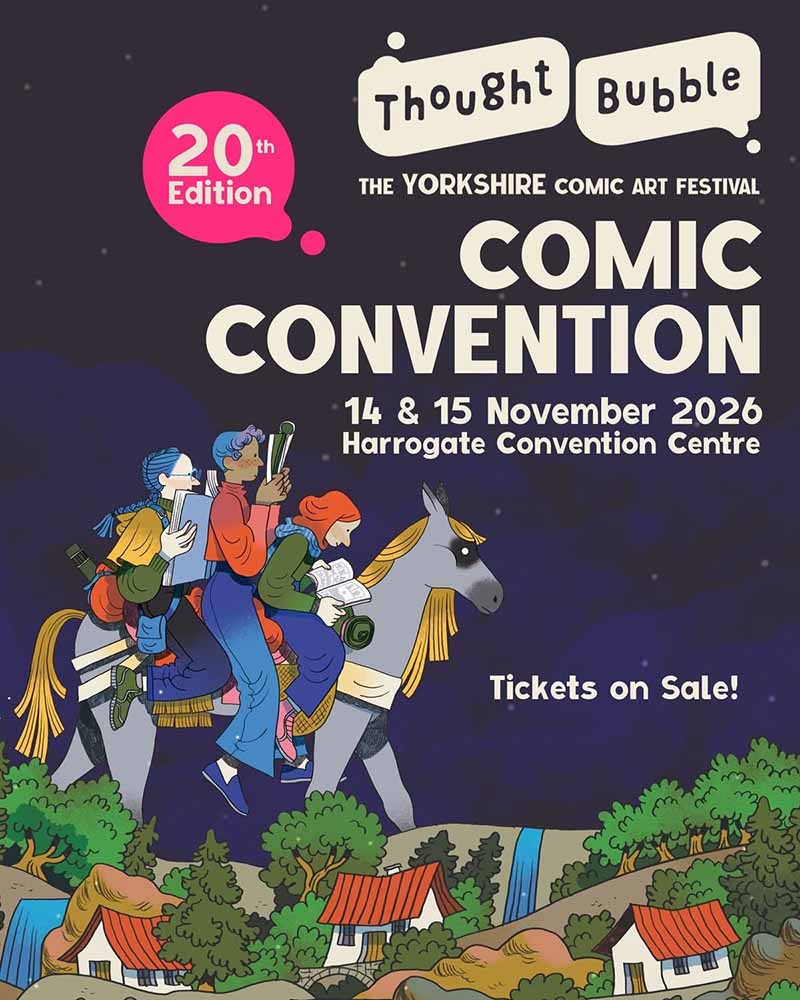
Poster art by Núria Tamarit