

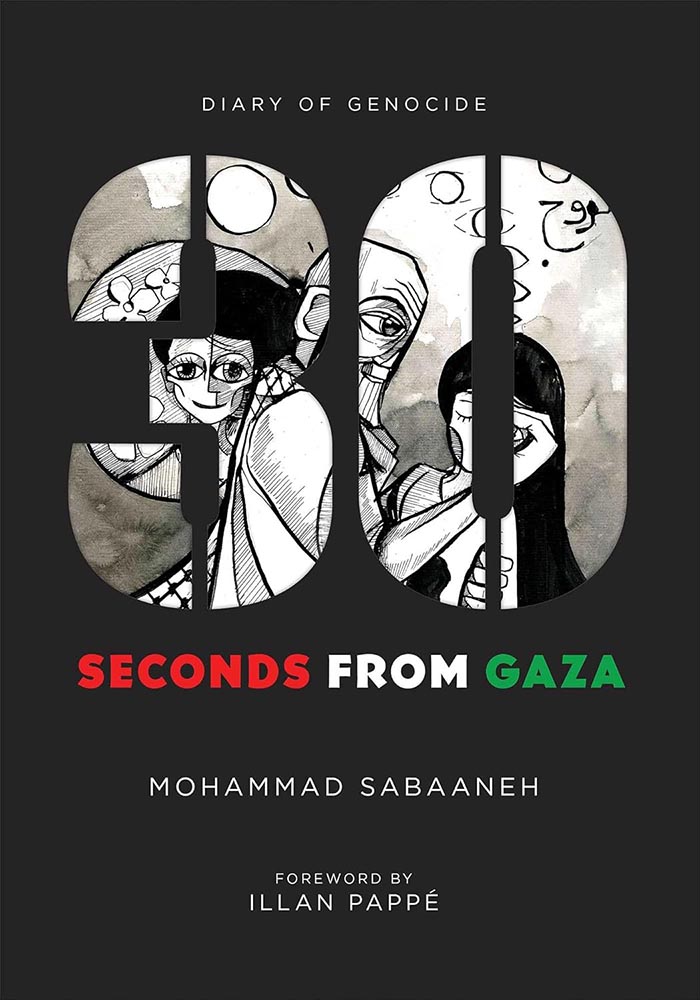
The winner of the 2025 Broken Frontier Award for Best Graphic Non-Fiction, Mohammad Sabaaneh’s 30 Seconds from Gaza: Diary of Genocide was one four comics offerings on the atrocities in Gaza to take its category in our awards last year. Sabaaneh’s work on the subject has been discussed on a number of occasions here at Broken Frontier including his graphic memoir Power Born of Dreams: My Story is Palestine. With 30 Seconds from Gaza he takes a different approach to much of the related comics reportage to date by capturing moments from videos posted by Palestinians to social media. An important historical record expected to be erased as the censorship of, and indifference to, the plight of those in Gaza became ever more pronounced.
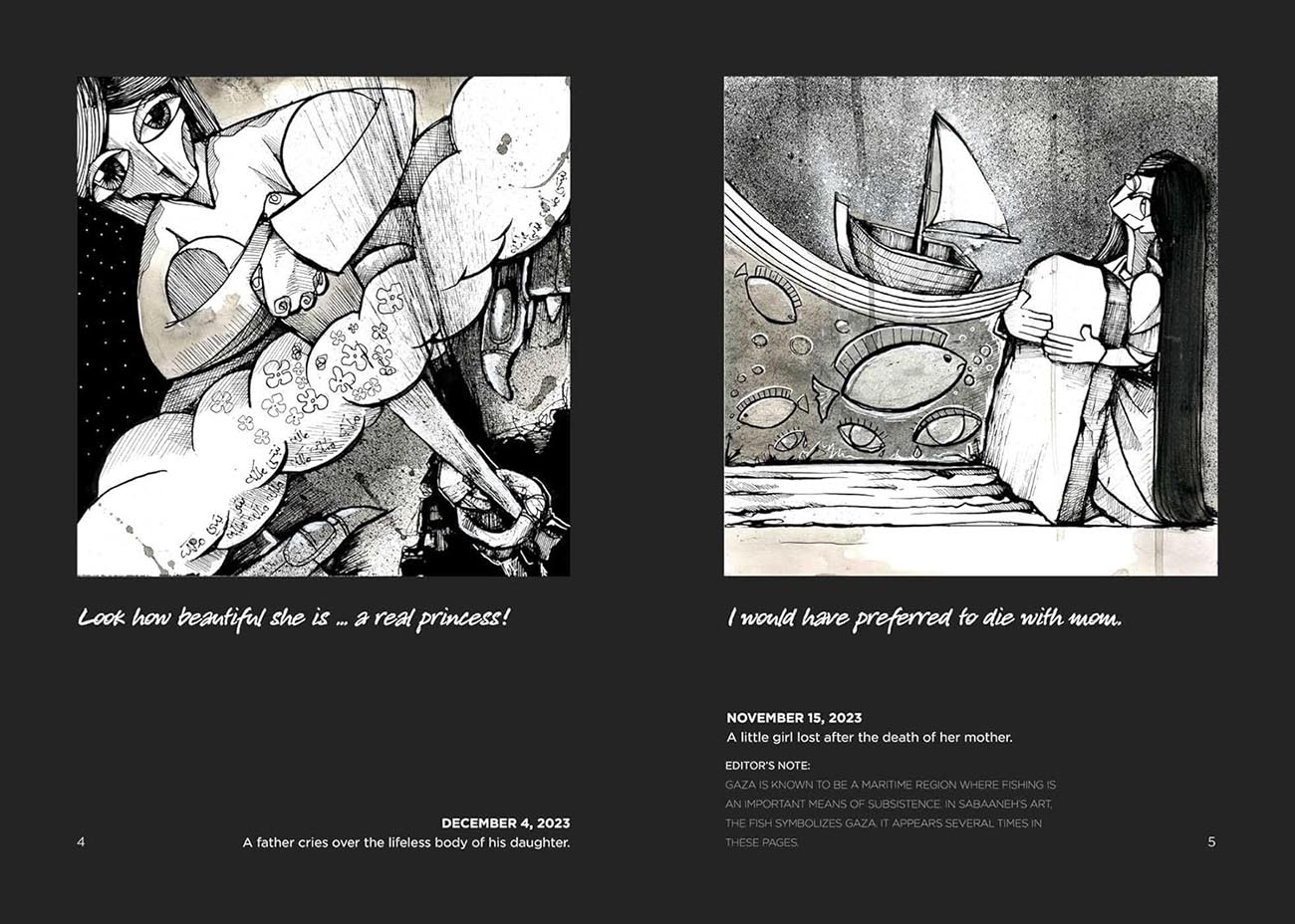
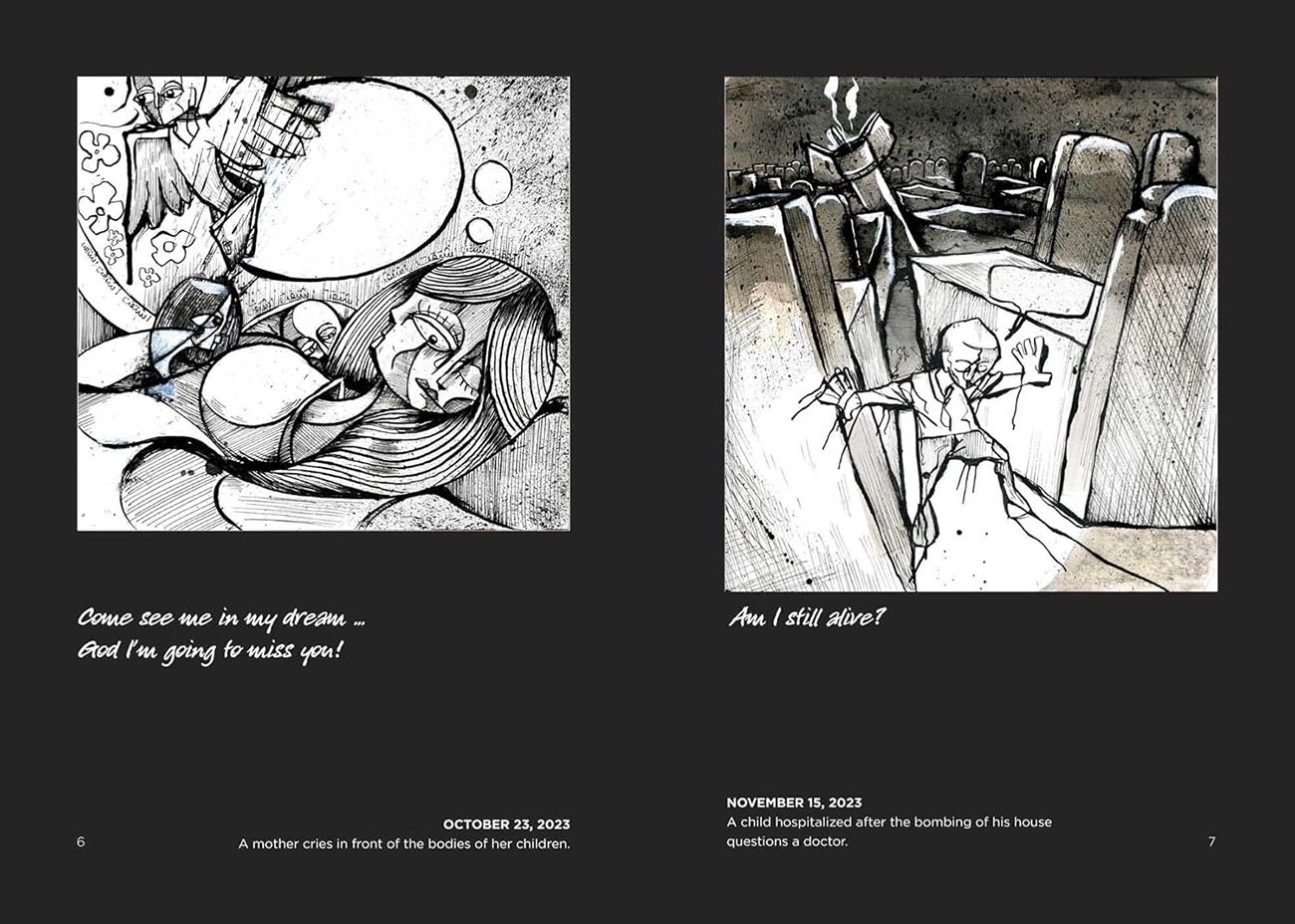
To facilitate this Sabaaneh’s cartoons re-present these posts visually, with the date and a short explanation recorded below for context. From the very first two facing pages it is absolutely harrowing stuff – one piece showing a child in a hospital crying for his missing mother with its facing counterpart, and counterpoint, depicting a mother crying over the bodies of her two slain children. That every illustration sits on deep black, glossy pages only adds to the sense of all-pervading gloom and morbidity that anchors the book in the realities of the horrors it portrays.
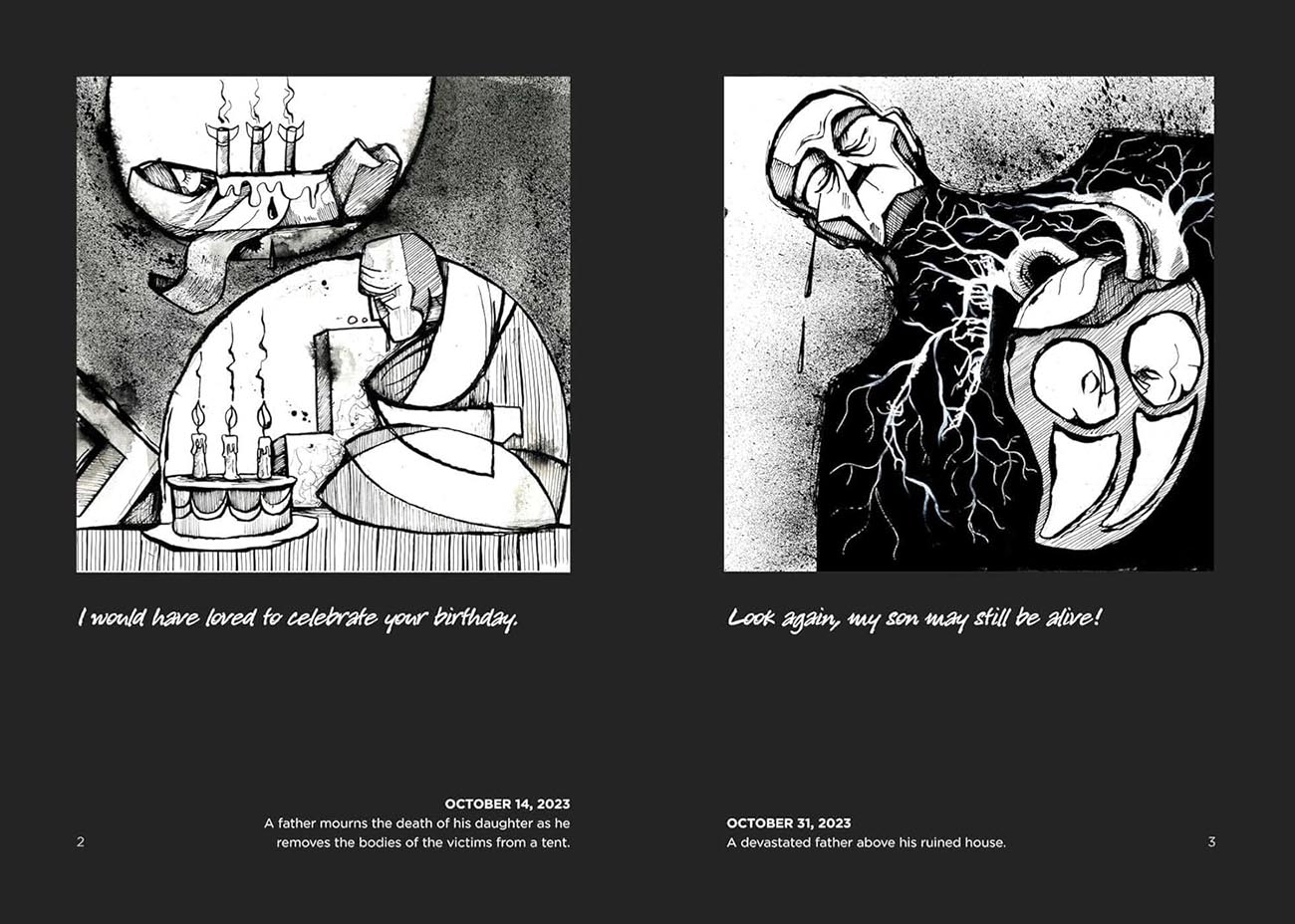
30 Seconds from Gaza is one of the most difficult books you will read this year, and for that very reason I urge you to do just that. Sabaaneh communicates these stories in representational and symbolic ways. A video of a man in the rubble of his home screaming for his fallen daughter becomes, in illustrated form, a shriek where the dead and displaced emerge furiously from his mouth. A woman mourning the deaths of her children who died in the conflict while also starving is shown holding an apple up to the skies as they disappear into the clouds, only their feet visible. Another mother despairing about the murder of her son asks how a 10-year-old could threaten the Israeli forces, as we observe a child playing with a kite in the street while a plane overhead drops a bomb in his direction.
In one section where his style shifts to sequential art, Sabaaneh begins with the words “The tanks shot my mom, the tanks ran over my dad” on stark black background before a page turn brings us more immediately into those horrors. This account proves to have at least a tiny glimmer of light at the end of the tunnel. But it’s a rarity in a book documenting a darkness that is so stygian it is overwhelming.
Never is that more effectively displayed than in a later comics section surrounding the death of Hind Rajab, the 5-year-old trapped in a car surrounded by the bodies of her family, killed while fleeing their home. This story some may already be familiar with from news reports. Hind’s final hours were spent pleading for help in a phone call to the Red Crescent. An ambulance was despatched. It was bombed before it could even reach her. She was later killed by 335 bullets from an Israeli tank machine gun. By definition there should be no circumstances in which the word “atrocity” should ever feel inadequate or insufficient. And yet here it does not even begin to convey the obscenity of events.
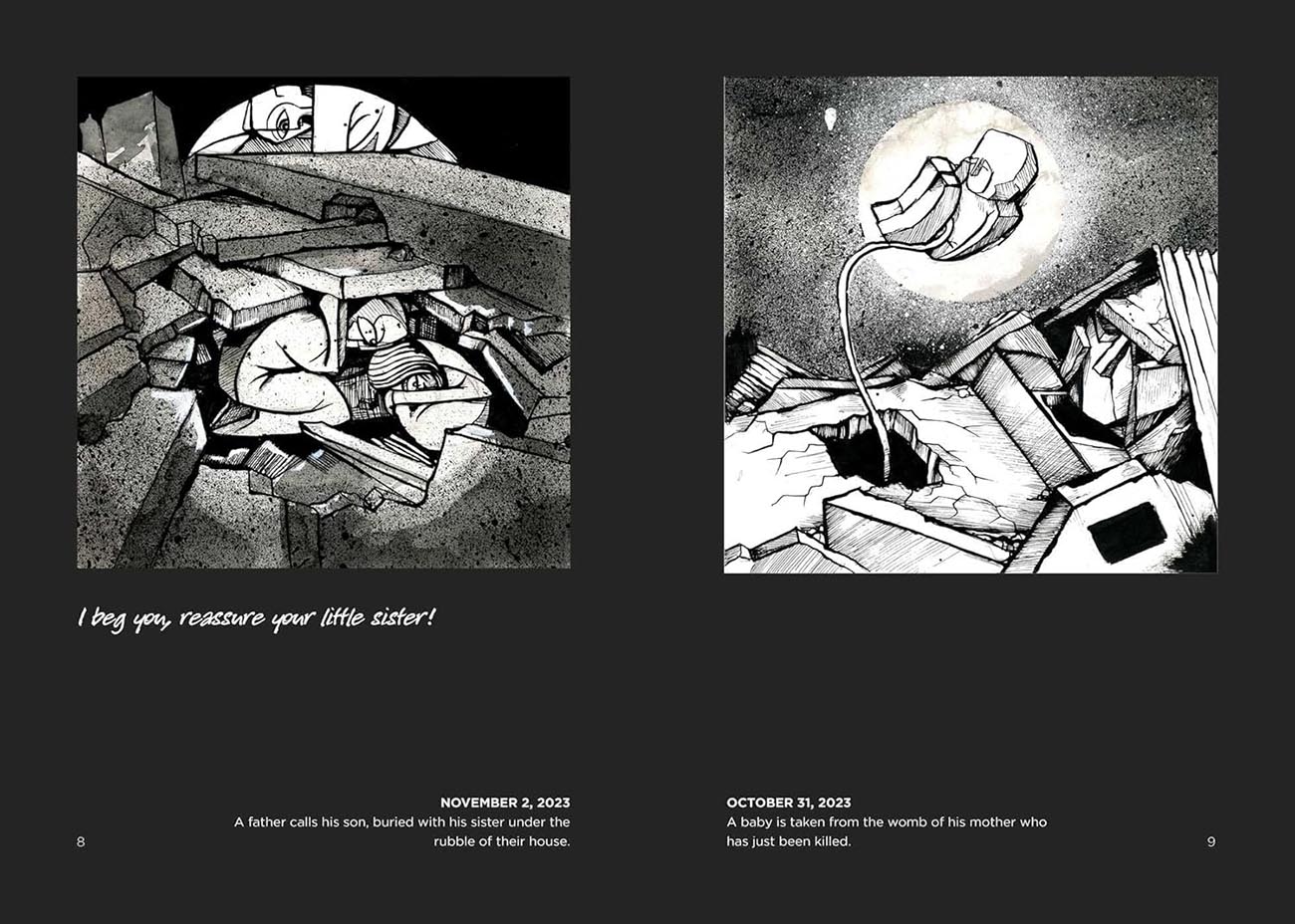
In this section, as throughout, Sabaaneh’s art is so effective for its angular abstraction which manages to convey the humanity of each story while also giving it a symbolic power. Visual metaphor and stark actuality intertwined in a powerful relationship that brings us truths that must never be conveniently hidden.
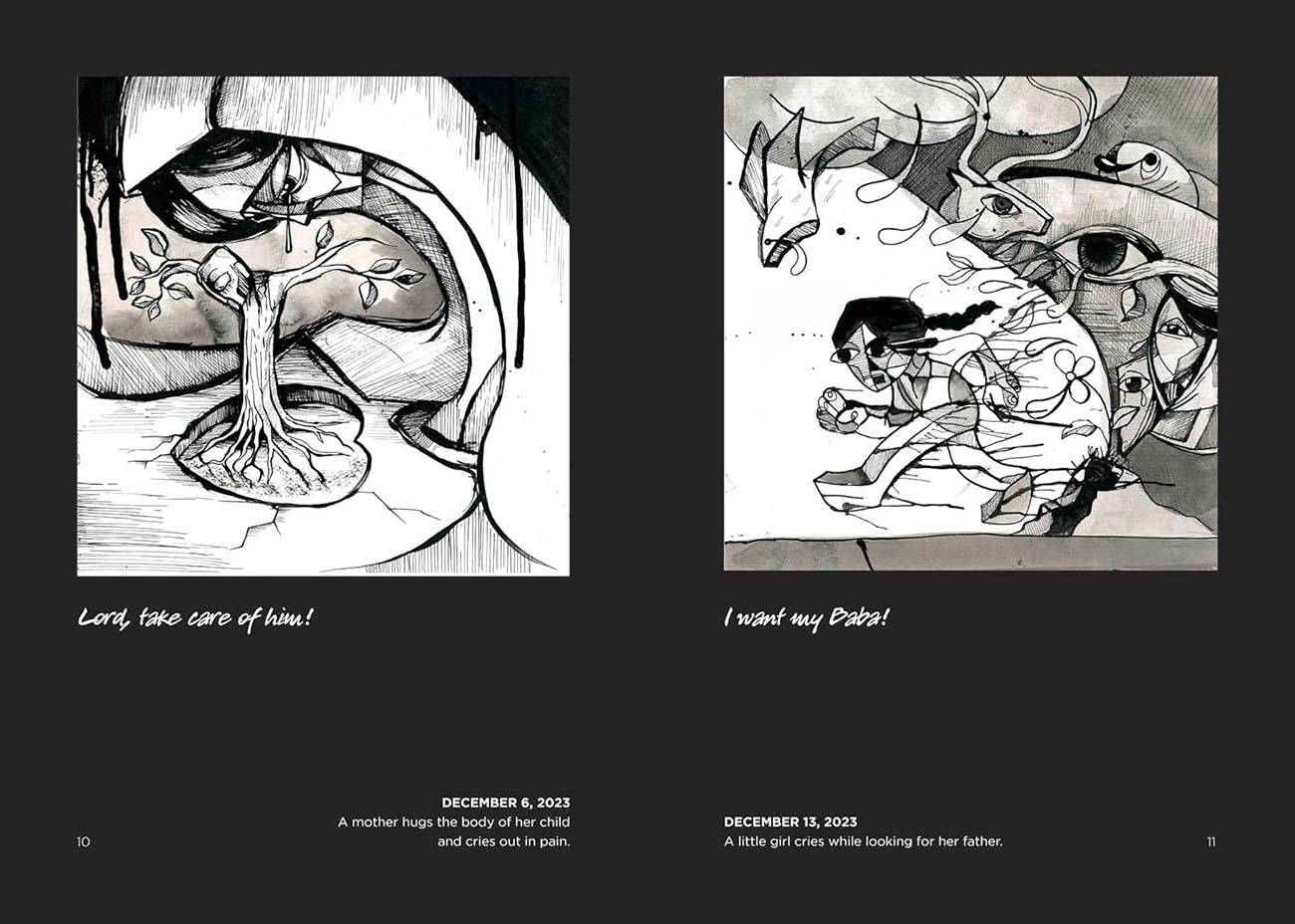
An astonishing collection of work many will find feels traumatising in its delivery. As it absolutely should be. Once again, this needs to be in every library, both public and academic. As do all of the books on our Palestine comics resource list at Broken Frontier.
Mohammad Sabaaneh (W/A), Nada Hodali (T) • Olive Branch Press, $22.00
Review by Andy Oliver