

Sometime towards the end of 1969, an American musical group called The 5th Dimension recorded the opening of the Declaration of Independence for a song they performed on national television. It was intended as a protest against the Vietnam War, and it’s interesting to keep that in mind while wondering why cartoonist R. Sikoryak decided to create an illustrated version of that document at this point in American history.
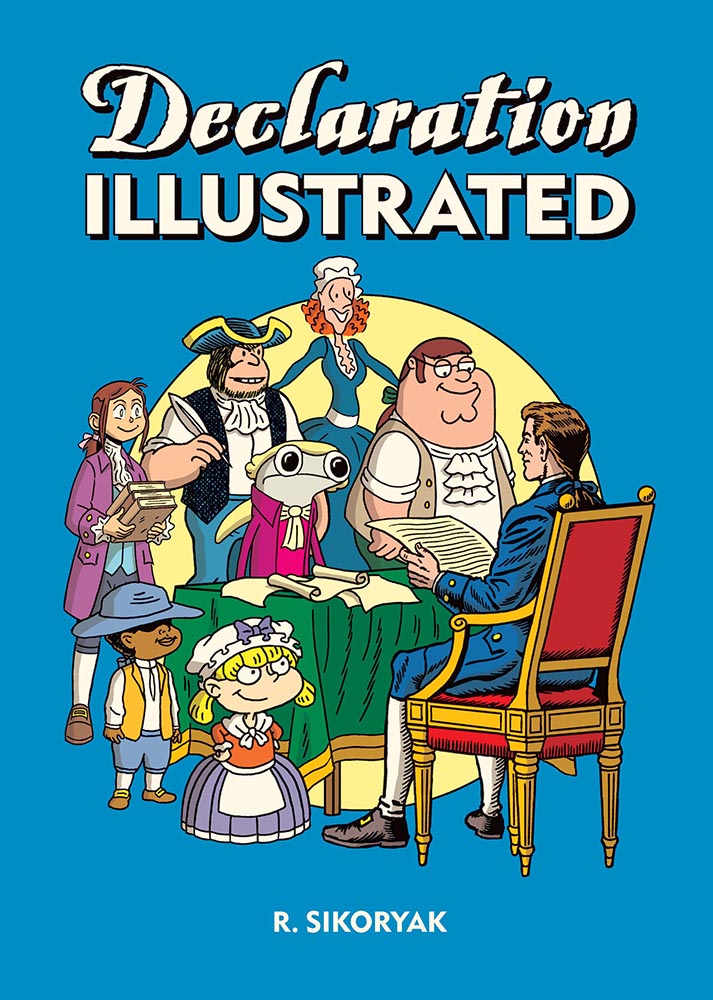
Even as the United States celebrates its 250th birthday, democracy in that country is perceived as being in peril. Recent polls indicate that 64% of its citizens believe it is in danger of failing, while historians are pointing to systemic challenges that they claim is pushing the republic to an inflection point. Sikoryak’s book, then, is more than just a new version of a celebrated text. It presumably serves as a reminder of why that founding document is more important than ever.
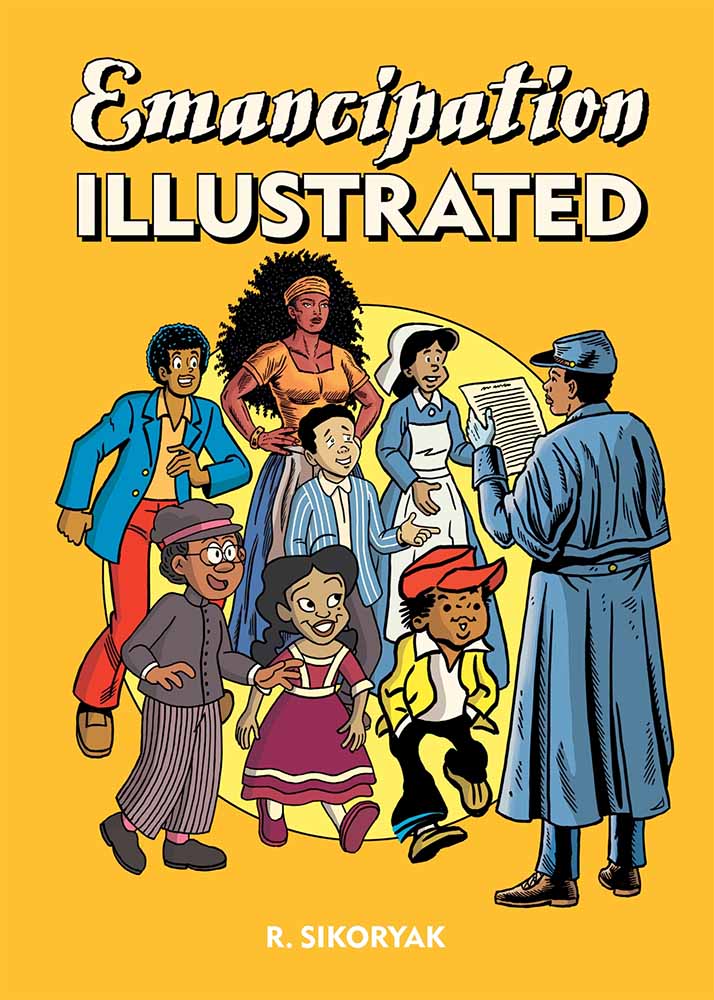
The ghost of Abraham Lincoln looms large in these pages, which feature not just the Declaration of Independence but (as a double-sided book) also the 16th President’s Emancipation Proclamation of January 1, 1863, declaring all enslaved people in the Confederate states as free. Also included is his legendary Gettysburg Address delivered after the Battle of Gettysburg, a chronology of events that led up to and followed the Civil War, and a selected bibliography.
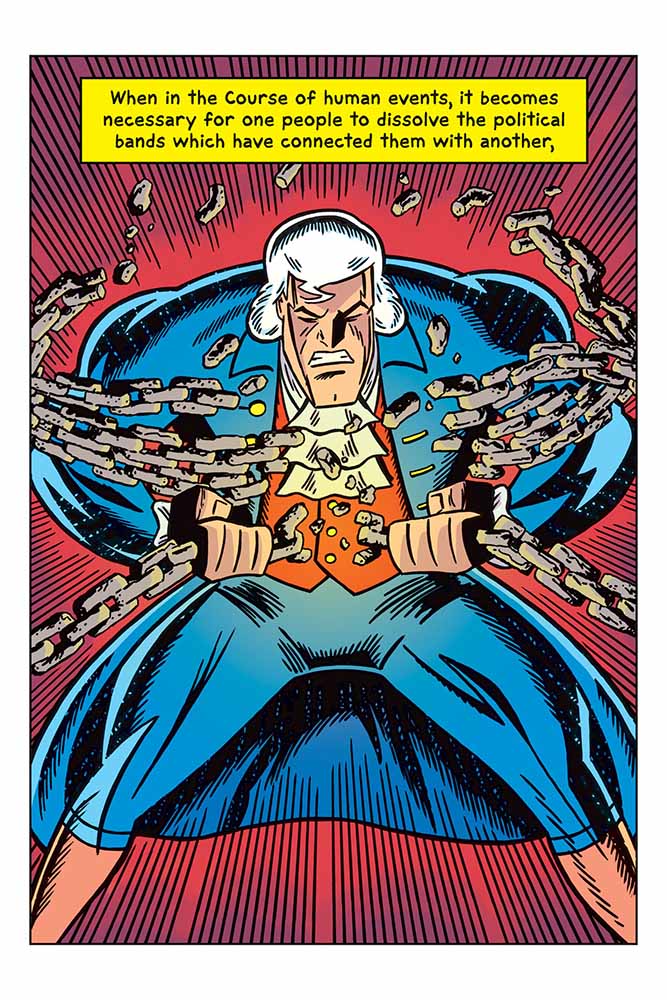
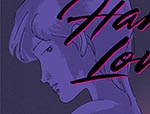
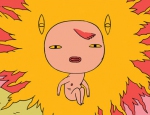
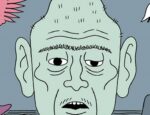
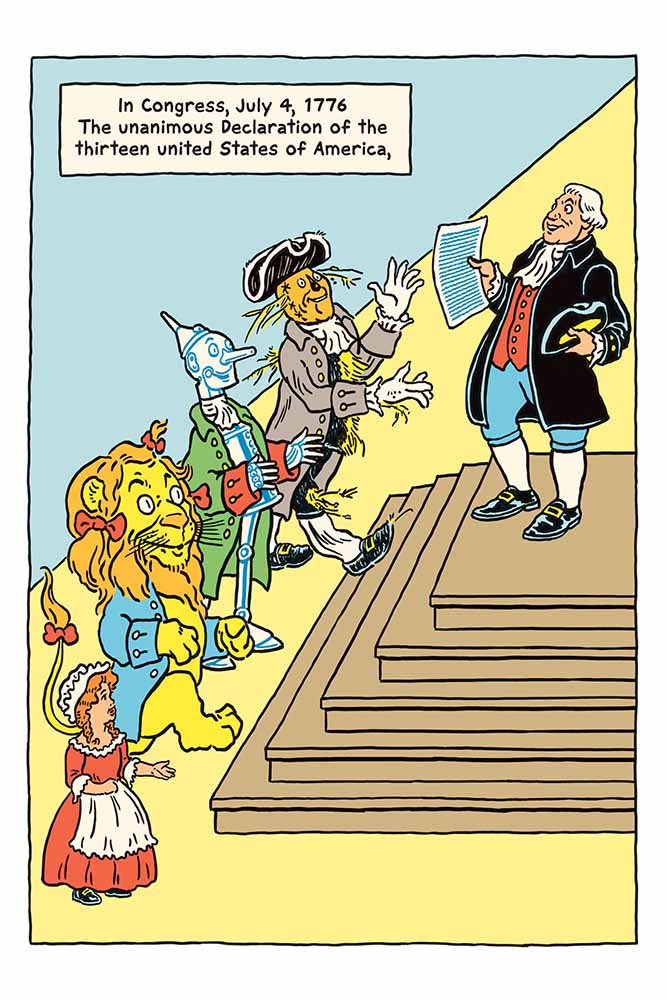
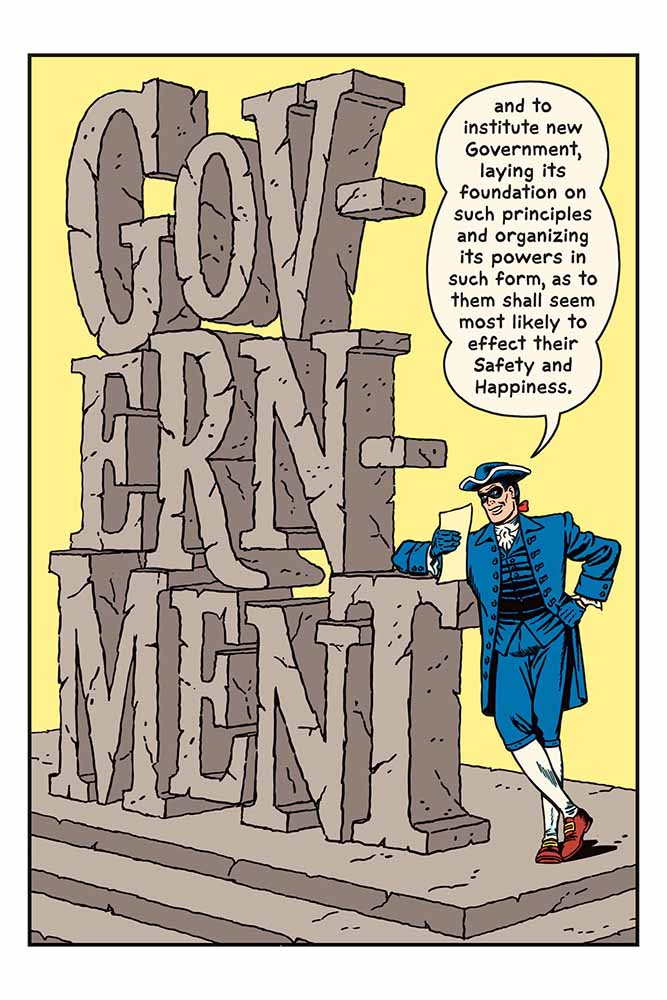
Anyone who has picked up a book by Sikoryak knows what to expect when it comes to the art itself. Like he did with his illustrated version of the Constitution, he uses a mash-up of styles from notable artists. The results — with a helpful comics index listing them all — range from the funny to the incredible, with a wide-ranging gamut of characters including Jen Bartel’s She-Hulk, Jack Sparling’s Plastic Man, Beavis and Butt-Head, My Little Pony, even Conan the Barbarian. It is an educative, yet subversive approach.
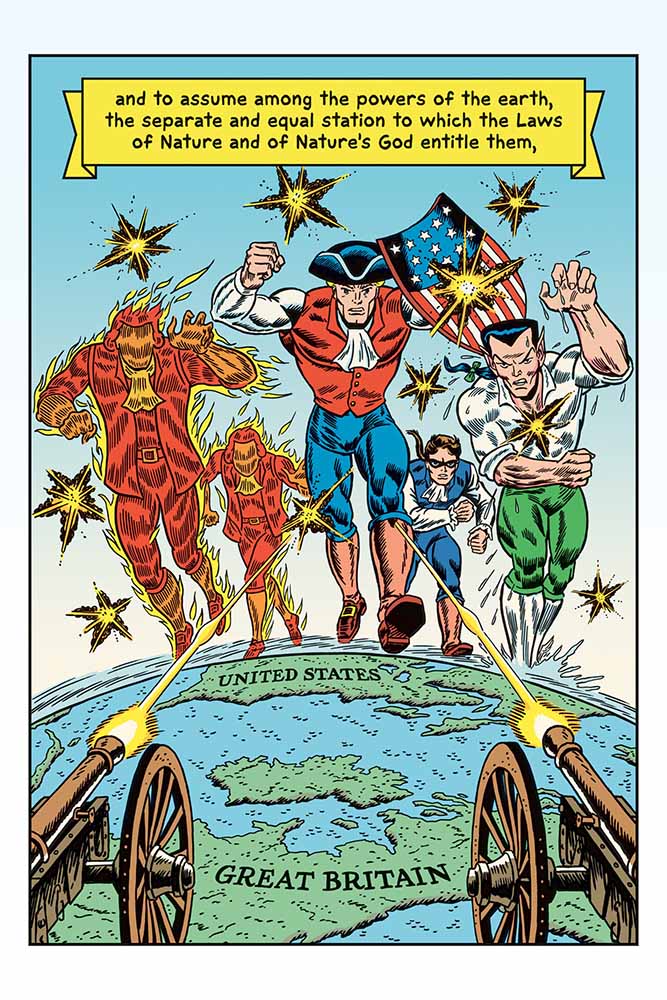
It’s easy to think of this as a great way of introducing the Declaration of Independence to young readers. However, it is more important to consider it as a palatable version for adults grappling with the notion of what it means to be American today. While the Declaration was meant to make explicit the creation of independent sovereign states from under the thumb of British colonialism, it also made assertations that have long been ingrained in the fabric of American society, and that have resonated with other countries that have tried to emulate these principles. By declaring that all men are created equal, and endowed with unalienable rights, it pointedly refers to governments as ‘deriving their just powers from the consent of the governed.’ These statements have, in recent years, become the basis upon which all kinds of legal battles have and are being fought.
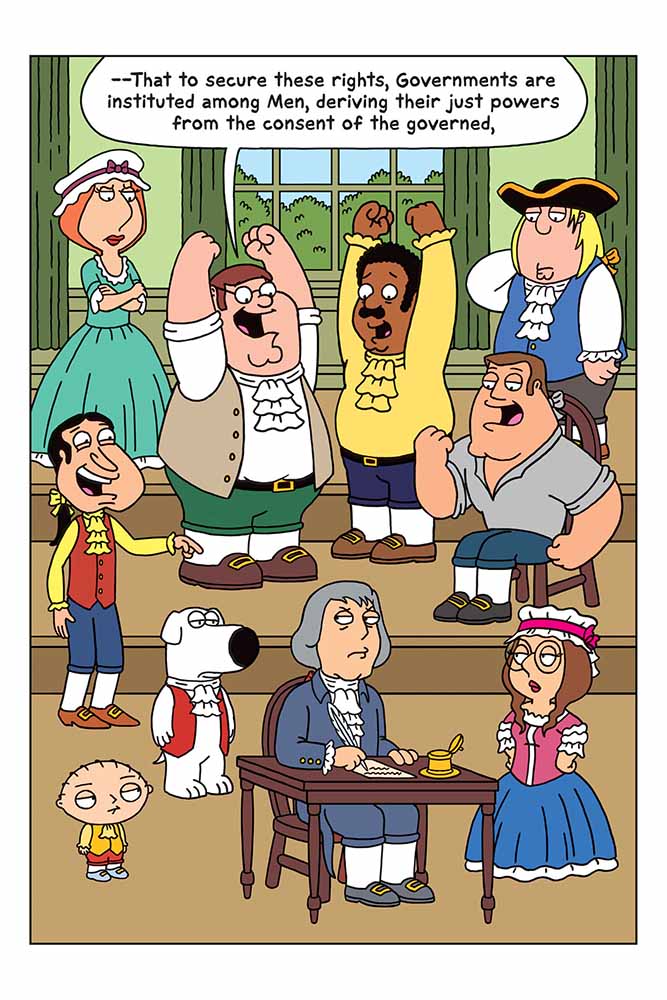
The presence of The Joker or Mr. Magoo can sometimes take away from the seriousness of the document, but there’s no doubting Sikoryak’s intent. One of the biggest arguments for why the teaching of history is critical isn’t that cliché about how it repeats itself, but that it can build civic responsibility and cultivate empathy. These are both in short supply in today’s America, making this book an ideal gift for a whole lot of people.
R. Sikoryak (W/A) • Drawn & Quarterly, $15.00
Review by Lindsay Pereira