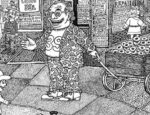


One of the nicest ways of spending an hour or so is with a book that hides more than it reveals. This is easier to do with a prose epic, of course, given the layers of meaning involved, but it is harder to pull off when the only means available are visual. Consider the Where’s Wally? series, conceived by British illustrator Martin Handford in 1987. There is an inexplicable joy that comes from poring over its dense pages and stumbling upon something odd, yet amusing.
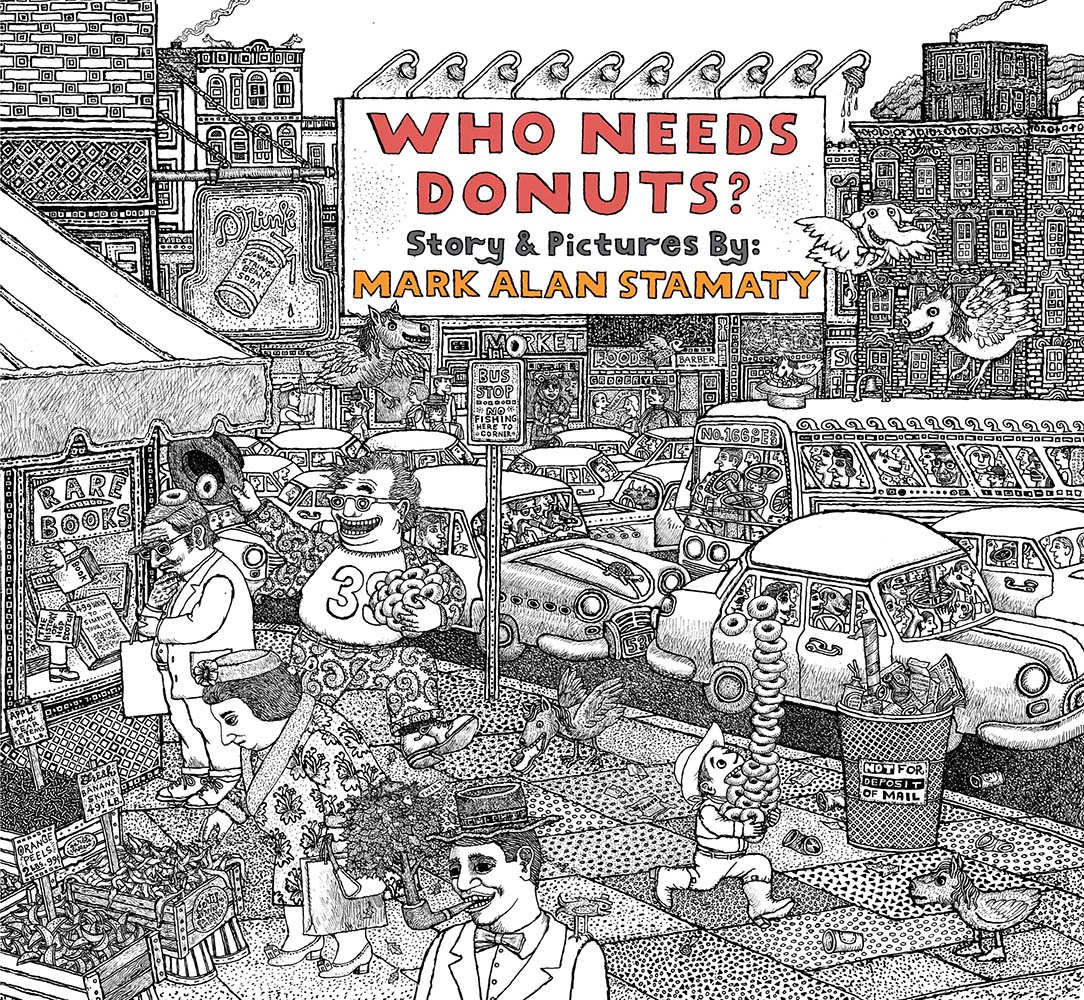
Interestingly, American cartoonist Mark Alan Stamaty published something that could well have been a model for Handford, because he did it almost a decade before. Written for children, Who Needs Donuts? was first published in 1973. It was re-issued in 2003 and now, thanks to Drawn & Quarterly, is available to a new audience of children as well as adults who miss being children. That last bit is particularly important, given how we live in a time when the imagination is being dismissed as unnecessary, and where the creative process is being openly undermined by Artificial Intelligence.
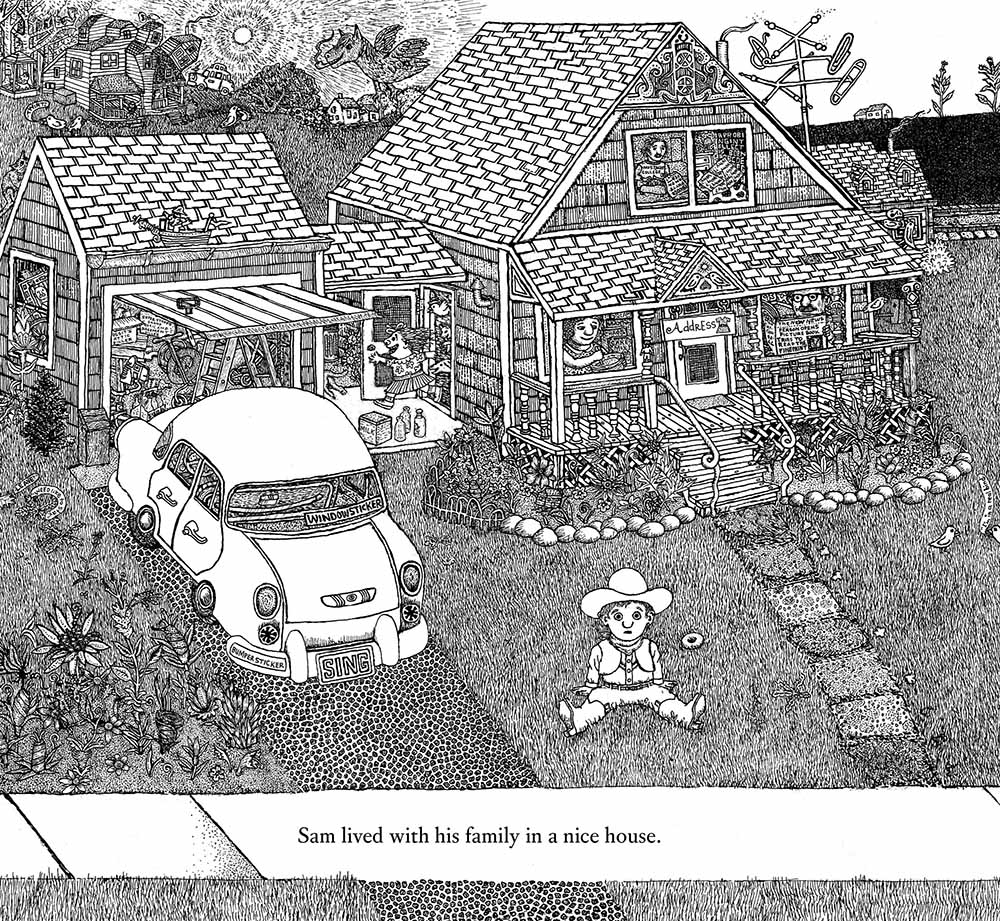
Like all great children’s literature, Who Needs Donuts? can be paraphrased in a few sentences. And yet, because it is great, one quickly starts to recognise and accept that those sentences will not be enough. Here’s the pitch: A boy named Sam goes to a big city where he meets a doughnut seller named Mr. Bikferd, who falls in love with a woman named Pretzel Annie, then runs away with her. He leaves Sam his doughnuts, and the boy uses them to save an old woman trapped by a flood of coffee in a basement.
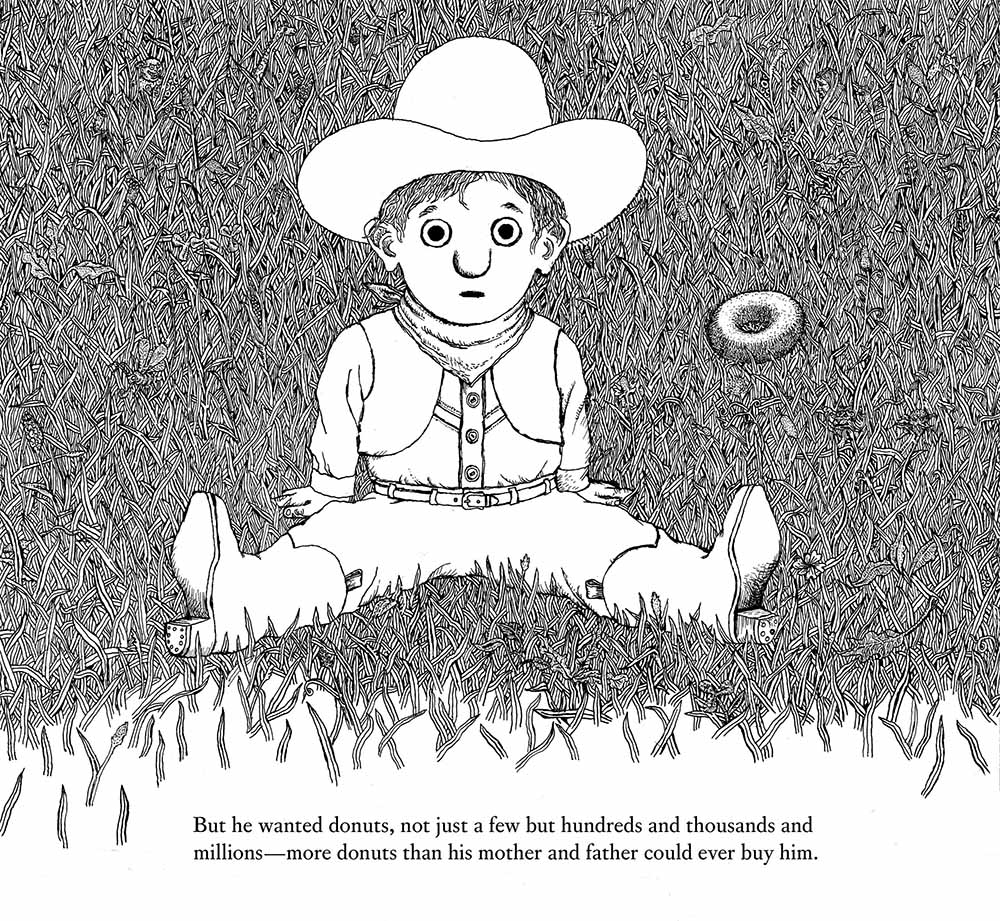
Nothing in that summary is adequate for the flurry of jokes that crowd every page of the book. There are all kinds of details hidden in corners, along with gags and what techies now refer to as ‘Easter eggs.’ Zoom into a corner and you find a traffic sign that makes no sense. Look at another, and there’s a hidden world tucked away behind a window. Try and read the fine print on a newspaper held up by a character, and the headline implicates your action. Also scattered across every page are all kinds of animals looking and behaving in ways that make no sense.
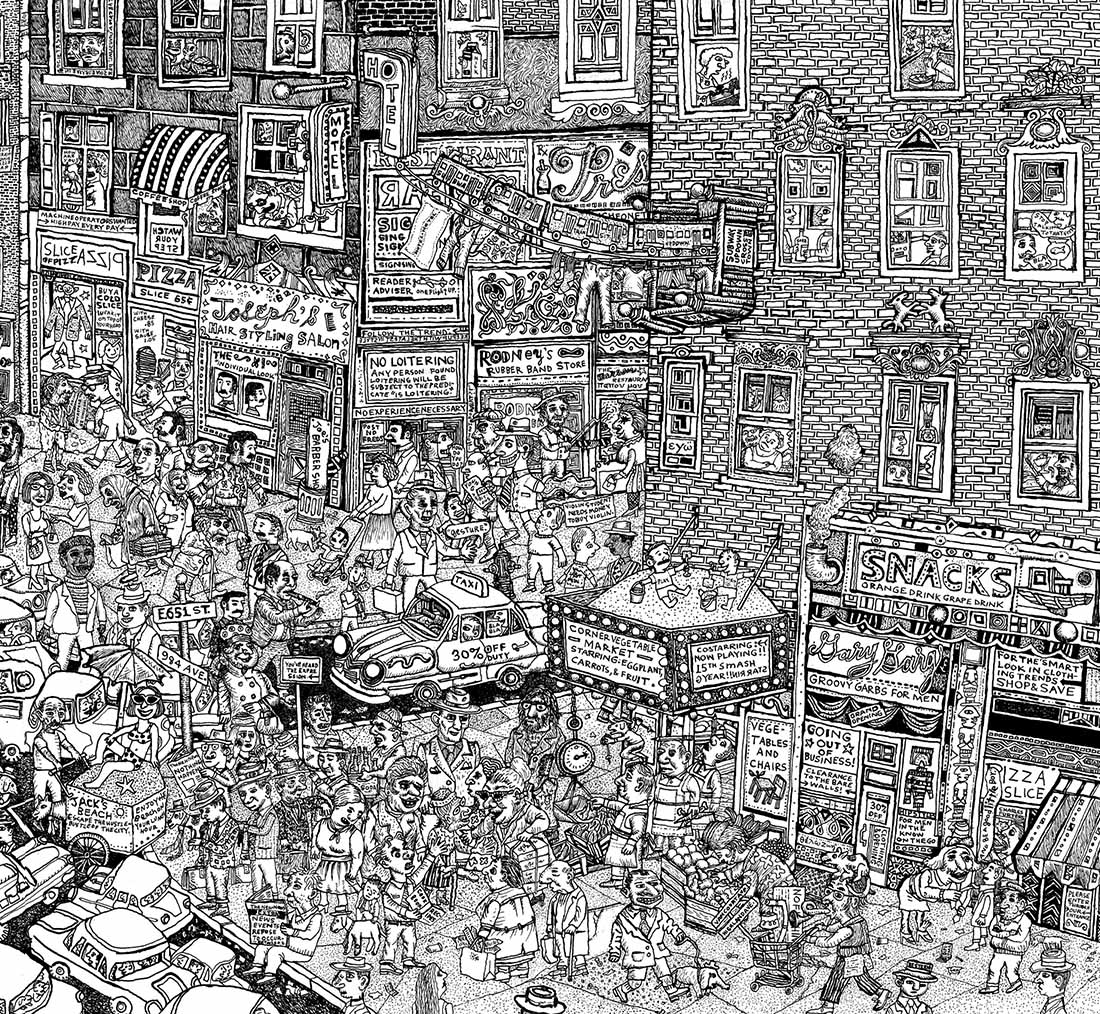
That absence of sense is also the point, because it is one of the hallmarks of what we call absurdism. It makes this more than just a children’s book, because absurdism as a philosophical concept has always been about scratching an existential itch. It reflects our perennial search for meaning, as well as our eventual capitulation once we accept how hard it is to find. From Lewis Carroll’s Alice’s Adventures in Wonderland to Eugène Ionesco’s Stories 1, 2, 3, 4, books that fit the bill of ‘literary nonsense’ delight us because they help us recognise the essential absurdity of the human condition.
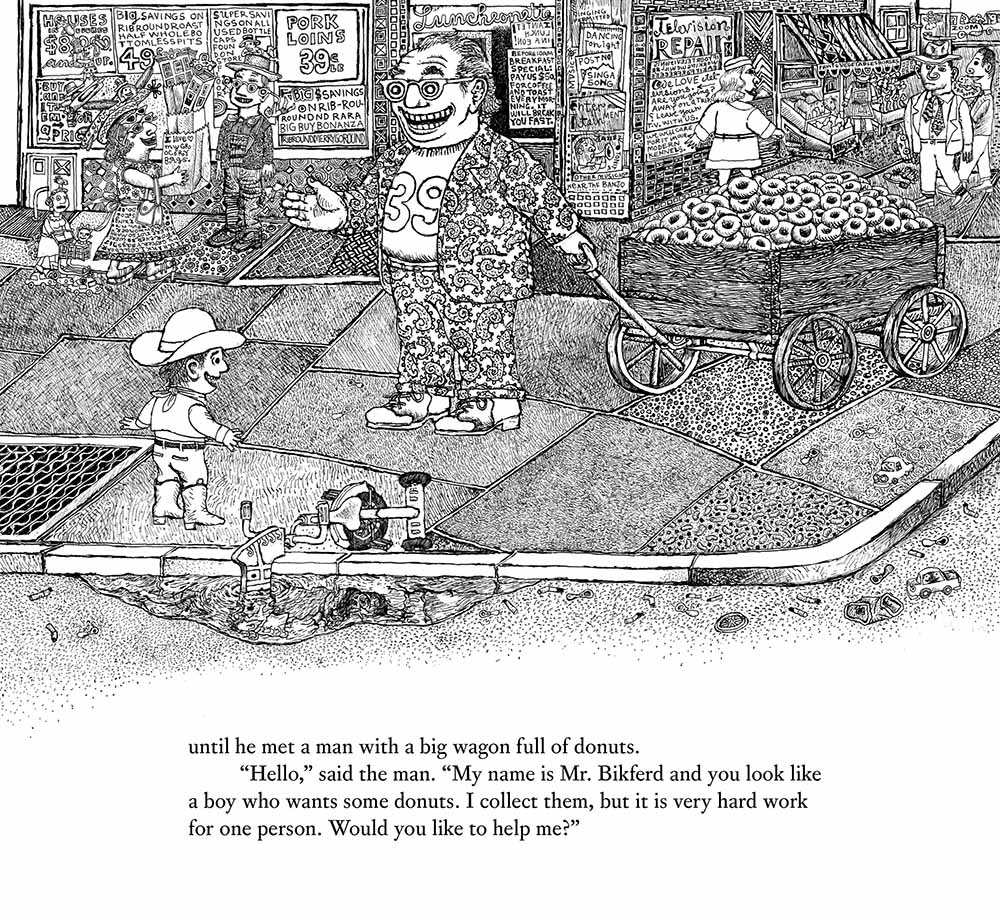
There is much to love about Who Needs Donuts? from its intelligent humour to the ease with which Stamaty builds worlds within worlds. At the heart of it though, is an understanding that children don’t need something to make sense the way adults do. They instinctively know that stories can be nonsensical because that is how life is. It is only the lucky adults who still remember that lesson.
Mark Alan Stamaty (W/A) • Drawn & Quarterly, $18.00
Review by Lindsay Pereira