

Here’s a thought that may crop up repeatedly while reading this fabulous biography: how is it that someone once referred to as the first Black American global sports superstar is such a little-known figure today? For this critic, the answer may have had something to do with a general lack of interest in sports and yet, despite the number of books (including an autobiography) that have been written about Marshall Walter ‘Major’ Taylor, it still feels as if this is a story that deserves a retelling.
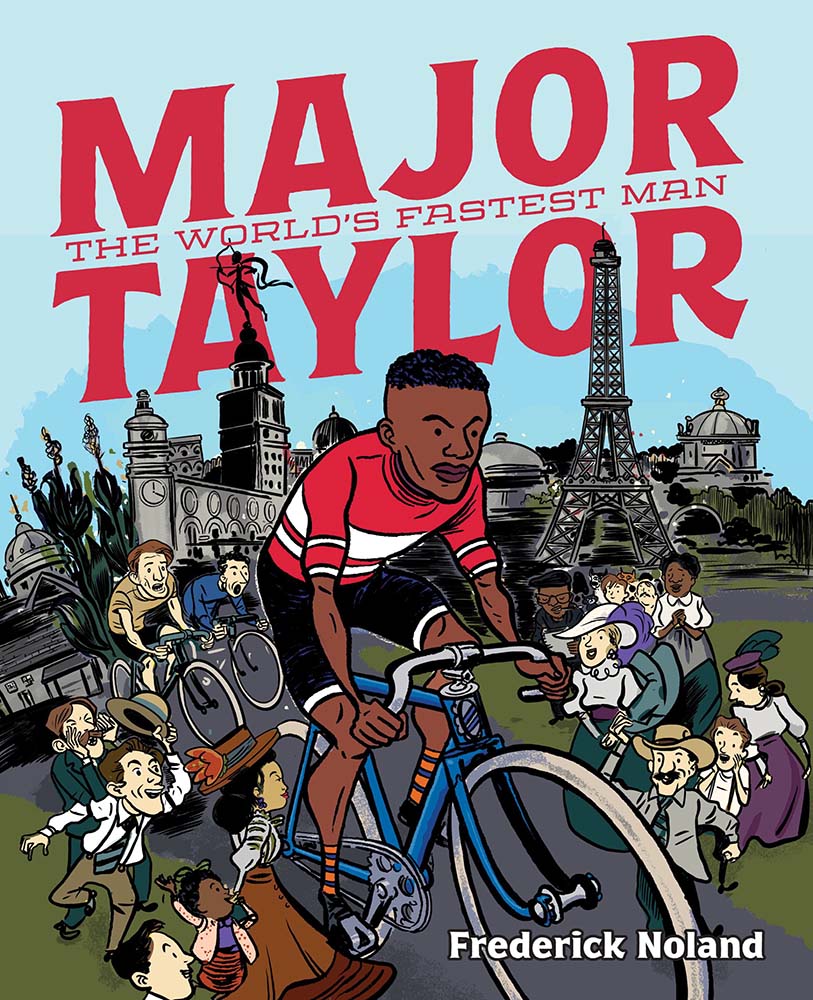
Luckily, American cartoonist Frederick Noland shares this sentiment, which explains why he has spent the last decade or so trying to do just that. The result is a history lesson that informs and entertains in the best possible way, recreating a world steeped in ambition as well as racial segregation, while carefully documenting Taylor’s rise against odds stacked continually against him.
As a biography, this narrative proceeds in a linear manner, starting with Taylor’s humble beginnings in Indiana, followed by his early days as an amateur cyclist, his relationship with mentors who recognised his talent, and his eventual success in Europe, Australia and New Zealand. It also juxtaposes those global achievements with the bigotry that was still very much a part of American society as far as Black people were concerned. It doesn’t focus on Taylor’s life after cycling either, presumably because that inevitable downfall takes away from what is clearly meant to be the celebration of a life.
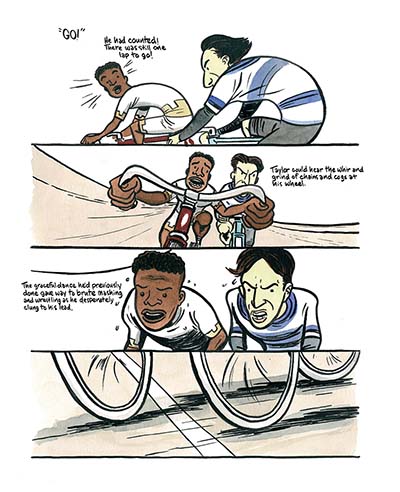
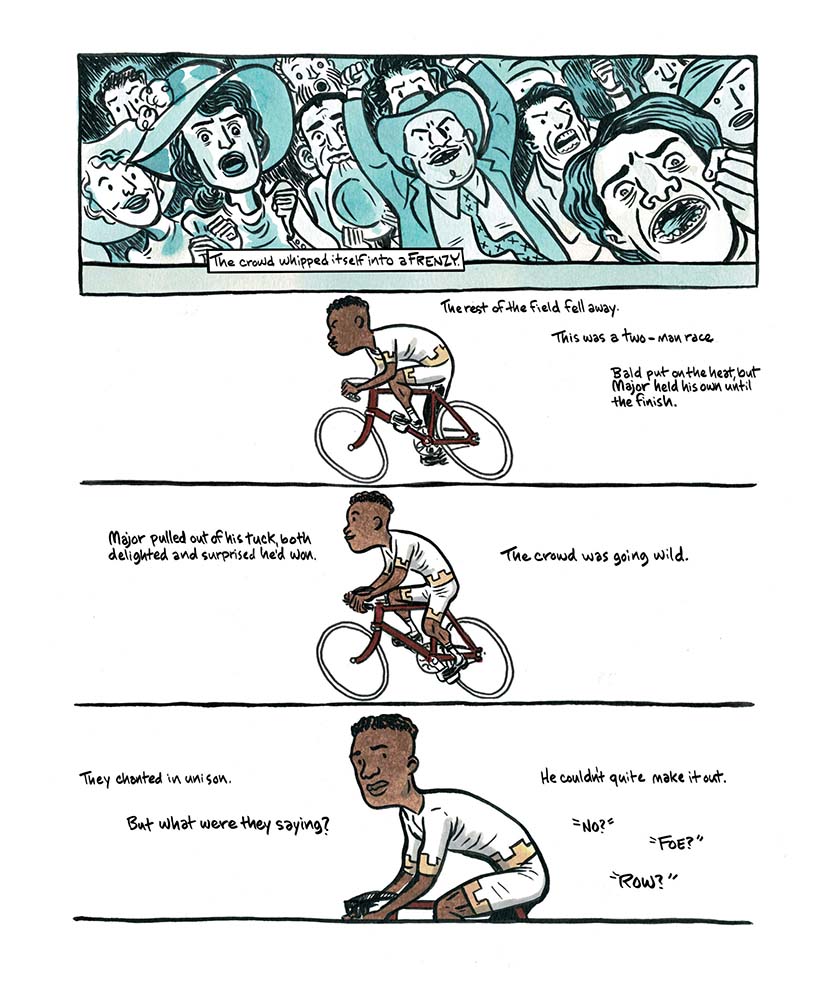
It is obvious that a great deal of research has gone into these pages. To Noland’s credit, these facts never overwhelm the storytelling. For instance, in panels depicting a young Taylor during the early years of his cycling career, there is a lot said about the development of bicycles as well as the importance of foreign supporters, but there are also subtle hints about how race had an oversized role in determining who had access to technology as well as opportunities. Writing about finding Taylor’s ‘voice’ in the afterword, Noland mourns the absence of moving pictures and voice recordings, but points to the abundance of photographic documentation including personal correspondence that is still accessible to anyone who goes looking. He also includes a helpful bibliography.
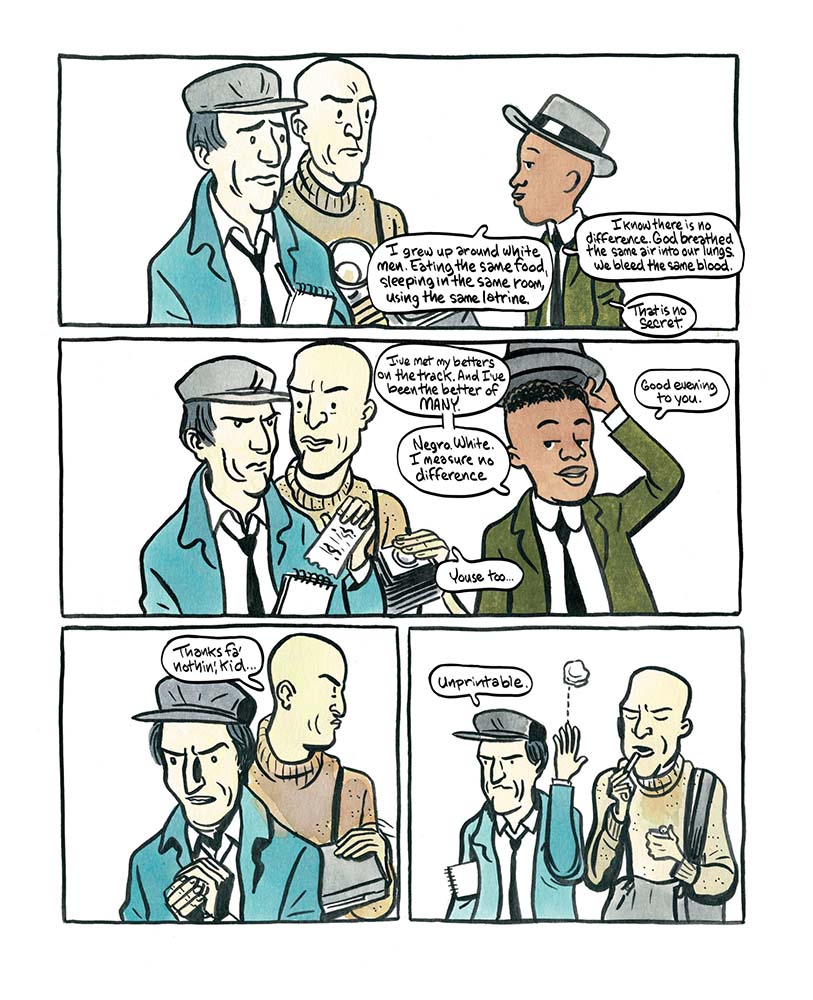
Noland’s biggest achievement is his compassionate portrait of a man who clearly had something to prove, despite the forces working against him. He doesn’t shy away from depicting his own country’s cruelty, which is laudable given current efforts being made in some political circles to erase everything that is unsavoury about America’s dark past. As an aside, it is interesting to note that a plaque at Taylor’s grave in Illinois reads: ‘World’s champion bicycle racer who came up the hard way without hatred in his heart, an honest, courageous and God-fearing, clean-living gentlemanly athlete. A credit to his race who always gave out his best.’ It is the reference to race that is particularly galling.
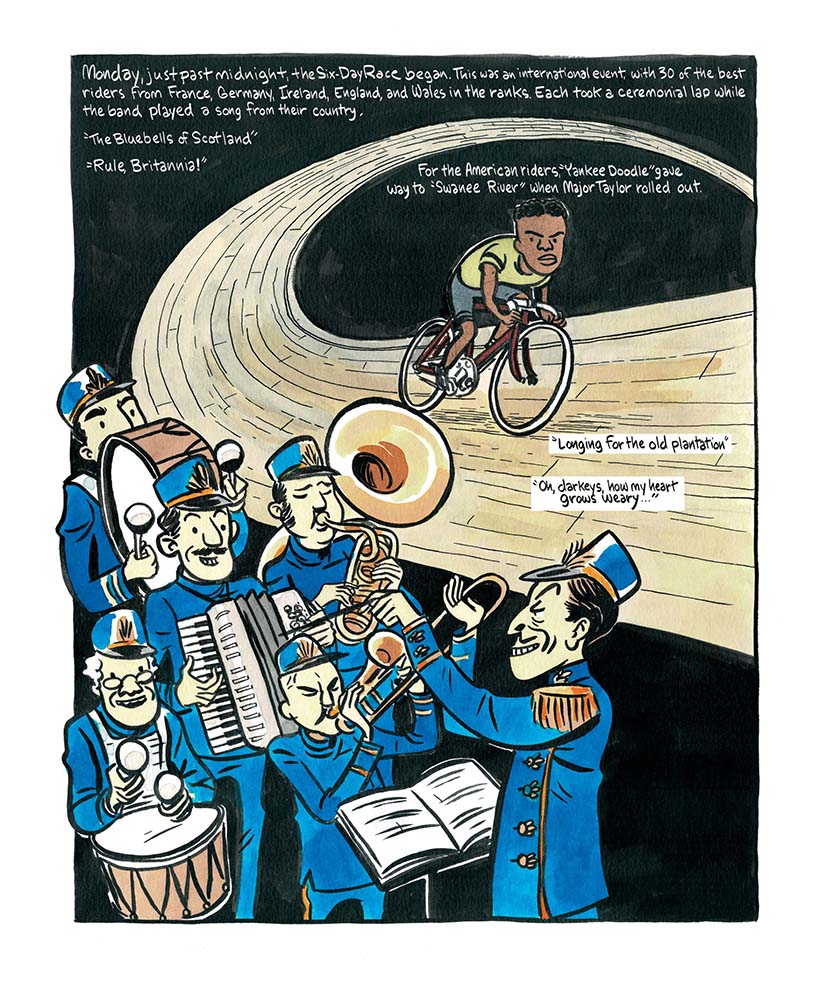
While in conversation with the San Francisco Chronicle earlier this year, Noland put forth a few theories about why Taylor isn’t particularly well-known outside of a few sporting circles today. He cited his country’s rising obsession with automobiles, as well as limited opportunities for retired sportspersons at the time, but also made a telling remark about a continued lack of interest in figures from Black history. Taylor may have passed away in 1932 but, almost a century later, this book serves as a reminder of the work that still needs to be done as far as race relations are concerned.
Frederick Noland (W/A) • Drawn & Quarterly, $30.00
Review by Lindsay Pereira