

THOUGHT BUBBLE MONTH 2026! With a body of quirky but relatable work behind him from publishers like ShortBox and Peow, Swiss artist Michael Furler has already built a knowing following among indie comics fans in the UK. But this year’s Thought Bubble marks his first appearance at a UK event and, as a result, a chance for readers here to pick up more of his work in print. As part of our Thought Bubble Month coverage we took the chance to chat with Michael about his narrative inspirations, the comics scene in Switzerland, and his particular application of the language of comics…
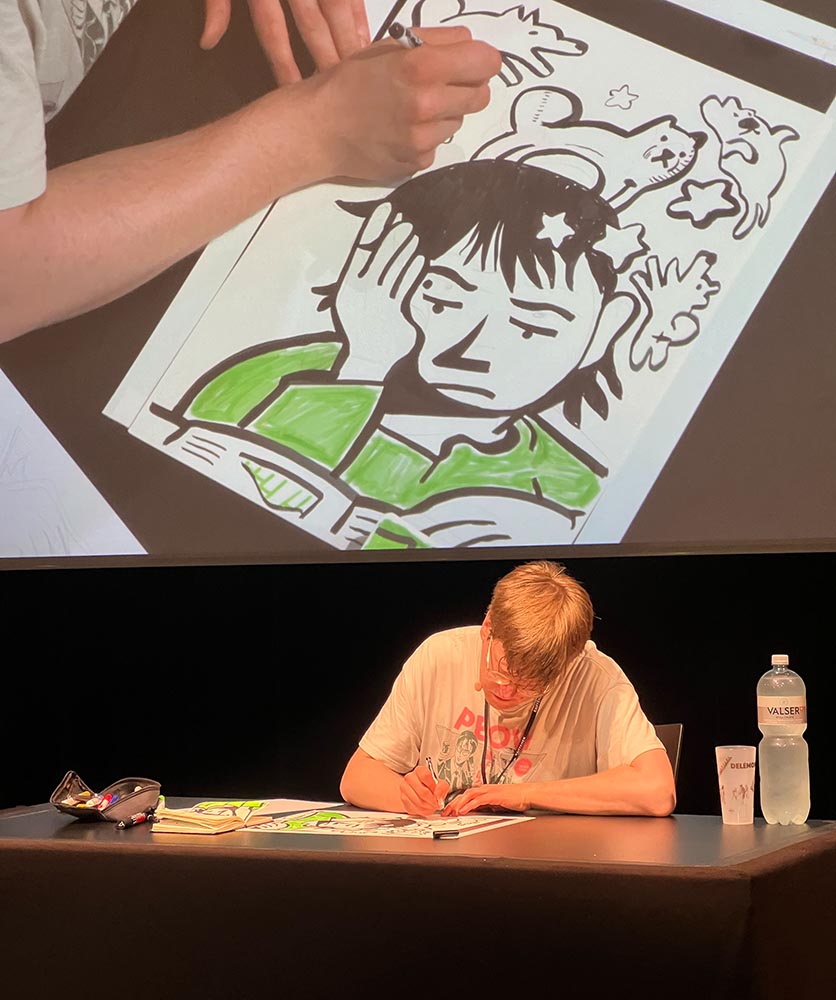
ANDY OLIVER: Your work has been published by such acclaimed names as ShortBox and Peow. Thought Bubble is a chance for readers to discover people’s work for the first time, though, so could you give potential new audiences an overview of your published comics to date? And can you elaborate on your wider illustrative career outside of comics?
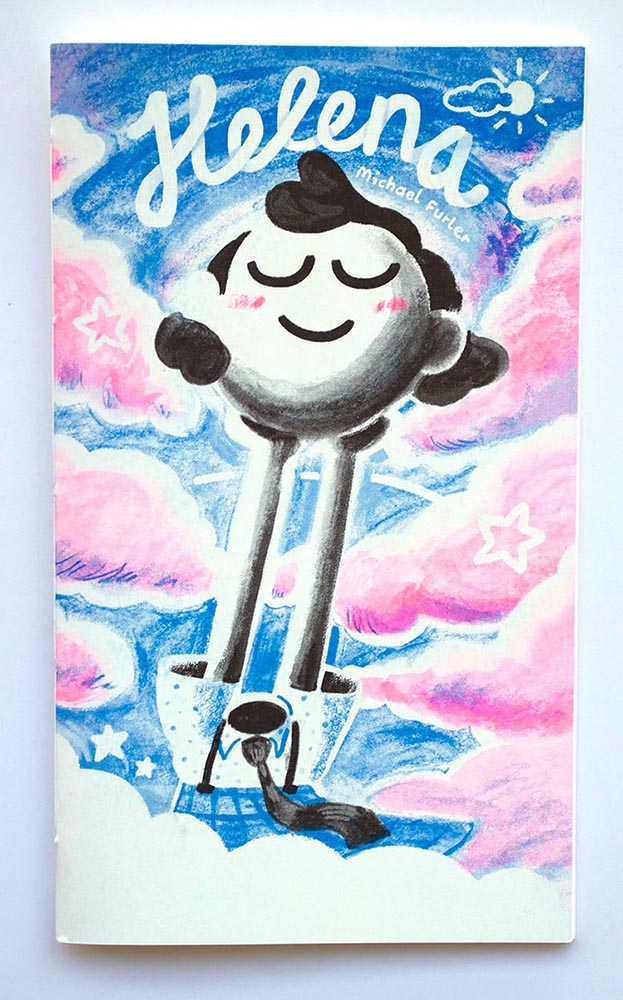
MICHAEL FURLER: Some might remember my first publication Helena, a comic strip about an anxious child with a tendency to talk to the imaginary. It was part of Zainab Akhtar’s ShortBox in 2017, back when it was still a physical box. I‘ve since been posting new comics online and I’m still working on new ones.
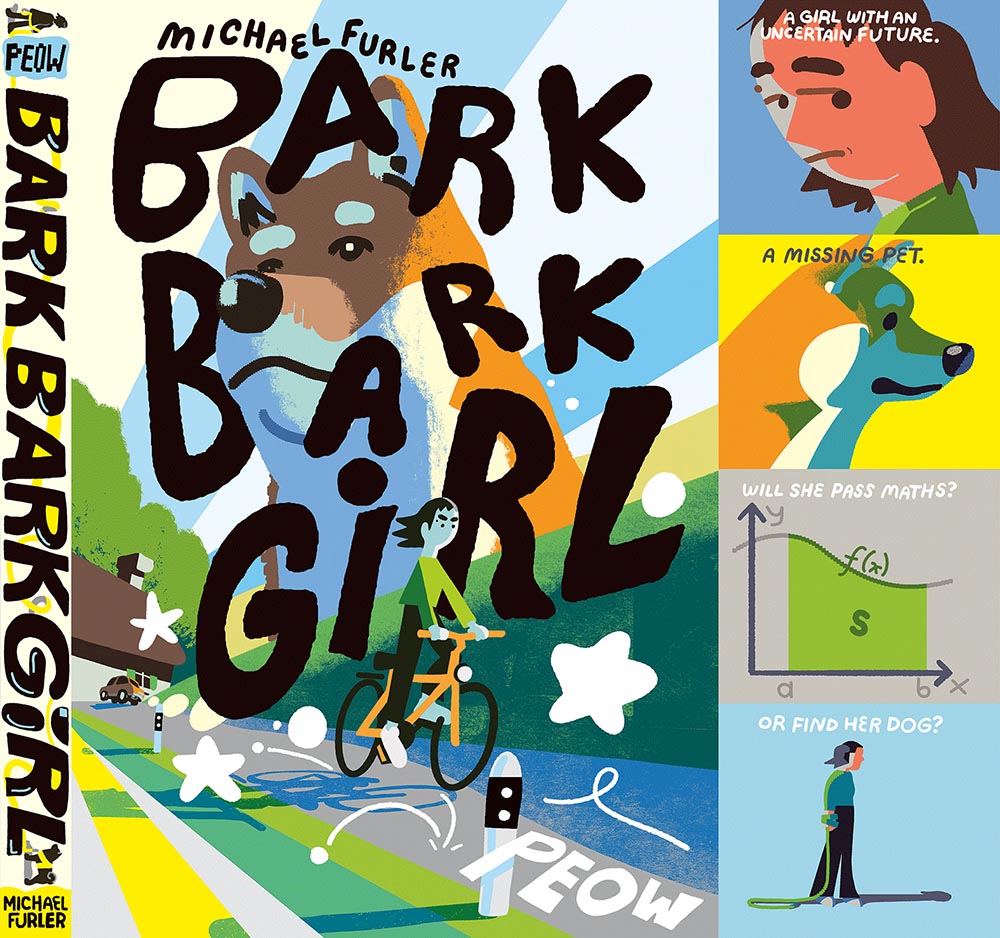
Then came Bark Bark Girl, the graphic novel I did with Peow. A slice of life story about Jola, a teenage student who loves her dog and tends to procrastinate, dealing with the threat of an academic setback by letting said dog wander off. She garners enough sympathy to get another chance to take the exam, but now she has to deal with knowing exactly what kind of person she is.
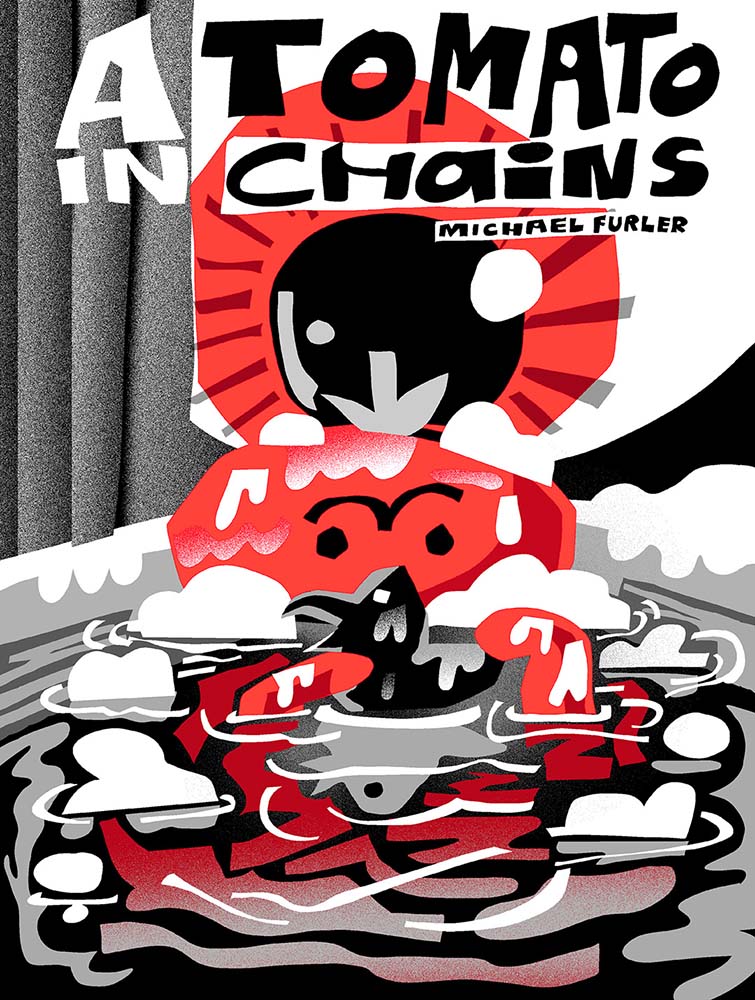
The short stories that followed were all for the ShortBox Comics Fair. A Tomato In Chains is about Tomato who is locked inside their own apartment, trying to ignore increasing ghostly apparitions. Bunny Punch is about the strongest being in the universe falling for an ad for a meal replacement shake and subsequently ruining some cops’ lunch. And in Child Of Wrath, a quasi prequel to Bark Bark Girl, a slightly younger Jola has to water her mother’s allotment, fretting how Mum will react to her sporting a fresh black eye.
I’ve been self-employed since finishing my studies, illustrating for Swiss clients like newspapers or universities. International work has come through people that know my comics, like the poster I did for the indie movie AJ Goes to the Dog Park or my editorial illustrations for the New York Times. If there’s no client work, I am happy to be my own client. Making stickers, posters and finally getting a chance to do more comics.
AO: The quirkiness and absurdism of your comics can be juxtaposed against more relatable ideas like, for example, coming-of-age motifs. What kind of themes are you looking to explore in your comics practice?
FURLER: At the base of every story I tell is some aspect of myself. Maybe a blurred memory or a rumination of past behaviour. How did something make me feel? Why’s that? I’m not shooting for an account of my own life, but to depict some sort of emotional truth. Helena is characterised as a lonely latchkey kid, but while that’s probably not wholly accurate to my childhood, it’s what it felt like. This is the motor driving the exploration of a theme.
And for my comics thus far, this process culminated in a main character. It sounds counterintuitive, but a character imbued with experiences similar yet different to my own is a better reflection than an autobiographical account of events could be. The indefiniteness allows for some narrative control and for absurdity to fill the gaps. A Tomato In Chains started as a portrayal of a period of working on Bark Bark Girl between Covid lockdowns and Peow announcing they would be closing shop (which luckily never manifested). It’s full of ghosts, even though in reality I wasn’t haunted at all! I could have made it a comic about me not responding to emails.
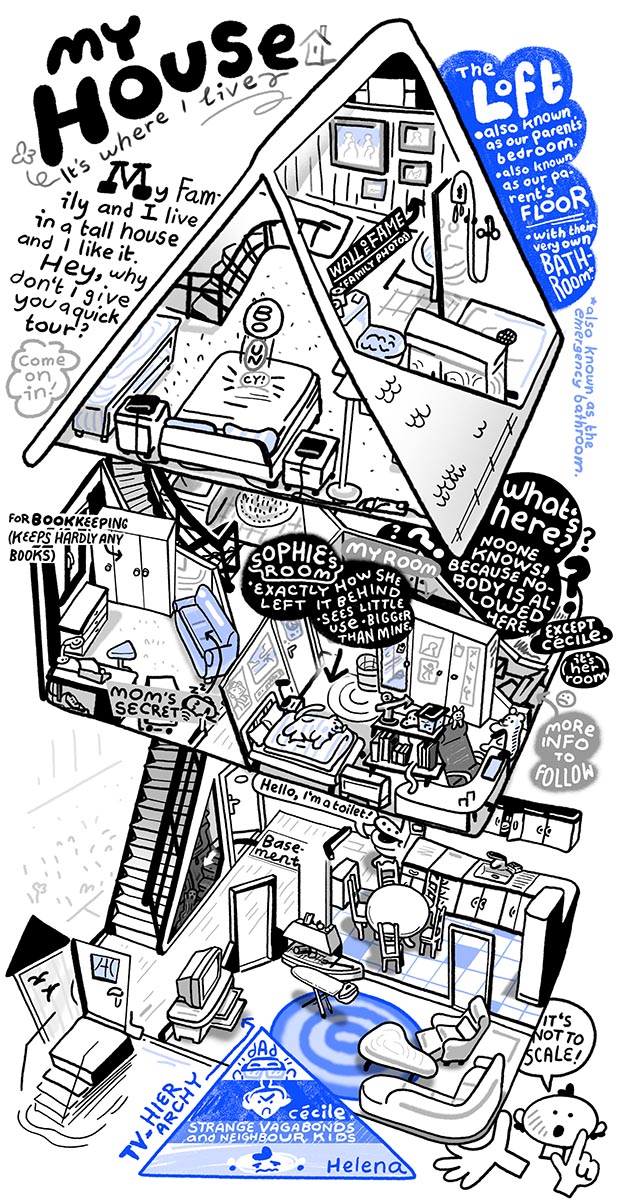
From Helena and the Infinite Summer
AO: Can you give us some insights into the Swiss comics scene? And as someone who works for a primarily English language audience how does that impact on your profile in your home country?
FURLER: The scene here is divided by language. Comics seem to be of larger public interest in the Romandie, the French-speaking part of Switzerland, than here in the German language regions. For a while, there was only one comics publisher on this side, now there are two. A lot of cartoonists are coming from the illustration degree in Lucerne (myself included) and that town is also the site for the only major comic arts festival, called Fumetto. It’s a tight scene and you get to know people by contributing to anthologies or at least attending their release parties. Thought Bubble is going to be my first British comic festival, so to summarise: Our small press fairs don’t need maps.
Aux Abois, the French translation of Bark Bark Girl, did get some attention, even winning a prize for best Swiss debut. But the English original has not, both because of the language and the availability of the book. Peow stuff doesn’t even make it to comic shops here (despite my proselytising). So I remain relatively low profile outside a zine fair/art school audience. And I expect it to stay that way until my French improves or I write something in my own language for once.
AO: What’s very noticeable about your visual storytelling is a constant sense of playfulness with page structure and an often noticeably kinetic panel to panel pacing. Do you consciously look to experiment with the form and its possibilities in your practice?
FURLER: I never thought of it as experimentation, but I guess I do! Adjusting pages and discarding panels is a process that comes naturally. A scene of two people making eye contact could be a single panel, two panels or ten pages. I look at how the flow from panels to pages impacts the readability and if it transports my intended meaning.
Same with design. Most of my stories take place in common place reality, but we find the protagonists in what counts for them as extraordinary circumstances. So I build a straightforward template divided into halves, thirds, golden ratios and the like, to then have an opportunity to misalign a panel by a couple of centimeters when the protagonist suffers a moment of total embarrassment. It’s a kind of language that’s universally understood and unique to comics. To overdo scenes, to surprise with the layout: That’s the fun for me.
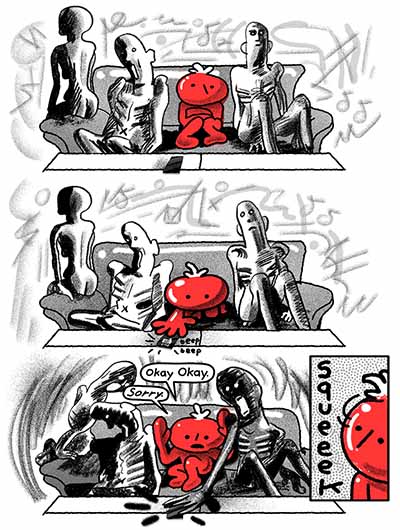
From A Tomato in Chains
AO: Let’s turn to your creative process. What mediums do you work in to bring your stories to the page? And can you tell us a little about how you use colour as a storytelling tool, particularly the limited application of it in a number of your comics?
FURLER: I write every beat and set piece idea that I’ve collected down on index cards and put them up where I can see it from my working space. The visualisation helps block a story into rough parts. I will add new moments in between beats, switch cards around, “kill my darlings“.
But once that’s done, everything happens in Photoshop. Even the writing happens directly in my layouts. I learnt to do comics by thinking in pages and the reason my process is digital is – similar to the index cards – that I can move, resize or discard panels to adjust the rhythm of my stories easily. But since the objective is always the printed object, every step of a page (rough, sketch, final) gets printed out, so I can check how the spread looks in the final format.
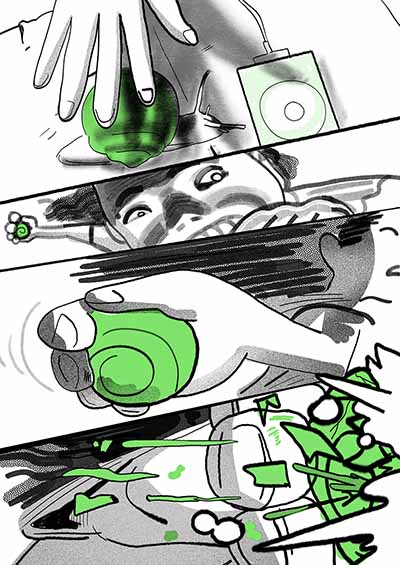
From Child of Wrath
The fixation on a finished object is also why I use colour as I do. Risograph printing is what attracted me to self-published comics and it’s what I use for every personal project. I’ve always liked working within constraints, but it used to be a digital thing, seeing what I can draw with the colour palettes set by games consoles like the Commodore 64 or the Sega Master System. Me adapting to the particularities and limitations of RISO has taken this to the “extreme”: Two colour printing.
Colours can be used the same way as layouts. You establish a rule for the secondary colour, like making the tomato shaped protagonist bright red. The eye is focused on them and they’re easy to track. As they become weary of their situation, they desaturate. In a moment of shock, everything is red except them. And if they are moving through busy backgrounds, taking away the colour means losing them. You start to teach a visual glossary that’s understood without having to explain anything.
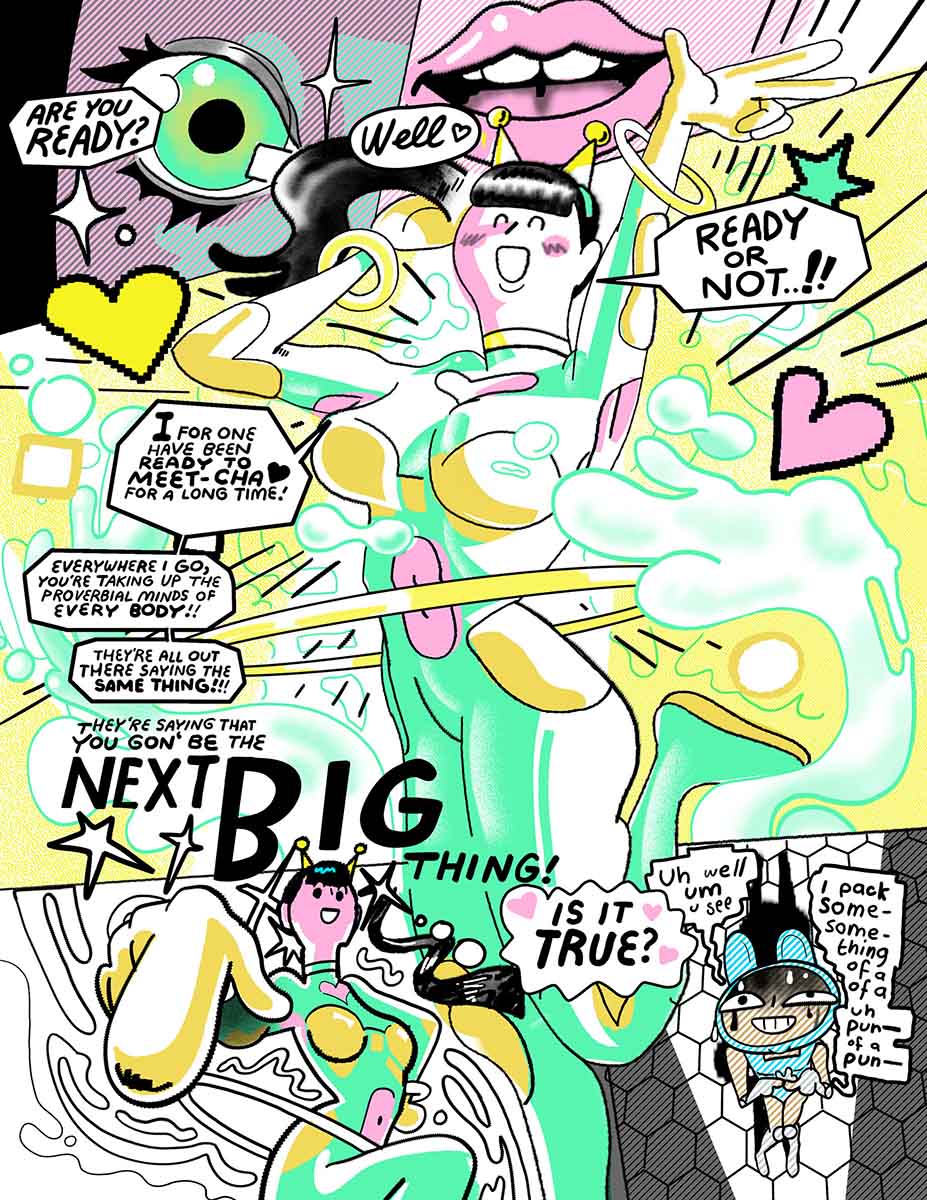
From Bunny Punch: Meal Replacement
AO: And, finally, are there any other projects you’re currently working on, either in comics or outside it that you can tell us about?
FURLER: I’m finishing up the last couple of autumn episodes of the second season of my comic strip Helena. I’m working on a proper website, but in the meantime, you can read it on Instagram.
I also started work on a story for next year’s ShortBox Comics Fair. I’m very excited to do something different, but that’s still a year away.
So the most pressing thing in my life are the 2,000 loose A3 sheets of Risograph comic pages strewn about my living room floor that are waiting to be folded, punched and saddle stitched in time for Thought Bubble. I’d be happy to show everyone.
For more on Michael Furler’s work visit his website here
Interview by Andy Oliver
Michael Furler is at Table D3 in the Redshirt Hall at Thought Bubble.
Thought Bubble 2026 runs from November 9th-15th with the convention weekend taking place on the 14th-15th. More details on the Thought Bubble site here.
Read all our Thought Bubble 2026 coverage so far in one place here.
Poster art by Núria Tamarit