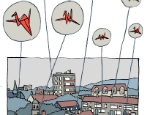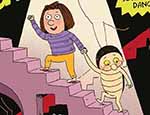


In an unidentified town near London, a crumbling, half-finished edifice, which looks like the base of the Eiffel Tower, scatters its debris near and far, sometimes rather dangerously. We meet our protagonist, Philip, in his basement apartment, where he works from home next to a large window, and spends a lot of time trying to avoid his perfectly normal (nice even) roommate, Caroline. He reluctantly pushes himself out of bed, his need for coffee superseding his inertia. He goes to a café, tries to read a book but gets distracted by a conversation between a couple next to him. He looks for a walk, takes a bus to the seaside, and it almost feels nice. A small cast of supporting characters orbit around the protagonist like satellites.
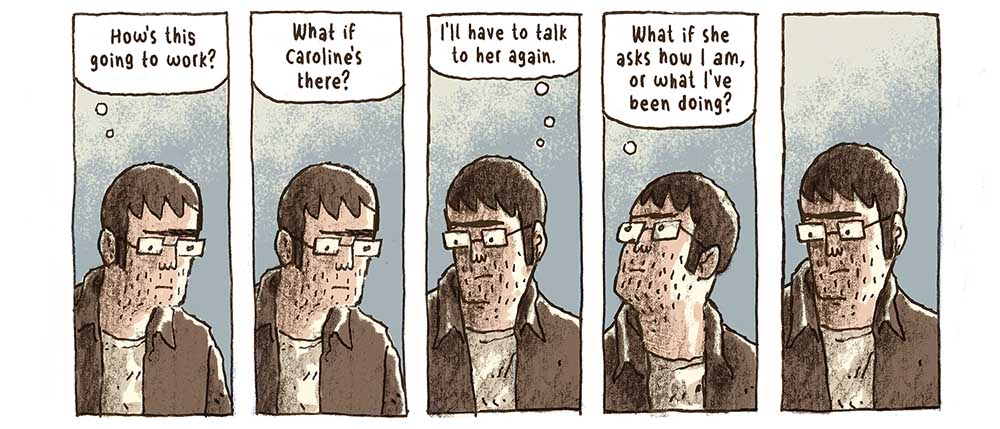
The problem with Philip is that he both craves human interaction and goes out of his way to avoid it. It is a classic, not unusual at all, quagmire as far as introverts are concerned. Except he is pathologically bogged down by his social anxiety. His need to overanalyze every conversation, minor or not, holds him back from the very thing he wants, as does his tendency to catastrophize. Yet these are not uncommon ailments of modern loneliness, where more of our lives are spent in front of screens than other people.
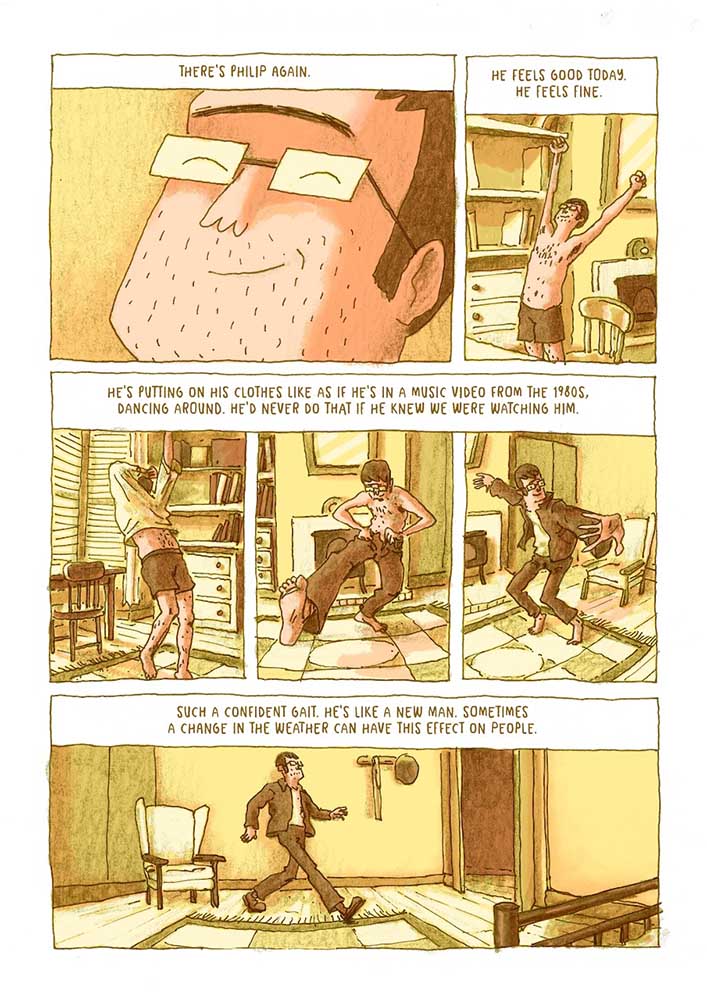
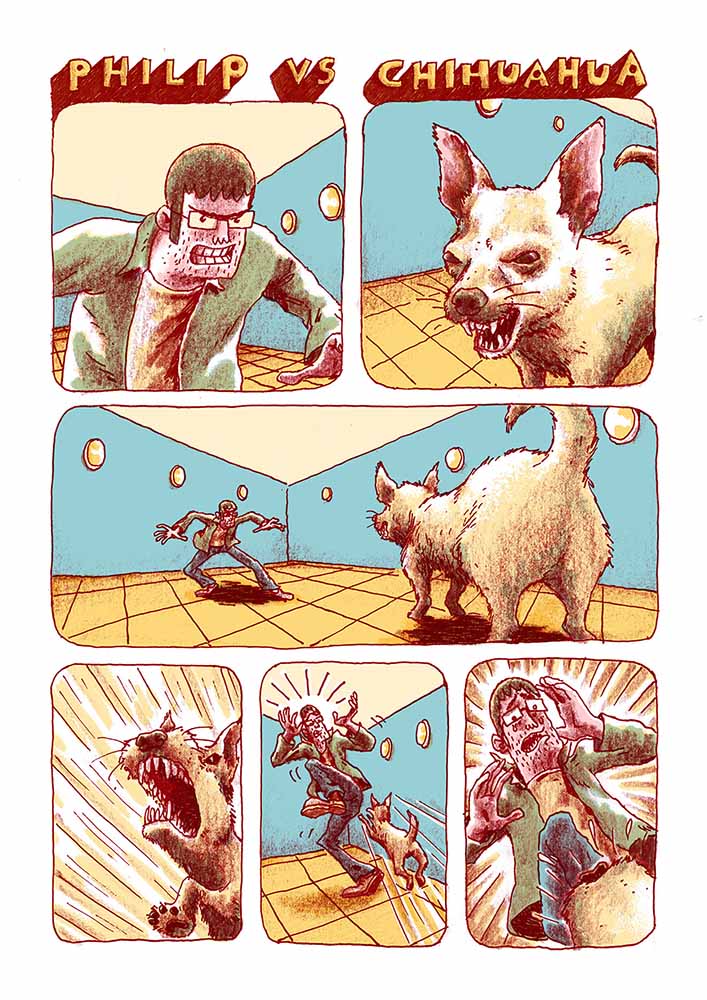
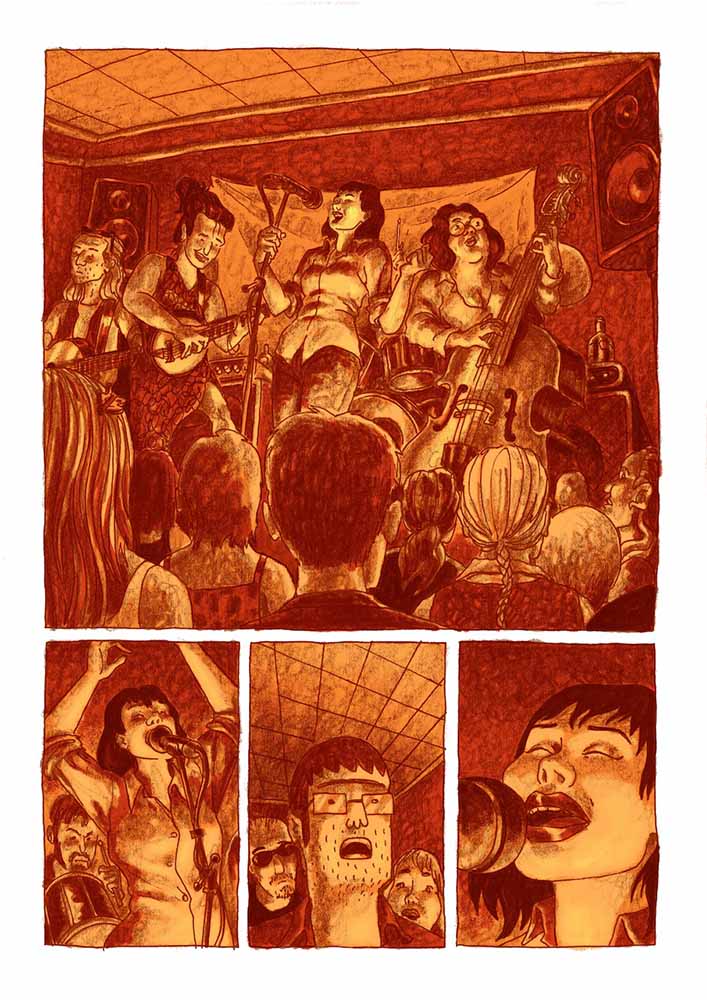
Was that Normal? is a curious slice of life that alternates between third-person narration and an almost autobiographical interior monologue that operates like dialogue. In sepia-toned panels, Philip dreams about getting a dog to keep him company, and then in full color, about fighting a chihuahua. Metaphorical fights, funny and disturbing, featuring animals—from gorillas to seagulls—speak to his interiority. When the narration switches from an interior monologue to third-person omniscient, it has a comic effect akin to a light-hearted indie film; at other times, it serves to accentuate the distance the protagonist feels from the world around him. When he meets Gina, a musician he instantly likes, at a local pub fittingly called Quagmire, his mood lifts, albeit only temporarily, before he spirals into yet another self-deprecating monologue.
There are painful moments when his awkwardness metamorphoses into self-absorption and he gets in his own way. Potts excels at visually capturing the shroud of anxiety that hangs over the story. There’s an architectural quality to how he designs the insides of Philip’s room, where our protagonist spends most of his time. Potts shifts fluidly from lifeless browns to mustard yellows, from vivid oranges to ominous purples, each carrying a different meaning. Potts’ skillfully depicted crowd scenes, which border on the grotesque, look as claustrophobic as his protagonist feels. The dual narration is punctuated by entirely wordless panels: expressive, wistful, beautifully drawn yet acutely reflective of the emptiness with which the book grapples.
Was that Normal? ends as it began. In the middle. For a story that, in no small part, unfolds in text messages, and grapples with the discontents of modern life, the visual aesthetic is pleasantly quaint and gritty, and the theme, timeless.
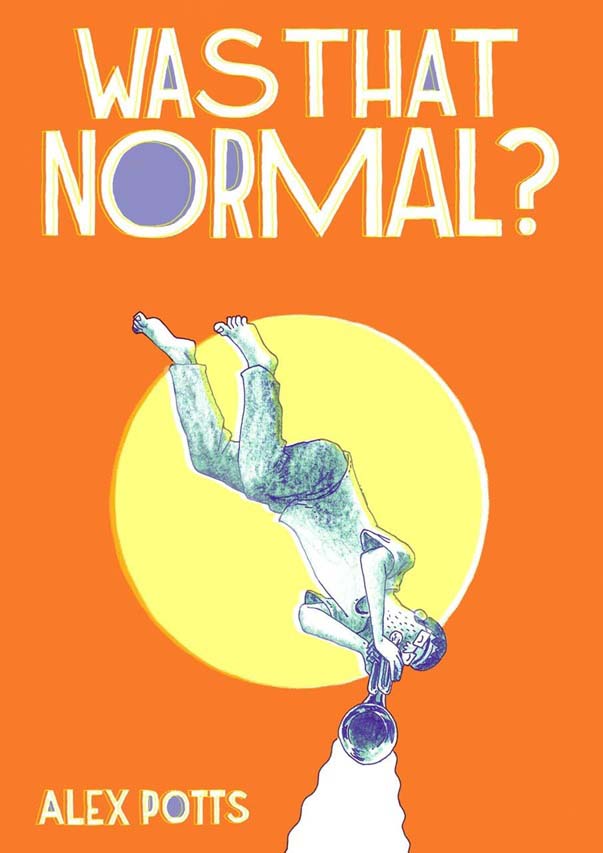
Alex Potts (W/A) • Avery Hill Publishing, £14.99
Review by Kay Sohini