

FANTAGRAPHICS AT 50! Raquelle Jac’s long-form comics debut, Bimbo Agitprop, debuted this month from Fantagraphics and, for what it’s worth, it’s already one of my books of the year. It’s described on the Fantagraphics site in the following terms:
Bimbo Agitprop captures the reality of growing up in West Texas in the early 21st century, through Satanic Panics, Y2K, a recession, abusive parents, shitty men, identity-centric politics, and woke/anti-woke pendulum swings. Reflective of the author’s era (born in the late 1990s) of hyperindividualist over-sharing of late 2010s internet, while being firmly grounded in the unfiltered, handmade, radically anti-establishment art of the 1960s underground comix, Raquelle Jac keeps her wounds fresh and open to both remember the past and protect herself in the future. At turns explicit, hilarious, profane, and defiant, Bimbo Agitprop is both an act of self-preservation and a call to arms.
In a candid and fascinating interview today at BF Raquelle chats with us about art and activism, the realities and responsibilities of autobiographical work, and finding humour in the bleak…
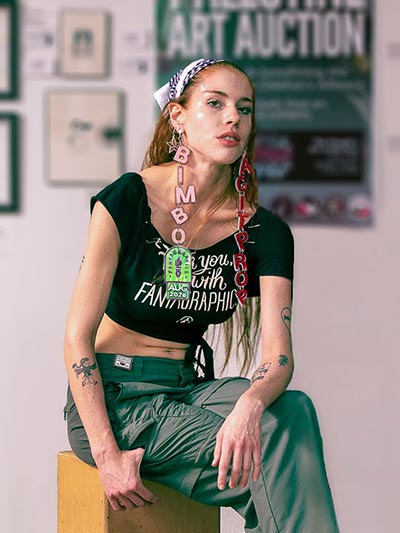
ANDY OLIVER: As a debut graphic novel Bimbo Agitprop is both a very contemporary book but also one very much rooted in an underground comix vibe of the past. So I wanted to start by asking you about your visual influences and inspirations?
RAQUELLE JAC: Yes, my work is very much inspired by underground comix artists, mainly Aline Kominsky-Crumb and Pheobe Gloeckner, but I’m also inspired by artists who work in a variety of other mediums. I’m inspired by Henry Darger, Ralph Steadman, Martin Rowson, Rory Hayes, Dori Seda, and others. I also love looking at old rock posters, especially ones with illustrated typefaces within them. And to my great shame, since I read them a lot growing up, one of my biggest inspirations (as far as comics go) are Chick Tracts.
AO: Bimbo Agitprop is a most memorable title in itself. What were you hoping to encapsulate in that title in terms of capturing the themes of the book?
JAC: The first iteration of the Bimbo title was “Agitprop for Bimbos” but Eric the editor said it felt too wordy. He was correct, and came back with, “what about Bimbo Agitprop?”. I feel like there’s a dialectical balance between the two words, one fluffy, one sharp, like writing a suicide note with a fluffy pink pen (reference to a story in the book). The word “Agitprop” is the combination of “agitation” and “propaganda”. It describes propaganda that is sharpened, active – propaganda that prompts someone into action, into becoming part of a larger struggle, as opposed to just propaganda, which tends to be passive, without an overarching goal of activating the masses. “Bimbo” evokes frivolity, the unserious, the vacuous and the seductive. These two words, when they meet, repel one another, but I feel like the combination works both spiritually and definitionally to describe the content of the book.
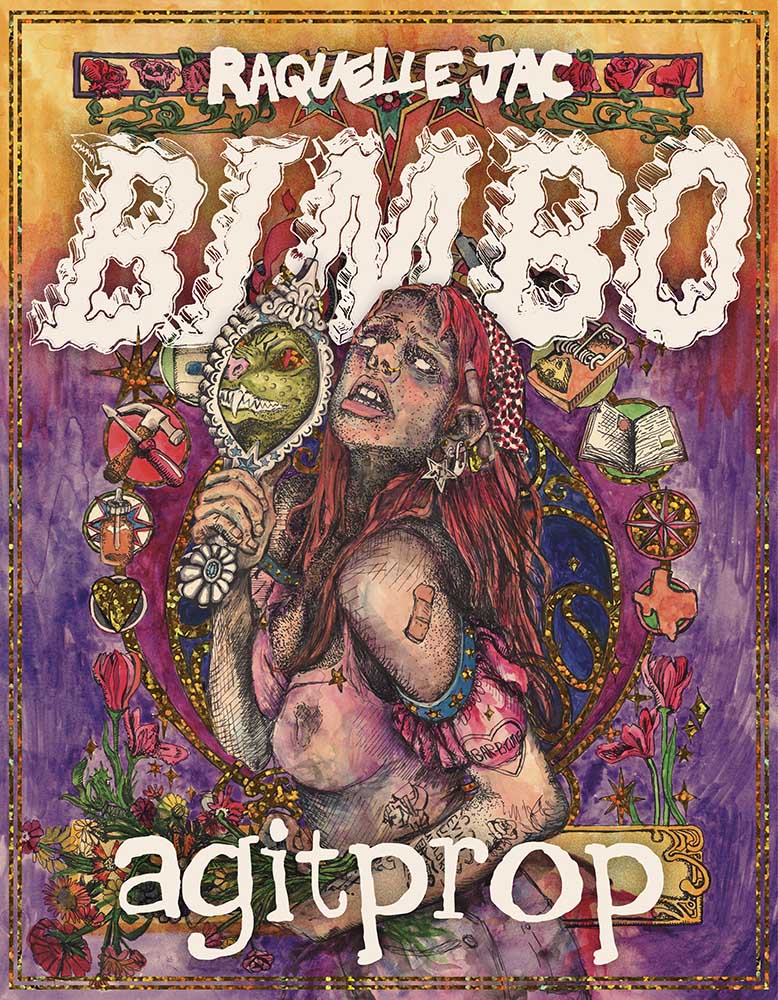
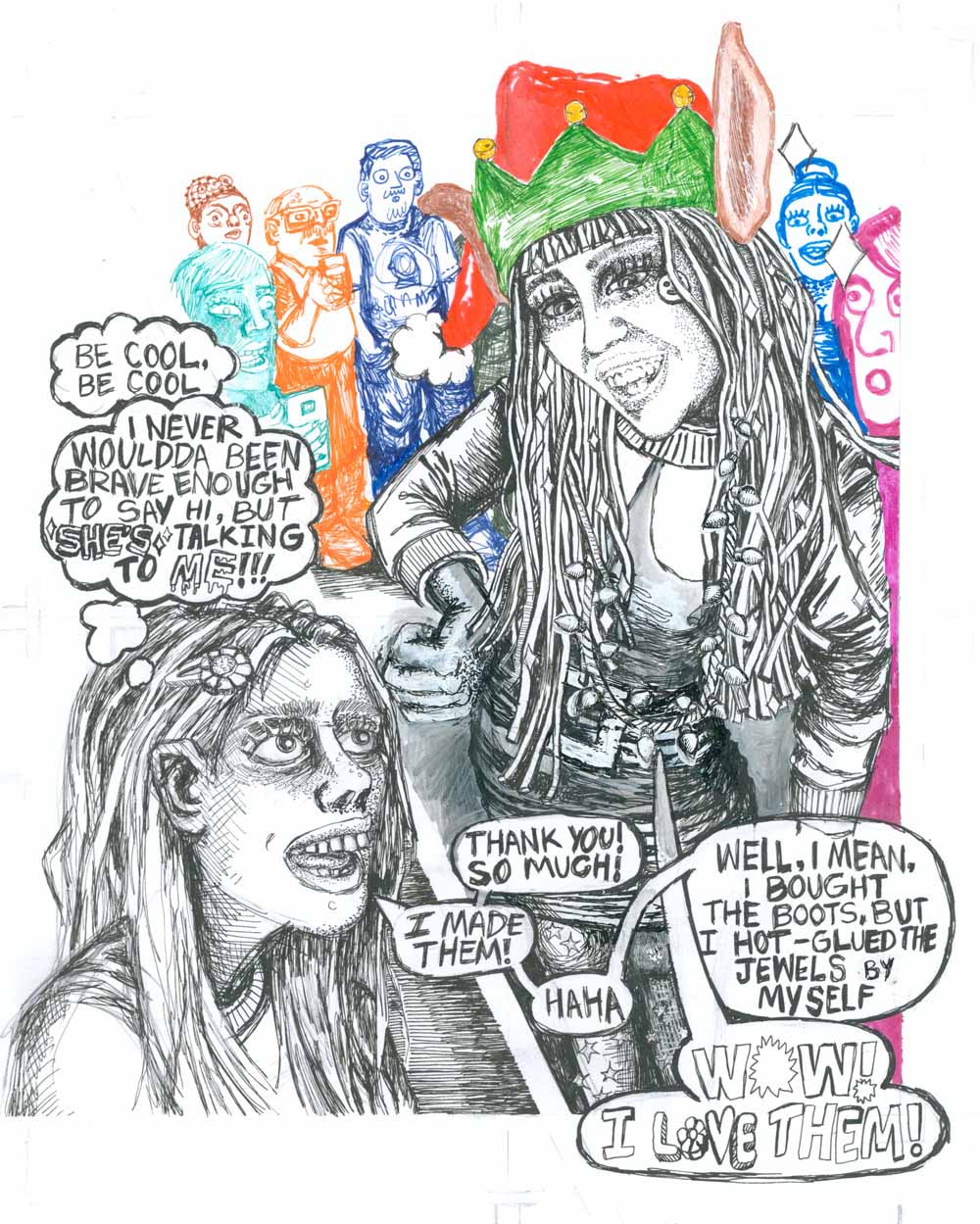
Bimbo Agitprop ends with a political message, and a literal call to action to get involved in one’s community – but only after a teenage story of dropping acid at a party with celebrities – one that could have been a frivolous “WE ARE YOUNG” type story, but instead, was redrawn and sharpened with political analysis layered atop it. I guess my intention behind the title was to demonstrate harmony in contradiction. Much like the stories in Bimbo Agitprop, there’s not much of a satisfying conclusion. The reader is bombarded with someone else’s life, and is forced to find resolution on their own, if at all. Just like the title, two words in opposition to one another, lacking closure, with no path to it.
AO: Given how very candid Bimbo Agitprop is as a memoir – especially some of the harrowing stories about your relationship with your parents – how much of a sense of vulnerability is there in putting events onto the page with such raw honesty? And, perhaps conversely, was there any sense of catharsis in that?
JAC: There’s a ton of vulnerability in my process. There’s also some catharsis. After finishing the book, I was so convinced I had been healed because I felt like I didn’t need to think anymore about all the bad things I mention in my book. The bad memories weren’t part of me anymore, they were instead: Bimbo Agitprop. But not thinking about it doesn’t heal the lasting damage. It only obscures the source. The trauma is atomized, diffused, but doesn’t go away.
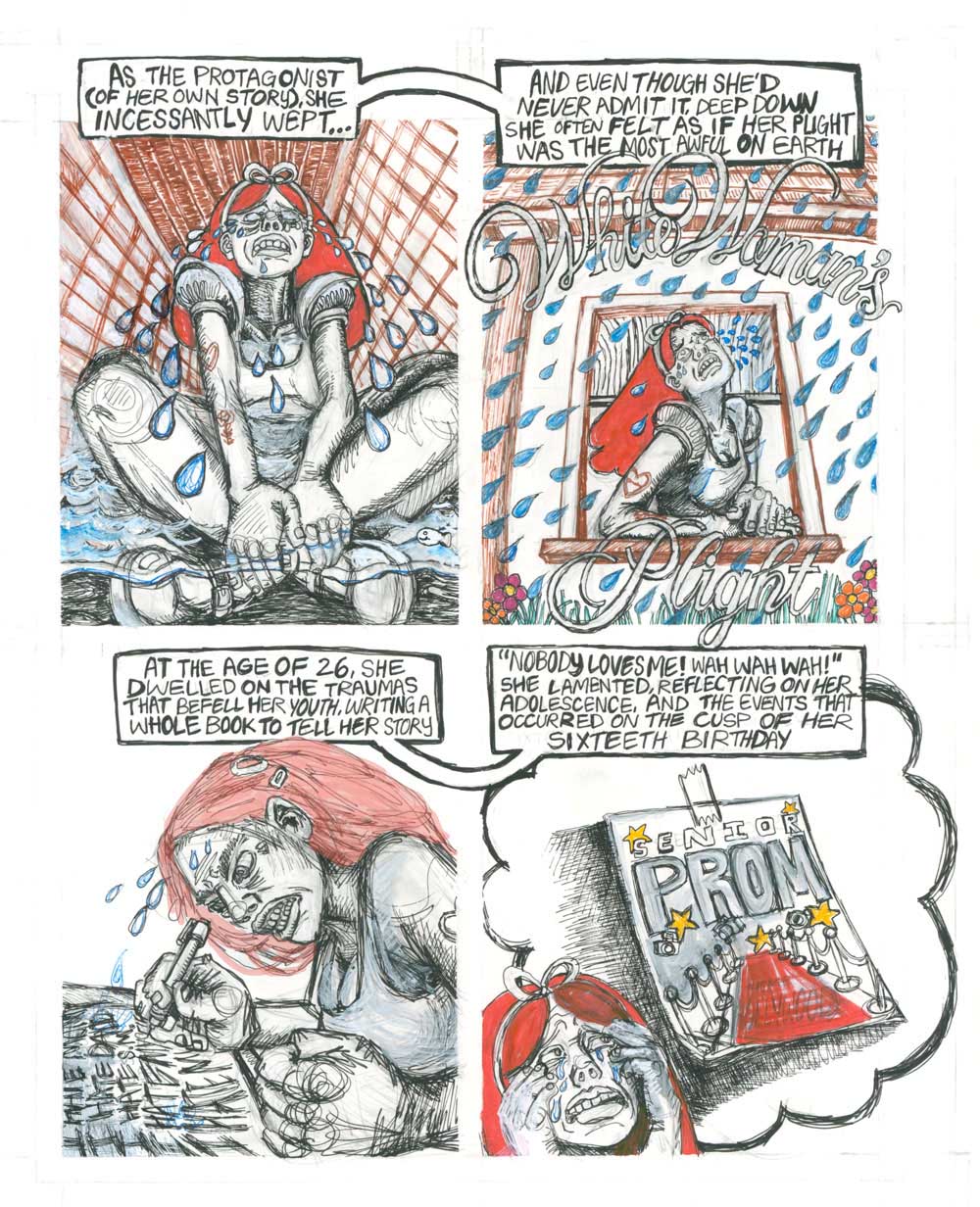
AO: Autobio work also comes with a sense of responsibility to it given it touches on the lives of other people as well as that of the central voice. How did you approach thinking about that aspect of the book?
JAC: When it comes to the lives of other people, I feel immense guilt about it. While making Bimbo Agitprop, I was primarily driven by a righteous anger that any of the events within my childhood had happened. But through writing, drawing, and all the excruciating effort it took, the memories changed from pulsing through my jugular vein, each beat of my heart reminding me of what happened, to existing only within the confines of the page. Memory is the foundation of autobiography, and memory is fickle. This concept is examined within the book: my mom undergoes theophostic therapy, uncovering “buried memories” of satanic ritual abuse.
Apart from a caricature of myself assuring the reader that “it’s all true!” I don’t go out of my way to legitimatize myself as a reliable narrator within the book. Right now, I try to live within the space between what really happened, and what I remember. I hope that if I got anything wrong within Bimbo Agitprop, that I can find shelter within the grace of that space. I feel similarly guilty about Bimbo Agitprop and the responsibility I feel when it comes to my own life. Sometimes I worry it might ruin my life. But, my life is mine to ruin.
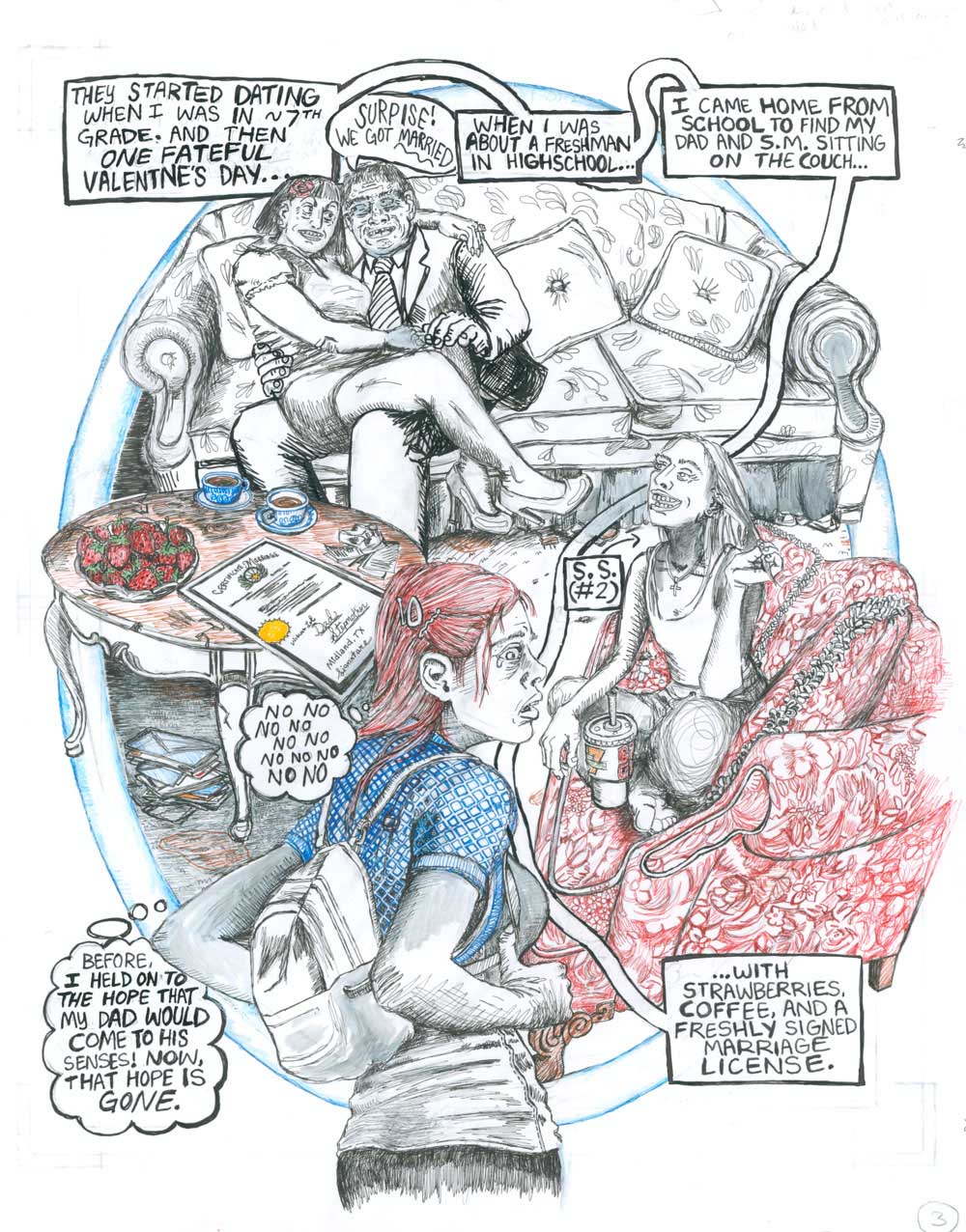
AO: This is a powerful and very dark memoir but it’s also one that has a noticeably bleak humour to it. Was it difficult to balance those two extremes or was the latter a natural progression from the former?
JAC: I think it was a natural progression. I have a difficult time sitting with negative feelings. I tend to ignore them, chastise myself for having them, judge myself for feeling them, blame others for them, or try to medicate them away. The bleak humor is oftentimes a reaction of self-disgust to perceived vulnerability within myself.
AO: What is it for you about the language of comics that makes it such a powerful tool to communicate socially relevant ideas, to act as a rallying tool, and to convey personal experience to an audience?
JAC: I primarily use comics to put to paper emotions that I cannot bear to hold alone. I was recently diagnosed with Borderline Personality Disorder, which means my emotions are very physical. I feel them everywhere in my body and they’re often unbearable. It’s true what I say in Bimbo Agitprop about comics relieving pressure like a burr hole to the skull. It’s one of the ways I communicate my own feelings. I think the ability for comics to act as a rallying tool and the medium’s ability to communicate socially relevant ideas is because of both the accessible and the sequential nature of the medium. With multiple frames, you’re able to walk people through an idea, at the pace that is required.
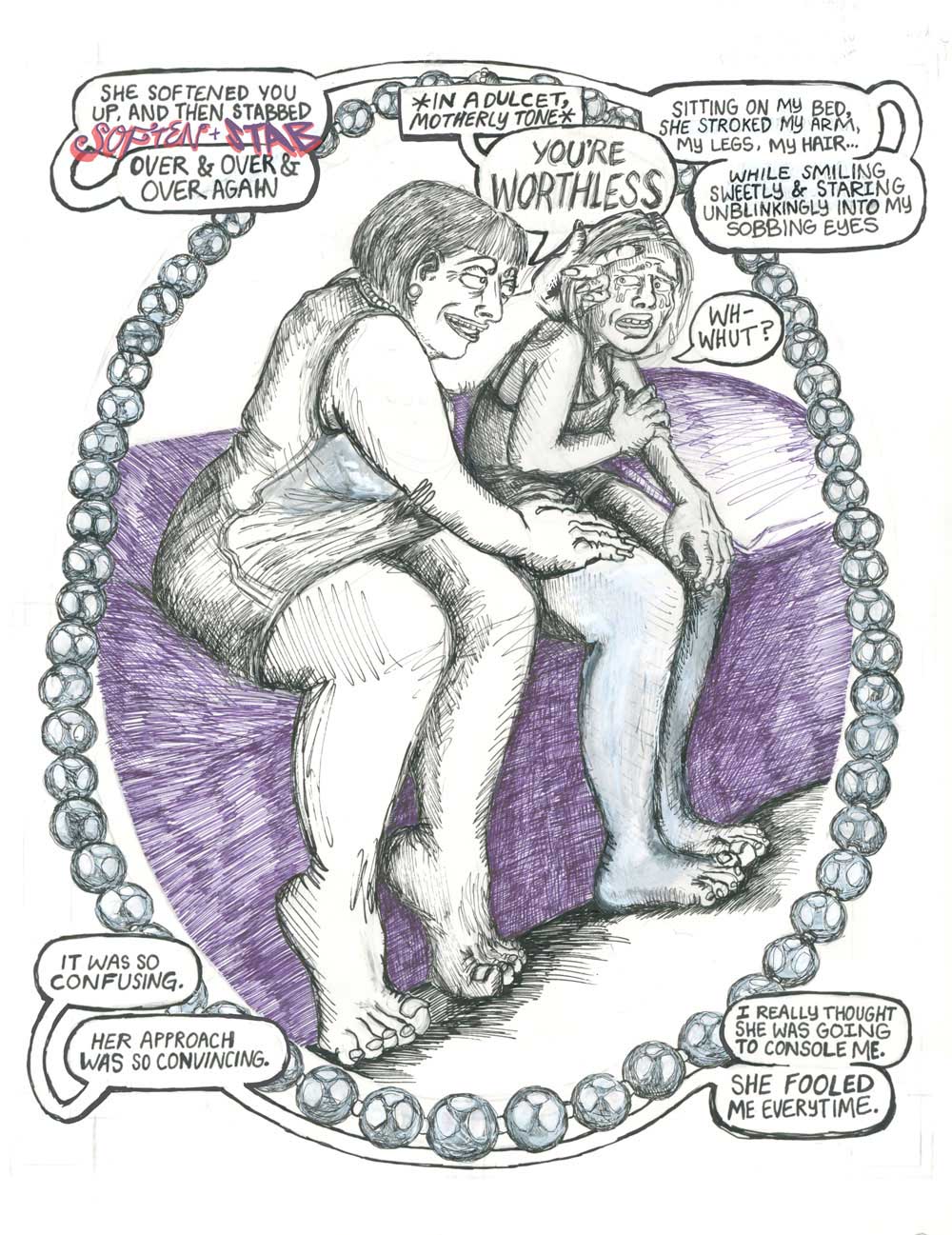
I’m not saying I’m the best at this… I’ve received feedback that Bimbo Agitprop feels overwhelmingly fast paced–almost too much– because of both the weight and content of information on the page… although, it is fitting, because when you’re living through these kinds of things, you don’t get breaks. Shit just keeps happening. Anyway, because of the wider cultural context that the medium of comics exists in, there is a lower barrier to entry. Comics, similar to zines, exist as a proletariat art form within popular consciousness, and therefore, the artist comes to the reader on equal footing. The perspective of comics being “low art” is an asset. The medium allows for a unique intimacy.
Additionally, one is able to communicate energy through the manner in which you draw an image. Drawing using vectors will evoke a different impression on the viewer than an illustration that’s clearly been drawn 10 times and erased, inked, with a ghost image lingering—pencil impressions that couldn’t be fully erased. My point is, there’s so many ways to convey emotion through comics, from how it’s drawn to how it’s sequenced. And making something that appeals to one’s emotions– that hits on a personal level– is the best kind of agitprop.
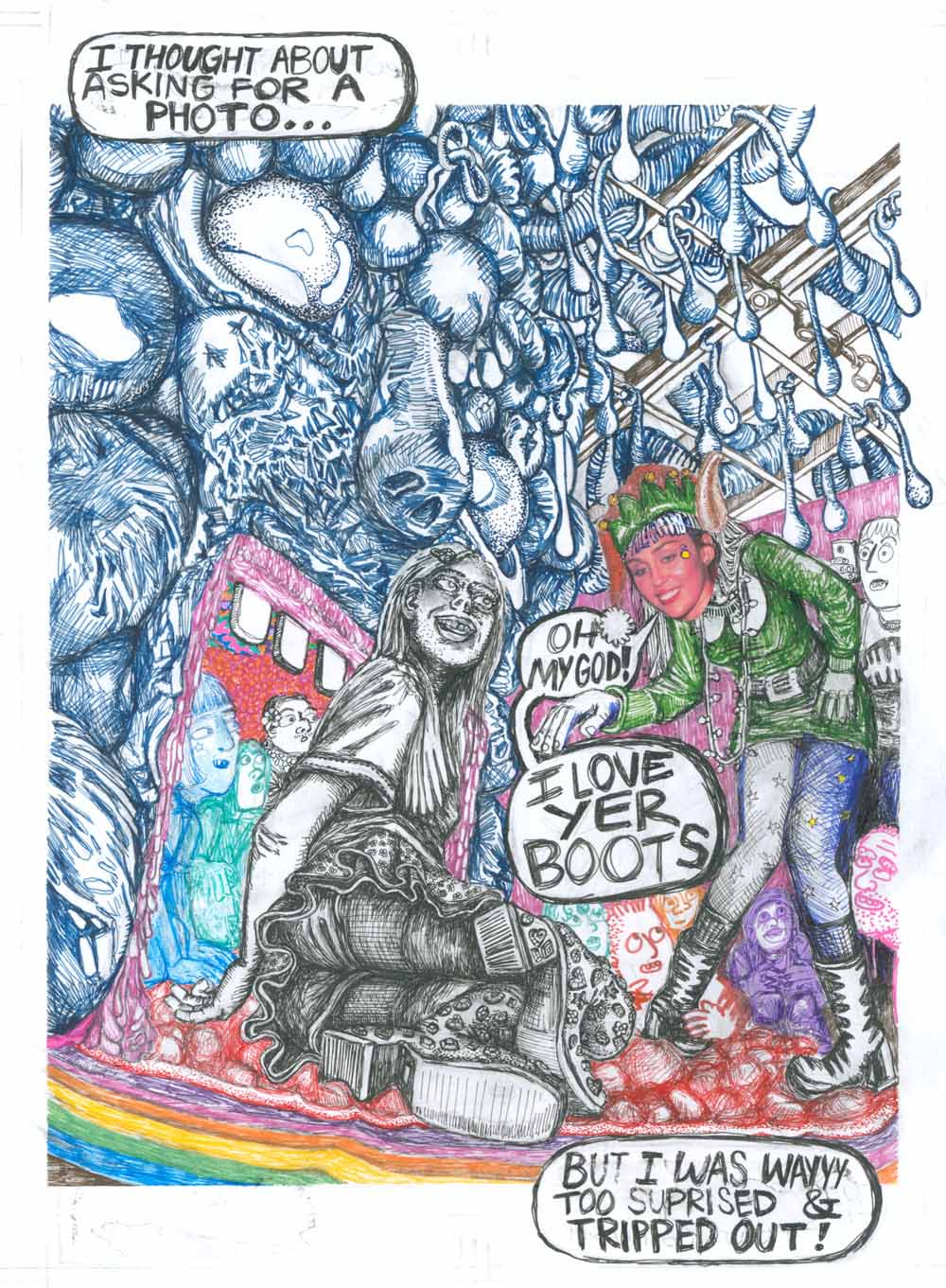
AO: Your pages have a sense of both packed, dense imagery and an often frenetic energy to them. Can you give us some background about your creative process and the mediums you work in?
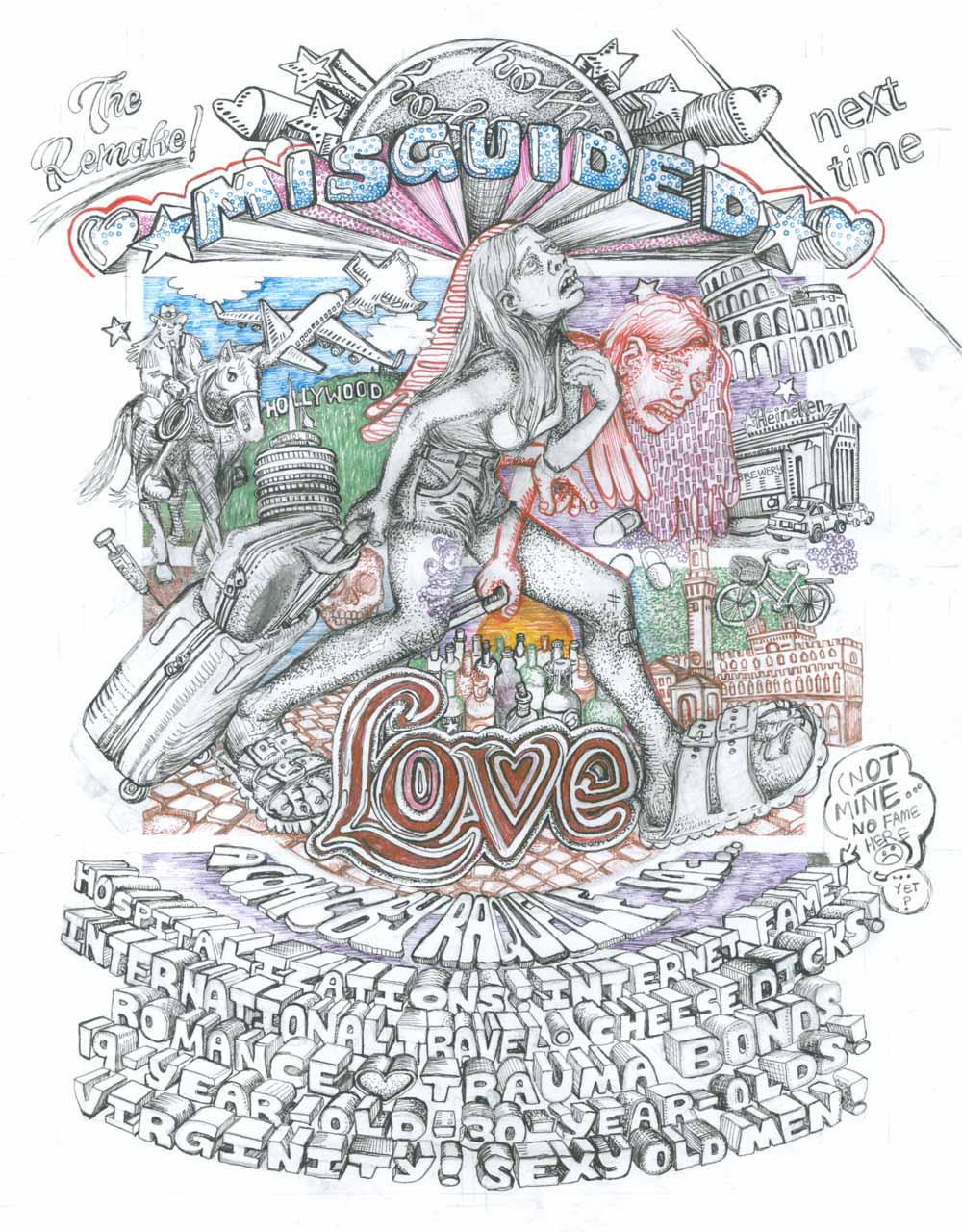
JAC: I use rapidograph pens, ball point pens, pencil, posca paint markers, watercolor, a tattoo pen gun on some pages, and I will sometimes form a collage of graphic elements, and then trace over the collage with pencil and then ink.
My creative process begins by sketching, with both language and drawing. Eric the editor will tell you how I sent him an insane 30-page single-spaced document of stream of consciousness word-vomit about my childhood when the book was in its infancy. Then, I read and re-read what I’ve written, and do a lot of editing, making sure to do several “self righteousness” editing passes where I edit out anything too moralistic or pretentious. Then, I will draw margins onto bristol paper and draw out the frames. I’ll quickly write what each frame should say on each page, and then begin to draw.
About halfway through the book I realized that hand-lettering everything was going to be impossible, so I created my own font using my handwriting. Even though it is apparent in some parts that I used a font, I wanted it to be as subtle as possible, so I made 4 different fonts with several variations of each character. It’s pretty obvious in some areas, but overall I’m happy with the outcome, and happy I didn’t need to take an extra year on the book just to hand-letter everything. Oh also, another part of my practice is taking photos of myself to use as drawing references. I’ll usually try to wear as little clothes as possible when taking these reference photos because I have a lot of fun figure drawing anatomy. It’s a challenge I enjoy. But don’t get me wrong, I also enjoy the challenge of drawing fabric and how it drapes across anatomy, but not as much as drawing the figure itself.
AO: You talk about wielding your art as a weapon which is an immediately attention-grabbing phrase. Can you tell us a little about your wider artistic practice and activism?
JAC: For the past two years I have consistently organized within the leftist political movement within North Texas. During this time, I led comms for a revolutionary communist organization, designed their logo and brand kit, and assisted in day to day operations. It’s some of my proudest work. There is something so powerful about working together with comrades for a goal larger than oneself. I’m also a co-founder of The People’s Art Collective, an anti-capitalist art collective and 501c4 nonprofit here in North Texas. The collective is currently on a hiatus after my health crisis threw a wrench in the works, but there’s some excellent artists doing great work within its ranks who I’m proud to call my comrades. One member, Andrew Elkins, is a talented printmaker and multidisciplinary artist who works at Pan Ector Industries, a really incredible Denton-based screen-printing shop who actually printed the Bimbo Agitprop shirts I designed for the book (to be sold at the book launch and on raquellejac.com). Some of my proudest work within the collective was The Palestine Art Auction, an event we planned with several organizations within the Palestine liberation movement. We ended up raising almost $6K for MECA in one night!
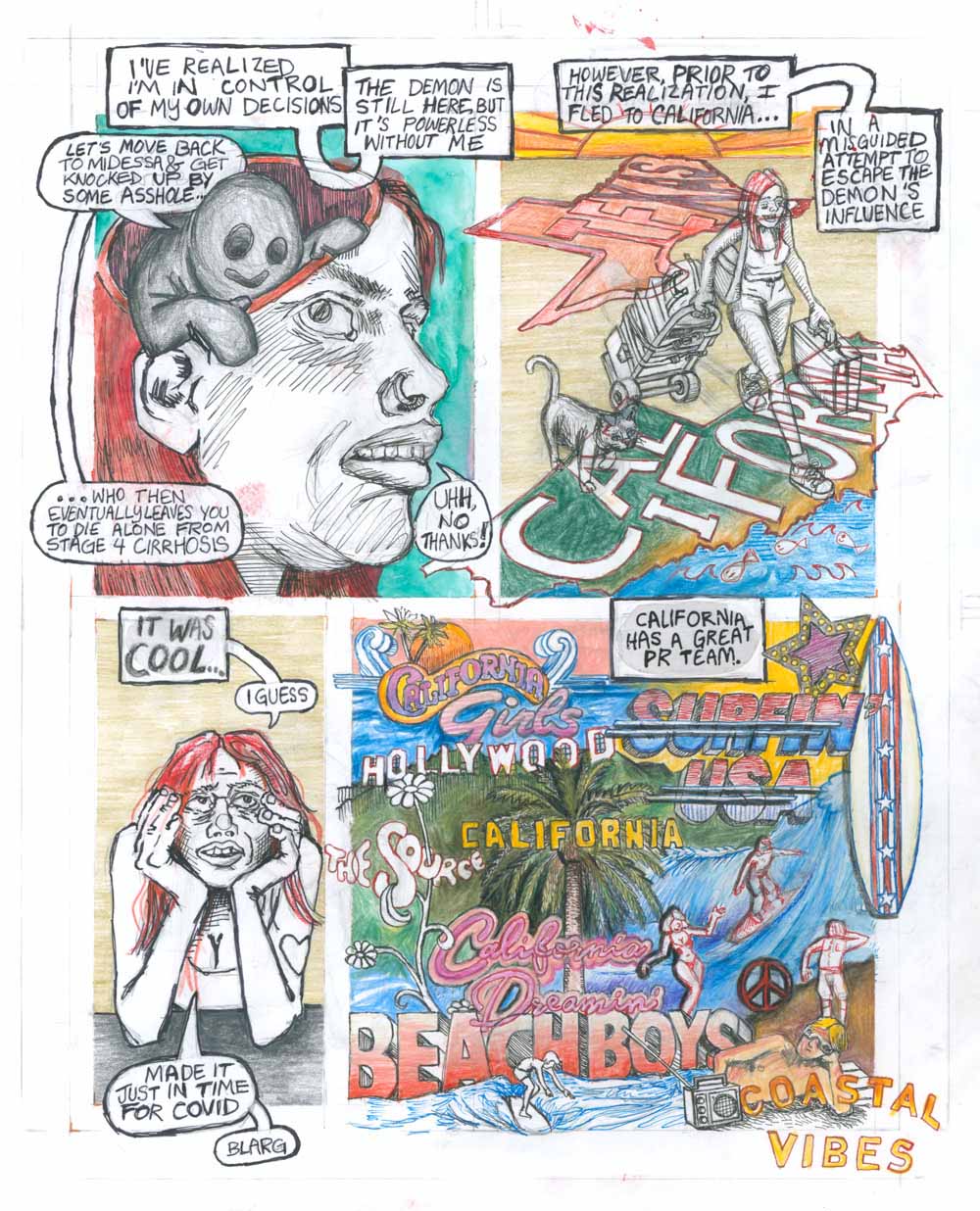
And of course the mural at La Estrella Bakery y Taqueria, a local family owned gem here in Dallas, famous for their delicious conchas. The mural was a community-building initiative that brought several communities together to paint a mural collaboratively designed by the collective, picturing an idyllic class-less socialist society, honoring all workers. I’ve learned so much about politics, the movement, about people, relationships, and about myself during my time organizing. I learned that I have a very hard time saying “no” when people ask me for help, and I have a very hard time asking for help when I need it. This is obviously a combination destined for disaster, so, as many organizers do, I burned out. Liberatory politics will always be part of my artistic practice. But for now, I’m fighting the good fight exclusively through comics, (and on that point, I have a big, exciting project in the works!). I would encourage everyone reading this to get involved in organizing! It’s the most fulfilling thing I’ve done in my life. And it’s a material way you can help change your own circumstances along with your community’s. There’s nothing more empowering, and you might just find your chosen family through it. Just make sure you treat your capacity with respect, and surround yourself with those who do as well.
AO: And, finally, what else are you working on right now both in and outside of comics? Are there any other upcoming projects you can mention?
JAC: As far as projects in the works both in and outside comics, there’s some exciting stuff in the works, but nothing I can talk about at this time! However, I am beyond honored to be appearing as a special guest at Short Run Seattle and also a special guest at Small Press Expo in Bethesda, MD. As far as small stuff goes, I’m managing a zine anthology curation project with some friends. It’s nothing big or non-profit based, as I’ve said, I’m on a break from all that. But I still have time for passion projects! The first issue of the anthology project is called The Beautiful Princess Diaries and the theme is HIGH EMOTION. Basically, the premise is to demonstrate the power of autobiography to process emotions, using the symptom map of Borderline Personality Disorder (also called the Beautiful Princess Disorder) (Stigma, Who’s she?) as a jumping off point. The idea is to demonstrate the universality of high emotions, and how many illnesses like BPD are deeply human. What I mean by that is, BPD is a collection of deeply human behaviors—but in pathological excess. By the time this comes out, I imagine the Open Call will be over, but stay tuned for the next Open Call! It’s a really fun project and I’m so honored so many artists have submitted and poured their hearts out on the page.
Buy Bimbo Agitprop online here
Buy online from Gosh! Comics here
Interview by Andy Oliver
Fantagraphics at 50 Month runs through August at Broken Frontier. You can see articles as they’re published in one tagged list here.