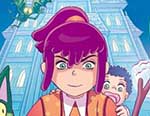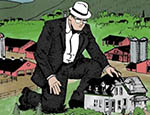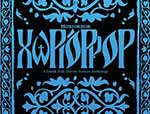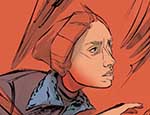


THOUGHT BUBBLE MONTH 2026! Next up in our series of Thought Bubble interviews we’re chatting to a new name on the scene exhibiting in Harrogate this year. Abu Amaan Pal tells us about his creative process, his autobiographical cookery comic Ranna Banna! exploring his experiences of moving from India to the UK, becoming involved in the community, and the Indians for Palestine anthology…
ANDY OLIVER: Let’s start by asking you to introduce yourself to the Broken Frontier audience by telling us about your wider artistic practice and how you discovered comics as a form.
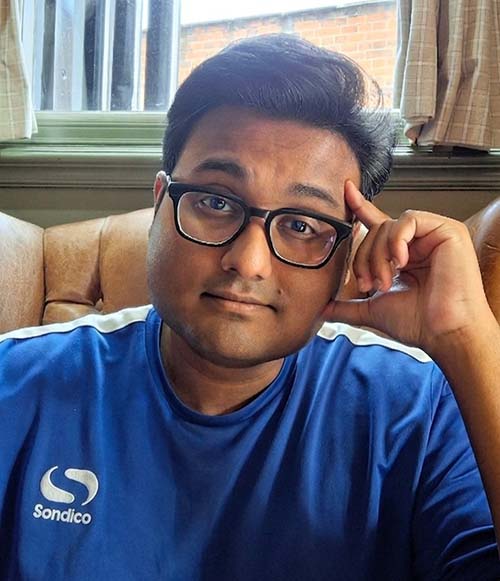
ABU AMAAN PAL: Hello! I’m Abu Amaan Pal, 29, an illustrator, animator and comic creator from Alipurduar, West Bengal, and Jorhat, Assam, India (I’m of mixed heritage, haha! A Bengali/Assamese mix!), currently based in the UK. I recently completed my MA in Illustration at the University for the Creative Arts, and I also volunteer at The Cartoon Museum and The Quentin Blake Centre for Illustration in London, helping out with various events, workshops and educational activities.
I was introduced to comics as a baby through my mother, Shamim Zakia. She had this big, black, hardcover book containing various comics bound together into one enormous, thick volume! That’s where I was introduced to The Phantom by Lee Falk, as well as Mandrake the Magician, Flash Gordon, Joe Kubert’s Tarzan comics, Superman/Batman, The Adventures of Tintin, Asterix and Obelix, Amar Chitra Katha, Raj Comics, Nagraj, Super Commando Dhruva, etc.
She grew up with all these books, which absolutely blew my mind as a baby!!!! The panels, the art, the writing! Oooofffff! I eventually discovered Will Eisner, Daniel Clowes, Alan Moore, Jean Giraud (Moebius), Katsuhiro Otomo, Yoshihiro Tatsumi, Osamu Tezuka, Frank Miller, etc., as I slowly grew a bit older and more awesome, haha! I’m like a walking, talking encyclopaedia of comics and pop culture!
My wider practice also moves between illustration, comics, visual storytelling and personal narrative. I enjoy drawing characters, observing everyday life, and finding little moments that might otherwise go unnoticed. I’m particularly interested in stories that are personal, emotional and sometimes a little funny, because I think life itself is often a mixture of all three.
I was drawn to drawing and illustration first, but comics gradually became a way for me to bring together everything I enjoyed: pictures, writing, humour, movement and storytelling. I love that comics can communicate something through a single image, but can also take their time and allow a story to unfold across several pages. There is something very intimate about that relationship between words and pictures. I’m still discovering what I can do with the medium, and that is probably one of the things I enjoy most about it.
As Alan Moore once observed, “Comics are not a sub-genre of literature or cinema. They are an art form in their own right, capable of doing things no other medium can do.”
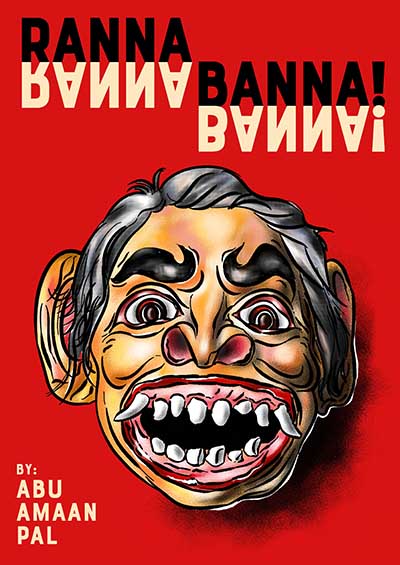
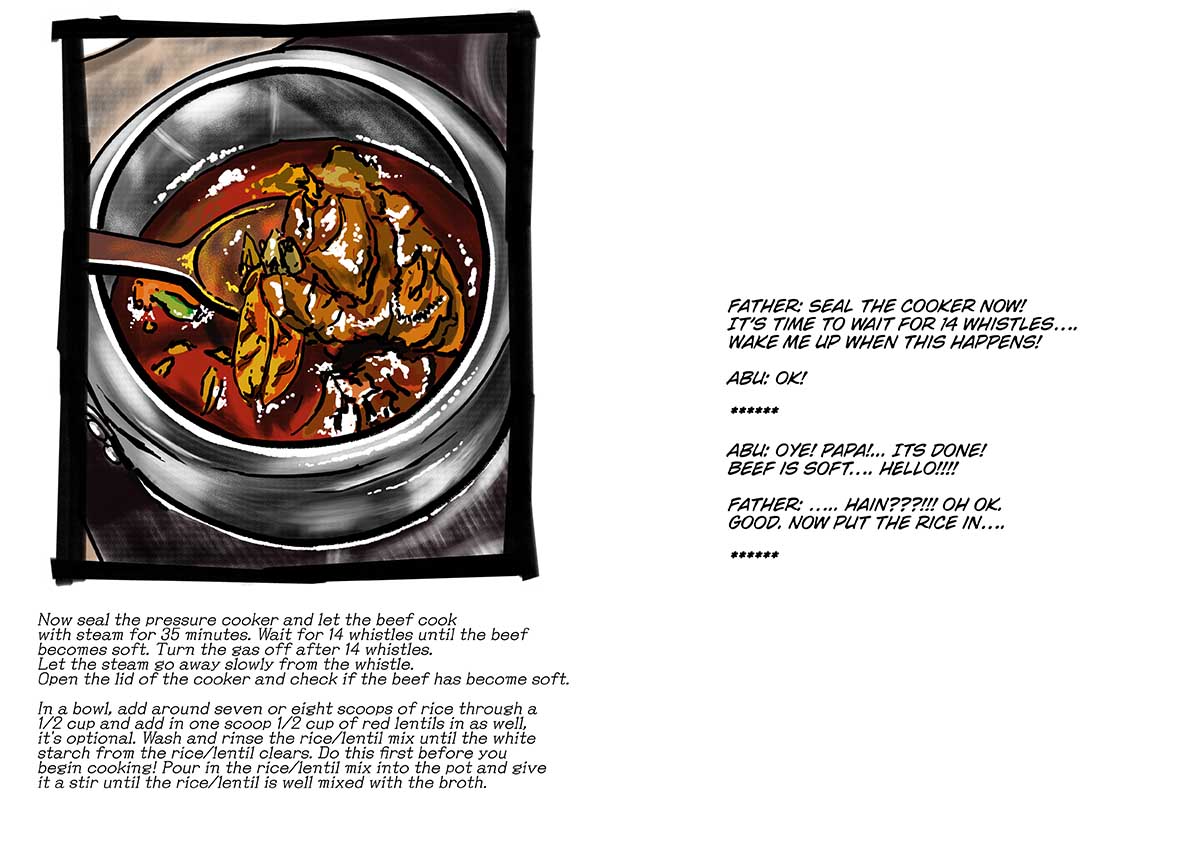
AO: Ranna Banna! is a mix of comics, prose, illustrations and recipes. Why did you take that cross-media approach to the project and can you tell us about the themes you’re exploring in its pages?
PAL: Ranna Banna! began as a project rooted in my own experience of moving from India to the UK for postgraduate study. Before leaving home, I had never really cooked for myself. Suddenly, I was in a student kitchen, trying to make food that I had always taken for granted. I had to learn, sometimes successfully and sometimes rather disastrously! But yeah… I’m an awesome cook these days! I can cook literally ANYTHING, haha! Except baking! I don’t do baking .
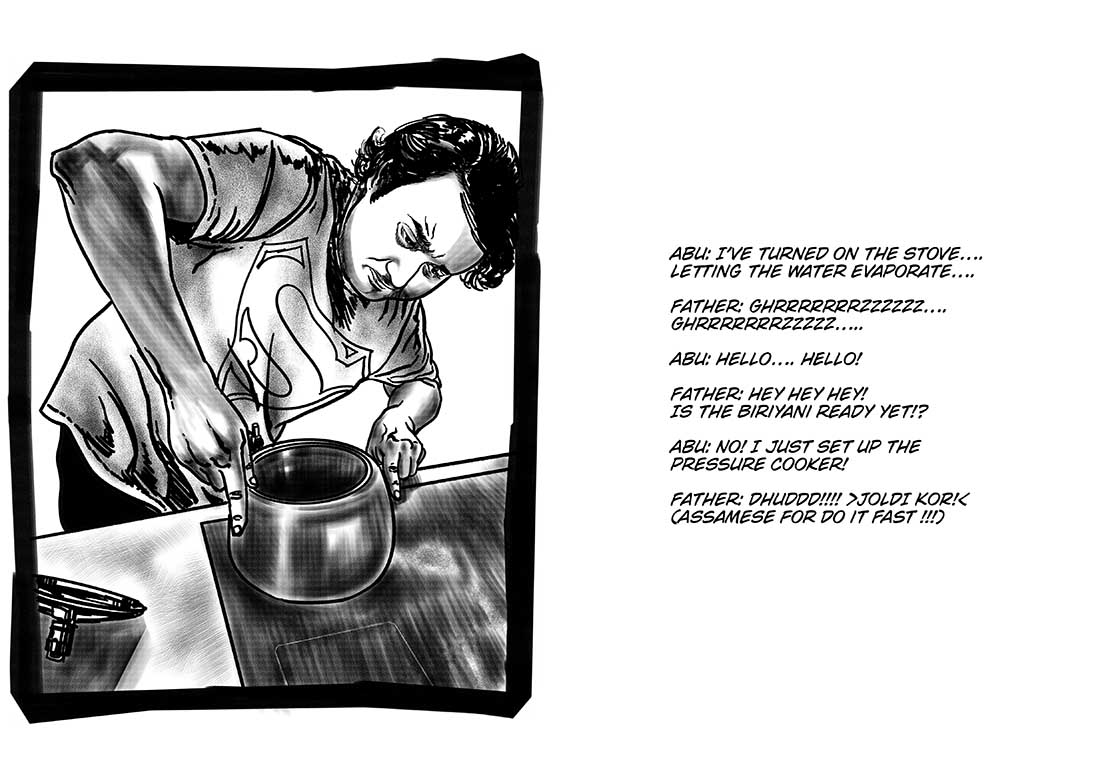
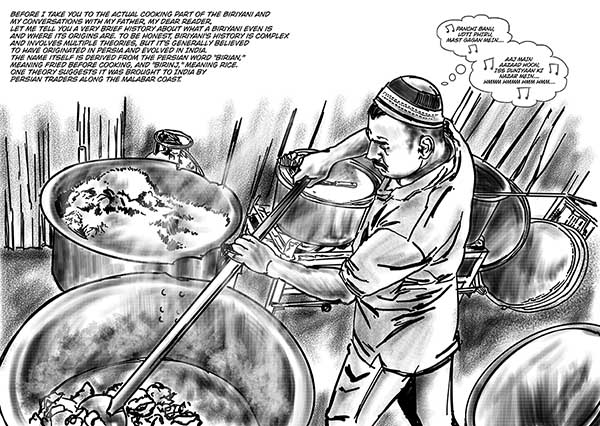
Food became a way of reconnecting with my family, my memories and my Bengali-Assamese heritage. I grew up watching my father cook with enormous, loud enthusiasm and listening to my mother guide me with her gentler approach. When I moved away, I found myself remembering their lessons and trying to recreate those familiar dishes in a completely different environment.
That is why I wanted the book to move between comics, prose, illustrations and recipes. Each form allows me to tell a slightly different part of the story. Comics help me recreate conversations and everyday situations; prose gives me room for memories and reflections; illustrations allow me to explore the visual and cultural world surrounding the food; and recipes give readers something they can actually take into their own kitchens.
But the book isn’t simply about cooking. It is about leaving home, learning independence, homesickness, family, friendship, relationships and trying to understand yourself as you grow older. Food is the thread that connects these experiences. For me, cooking is not just about learning how to prepare a meal. It is also about carrying a little piece of home with you, even when home is thousands of miles away.
These days, I cook Italian cuisine, including various pastas and spaghetti dishes, haha! So simple and so good!
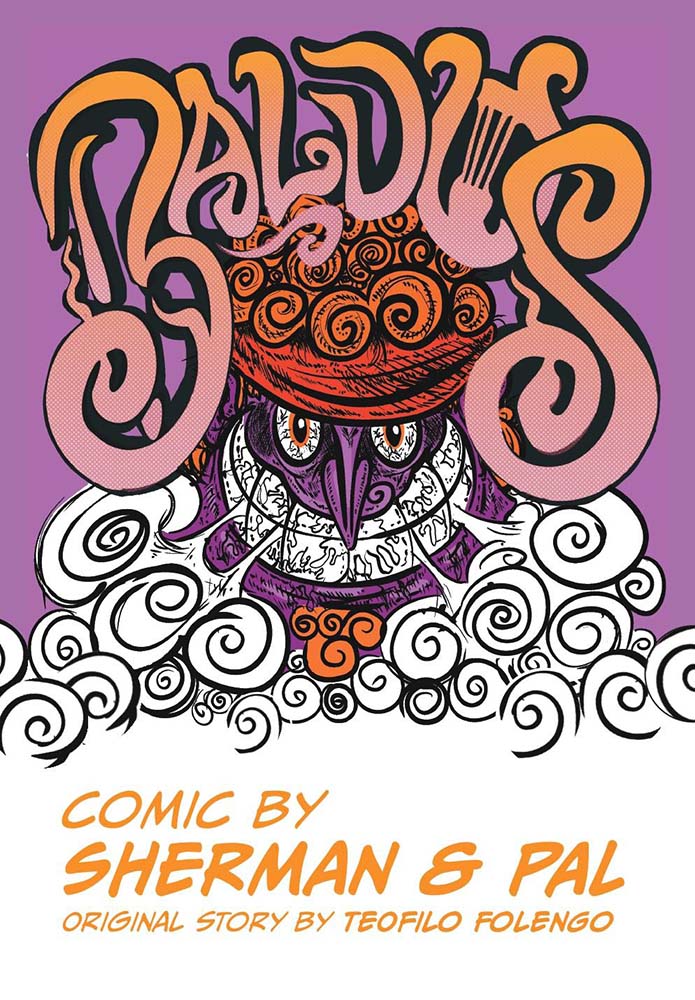
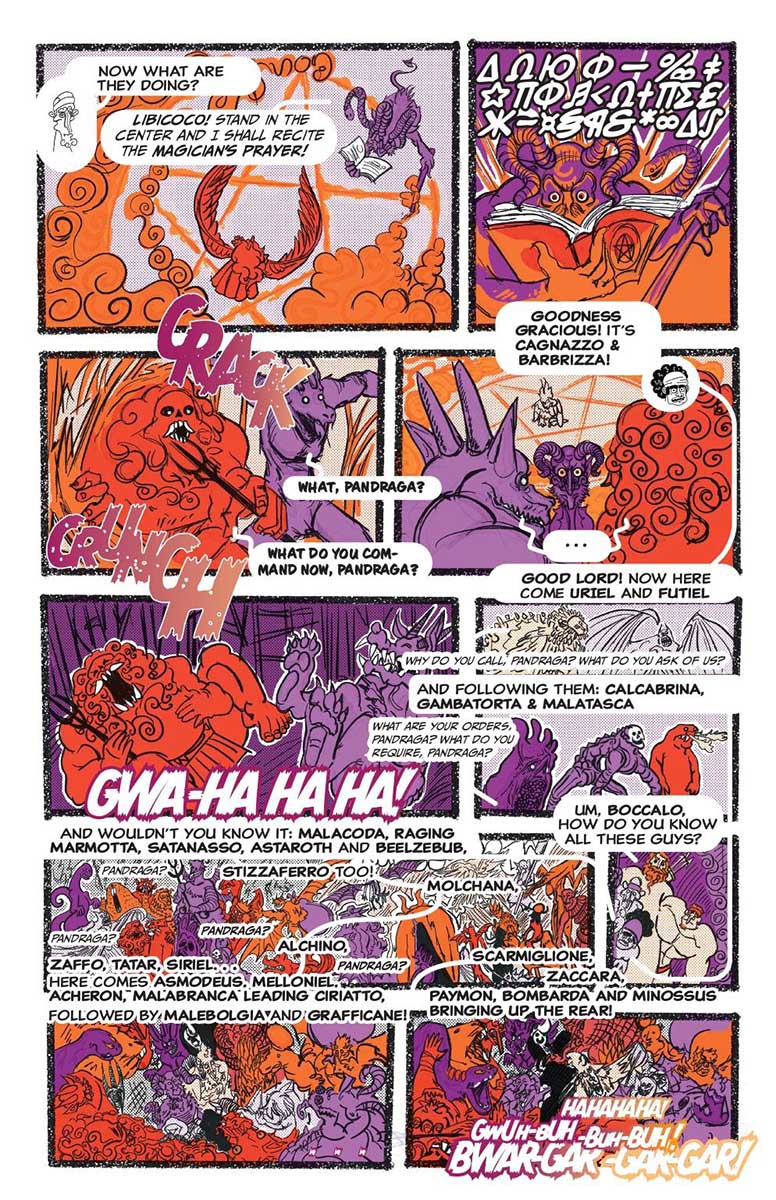
AO: Your comic Baldus is a very different project indeed. What’s the premise of the story and can you talk about how you collaborated with Nathaniel Sherman Windom on the project?
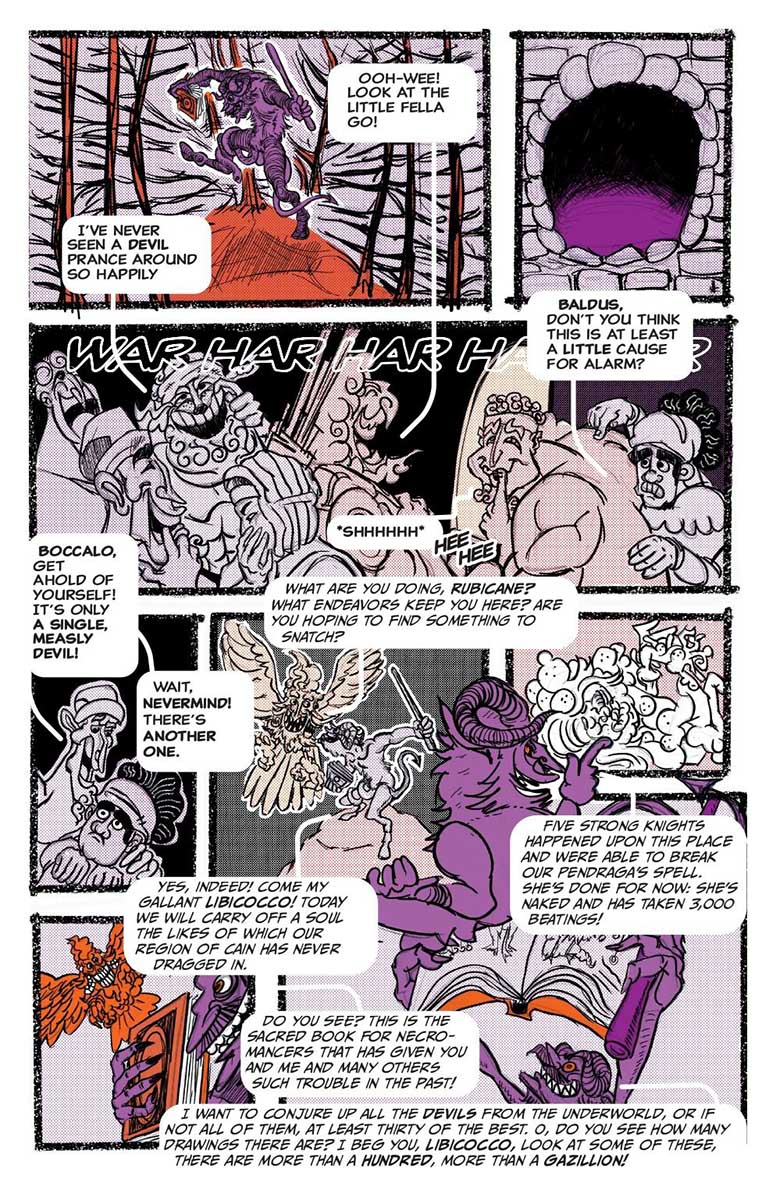
PAL: Baldus was a very different and rather wonderfully chaotic adventure! It is a comic adaptation of a story by the Renaissance writer Teofilo Folengo, translated by Ann E. Mullaney. The pages take us into a fantastical world of necromancy, devils, supernatural characters and absolute mayhem. There is a lot of theatrical energy, exaggerated action and absurd humour in it.
I worked on the project with Nathaniel Sherman Windom, whom I affectionately call “The Shermanator!” He was the one who told me about Teofilo Folengo and his batshit-crazy parody of Dante’s Inferno and John Milton’s Paradise Lost! We approached it as a shared creative adventure, bringing our ideas and enthusiasm to the process of translating this unusual source material into comics. It was a chance to experiment with visual storytelling, character, pacing and the sheer fun of making something a little outrageous. Nathan and I sold copies at Gosh! Comics, and they immediately sold out! We were over the mooooon!!!!!!
What I particularly enjoyed was how different it felt from my more personal work. Ranna Banna! comes from lived experiences and memories, whereas Baldus allowed us to play with a much more fantastical world. It reminded me that comics can take you in so many different directions. Sometimes you are drawing something close to your heart; sometimes you are drawing an army of devils causing trouble!
AO: Tell us about your creative process and the mediums you work in?
PAL: My process usually begins with lots of rough sketches, notes and ideas. I tend to think visually, so I often draw something before I fully understand what I am trying to say. Sometimes the drawing helps me discover the story rather than the other way around. I also keep sketchbooks and notes, which often become little collections of observations, conversations and visual ideas.
I go around various pubs and draw people from all walks of life. Eddie Campbell is one of my all-time biggest influences when it comes to this because I, in a way, modelled my ever-transforming art style on his heavy, scratchy pen-and-ink style of drawing people and other things! I mostly enjoy drawing humans, haha! Sean Phillips is also one of my major creative influences. I met him and his son Jacob Phillips a few months ago, and they were both so lovely and influential. Hope to see them again at Thought Bubble!
I tend to write a lot of prose and record video anecdotes and stories for my Instagram Story feed, which my followers often read and really enjoy. People who have been following my Instagram for many years often come up to me and say, “We love your stories so much! My friends and I really love going through your life! It’s like a TV Dramedy!” Haha! I view my life as a coming-of-age/slice-of-life drama that people get to follow through my Instagram Stories!
I work digitally as well as with traditional materials. I enjoy using digital tools because they give me flexibility, especially when developing comic pages, but I also love the texture and unpredictability of traditional brushwork, ink and watercolour. I don’t want everything to look too polished or perfect. I like a little roughness, spontaneity and personality in the finished work.
For comics, I spend a lot of time thinking about pacing: what should be shown, what can be left unsaid, and when a reader needs a moment to pause. I suppose my process is a mixture of planning and happy accidents. I like having a direction, but I also enjoy being surprised by the work.
AO: You’ll also have copies of the Indians for Palestine anthology at Thought Bubble. How did you become involved in that project and what are its aims as a collection?
PAL: I’m very grateful to have contributed artwork to Indians for Palestine: Comics of Solidarity. It is an important project because it brings together comics and cartoons by Indian artists, creating a collection of voices expressing solidarity with the Palestinian people and their struggle for peace and justice.
Sanid Asif Ali, the editor of the anthology and a great friend of mine, was someone I approached by sending him my portfolio because I wanted to be part of this grand initiative. He was on board with my art style from the very beginning! I contributed my artwork to Aparna Kapur’s story, which also happens to be the first chapter/segment of the anthology itself. Her short story was very emotional and really helped me structure the layout in a very simple manner, using a bit of digital collage with real-life photo references, a technique a lot of artists use.
Nathan (Nathaniel) happily contributed by lettering the whole chapter/segment, and the entire team at IFP (Indians for Palestine) loved it! I included him as our most esteemed Honorary South Asian collaborator from the far reaches of West Virginia, USA , since he’s the only American teammate, haha!
For me, being involved was a way of using the medium I care about to contribute to something beyond my own personal work. Comics are often thought of as entertainment, but they can also document, question, remember and give people a way to express their response to what is happening in the world. I think there is real value in artists coming together and using their different visual languages to speak about humanity, dignity and solidarity.
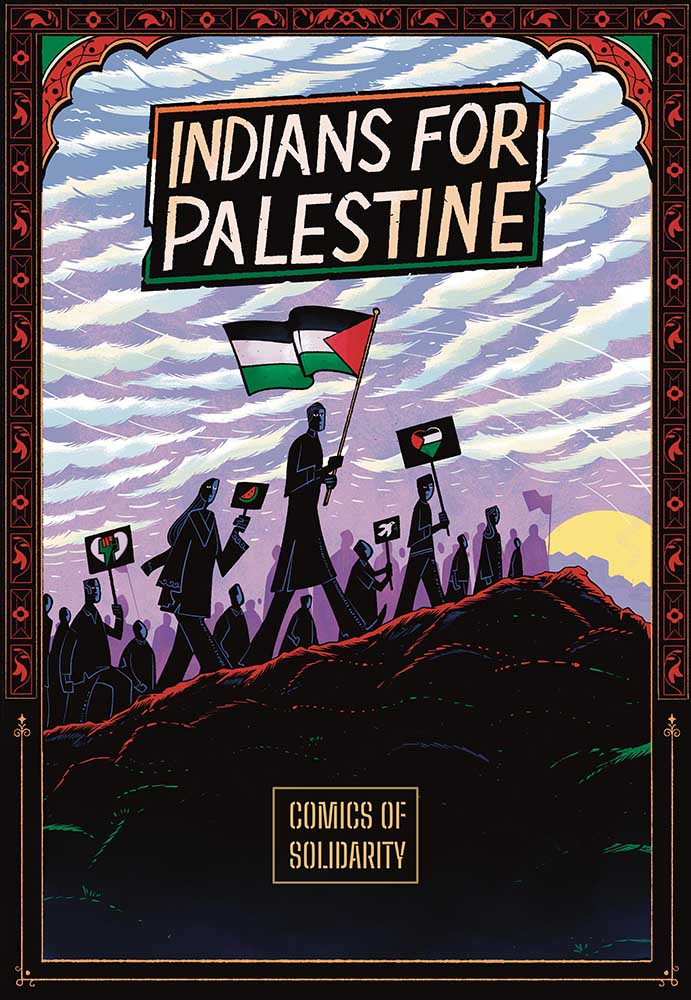
What I appreciate about the anthology is that it brings these contributions together in a physical book, rather than allowing them to exist only as separate images online. It gives different Indian voices a shared space and allows readers to encounter a range of artistic responses. The project also has a charitable purpose, with its net proceeds going towards a Palestinian cause. I hope the book reaches many readers and encourages people to keep looking, listening and caring.
AO: As a newer voice on the scene what advice would you give to emerging creators about getting your work seen and building an audience?
PAL: I’m still figuring this out myself, so I’m not sure I am qualified to give anyone a grand formula! But I would say: make things, share them, and try not to wait until you think they are perfect. I spent a long time feeling that my work needed to be better before I could show it to people. I’ve gradually learned that sharing work is also part of learning.
Find your community, go to comic festivals, meet other artists, TALK TO PEOPLE (V.V. IMP!), support their work and be open to collaborations. Some of the most encouraging experiences I’ve had have come from conversations with other creators and people who genuinely care about comics.
Volunteering at The Cartoon Museum and The Quentin Blake Centre for Illustration has also helped me feel more connected to the comics community. Gosh! Comics and Forbidden Planet have been a big help in my life as a creator, too, although I mostly go to the latter to buy craploads of action figures … Mostly Superman. I’ve loved him ever since I was a tiny speck of a cell!
I would also say that you don’t need to have everything figured out at the beginning. Your style will change, your interests will change, and some projects will work out differently from how you imagined. That’s alright. Keep making work that means something to you, be kind to other creators, and remember that building an audience takes time. A small group of people who genuinely connect with what you make can be a wonderful place to start.
I could also say this, though… Use your Natural Charm and let your skills and talent in the medium… shine and speak for you to the lovely people of this beautiful community. It worked for me, haha! I do happen to be a very shy person myself!
AO: And finally what’s next for you, Abu? What else are you currently working on?
PAL: At the moment, I’m developing a full-length graphic memoir that grows out of the experiences behind Ranna Banna!, but takes the story further. It explores moving away from home, growing up, family, friendship, love, loneliness and the strange uncertainty of trying to build a life in a new country.
Over the past couple of years, life has brought some lovely experiences as well as some difficult changes. I’ve had to navigate personal disappointments, the ending of important relationships and some uncertainty around work and what comes next. I don’t necessarily want to turn all of that into a sad story. I’m more interested in being honest about how life can be difficult and still contain kindness, humour, unexpected friendships and reasons to keep going.
I got heavily encouraged and received his blessings from none other than Craig Thompson himself to go for it and draw/write the book! He’s like my second father figure, as he’s closer to my father’s age, hehe! A mentor from afar! Stephen R. Bissette, yup, that Steve Bissette of Swamp Thing fame, has all of my comics that I posted to him. I’ve known him for six or seven years at most through Facebook and many, many Zoom calls. He gave me his full-on blessings for my personal project as well! My very first mentor! Hannah Berry has also been very vocal and supportive of my venture into this book. Bobby Joseph as well. Katriona Chapman!! And a whole caboodle of other huge legends in the medium of graphic memoirs have given me their blessings to do this book, including my bestie, Nathan.
I’m also continuing to draw, make smaller comics, explore collaborations and find ways to become more involved in the comics community. Exhibiting at Thought Bubble is something I’m really looking forward to, and I’m excited to meet readers and fellow creators, you know… charm them, hehe!
I suppose the biggest thing I’m learning is that you don’t have to have your entire life mapped out to keep making things. Sometimes you just have to take the next small step, make another drawing, cook another meal and see where it takes you. There are still so many stories I want to tell, and I feel very lucky that I get to keep trying.
I believe in The Fate of The Artist, as Eddie Campbell described it in his graphic memoir from the mid-2000s. What’s my destiny going to be like in an uncertain world as an up-and-coming artist?…. I leave that to Fate and the Universe…. Or me! Haha!
Interview by Andy Oliver
Abu Amaan Pal is at table C21a in the 2000 AD Hall at Thought Bubble.
Thought Bubble 2026 runs from November 9th-15th with the convention weekend taking place on the 14th-15th. More details on the Thought Bubble site here.
Read all our Thought Bubble 2026 coverage so far in one place here.
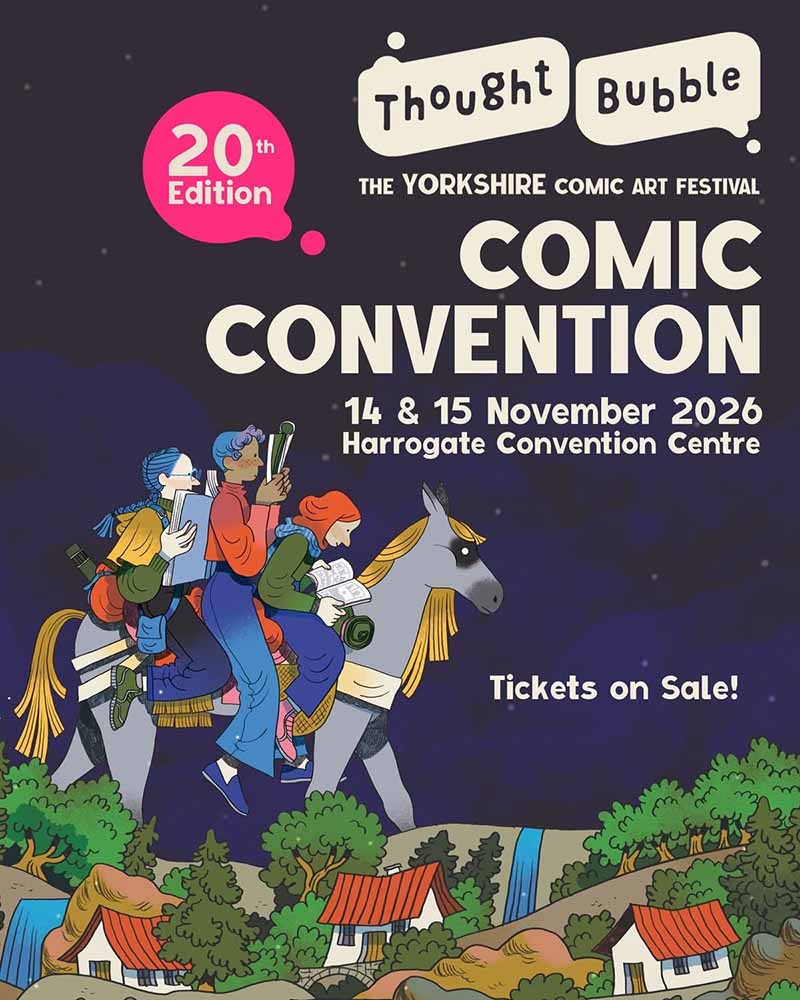
Poster art by Núria Tamarit