

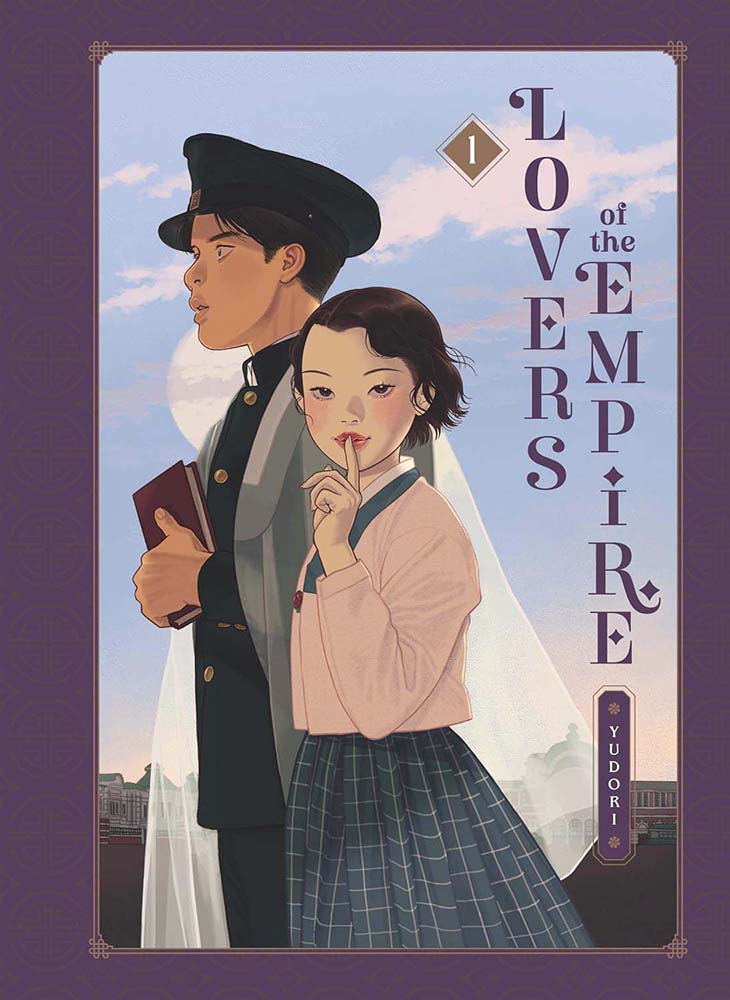
FANTAGRAPHICS AT 50! The 1920s in occupied Korea saw the beginning of Japan’s bunka seiji, or cultural policy. Behind a veneer of modern progress, Koreans were allowed more freedom of speech, to dress in traditional clothing, and publish Korean newspapers. It is within this volatile melting pot of Gyeongseong, as Seoul was known in 1929, that Yudori sets her lush, brilliant manhwa, Lovers of the Empire.
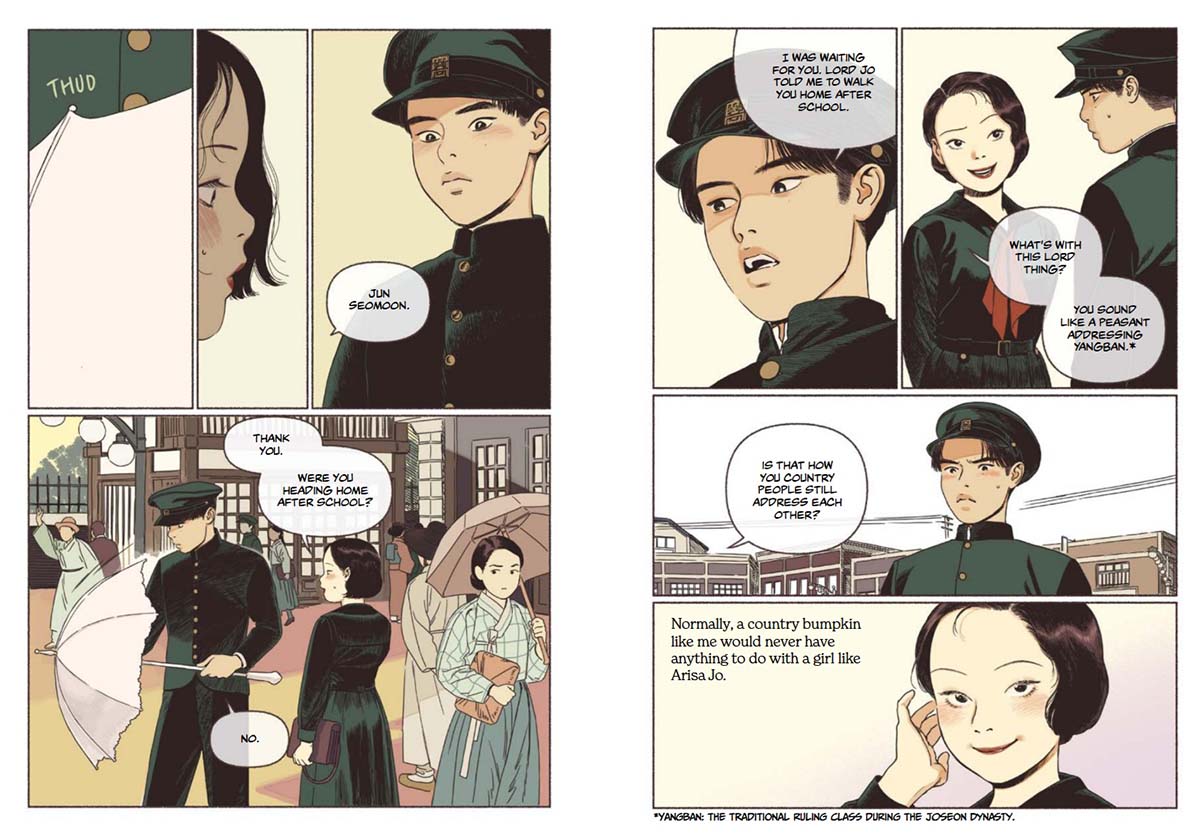
The story follows Arisa Jo, the spirited daughter of a prosperous businessman, and Jun Seomoon, a boy from a humbler background. Jun is tasked with being Arisa’s companion and bodyguard. He accompanies her everywhere from her school to shopping in department stores. In the process, Jun finds himself in unfamiliar territory and company, unused to riches and refined society. Despite their personalities and backgrounds being polar opposites, they slowly become attracted to each other. Through shops and cafés, and changing fashions and customs, Yudori reconstructs a Korea suspended between the rigours of occupation and modern aspirations.
Like her debut Raging Clouds, Yudori approaches history through the stories of ordinary people rather than tracing specific historical events. The political realities of Japanese occupation are ever-present, but they emerge through everyday encounters. Colonialism is seen in the languages people speak on the streets, the clothes they wear, and in everyday social interactions. Yudori allows the setting to expand and crystallise along with the story until the social and political landscape becomes as important as individual characters.
Arisa and Jun are colourful contrasts. Arisa embraces new ideas with enthusiasm. Confident, impulsive, and curious, she embodies a cosmopolitan Seoul. Jun is from the countryside, a world that believes in caution and one that is used to obligation. Their differing backgrounds attract them to each other as each learns to interpret the other’s perspective.
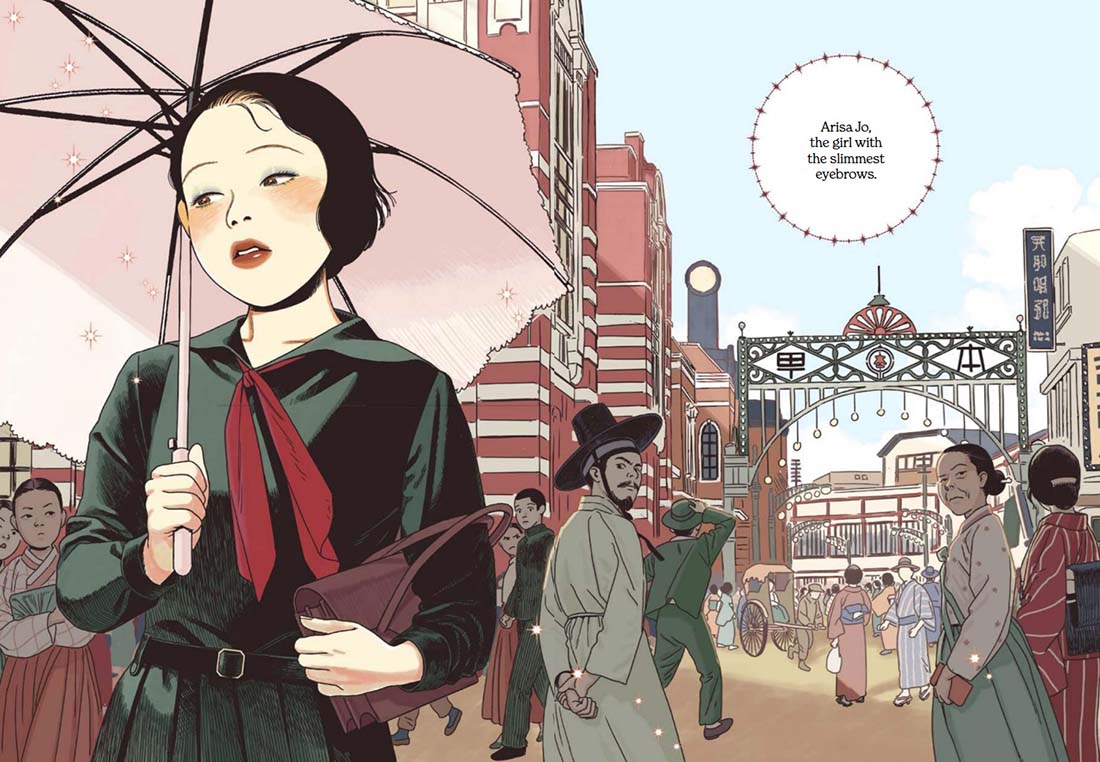
While romantic tension simmers beneath their interactions, it does not dominate the narrative. Yudori does draw on their relationship but uses it as an anchor to examine class, colonial rule and cultural dynamics. Aspects of Korean culture are revealed through architecture, transport, and changing social customs accompanied by explanatory notes at the end of chapters.
Yudori’s illustrations complement the backdrop with so much elegance that some panels look like postcards. Urban spaces like street scenes and storefronts are finely detailed, exuding the art deco style that was prominent at the time. The costumes are similarly portrayed with a sharp eye towards maintaining historical accuracy. The characters are drawn with vivid colours and expressive faces, beautifully enhancing the text.
As with Raging Clouds, Lovers of the Empire too centres on protagonists negotiating restrictive social structures, while striving for personal freedom. But in this work, there’s a noticeable shift in emphasis. Where Raging Clouds was driven by emotional conflict and symbolic imagery, Lovers of the Empire derives much of its power from observation.
Lovers of the Empire reminds us that history is built from ordinary lives as much as extraordinary events. With this first book in a series, Yudori has laid some solid groundwork for the volumes to come.
Yudori (W/A) • Fantagraphics Books, $29.99
Review by Swati Nair
Fantagraphics at 50 Month runs through August at Broken Frontier. You can see articles as they’re published in one tagged list here.