

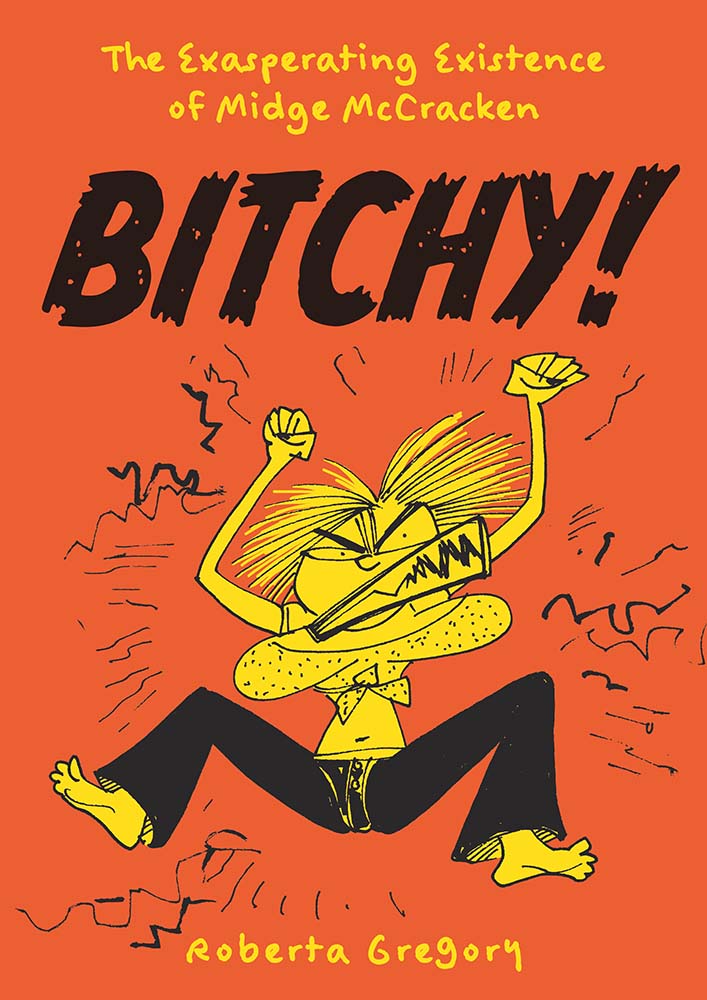
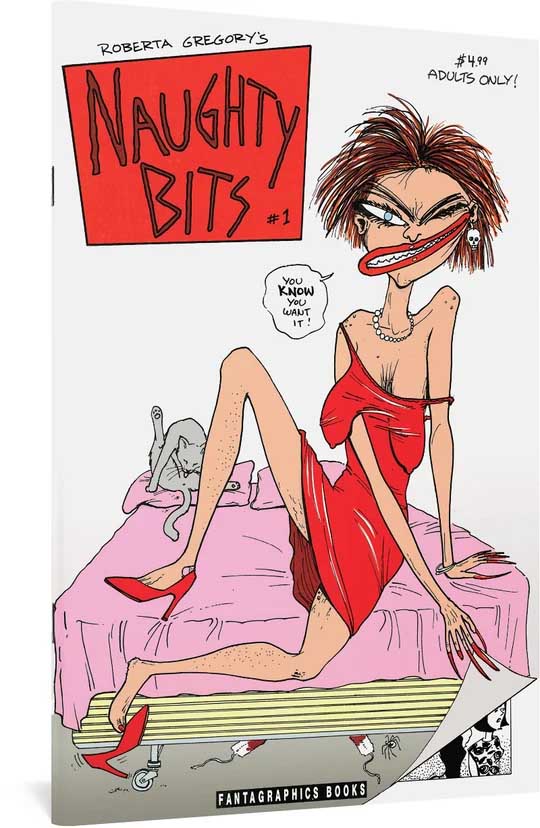
FANTAGRAPHICS AT 50! Fantagraphics describe Roberta Gregory’s Bitchy! The Exasperating Existence of Midge McCracken as collecting “one of the most influential, feminist comics series.” Presenting the character’s life for the first time in a chronological rather than publishing order it compiles hundreds of pages of classic material from the pages of Naughty Bits. As part of our Fanta 50th anniversary celebrations at BF we chat with Roberta today about the curatorial aspects of the collection, her place in the underground comix scene, and the origins of Midge McCracken…

ANDY OLIVER: You’re associated with a number of firsts in comics including Dynamite Damsels, the first continuing self-published comic by a woman, and Naughty Bits becoming the longest running alt comic from a woman cartoonist. What was your introduction to the underground comix scene? And were you aware at the time of the trail you were blazing?
ROBERTA GREGORY: Well, Dynamite Damsels, celebrating its 50th anniversary this year, was really a one-off comic book, not a continuing series, though I did draw some stories for a sequel I never finished. It originated with a comic strip, “Feminist Funnies” I’d created for my university’s Women’s Resource Center in 1974. I grew up reading comic books during the late 1950s and 1960s. My dad, Bob Gregory, wrote and drew comics for Dell and Gold Key comics, mostly the Donald Duck universe.
I read all of those, plus the Superman universe, Archie, Little Lulu, Spider-Man and much more. For some reason, comic books seemed to be “man’s work” in those days: women’s names weren’t ever associated with them. I wrote and drew my own attempts at comics stories during my childhood and adolescence but never dreamed I would ever be published. But when I left home and moved to the city in 1971, that all changed. I discovered Underground Comix and some of them, like Wimmen’s Comix and Tits and Clits, were all the work of women, in a dazzling variety of art and storytelling styles.
It was such a revelation! From the beginning, I was pretty much writing the types of stories that I wanted to read, but which nobody else seemed to be creating. I would say that’s been the story of my creative life, so in retrospect, I guess it could be considered trailblazing. That sounds far more impressive than “writing weird stuff that most people aren’t ever going to want to read.”
AO: As mentioned you were involved with two seminal underground anthologies in Wimmen’s Comix and Gay Comix. How did your involvement with both come about and, in retrospect, how influential and important were they both as platforms that others could build on?
GREGORY: I wrote to the Wimmen’s Comix Collective in 1974 and sent them stories, some of which were published. In 1979, I believe, I received a letter from the first Gay Comix editor, Howard Cruse, soliciting contributions to a new anthology with a format inspired by Wimmen’s Comix; he’d written to people known for their comics featuring what we now call LGBTQ content. He wanted the pages equally divided between female and male creators, and since I was one of the very few women writing these sorts of stories back then, I appeared in all of the first several issues, and wrote longer pieces, up to 6 pages or so. In Wimmen’s Comix I was lucky to get one or two pages, if that. I think a lot of Indy and underground creators got their start in these anthologies; when Tits and Clits became an anthology, I contributed to that title, too.
AO: Can I ask you about the genesis of Midge McCracken as a character. What was she a reaction to at the time?
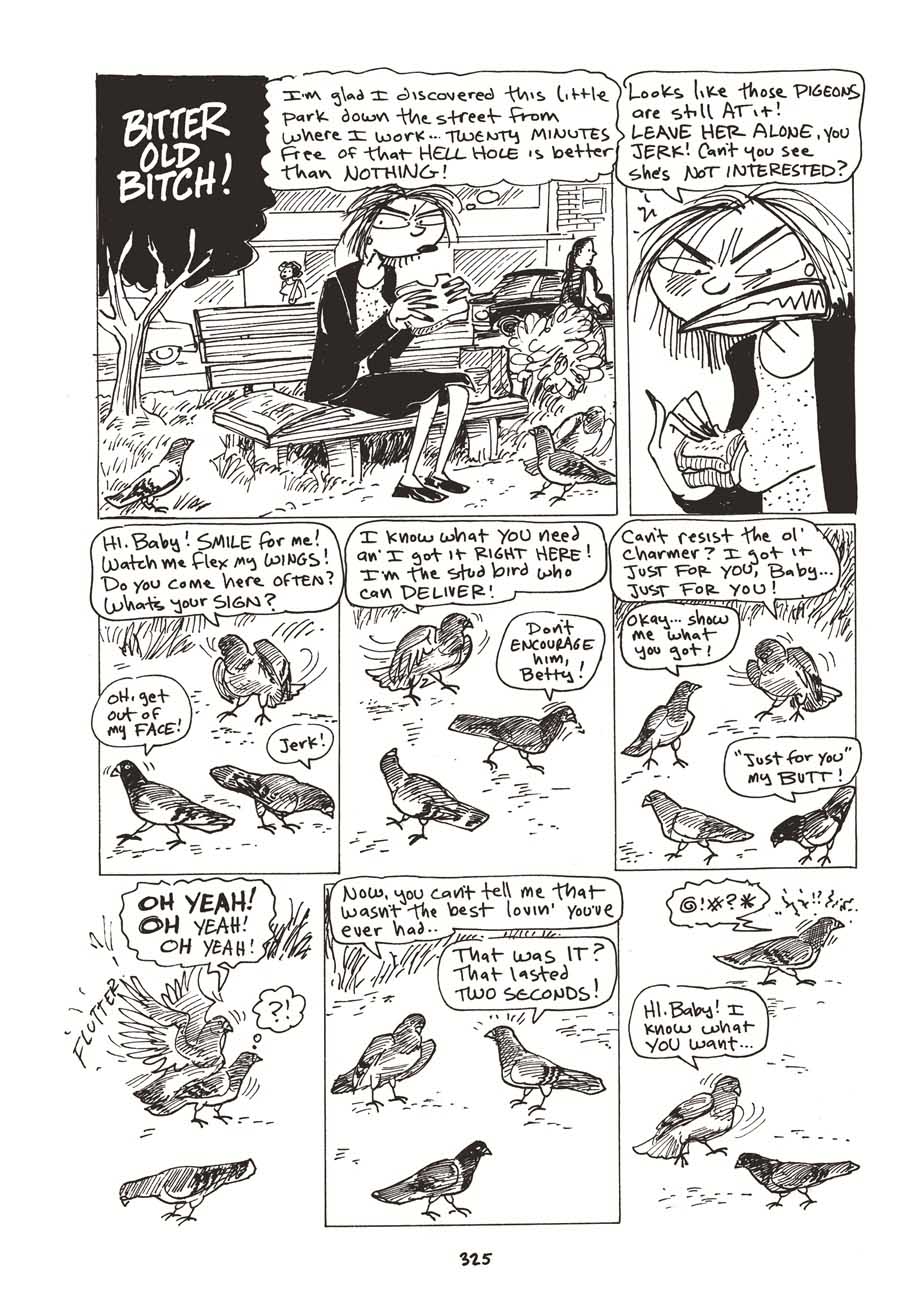
GREGORY: Midge started out as a joke, really. I drew a story for Fantagraphics’ Graphic Story Monthly anthology in 1990, in which I used six panels to poke fun at the 1980s style of angsty, “ugly art” comics, featuring a miserable, horribly drawn woman complaining incessantly, kicking a small child, then stomping her little dog to death. I called her Bitchy Bitch because I thought that, when Pete Bagge’s bratty “Girly Girl” character grew up, she’d be a “Bitchy Bitch.” (For a while, people seemed to assume that I had named her after “Richie Rich” but that wasn’t the case at all. Even as a child I loathed Harvey Comics; when you’re eight years old and reading Uncle Scrooge, you have pretty high standards.)
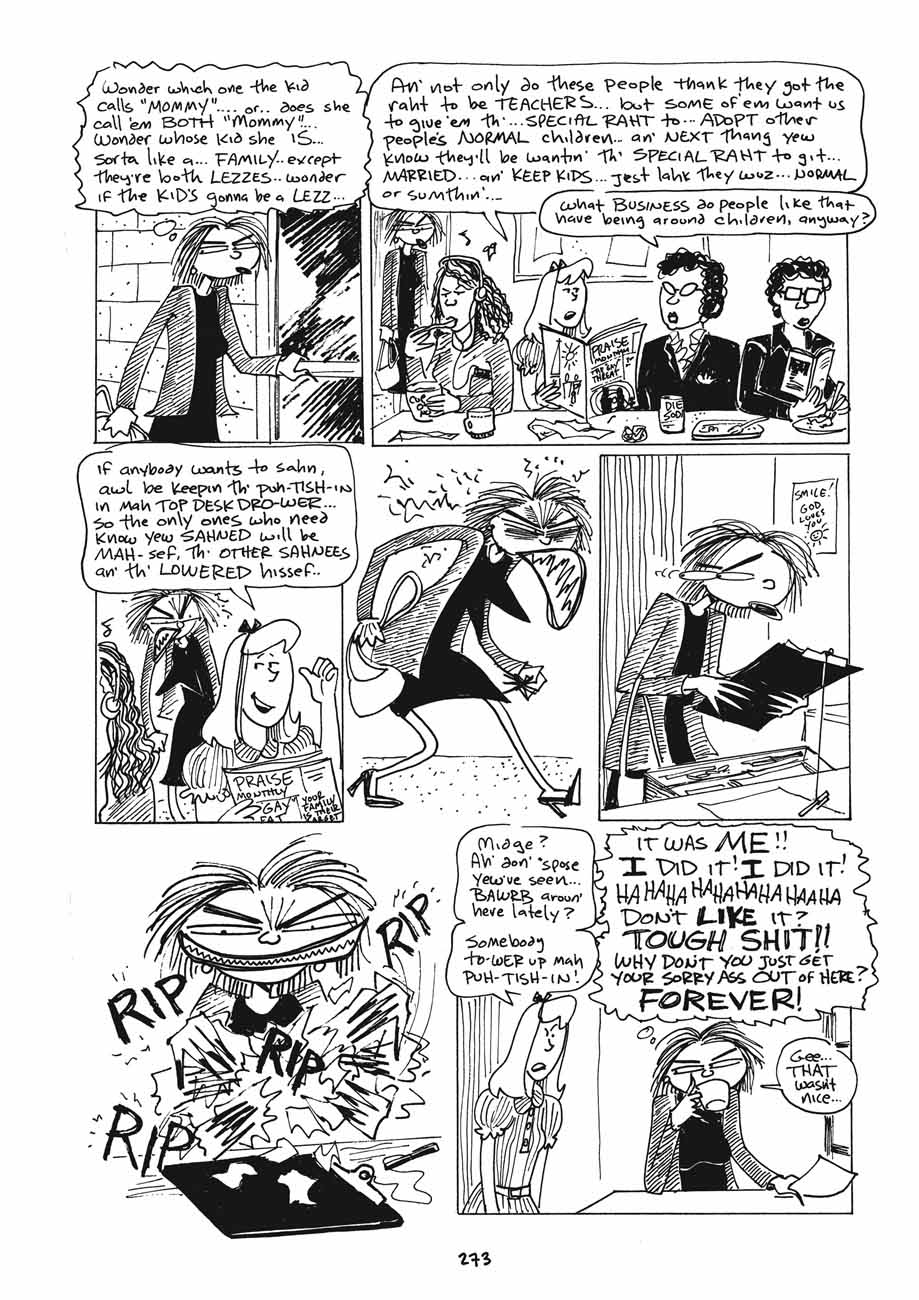
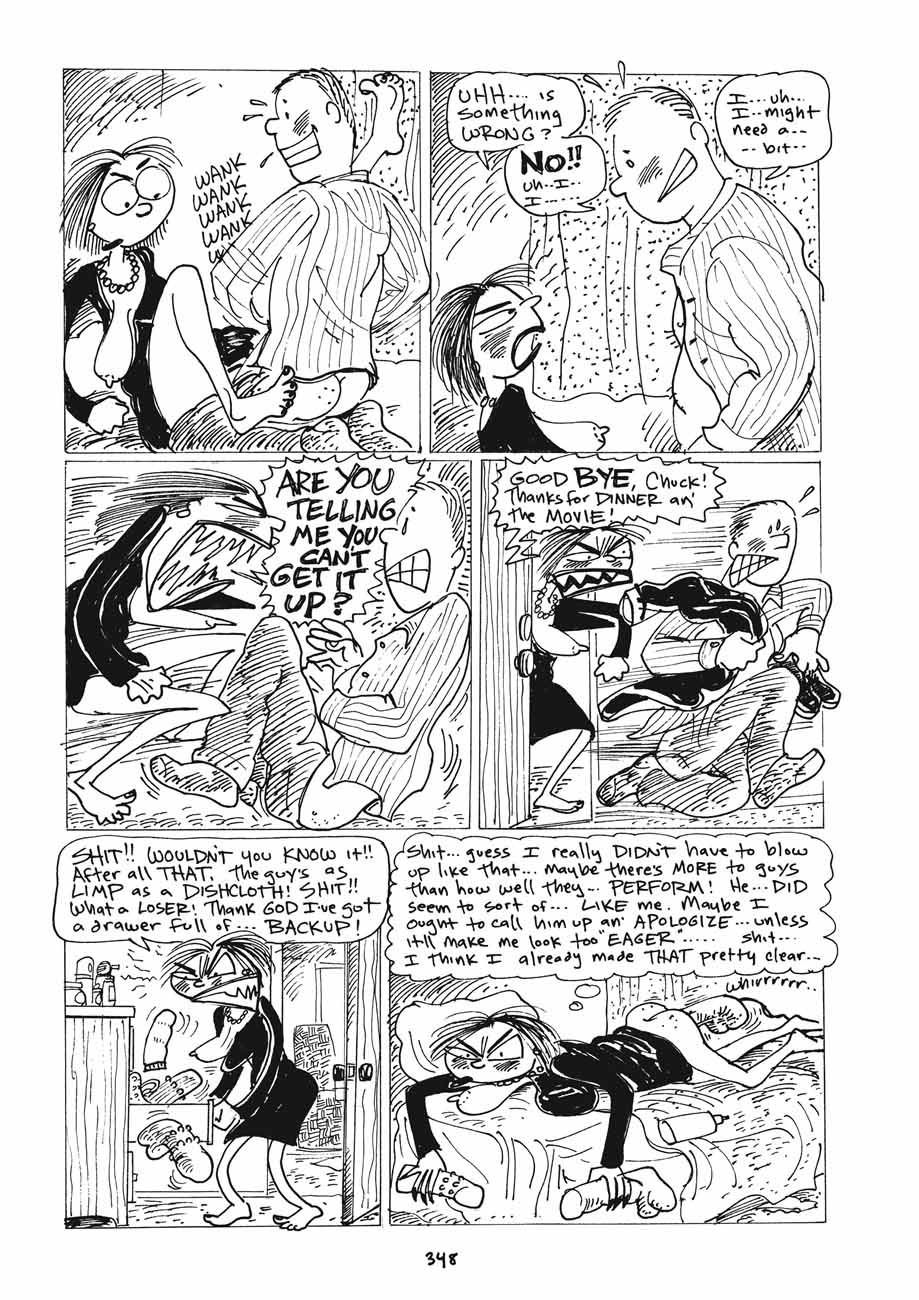
I thought those wretched little panels were the last I’d ever see of Bitchy Bitch, but then I drew a mini comic story about her taking over my job as a pasteup artist at Fantagraphics, and later on she became a last-minute addition to the first issue of Naughty Bits. Gary and Kim invited me to do a comic book for Fantagraphics, which I assumed would likely be a one-off. I envisioned a collection of cheeky and sexy pieces (hence the title), and I had some stories already drawn, but to replace one that wasn’t all that great I decided to send my hideous “Bitchy” character on a date from hell: horribly explicit sex with a repulsive partner, after which her car is stolen, ad nauseam.
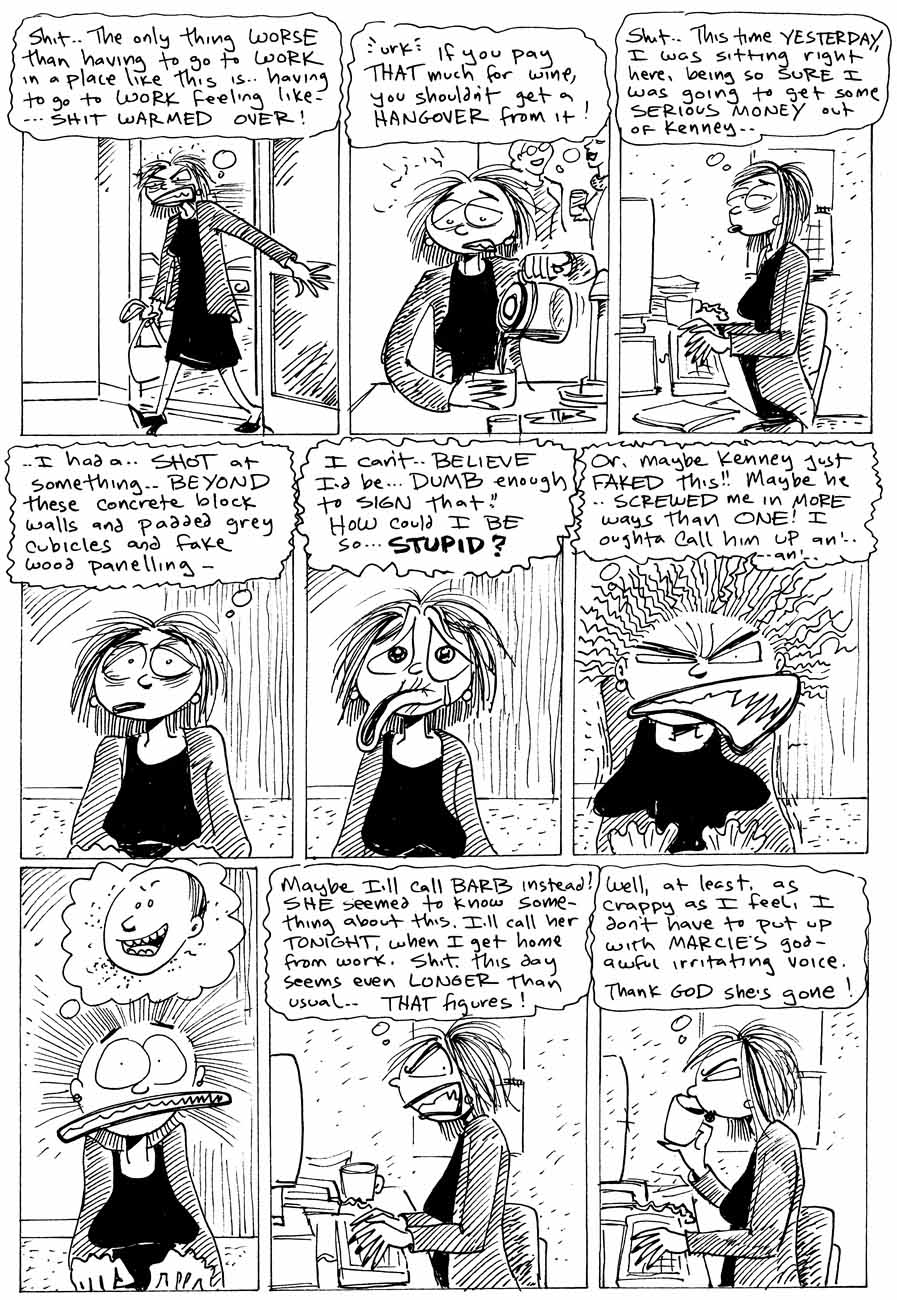
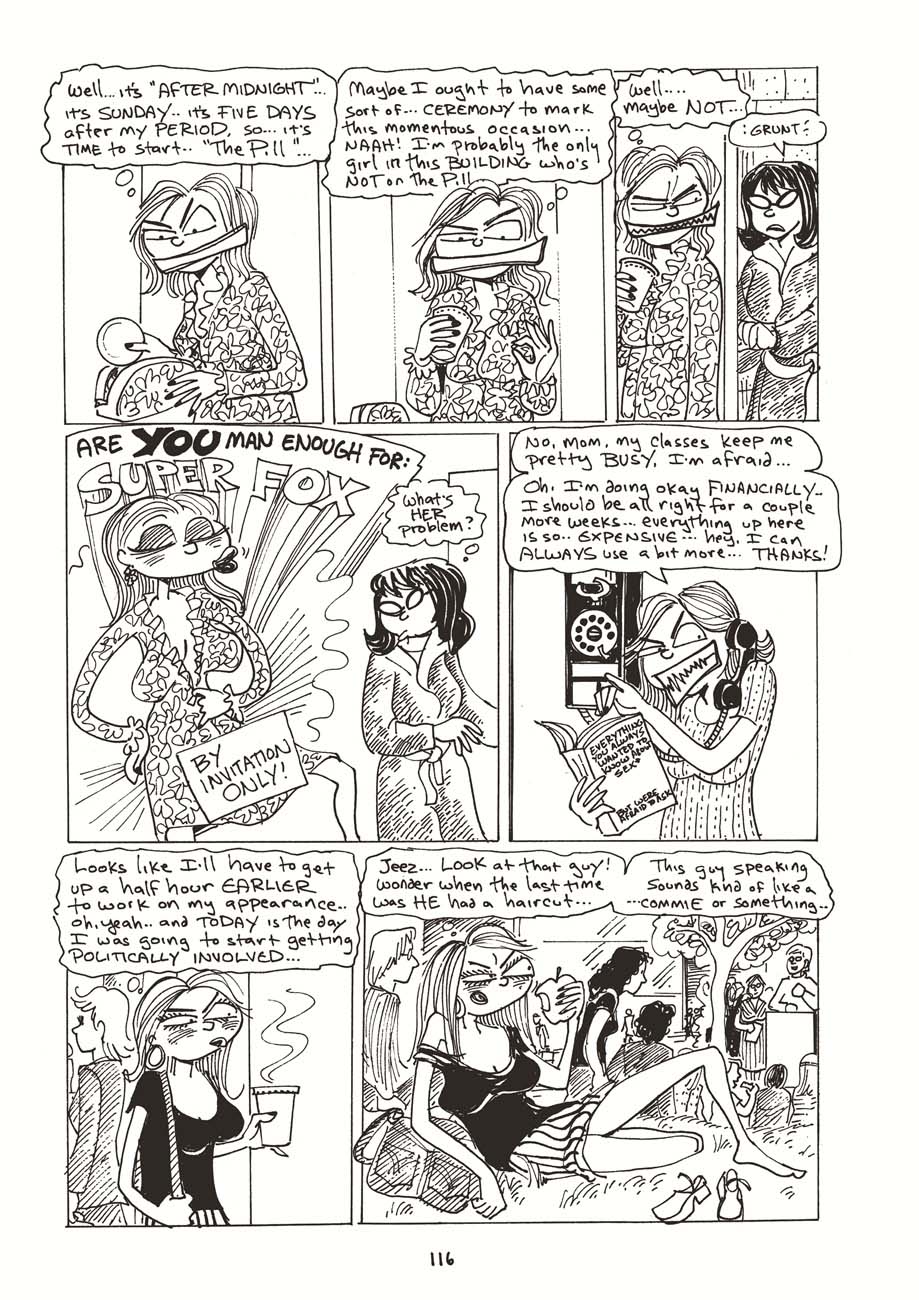
Again, I thought I’d seen the last of her, until I was invited to do a second issue of Naughty Bits. And then I really began to wonder what might make someone end up like this. I am much more of a novelist at heart than a gag cartoonist. So Midge had a pushy, manipulative mother and a soul-crushing job in the second issue, and a horrible childhood by the third.
AO: Does the world of Bitchy Bitch feel as relevant to you now now as it did at the time, given how finding humour in the bleak is something we all find ourselves engaged in more than ever in 2026?
GREGORY: Bitchy’s “present day” low-tech world is definitely dated, but human nature and self-sabotage and dysfunctional relationships haven’t changed all that much. Here I thought the late 1990s were grim times, and that “Dubya” was a miserable excuse for a president! It does put things in perspective, doesn’t it? Perhaps Bitchy Bitch might fit into our current era better than I expected.
AO: What’s fascinating about Bitchy! The Exasperating Existence of Midge McCracken is the curatorial aspect of it. This is more a reordering of the original material to create a linear narrative as it is a collection. Did that process give you any new perspectives on Midge’s story?
GREGORY: Yes, given how haphazardly I filled those 40 issues of Naughty Bits while working day jobs and simultaneously creating other large projects (observe the dates on some of the stories), rearranged into the chronological order of her life the storyline seems remarkably cohesive. Midge does evolve from a two-dimensional character to someone quite a bit more complicated, sometimes motivated to do the right thing (up to a point), despite her negative conditioning (brought on by all the crap I shamelessly flung her way in some of the earlier episodes).
It could just be that I like a good story, and there’s nothing more tedious than a predictable protagonist: everything I create is first and foremost for my own enjoyment. I should add that a few of the earlier, less cohesive stories were left out, as well as two later stories that seemed irrelevant or redundant, though one was a favorite of mine: Midge in the fourteenth century, accused of being a witch, of course.
AO: Collections like this aren’t simply for the long-time fans and aficionados. They’re also about bringing historically important work like this to audiences unfamiliar with it. With that in mind what are you hoping a new readership will be taking from its pages?
GREGORY: Considering the last issue of Naughty Bits was published over twenty years ago, in a press run of a few thousand and available largely from comics retailers in a world where social media was far less pervasive than today, there’s a whole lot of people totally unfamiliar with Midge’s story. (There was a short-lived animated cartoon featuring her on cable TV in the early 2000s, which I had little to do with.) I hope new readers appreciate the historical perspectives of Midge’s world (and mine), from the Kennedy era, to the sexist and exploitative “sexual revolution,” to the Y2K panic, and I most certainly hope they learn from her never-ending internal monologues how not to make yourself miserable. I hope they enjoy this taste of the “tell it like it is” Underground Comix era…
I think even among the Indy comics world this epic is definitely different, but over the years I made Naughty Bits into the comic book that I would most enjoy bringing home and reading, myself, with an anti-heroine who’s not always easy to sympathize with, plus lots of extras: autobiographical stories, commentary, histories of interesting women, guest pages, at least an hour of entertainment for a few dollars. I hope most people aren’t too offended by some of the harsh language and raw illustrations, and above all, I hope people don’t once again start asking who Midge is “supposed to be.“
AO: With a facsimile edition of Naughty
GREGORY: Before the series was somewhat abruptly cancelled at the 40-mark, I had been developing a storyline where Midge obsessively wonders if she has a lump in her breast or not. I even began to write a script for it. That might be a project to finish, if for no reason than to find out how the story ends. I wasn’t sure if it should end up being an enormous false alarm due to Midge’s obsessive mental doomscrolling, or if I should take this opportunity to put her out of her misery for good. Writing is millions of tiny decisions.
AO: And, finally, are there any other projects you’re currently working on either in or outside of comics you’d like to tell us about?
GREGORY: I have been talking to Fantagraphics about reprinting my “Bitchy Butch: World’s Angriest Dyke” collection of stories that appeared in Naughty Bits and Gay Comix, starring my grumpy lesbian version of Midge. (They published it in 1997 but it’s pretty much out of print.) Her world is somewhat different: she has supportive friends and even the occasional Goddess materializes to give her a nudge in the right direction, none of whom she acknowledges or is probably even aware of. My many pages from Gay Comix would also be included here, and maybe even more oddities; I have so many creations that were never published, or are long out of print.
A new project is an illustrated account of Clara Schumann’s remarkable life, which is much more work than churning out a Bitchy story: I’m currently reading through stacks of books. Plus, my venture into the world of hundreds of thousands of words (over the course of three decades) is three quarters finished: my words-only novel, Mother Mountain (an offshoot of my 1980s graphic novel Winging It), which I have been enjoying so much and, as usual, is not like anything else out there. All these are creations I am eagerly looking forward to reading… once they’re completed, of course. And if they get published and some other folks enjoy reading them too, so much the better!
Buy Bitchy! The Exasperating Existence of Midge McCracken online here
Interview by Andy Oliver
Fantagraphics at 50 Month runs through August at Broken Frontier. You can see articles as they’re published in one tagged list here.