

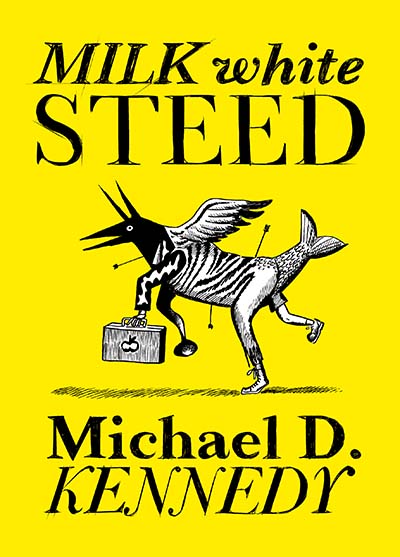
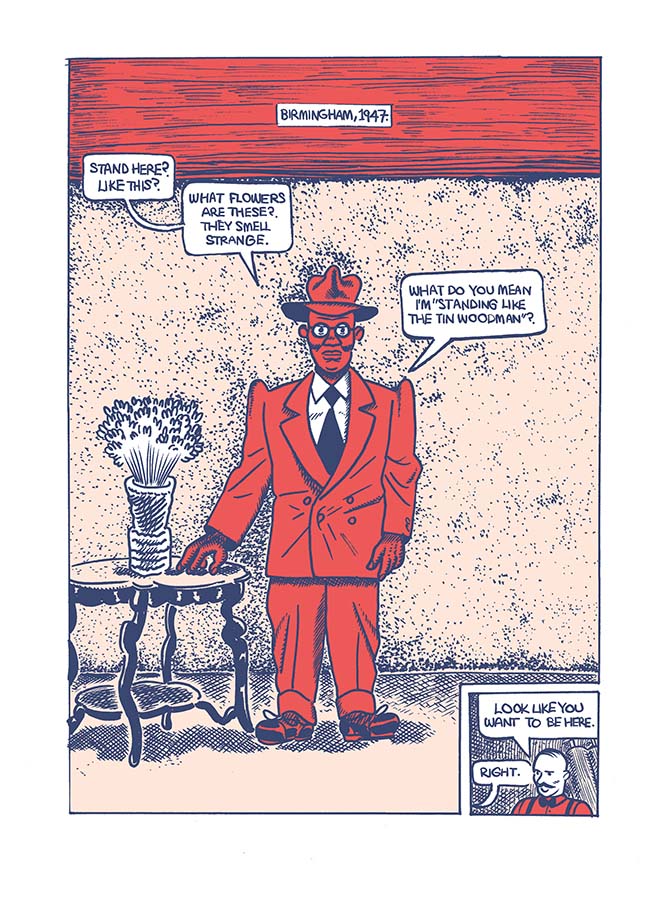
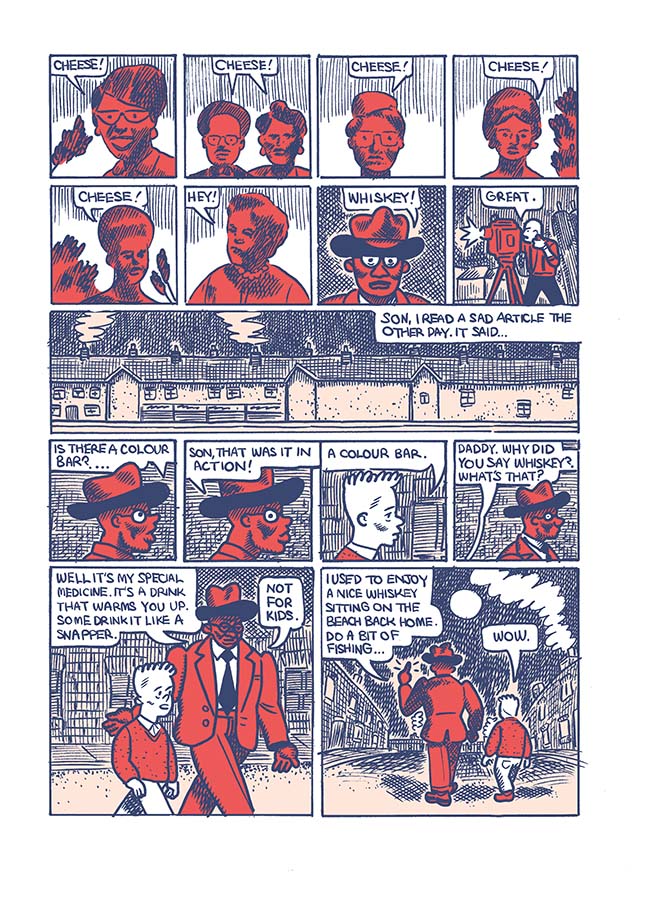
When Broken Frontier’s Lindsay Pereira reviewed Michael D. Kennedy’s Milk White Steed here last year he said “to read this is to revel in the versatility of comics as a medium and applaud its ability to engage with difficult questions.” Publisher Drawn & Quarterly describes it as “inspired by the folk tales and oral traditions of his Caribbean roots… a dreamlike venture into the messy truths of everyday West Indian lives: the abiding pursuit of the familiar and the vicious appraisal of their own otherness, all at once.” BF’s Lara Boyle caught up with Michael to talk about the book, his first connections to comics, literary influences, and working with D+Q…
BROKEN FRONTIER: How did you get started as a comics artist? Or art in general, how old were you when you started out? And did you always know you wanted to do this? Or was it a different path that got you here?
MICHAEL D. KENNEDY: So it’s the classic story. I got into comics as a kid and was thinking about working for Marvel, or whatever, and then realizing there’s much more to comics and literature. So I came up out of high school really just assuming I’d work for Marvel or a big company, and ended up going to university and finding out more literary influences, and film and things like that, and eventually I started writing for myself.
The major breakthroughs came in my mid-twenties after reading and studying so many works of fiction, drama, poetry and philosophy from Caribbean-British writers and African Americans. I wanted to create that space for myself in comics and that has been my long-term goal as an artist.
BF: Did you go to comic stores as a kid? Or did you find it a different way?
KENNEDY: I got into comics through cartoons, the X-Men, Spider-Man, 90s stuff, but I think, being stuck in a small town, we didn’t have a comics store, so it was always randomly finding issues in twenty-five pence bargain bins in bookstores or at car boot sales, flea market sales, so I’d be buying up collections from the 80s and 90s, really cheap. I was exposed to lot of 80s superheroes stuff, 90s superheroes stuff, so I was quite lucky in that regard.
As a teenager, the local library was also great for finding graphic novels and trade paperbacks of superhero comics. I found a copy of Paul Gravett’s Graphic Novels: Stories to Change Your Life in Tamworth library and that introduced me to some incredible works and still does when I flick through it.
BF: What caught your eye about those early comics that you were looking at?
KENNEDY: Probably the artwork and the bright colors.
I do recall the density of the stories and storytelling choices involved as something I loved. I loved the drama of it all and the ridiculous back stories. A couple of years ago, I bought the Milestone comics I had as a kid but in a compendium format. The amount of social realism and folklore that the likes of Dwayne McDuffie put into those superhero comics still really track with me. And they are super fun too.
BF: And then you had literary influences. Who were your influences in that regard that made you want to write?
KENNEDY: I guess like a lot of people, Tolkien, Stephen King, and then when I got more mature, you just follow that route from let’s say, the existential writers, and then the big breakthroughs came with the more wacky stuff from the 70s, Thomas Pynchon and Ishmael Reed, and I think it was then when I was like, I want to put this into comic book form.
When I began conceiving of a graphic novel style of my own I wanted to bring across encyclopaedic works that I was enjoying. Works by Ishmael Reed, Toni Morrison and modern works by Colson Whitehead, Olga Tokarczuk and Zadie Smith. Pynchon was a big influence on keeping things countercultural and books like Oreo by Fran Ross changed a lot of things for me. At some point I began really thinking about the Caribbean and Irish writers and their poetry in particular. I began encountering voices that found living in the U.K. surreal but profound. That poetic and also mystical approach mirrored my own experiences and my families and I think that was when my comics went from satirical strips to something more story-driven and of course, folktale-driven.
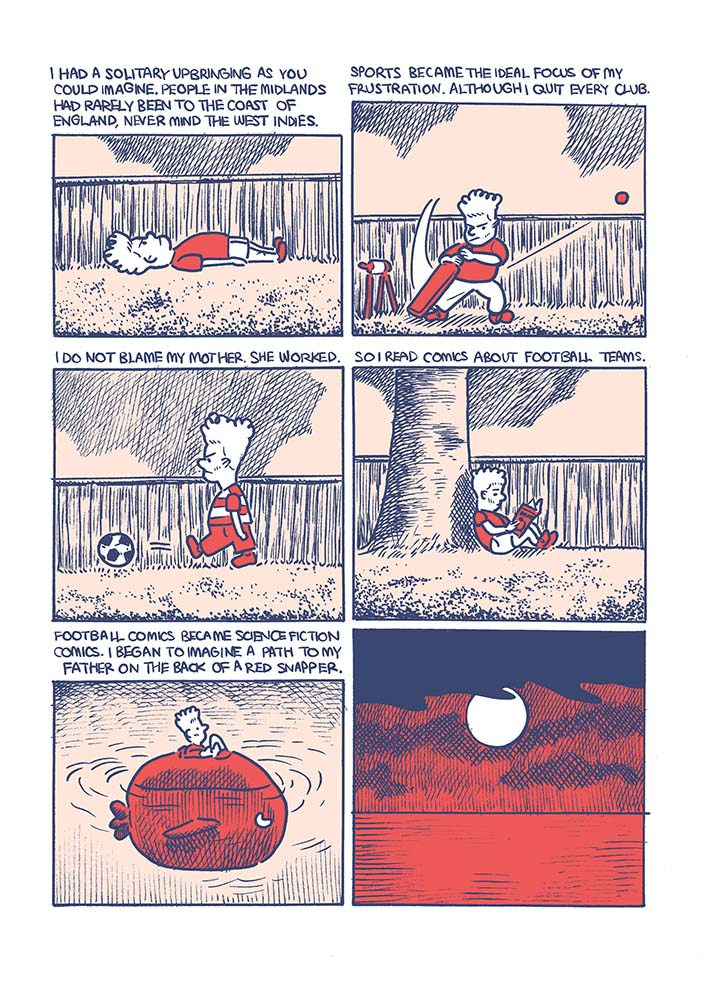
BF: That’s what struck me about your stories because they do have this surrealist bent to them. Especially Duke Ellington on Mars. Were you inspired by short-form stories?
KENNEDY: I started with short stories. Because coming in, I’d spent a few years doing strips, and I was like, well I guess the next logical step is a full page comic, which is alright because a lot of the comics in the book are about forty pages. So I started off really short and the whole idea was to do as many short stories as possible.
That said, many of my favourite fiction works are short or novellas. As a film student I think it was recommended to me to read short fiction in order to write decent film ideas so I just began reading “Best short story of the year” type books and took it from there. It took a while to find a similar amount of reading material within the graphic novel market but I think that’s why Gegika manga resonated so well with me because it’s all short for the most part.
BF: Do you think doing work for magazines helps you in being able to meet deadlines?
KENNEDY: They’re two super different things. The magazines is a week turnaround, and with the comics, I could do maybe something in a week, but then I sit on it for six months, and do it a bit more. I wish they were a bit more interlinked, but they seem really separate.
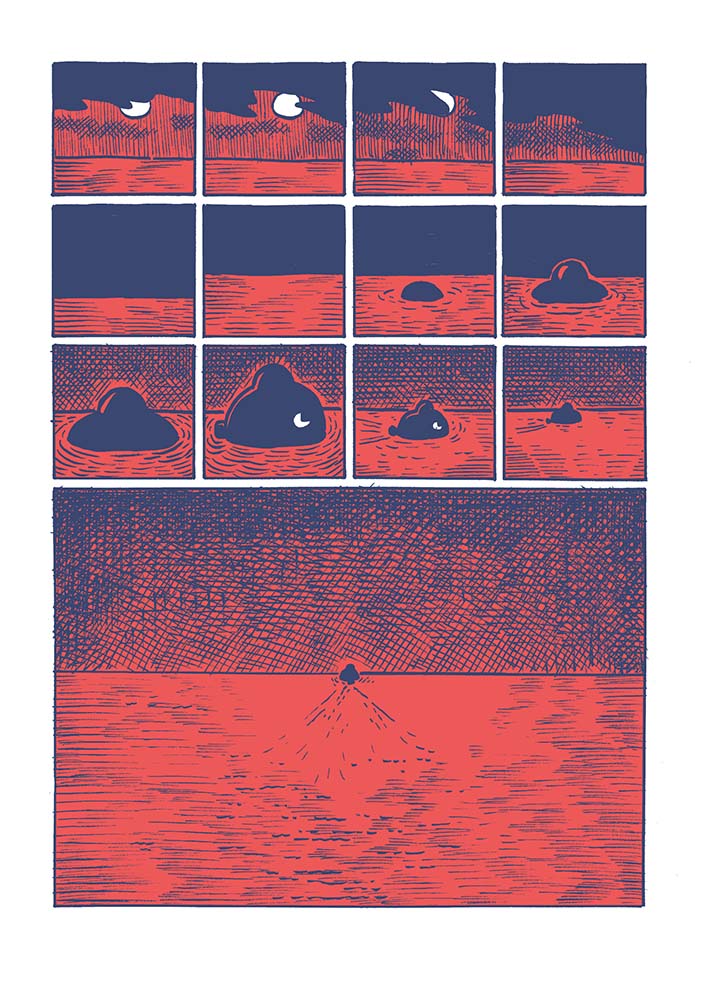
BF: Did you pitch it to Drawn & Quarterly as a proposal?
KENNEDY: I just announced on Instagram that I’d drawn a draft of a book, about folklore and this and that, and then my editor Tom just slid into the DMs and reached out and made it happen. He just asked to read it, and then read it, and made an offer. So it was the perfect outcome of me shouting into the void.
BF: Were you reading D+Q books when you were working on it?
KENNEDY: Yeah I’m a massive D+Q fan. Seth was a big inspiration to start making comics. I really like him. I think at the age I was it was the perfect time to get into him, because he’s got such a cool cartoonist practice where he’s got a lot of world-building and telling stories in these really well-designed worlds. So he was a big influence. And a lot of Japanese comics that Drawn & Quarterly published. I was looking at that stuff because a lot of it’s about folklore and spirituality, about characters living in these really tough urban environments as well, so I wanted to bring that to Britain.
The Sky is Blue with a Single Cloud by Kuniko Tsurita I think was the first book that really changed my perception of what short comics could be as a bookstore reading experience. Then I discovered Yoshiharu Tsuge who completely transformed my idea of what short comics as a medium could do for an author and reader.
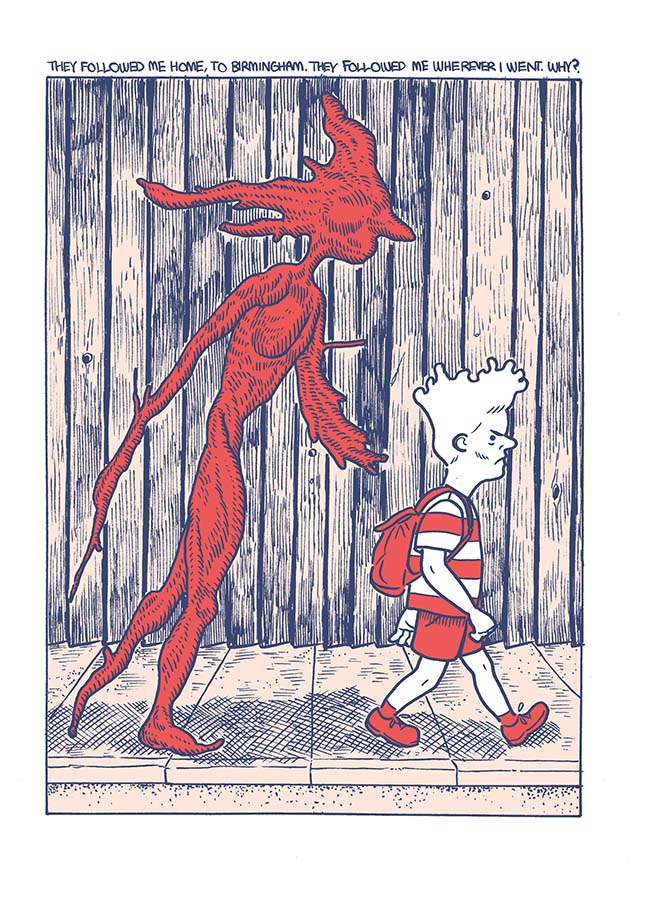
BF: I also feel like you play with the form of comics a lot, where you have poetic layouts and pages, and what you’re doing with the panels. How did you find your visual language in terms of being able to make those decisions on the page?
KENNEDY: It was a tough process. I think working traditionally, on small pieces of paper, really helped with that, because it didn’t feel precious, so I could just move things around. Say, for instance, I’d do a couple of pages that were a traditional horror situation, and then because it was on really expensive paper, I was like well I’ll just insert a two page poetic bit and try and create some new poetic bit, and that’s how it emerged, just trying to edit really well. I don’t see myself as very good at writing things start to finish. I like to edit and reshape things a lot.
BF: Did you have a routine while you were making it?
KENNEDY: Yeah I think my best routine is: wake up early, get as much done as possible, finish by the early afternoon, do chores and make dinner and stuff, which I find that’s the best one. I can’t do the night shift.
Buy Milk White Steed online here
Or online from Gosh! Comics here
Interview by Lara Boyle