

In 1957, a platypus named Penelope vanished from the Bronx Zoo in New York. Zookeepers were astonished to find that she could have tunnelled her way out or climbed over the fence. Penelope was never found.
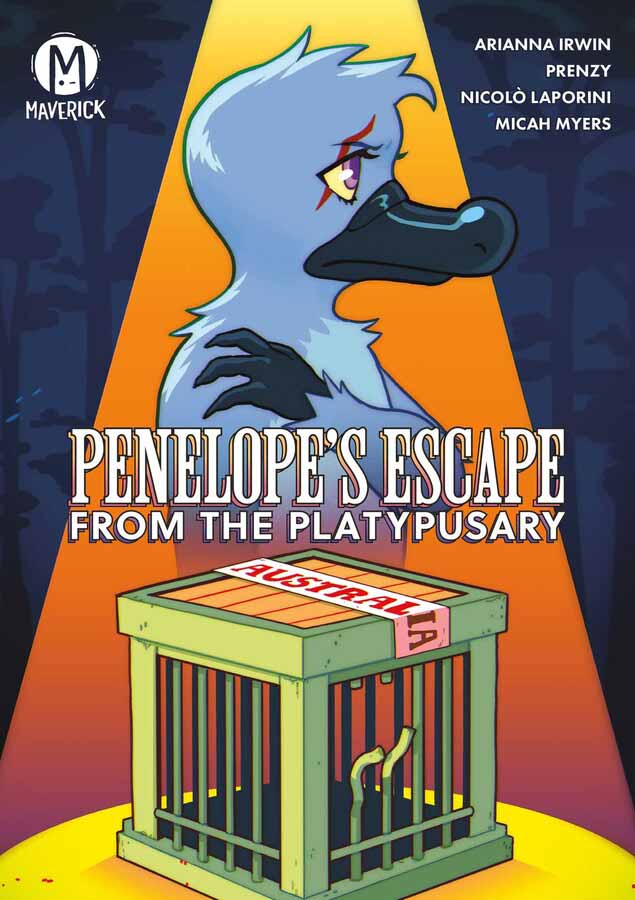
It sounds more like an amusing anecdote, that odd little incident most likely to disappear into the archives and be forgotten. But it held Arianna Irwin’s attention long enough to write an entire graphic novel around it. Penelope’s Escape from the Platypusary, has artwork by Prenzy, colours by Nicolò Laporini and lettering by Micah Myers. Irwin reimagines Penelope as this fiercely feminist, resilient character who faces many obstacles during her time at the zoo, prompting her to decide to jump ship. Penelope arrives at the Bronx Zoo with her companion Betty from Australia. Betty’s declining health is a cause of worry but Penelope befriends Cuddlepot, a koala at the zoo, and the two quickly become each other’s support. He is the one Penelope relies on when she is relentlessly harassed by Cecil, a male platypus that the zoo staff selects as her prospective mate. When the humans repeatedly try to force the pairing, Penelope decides it’s time she found a way out of the zoo. With Cuddlepot’s help she hits upon a plan.
While this sounds like a lightweight animal adventure Irwin gives the story enough heft to make it more reflective of real life. Penelope is expected to comply with decisions made for her, and her primary struggle is around wrenching back control over her life. Penelope’s character emphasises themes of autonomy and gender expectations, and Cuddlepot brings in kindness and friendship. The book is not without its moments of levity, too, which the Squirrel King and his little kingdom provide.
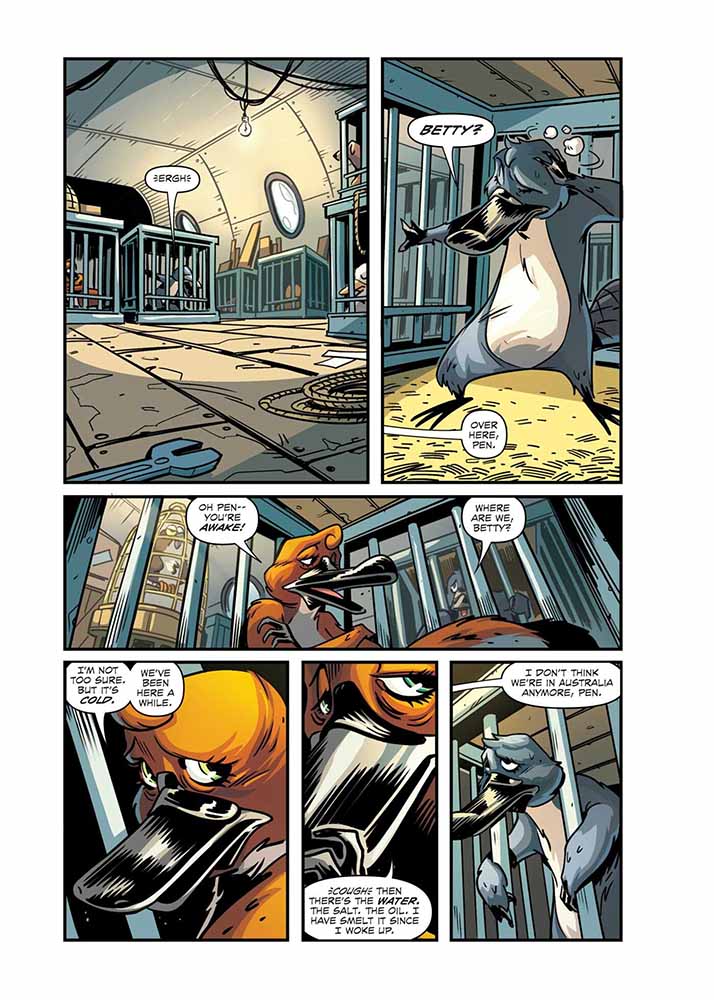
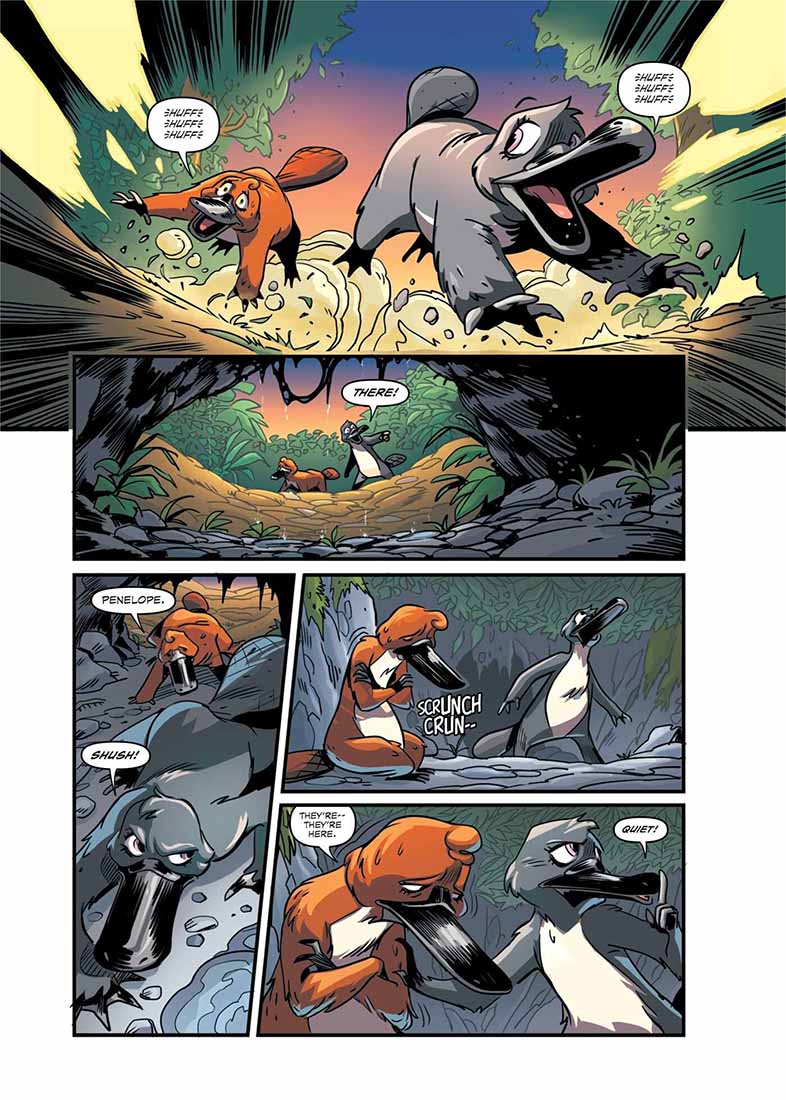
Prenzy’s expressive illustrations with its bold lines bolster the text in many ways. Penelope’s face renders anger, fear, and determination quite visibly and the action scenes are drawn with enough force to make the danger feel immediate. Laporini’s vibrant colours infuse the pages with considerable energy and move the story effortlessly between different settings. The visual language has been given great thought to convey boundaries. For instance, humans remain largely outside the animals’ territories within the zoo to focus on the animals’ interior lives. Humans hardly feature in the panels within the book yet their authority is all-encompassing, which deepens the animals’ struggle.
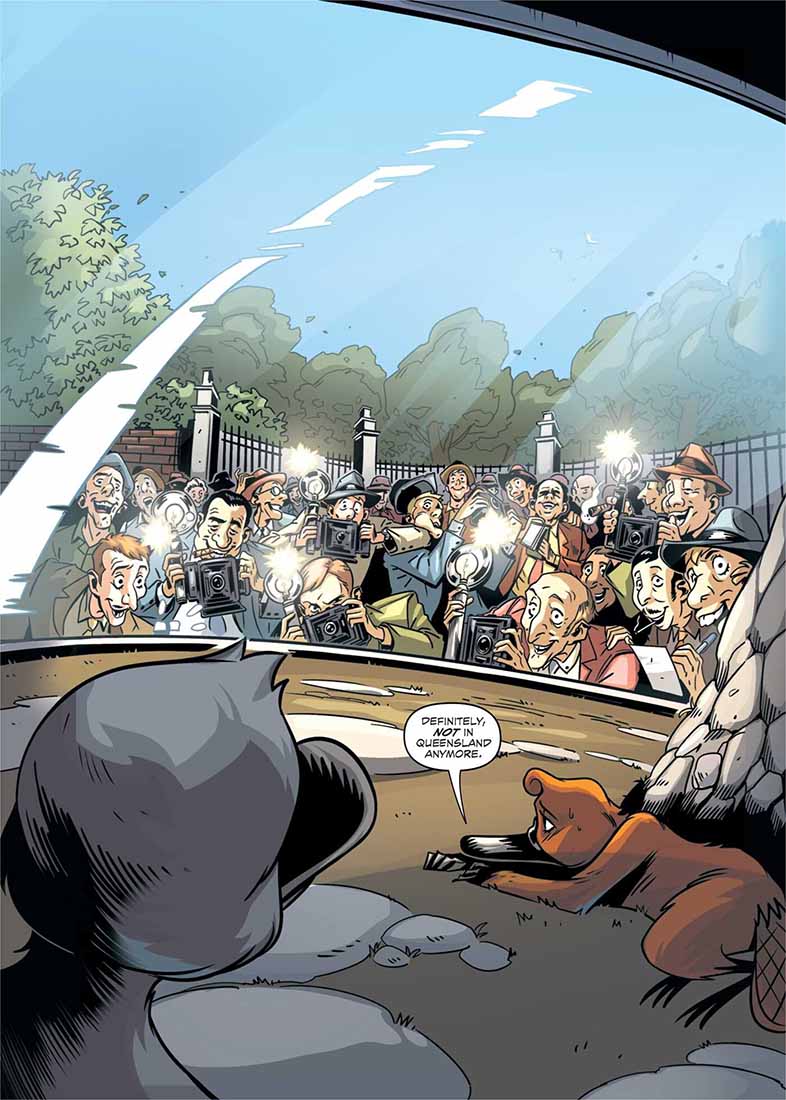
From Penelope’s deep desire to go back to her homeland, to her grief and anger, there are a million sparks that ignite the fire of her rebellion in all its glory. Penelope’s Escape from the Platypusary is a visual, emotional and literary treat, in that sense.
Arianna Irwin (W), Prenzy (A), Nicolò Laporini (C), Micah Myers (L) • Mad Cave Studios/Maverick, $21.99
Review by Swati Nair