

“Seventy years since the Korean war armistice and the cycle goes on and on.” That troubling observation made by South Korean artist Keum Suk Gendry-Kim makes it immediately obvious why she needs to talk about the dictator next door. In her case, the need to do so is compounded by where she lives — on Ganghwa Island, approximately 2 kilometres across the Han River estuary from North Korea. It happens to be a key border observation and security zone, placing her in a line of fire as literal as it is metaphorical.
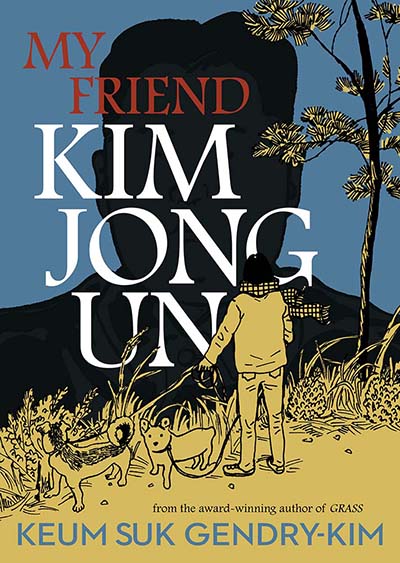
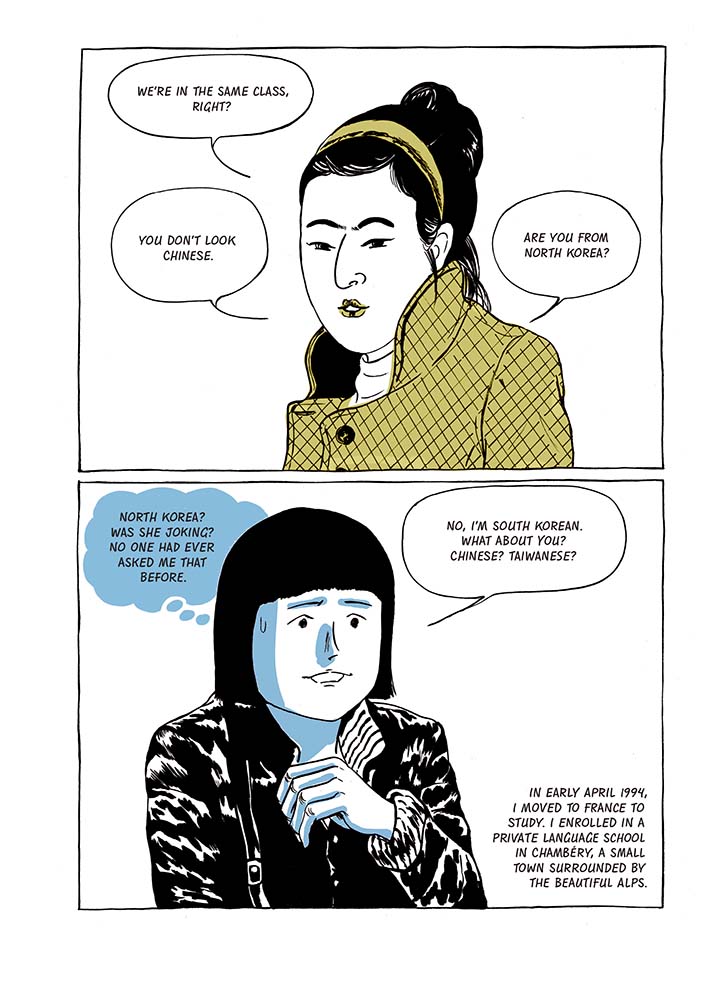
My Friend Kim Jong Un is a history lesson. It is also a memoir of sorts though, because of how Gendry-Kim uses her own past to define the relationship between both countries. This approach allows one to understand how that fracture continues to exert an influence on everyone living in this part of the world. Bringing in the personal — for example, through descriptions of how a daily walk with her dog is interrupted by military drills and roving helicopters — also highlights the unrelenting anxiety of trying to live a normal life under the constant threat of nuclear war. When Gendry-Kim tries to find out about fallout shelters in her town and discovers how inadequate they are, the gallows humour does little to deflect from the horror of what any unstable regime could do.
Under the international Nuclear Non-Proliferation Treaty, only five countries are legally recognized as nuclear-weapon states. And yet, given that there are also undeclared or non-signatories, as well as countries engaged in nuclear sharing or hosting, this book points out why the issue is deserving of more supervision.
To be fair, the Supreme Leader of North Korea has long attracted attention, and not just from South Korea. Much has been written and speculated about his past, as well as his plans for a country we still know little about. The book also makes pointed references to propaganda from both sides of the border, starting with what children in South Korea are taught about the appearance of communists in the North.
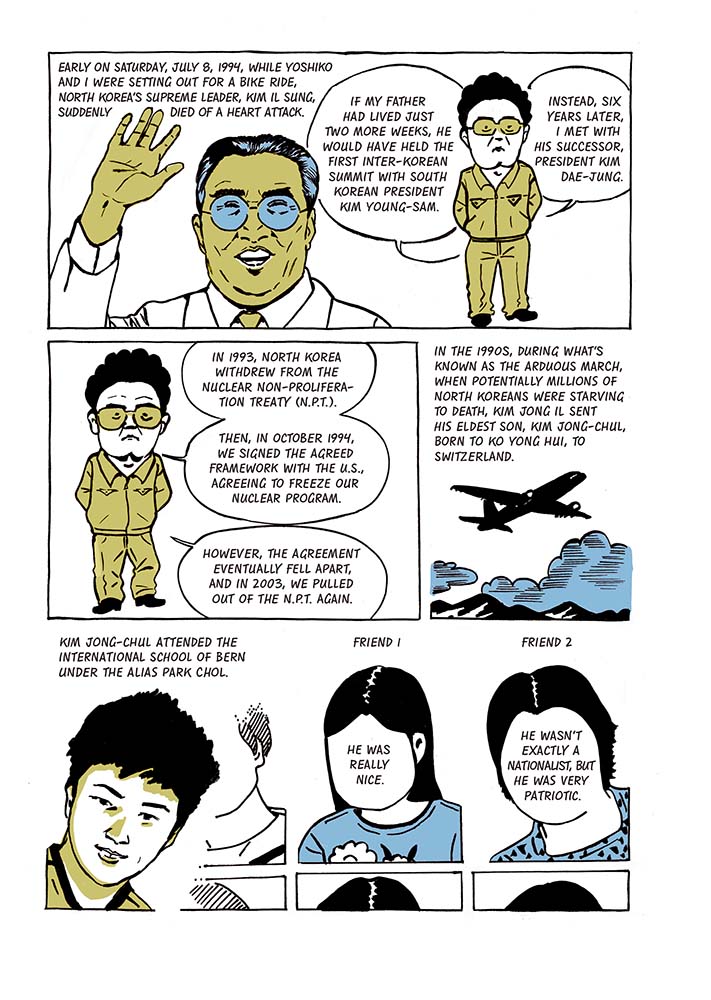
These are muddied waters that must pose a challenge for any historian, given the decades of misinformation and outright hostility involved in trying to understand why the Korean Peninsula split at the end of World War II. Gendry-Kim’s approach is to break down large pieces of information into bite-sized nuggets that make it easier to understand the Mount Baekdu Bloodline defining the lineage of North Korean leadership. She intersperses her own research with inputs from journalists, political leaders, the former personal chef of Kim Jong Un’s father, even a defector from the North who has some surprising things to say about differences between people from both countries.
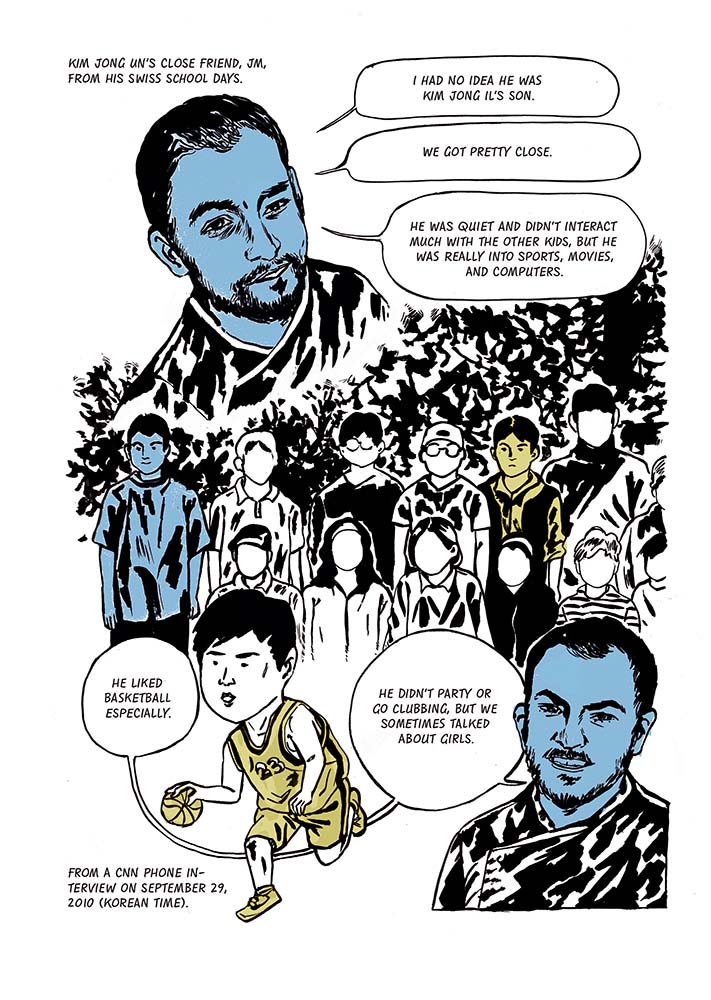
This is a slim book, but it packs in a great deal. Gendry-Kim’s vivid drawings help one distinguish the many famous faces she writes about, but she also makes a conscious choice of protecting those she interviews by portraying them with blank or featureless faces, using that simple device to reveal the suspicion that still clouds anyone associated with the North, however obliquely.
No one in South Korea appears to be sure about what the future holds, as far as the North is concerned. What My Friend Kim Jong Un does well, however, is create a primer for the rest of us, drawing back a curtain on a subject far more compelling than K-dramas and K-Pop.
Keum Suk Gendry-Kim • Drawn & Quarterly, $30.00
Buy online from Gosh! Comics here
Review by Lindsay Pereira