

PRIDE MONTH 2026! In another of our Pride spotlight interviews we chat today with emerging comics talent Nessie Mooo. Nessie talks about the premise of urban fantasy series Deathmetal, being part of a comics collective, experimentation with the form, representation, and getting your work out there and seen. It’s a fascinating conversation that touches on many familiar thoughts and issues for those entering the self-publishing arena…

ANDY OLIVER: One of the aims of our Pride Month interviews is to introduce creators to wider audiences so let’s start by asking you about your creative background and your route into comics?
NESSIE MOOO: Hi! I’m Nessie and although I have only been making comics for a few years, debuting with Laika in 2023, I have always been an artist. I studied Illustration and Animation at Kingston University, and have worked on mainly animations for clients like Oxford University, but comics have really been my calling recently – I think it is such an open, unpretentious and interesting medium that allows the space for experimentation and new ideas that I needed after graduation. I joined the Shipwreck comic collective in 2024 and after making one comic per month for a year or so and finding my feet and narrative style, I have started work on Deathmetal.
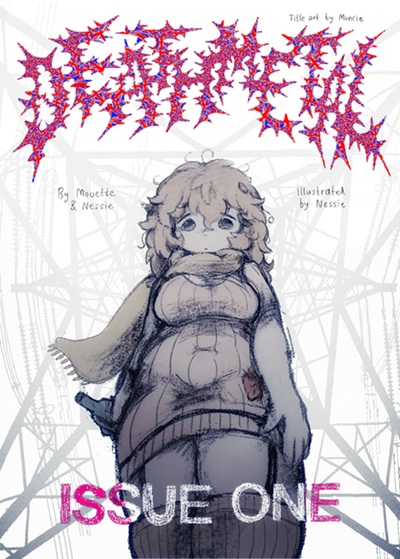
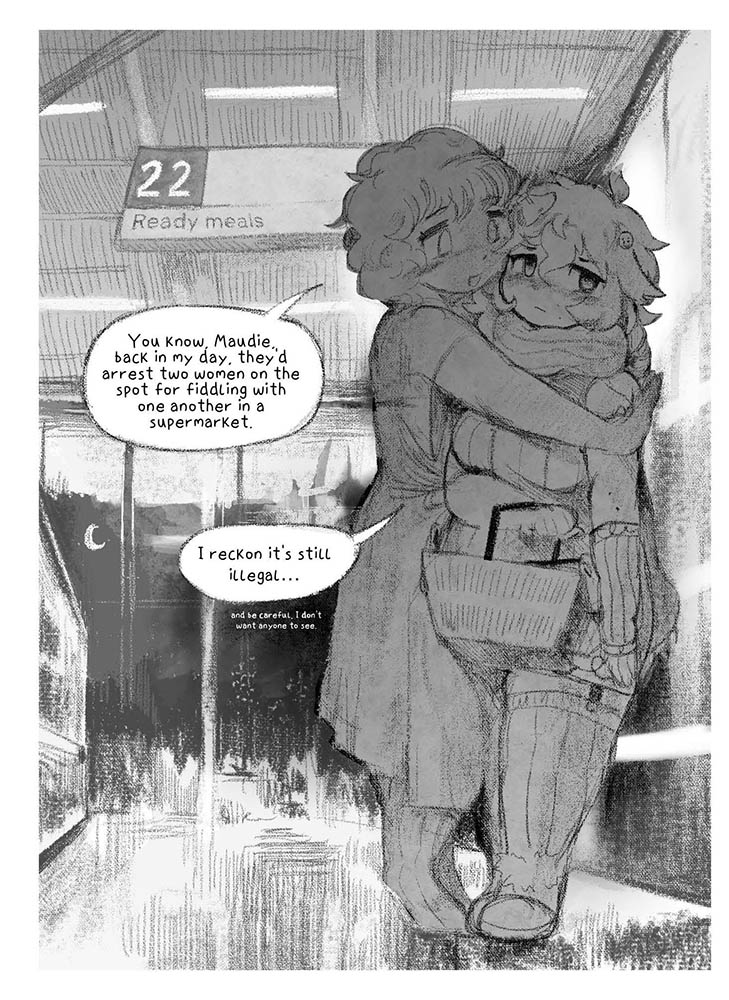
AO: Deathmetal (below) is that first long-form comic from you which recently smashed its crowdfunding target on Kickstarter. What stands out to me about from what I’ve seen of the project is its intriguing mix of the everyday and the out there. Can you tell us a little about the premise and the themes the story explores?
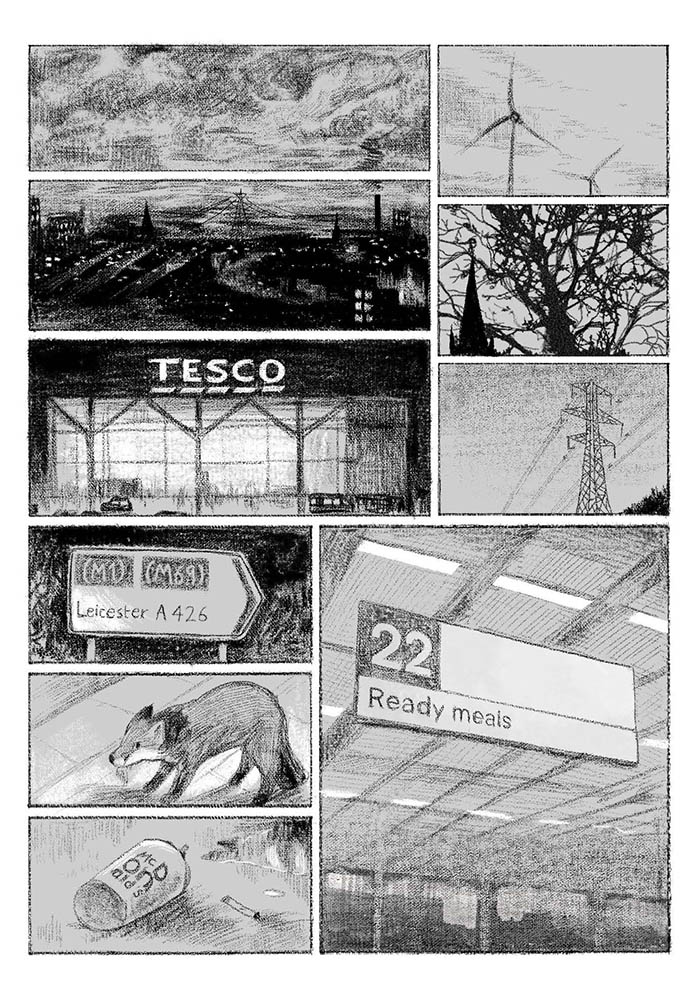
NESSIE MOOO: Deathmetal started as an observation by me and fellow comic artist Mouette that there doesn’t seem to be very many artists in our weird, alternative, manga and furry adjacent subculture in the UK making comics. The idea of setting some fantastical story about magical girls and spirits and monsters somewhere uncomfortably local – Leicester – just seemed so exciting!
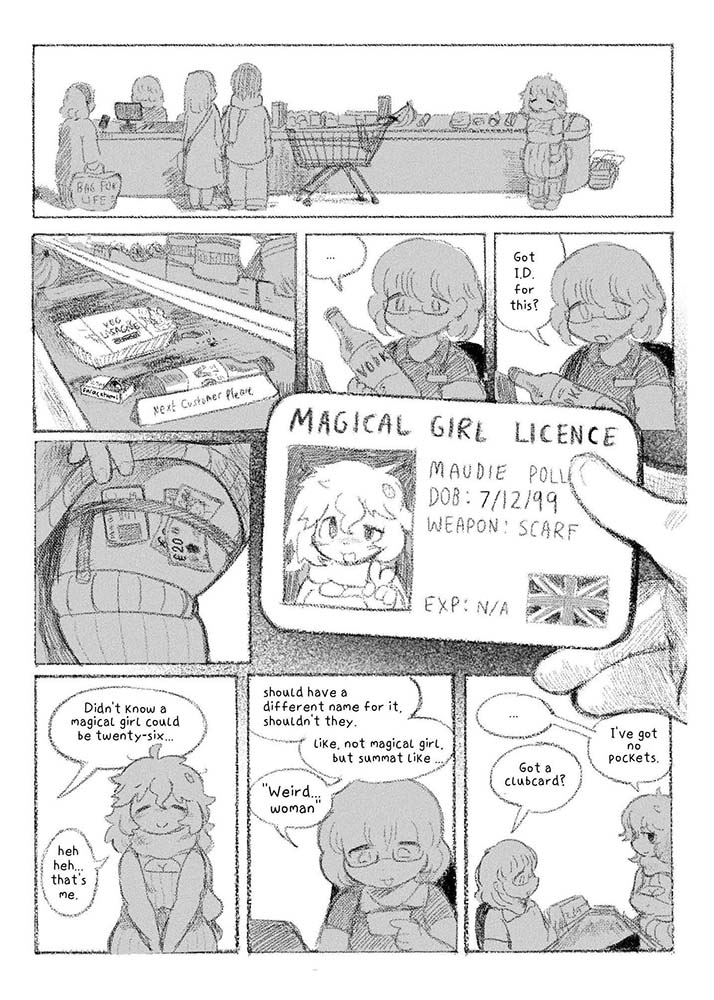
Officially licensed magical girl, Maudie Pollard, has been in the profession for a while now at 26 years old. She lives in a world where being a magical girl is seen as at best, boring, or at worst, a public nuisance, due to negative and biased media coverage. She is depressed, lonely and effectively a NEET, out of touch with her identity and her local community. The story explores both her sexuality (bringing to attention how common sapphic themes are in magical girl stories) and her relationship to her county of Leicestershire and its history; the bewilderment of being in a country drowning in memory and decay, but also finding that some nice things are still around. It’s about exploring the connections we have to a place in ways that aren’t necessarily described by stereotypical British imagery.
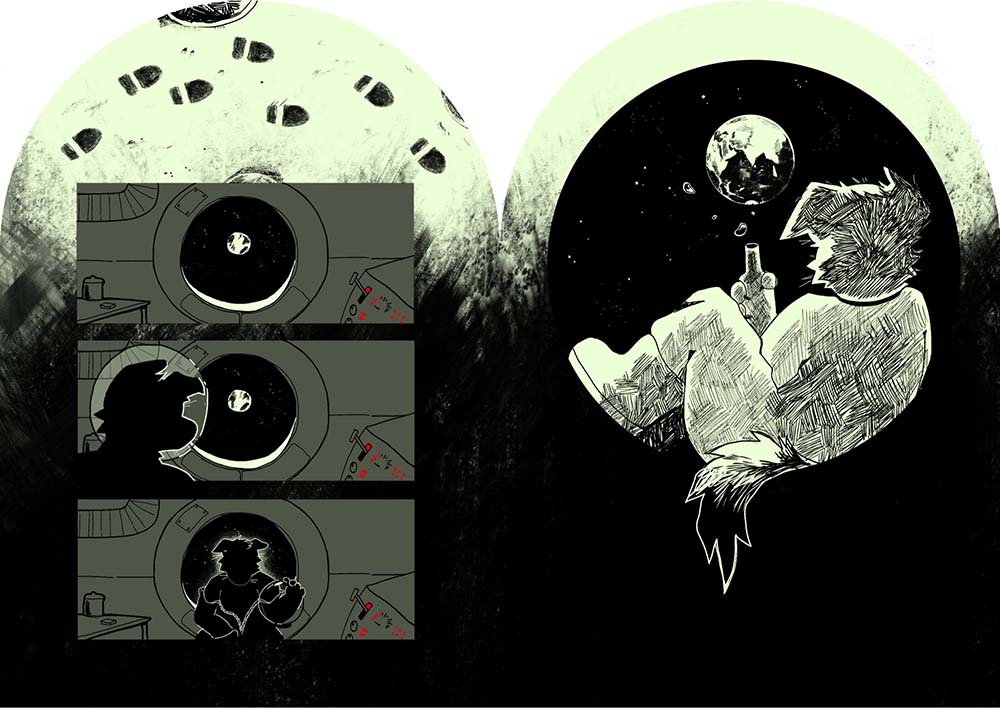
AO: Moving backwards to your very first printed comic I was very impressed by Laika (below) and its application of the language of comics in its storytelling. Why did you choose its particular format and irregular shaped pages as a narrative device?
NESSIE MOOO: Thank you! Laika started as a regular second year university project where I was first given a healthy amount of freedom; I have always been fascinated by the story of the real Laika and the topic of animal rights is very close to my heart as a lifelong vegetarian. I have also been part of the furry fandom since I was about 10 and am fascinated by the positive and negative aspects of anthropomorphisation of animals, and this just seemed like a good opportunity to test out my storytelling and worldbuilding skills.
I mainly decided to make it a comic just because I had kind of tired myself out on animation; although I am proud of my animated films, there’s something about the limitations of comics, and again, the unpretentiousness that felt right for this story. I’ve always been fascinated by creative, non-traditional panelling seen in comics and manga like Witch Hat Atelier (a big inspiration for this project), and wanted to push further by making the actual book an unusual shape as well. The shape is inspired by a few things – gravestones – hopefully for obvious reasons considering Laika’s fate, a death sentence in space, as well as the reoccurring circular motif that became apparent in Laika – the earth, the moon, the window of Sputnik II … it just felt natural. I think it makes the comic really stand out, and although it has been an absolute nightmare to (finally) print because of this, I’m happy I designed it this way.
AO: Looking through your shorter LGBT work in preparation for this what stood out was the varied approaches to the page and different styles of presentation. Thinking about your process, what mediums do you work in to bring your stories to the page?
NESSIE MOOO: I almost always work digitally nowadays, which I am slightly insecure about, but my living situation and being on the move a lot has meant this just feels right for me. I don’t find it limiting either, personally – I think a digital canvas allows for arguably as much experimentation with new textures, colours, brushes and styles as a piece of paper does. I try to replicate watercolours, graphite pencils, halftones, charcoal. That said, my comic ‘Time Flies’ was drawn in biro pen at a time when I was travelling abroad and my iPad wasn’t available to me. I believe in using what I have to hand, there is no need to go too far out of your way for a particular medium or set up.
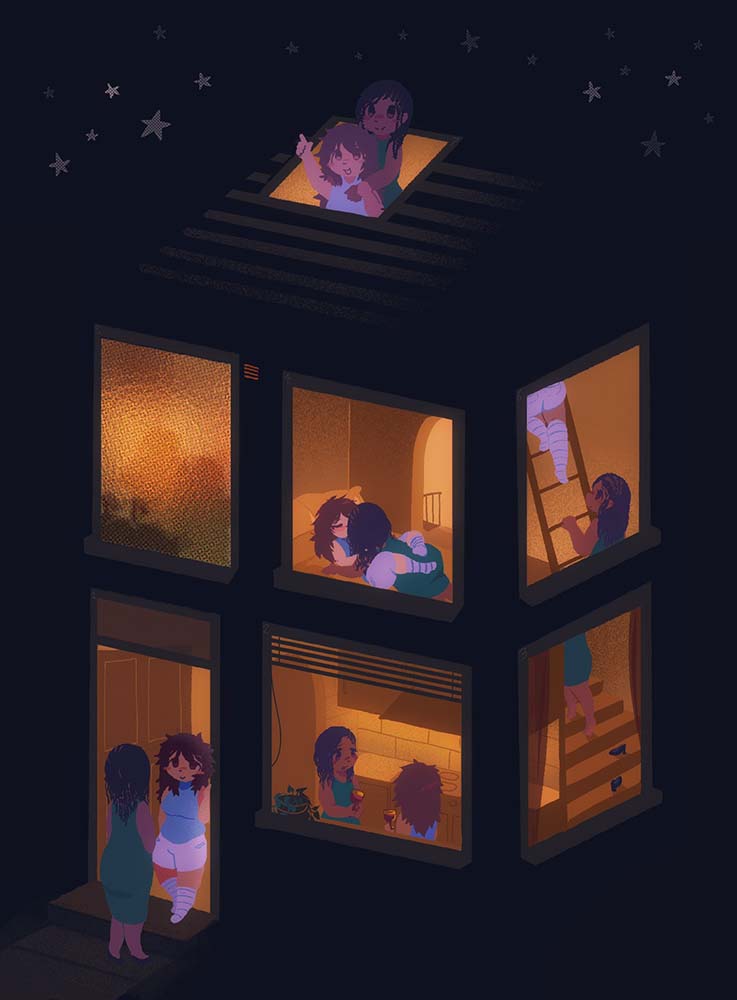
My comic ideas usually stem from either an interesting visual style I want to try out, or a punchline or sweet premise I think of. For ‘Night In’ (below) for a long time I had the idea of using a sort of dollshouse setting, with views into different rooms of the house – like each room is a panel – to show progression of events. Much later, I thought it could be a story of a lesbian couple having a romantic date at home and the different ways they use the rooms of the house, ending at the roof looking into the night sky.
AO: Following on from that why do you think comics, in particular, are such a powerful form for communicating queer experiences?
NESSIE MOOO: I think there’s something inherently down to earth and more instinctual than other mediums about making a comic. visual storytelling – I try to pay attention to the softness of the brush, colours, lightning and pacing to convey a specific atmosphere that I think is unique to queer love and crushes. Shy-blushyness – the size and amount of panels to convey the awkwardness and pacing or no panels at all to convey the dreaminess and slowing down and letting these little moments take up a whole page. Lots of my sapphic comics focus on small, intimate moments with a specific atmosphere rather than major overarching events, which I think speaks to the effectiveness of minicomics especially.
AO: As an emerging artist on the scene what have been the challenges of getting your work seen by wider audiences?
NESSIE MOOO: Before I joined Shipwreck, I think the alternative online comics community I have talked about felt so scattered and distant. When you’re not making mainstream single panel Instagram-friendly comics about being a straight guy hanging out with his friends (or something), I think it’s a bit difficult to gain traction. This is the exact reason my colleague Mouette started the collective; now I not only know other comic creators I can exchange advice, discuss ideas and collaborate with, but it has given me the motivation to make comics regularly and the confidence to experiment more.
I feel satisfied enough with my online connections, but at the start of this year I felt myself wanting to connect with local communities and businesses; I now work with a East Midlands-based queer nightclub that I should be selling Deathmetal at later this year.
AO: And, finally, what’s next on your comics slate? What are you currently working on and where can people see you in the rest of 2026?
NESSIE MOOO: The next few months are dedicated to focusing on Deathmetal (above) – me and Mouette are going to be locking in on polishing the story and starting to ink the pages, which unfortunately does mean a bit less time for regular minicomics. In the meantime, I can often be found at small nightclubs around the UK selling some small art bits (no comics yet though!), all building up to the Thought Bubble comic festival in Harrogate this November which I’m really excited for! Thank you so much for this interview and I hope this was interesting.
Visit Nessie Mooo’s Ko-fi and online shop here
Interview by Andy Oliver