

FANTAGRAPHICS AT 50! Graphic Medicine as a genre did not exist in 1955 when Bill Gaines and Al Feldstein cast their editorial net wide after their EC horror comics were banned. The two short-lived series collected in Shock Treatment from Fantagraphics Books are from that period: M.D. and Psychoanalysis.
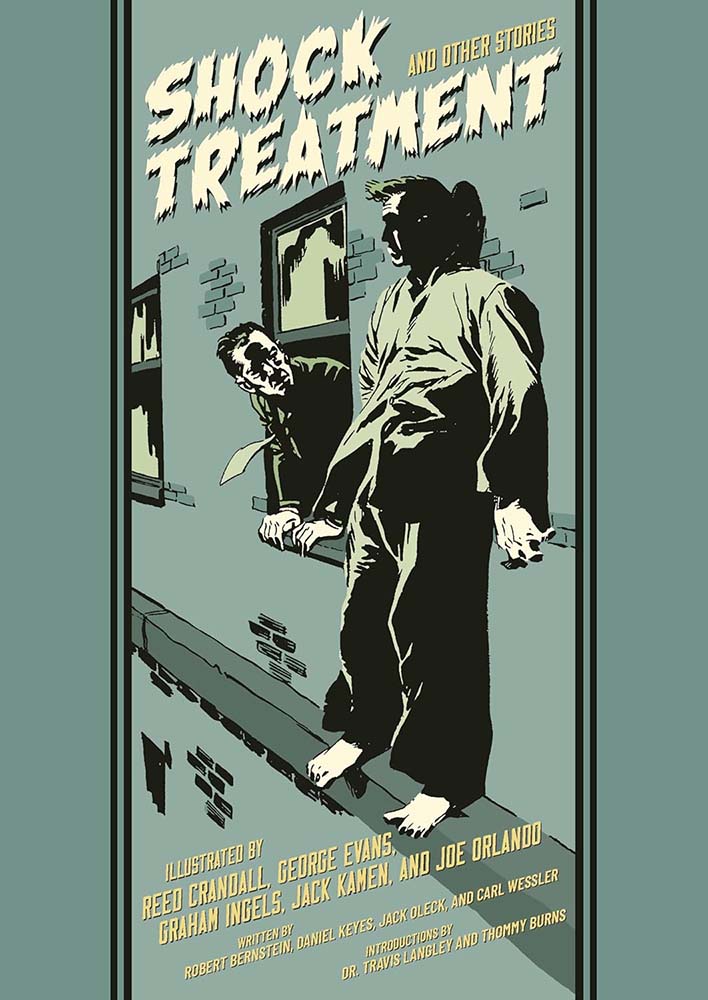
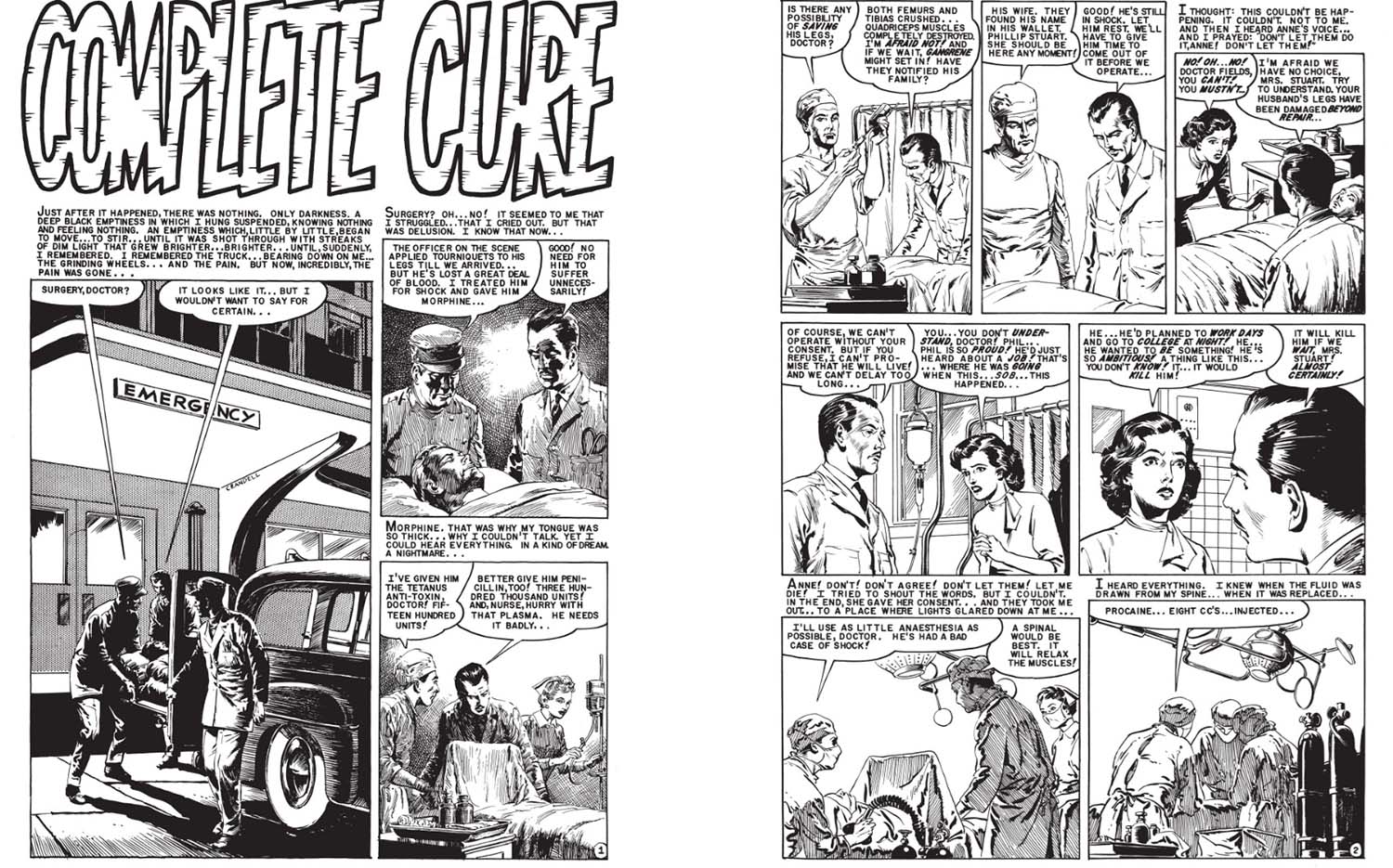
M.D. followed the format of EC’s horror titles, the only difference being each story dramatized a medical condition with a more constructive twist ending (if not a more narratively compelling one). Four of EC’s more representational artists took part each issue: Graham Ingels is a real standout, ‘The Fight For Life’ (M.D. #1) takes advantage of his brutal art style showing the horrors of war and plague from prehistoric times to when modern medicine was developed in the last century; Reed Crandall’s mid-century classical linework is perfect for depicting everyday people in tragic circumstances, like ‘So That Others May Walk’ (M.D. #4) with it’s dual narrative of a child diagnosed with polio in an iron lung and the flashback of another boy’s long recovery from the same ailment; George Evans’ expertise with staging (usually air battles, but here 50s suburban living) and facial expressions chillingly depicts the grateful parents of a ‘Shock Treatment; (M.D. #3) patient (or victim, depending on your perspective); and the final member of the group, science fiction specialist Joe Orlando, who puts a lot of emotion into ‘Different’ (M.D. #2) about a young boy with cerebral palsy who is abused by his father and runs away from home, a unique play on the twist ending makes for a unusually uplifting story (for EC, anyway). It’s a shame EC wasn’t able to continue this particular series, with improved writing this may have evolved into an antecedent of modern Graphic Medicine rather than an unjustly forgotten part of comics history.
Psychoanalysis has been my low-key obsession ever since I first discovered the title decades ago. Utterly without precedent, and presaging later alternative comics in style and lack of dynamic action. The comic is atypical for EC Comics, with Jack Kamen being the sole artist for all four issues. Also, the writers have all been identified: Daniel Keyes, well-known in the future for Flowers For Algernon, but then with only three science fiction short stories to his credit (according to isfdb.org); and, prolific comics writer Robert Bernstein. All three combined to push comics into a literal “New Direction” with this series of text heavy, plot-free, talking heads that nonetheless work as sequential narrative. Also new was the serialized format of the three characters broken down throughout the four issues: the oedipal manipulations of 15-year old Freddy Carter, the self-destructive tendencies and body dysmorphia of 19-year old Ellen Lyman, or the anxiety-crippled 28-year old Mark Stone whose later sessions analyze psychoanalysis itself – touching on transference, dependency, and abandonment issues between therapist and patient.
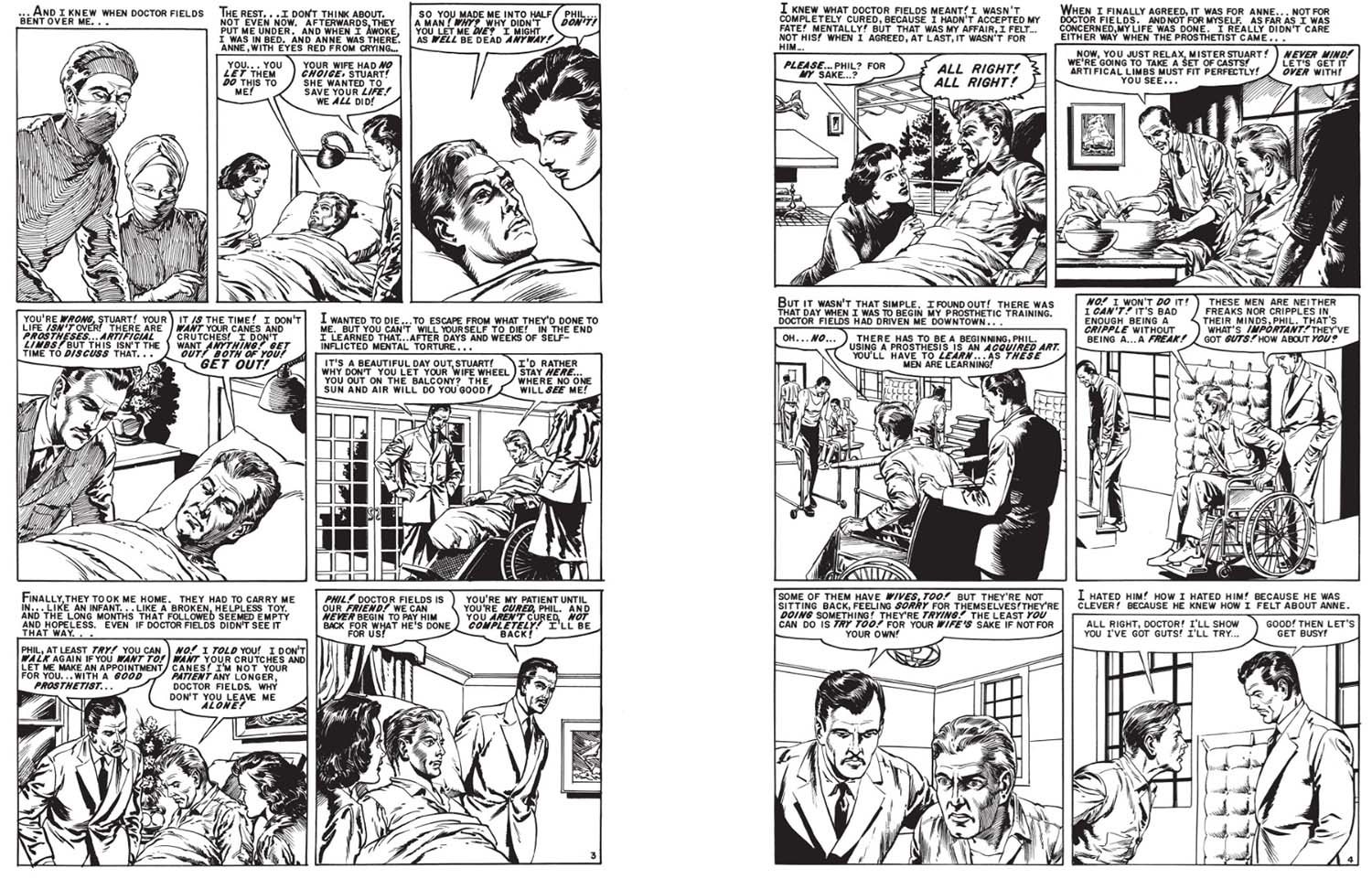
Jack Kamen may not be the most well-known EC artist, but he’s a perfect fit for this new kind of comic. He excelled at people talking for pages at a time, varying angles from panel to panel, and subtle facial expressions, to keep the narrative flowing through difficult to depict subjects and text-heavy stories. The mid-century advertising art and romance comic veneer of his drawing style made the characters more grounded in reality and relatable, which is essential to draw the reader into the non-linear narrative of these comics.
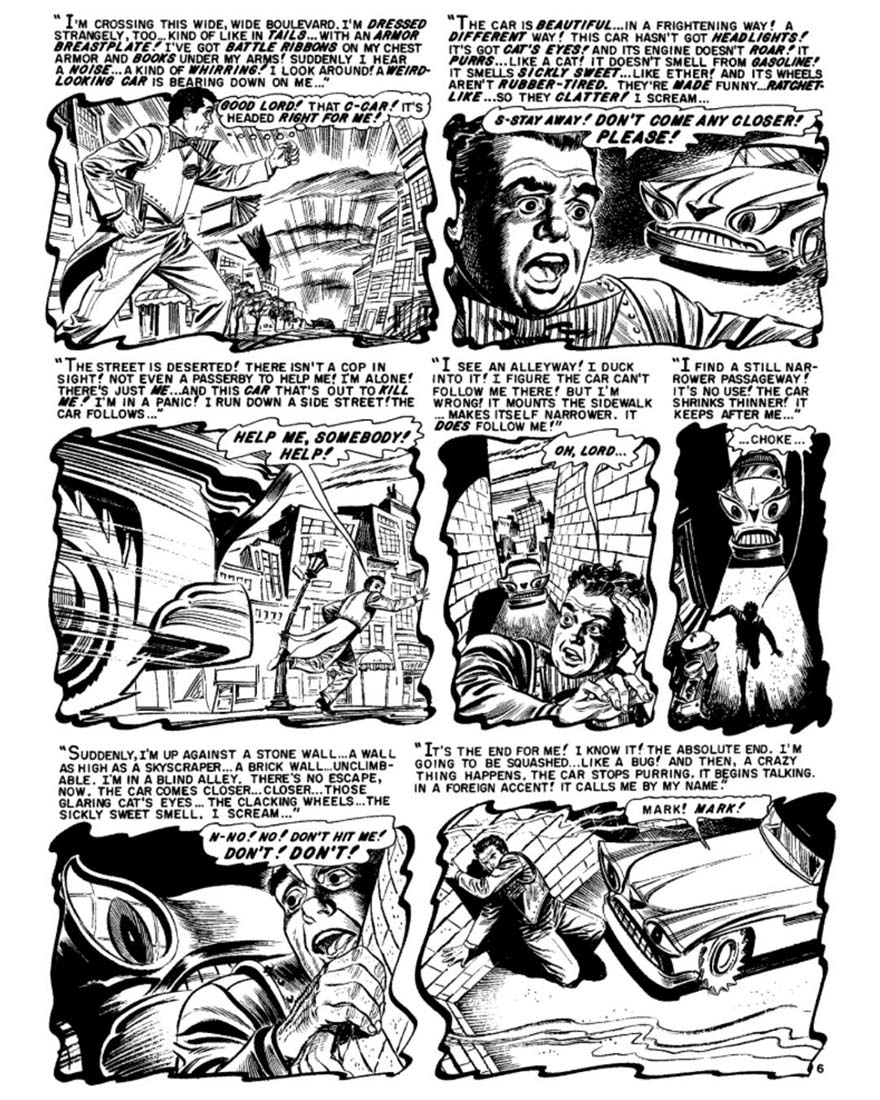
The writing by Daniel Keyes and Robert Bernstein in Psychoanalysis gave Kamen plenty to work with, despite some limitations imposed by the theme of the book. Flashbacks are used judiciously to not only explain mental stress, but also to expand the stories beyond the psychiatrist’s office. Another tool used by the writers to break up the narrative was the dream sequence, a nice way to introduce fantasy and horror elements into the otherwise grounded in reality storylines. A good example comes in Psychoanalysis #3 ‘Mark Stone, Male: Session 3’, the subject recounts a dream of being chased by a car anthropomorphically resembling a woman. It’s a brilliant way to illustrate the subject’s feelings toward women as only comics can.
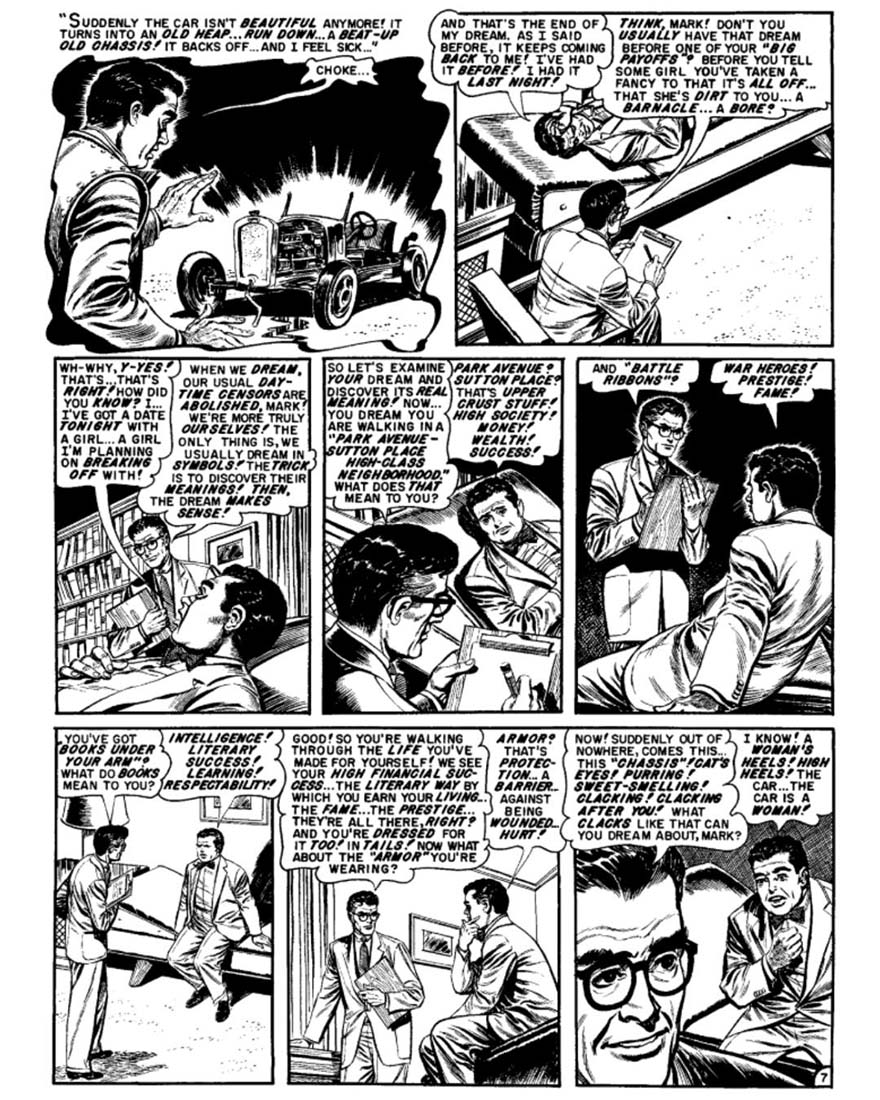
Though the medical science and Freudian analysis may be a little outdated (okay, seventy years have passed after all), we definitely recommend this 40th (!) volume from Fantagraphics’ EC Artists Library series. Though EC Comics have been reprinted many times in color over the past thirty years by other publishers, this Fantagraphics volume in particular benefits from the crisp black and white presentation of the art in this series.
Robert Bernstein (W), Daniel Keyes (W), Reed Crandall (A), George Evans (A), Graham Ingels (A), Jack Kamen (A), Joe Orlando (A), Johnny Craig (A), Marie Severin (C), William Gaines (Original Editor), Al Feldstein (Original Editor), , ; Fantagraphics: J. Michael Catron (Senior Editor), Jacob Covey (Series Designer), Justin Allan-Spencer (Volume Designer), C Hwang (Production), Paul Baresh (Production), Kaz Strzepek (Production) • Fantagraphics Books, $39.99
Review by Gary Usher
Fantagraphics at 50 Month runs through August at Broken Frontier. You can see articles as they’re published in one tagged list here.