



FANTAGRAPHICS AT 50! In the first of our spotlight interviews for our celebratory Fantagraphics month at Broken Frontier we chat with cartoonist Jesse Moynihan about the epic Forming, first published in webcomics form and collected in its entirety by Fantagraphics later this year. Forming has been an alt comics fixture for so long that it was first covered at BF way back in 2014 by Bart Croonenborghs on the site here.
Fantagraphics describe the book in the following terms: “In Forming, Jesse Moynihan takes 50,000 years of socio-religious postulation and throws it in the blender to create one epic—and irreverent—battle royale between alien gods, Ancient Greek Titans, interplanetary assassin droids, and humanity itself.” Today Jesse talks to us about changing narrative plans, not working in secret, and making art as a way to connect to other people…
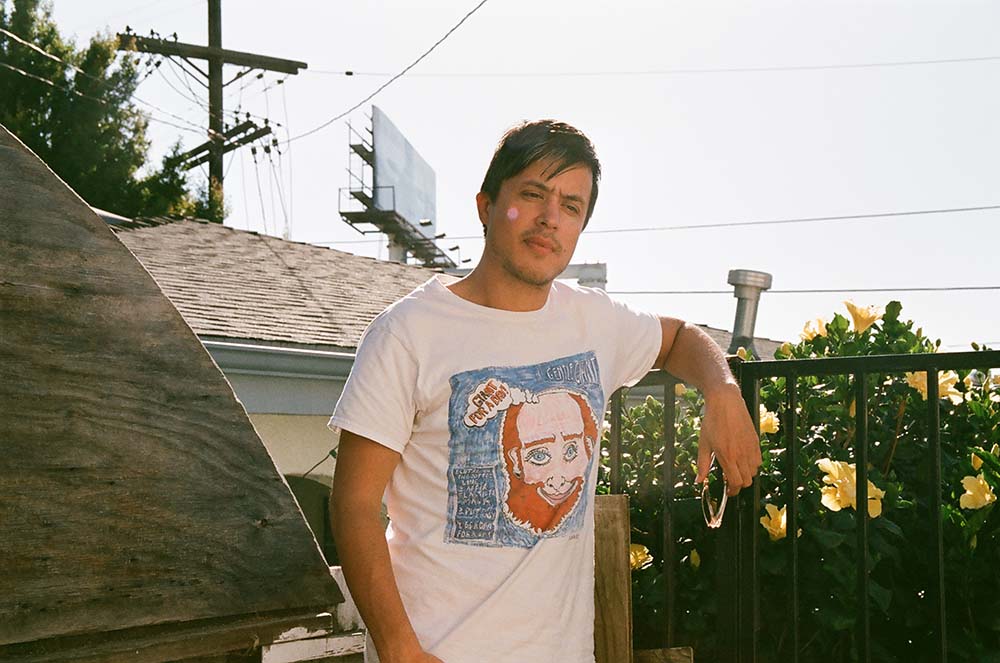
ANDY OLIVER: What was the genesis of Forming? What inspired you to start on the creation of a story so epic in theme and ambition?
JESSE MOYNIHAN: I was coming off of publishing a handful of surreal, black and white auto-bio comics that were inspired by the underground stuff I grew up with like Peter Bagge’s Hate and Robert Crumb’s work. I remember tabling at comic conventions and the realization that the general public was taking one look at my shit and not giving it a chance. It was one of those things where other comic artists seemed to like what I was doing but no one else cared at all. I have a vivid memory of Dash Shaw telling me I was making stuff that was looking backward rather than forward. He had started doing full color webcomics that looked amazing. This was right at the time when I was starting to change my motivation for making art – that I was going to stop mining from my ongoing depression for content and that I would start making stuff that aligned more with my aspirations. So I decided to make the biggest and most colorful thing I could.
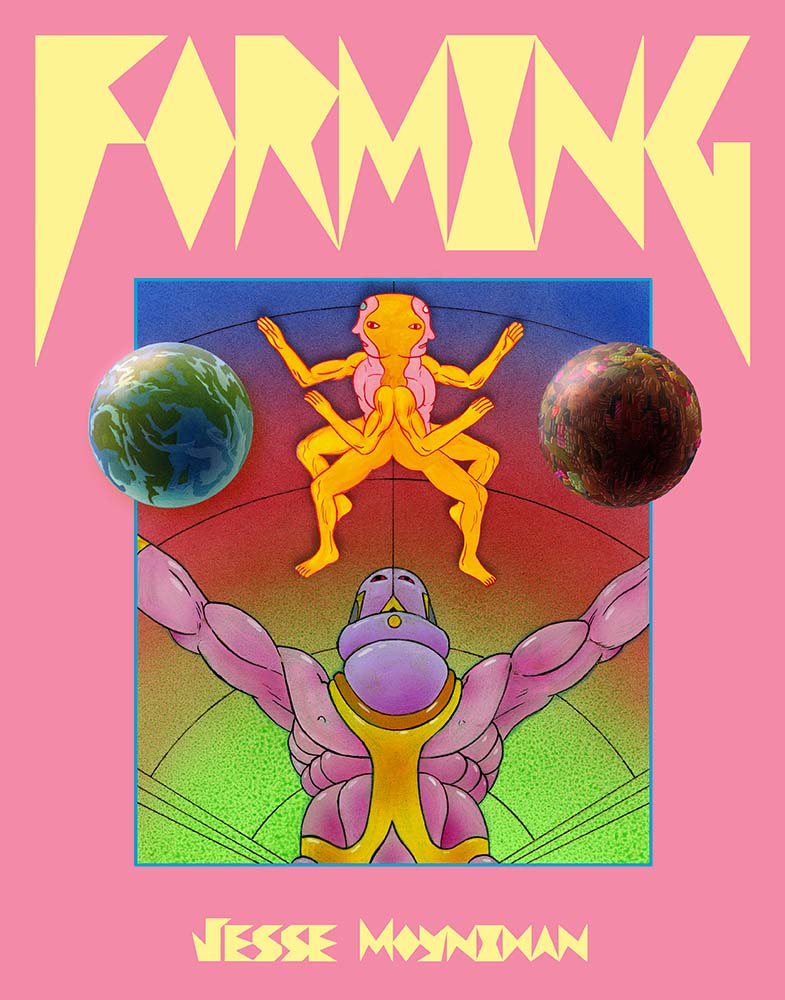
AO: What were some of the main philosophical themes you were looking to explore in the pages of Forming?
MOYNIHAN: I think the main themes revolve around the search for truth, enlightenment, hate, selfishness, compassion, love and making art through one’s life.
AO: Working on one comics project for a decade and a half is an incredible commitment. In hindsight did you ever find the story going off on unexpected tangents? Or did you have a narrative gameplan from the very beginning?
MOYNIHAN: I had an initial gameplan but it changed a lot over the years. I had to re-write the outline a few times and some of my narrative threads went in different directions than I had initially thought they would. One of my main strategies for keeping the process fun was that I would change anything if I felt like I had a better idea than what was in the plan. I also would go down little narrative rabbit holes that were unplanned. I couldn’t just spend years tediously tracing my outline.
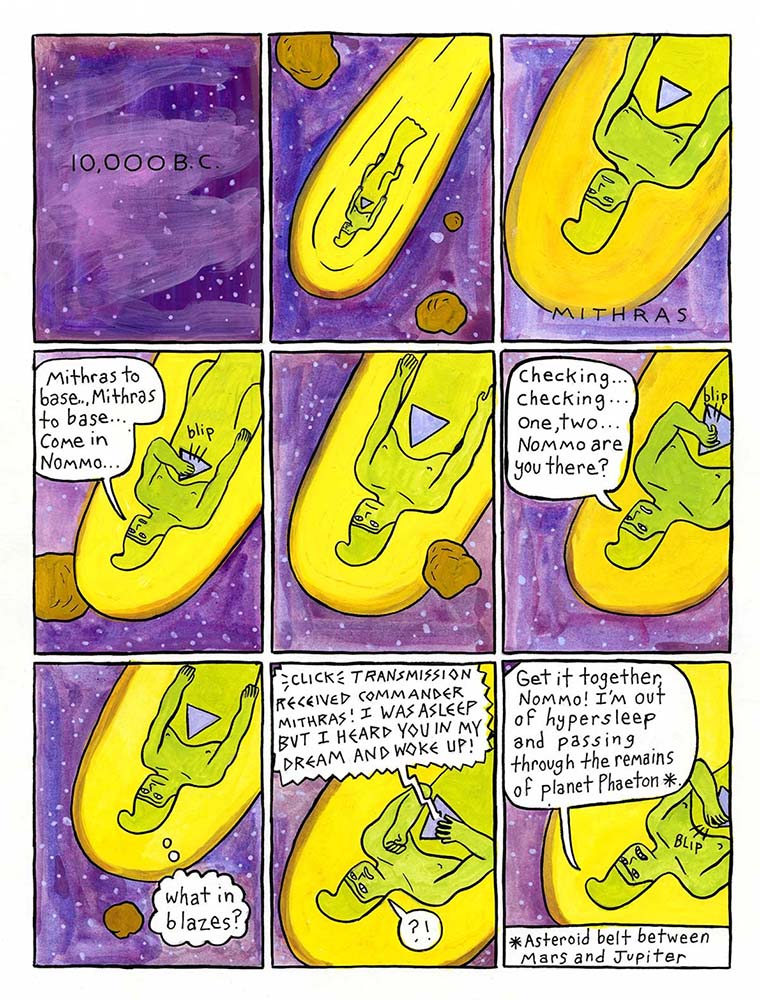
AO: Webcomics are very different in their method of delivery to other forms of comics. How did you balance that in terms of incremental delivery online versus the potential of being read in a later print collection format?
MOYNIHAN: Unless you have a very established fanbase I don’t think it’s wise to make anything in secret. You have to constantly remind people you exist and that you are working on something. In some ways it’s worse and less romantic than how things used to be, but also it means authors have more access to a potential audience than ever before. I admire people who can work in secret. I’ve taken a slight step back from social media here and there but in more closed online communities like Discord I’m pretty much present all day long. The chase to be elusive and prestigious I think is probably over, although sometimes I wish some of that would come back. Everyone is accessible, everyone is hustling to be seen and heard.
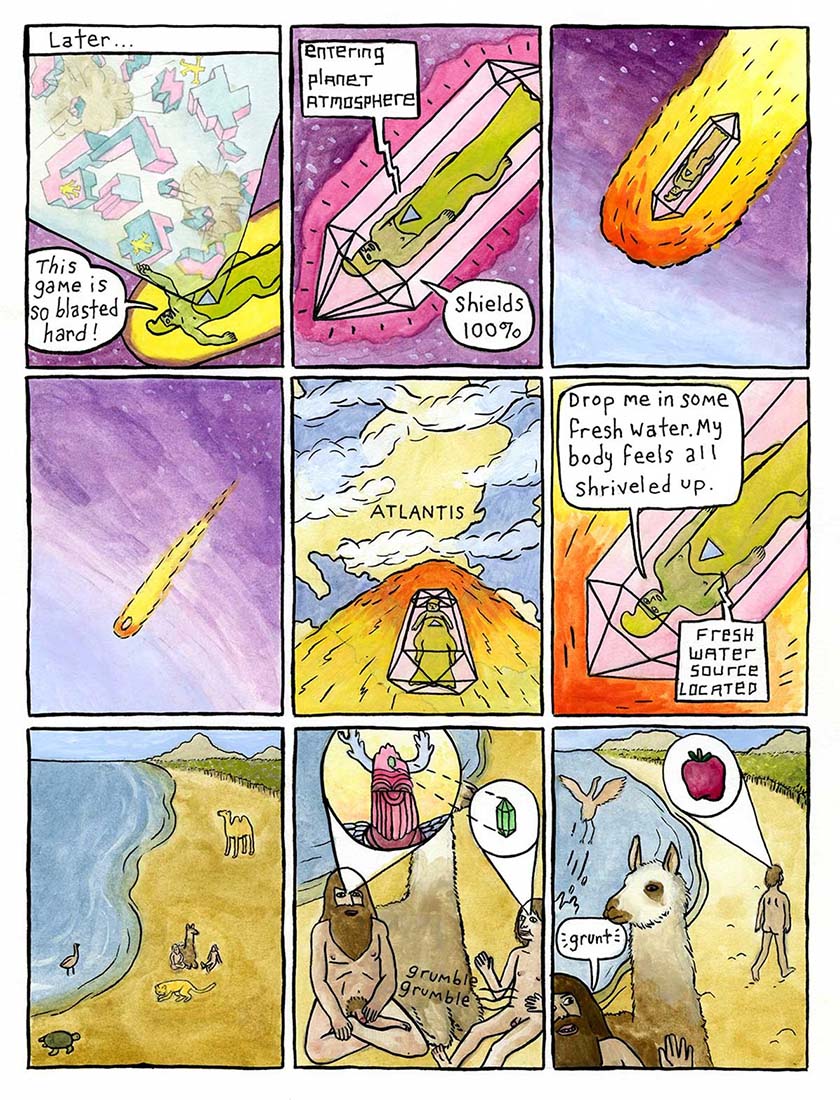
AO: Something that’s very apparent from the collection is the evolution of your visual storytelling. It begins with very rigid 9-panel grid page structure but becomes freer and more experimental as the years progress. Was that a conscious decision? And why did you move away from that original presentational style?
MOYNIHAN: I started with the 9-panel grid because I thought it would be a great rhythmic consistency to bang the story out from week to week. I could have a similar cadence to a comic strip but expanded to fit more plot. As the story went on and I became less concerned with hitting plot points, I started luxuriating in more open layouts. After a while I just got tired of being so married to the grid and I wanted to flex my art muscles more.
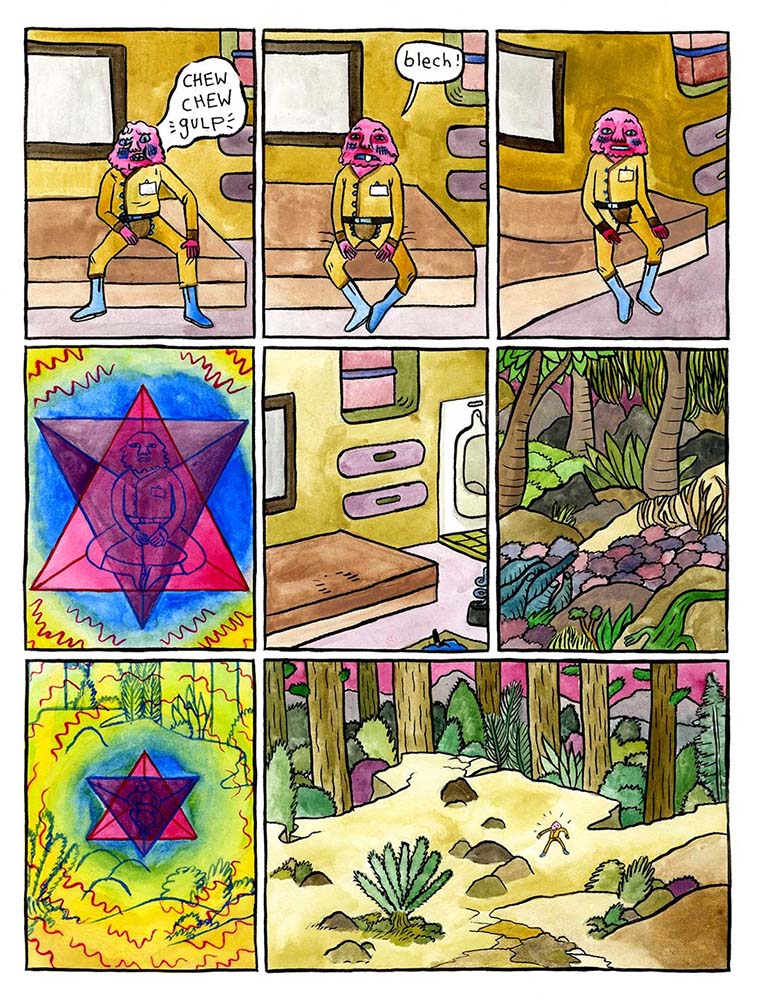
AO: Your vibrant use of colour a very important storytelling tool in Forming. How did you look to use colour to complement mood and theme?
MOYNIHAN: I wanted Forming to be my version of a blockbuster movie so it had to be in color. I hadn’t worked in color since high school art class. I didn’t really know where to start. I heard some comic artists liked using gouache because you could build opaque layers or treat it like watercolor. So I went out and bought a bunch of gouache paints and tried to remember my high school color theory. At first I was just trying to get the representations correct, like yeah that looks like a tree and a bush… and that looks like sand, okay cool. As I gained confidence I started thinking of color more as emotional representation and as spiritually symbolic.
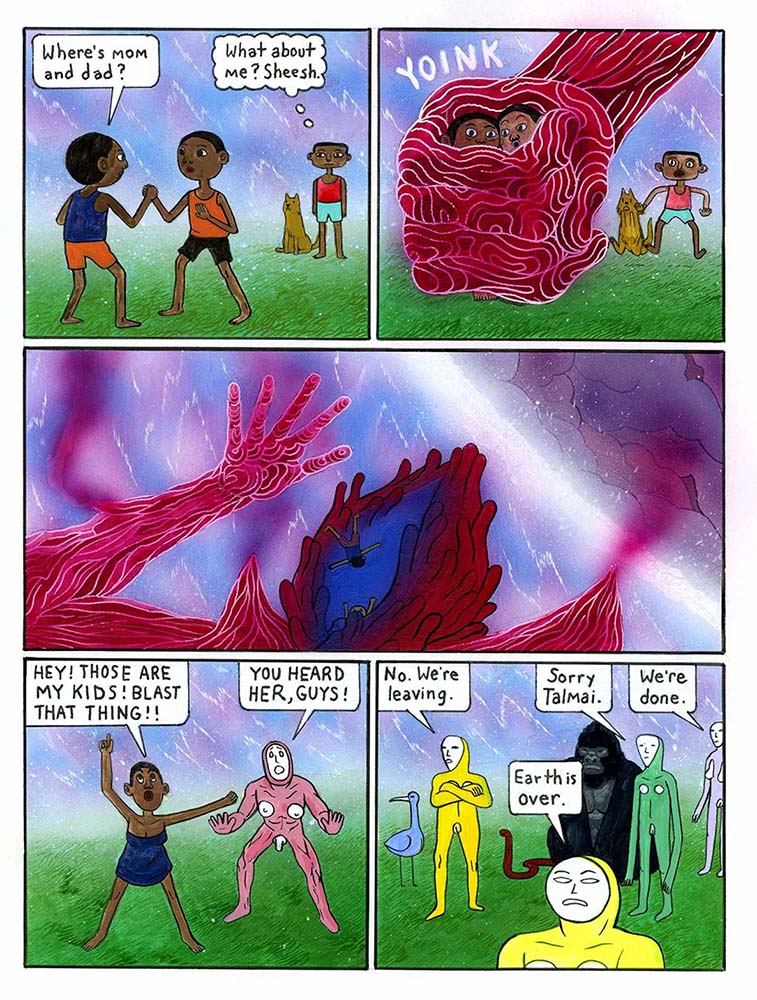
AO: Can you tell us a little about your creative process with Forming and the mediums you worked in to bring it to the page?
MOYNIHAN: The creative process is always to mine for something vibrant inside of me, pull it out and hope it resonates the same way for other people. I make art as a way to connect with other people and communicate novel ideas that I hope contribute to pumping up our experience on Earth. For comics I use gouache, ink, airbrush, colored pencil and sometimes Copic markers.
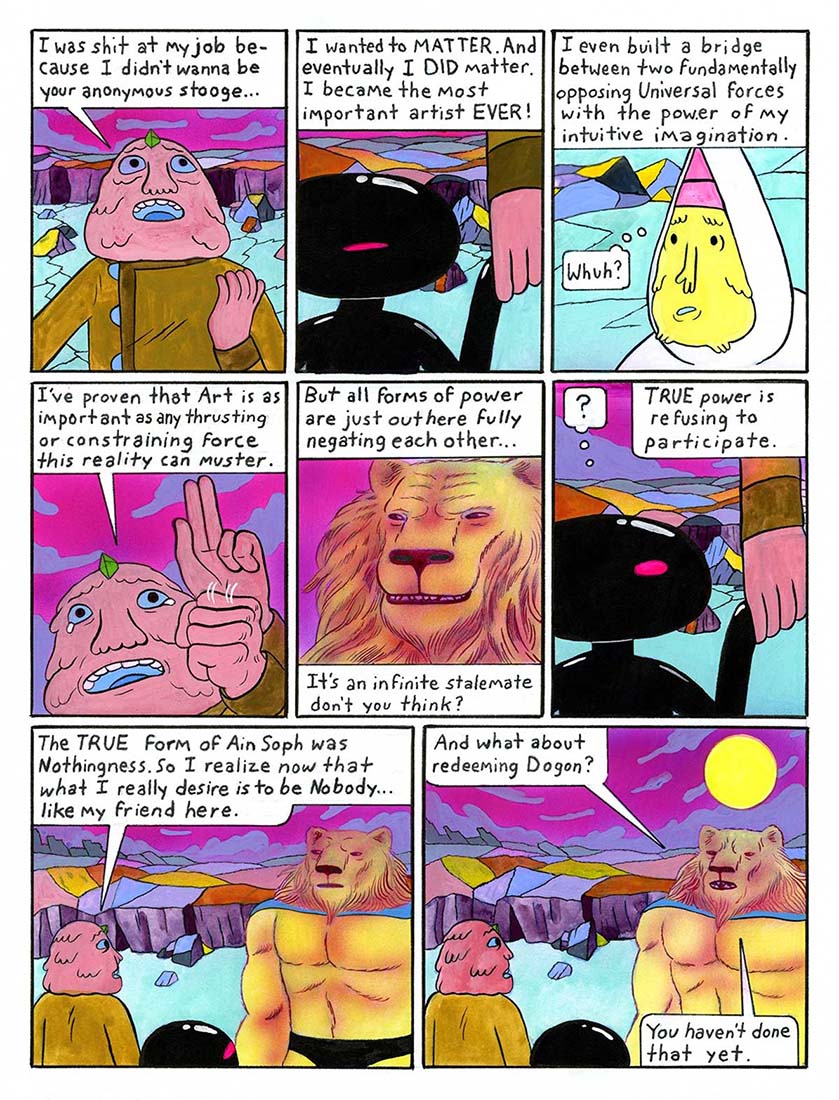
AO: And, finally, what else are you currently working on both within and outside comics?
MOYNIHAN: I have some ideas for a future comic but I don’t think I will start on it for a while. I need to resolve some things in my life first, or like, get into a different phase of life. I was thinking about trying to do a weekly 4-panel humor strip though. I thought that could be a nice change from Forming. Most of my days are taken up by animation. I’m adapting Forming for animation with a company called Bardo in Los Angeles. I’m also working on an animated series called Jesus 2 which is a whole other spiritual-sci-fi universe that takes up all of my time.
Interview by Andy Oliver
Fantagraphics at 50 Month runs through August at Broken Frontier. You can see articles as they’re published in one tagged list here.




I’ve read his stuff, and it was astonishing. Really really good.