

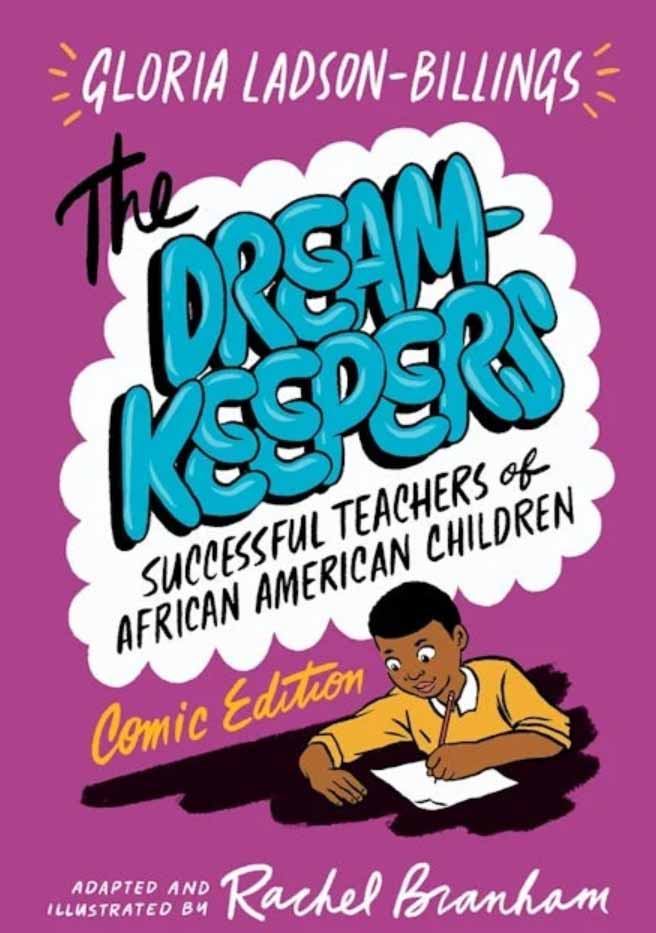
Gloria Ladson-Billings’ The Dreamkeepers: Successful Teachers of African American Children was first published in the ‘90s. Its analysis of how the culturally relevant practice of eight teachers achieved outstanding results with African American school children proved to be a landmark text in education. Earlier this year Rachel Branham adapted the book as a 200-plus page graphic novel format, allowing its message and observational studies to be appreciated via an alternative method of delivery. Published by Teachers College Press it also includes an introduction from Ladson-Billings that explains why she felt a comics version would be a relevant and complementary addition to the original text.
Our entry point into the proceedings and reader identification figure is Nissa, a young student teacher who has recently discovered her neurodiversity. On her placement at Pinewood School Nissa meets inspirational teachers like Julia Deveraux. Julia underlines to Nissa the importance of including students’ cultures in the learning experience, and to alter fixed beliefs and low expectations about African American pupils while empowering them in the process.
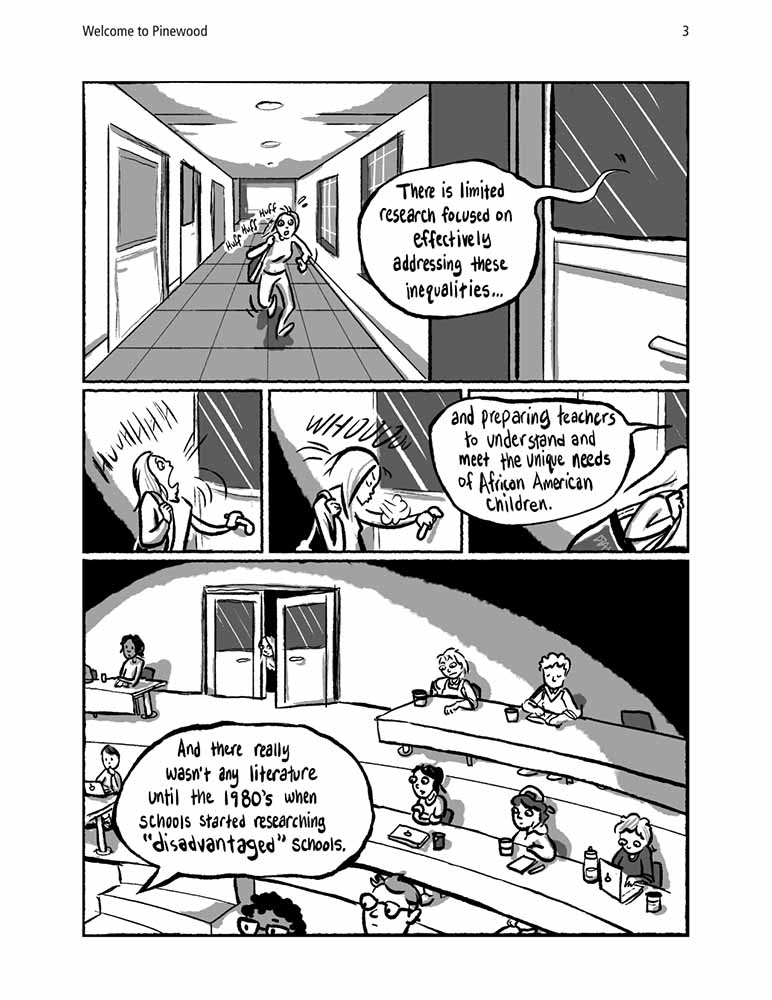
As a narrative structure this works extremely well, allowing the reader to learn alongside Nissa and be introduced to the ideas of the original book in a conversational, relaxed and accessible way. What we discover as events progress is the importance of teachers connecting with communities, providing culturally relevant pedagogy that mirrors the lived experiences of students, equipping students to challenge and be critical of social injustice, and to recognise that cultural identity is an integral part of the teaching process.
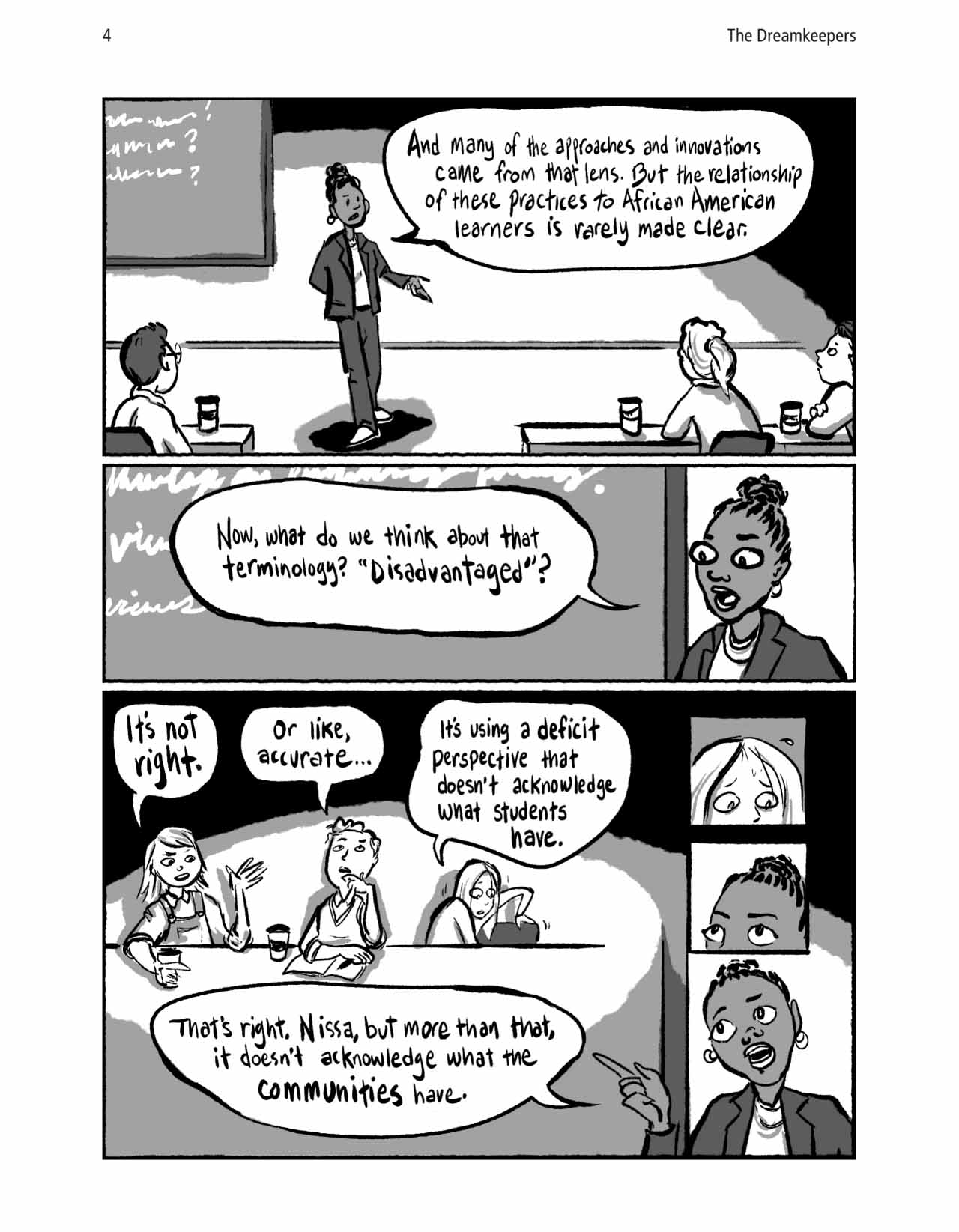
Branham’s visual style is accessible and inviting throughout. Visual characterisation plays an important role here with her stripped back cartooning style really connecting us with characters and drawing us into their world. Visual metaphor illustrates key points while experimental page structures – a quilt becoming panels during a sequence at a quilting bee for example – are used effectively without becoming a distraction. Lettering, the importance of which as a narrative tool is too often overlooked, is also cleverly employed in sequences like the one where Nissa becomes frustrated at her failure to communicate a lesson’s intent to her students.
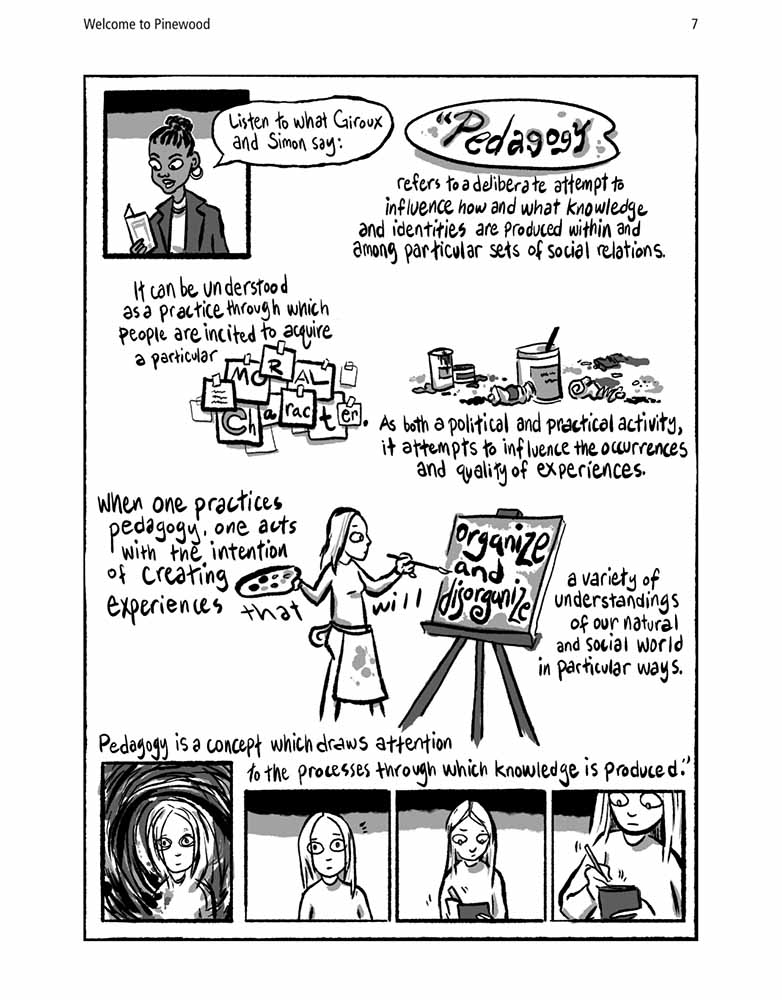
Along the way Nissa makes her own breakthroughs and her ever present post-it notes record crucial observations on this journey. The Dreamkeepers: Successful Teachers of African American Children Comic Edition is not simply a fascinating read on changing the system from the inside but, if like myself, you sit somewhere near the very centre of the Venn Diagram of privilege it also gives you so much food for thought. Recommended not just for those interested in educational theory but also for its sociological impact too.
Rachel Branham adapting the work of Gloria Ladson-Billings • Teachers College Press, $32.95
Review by Andy Oliver