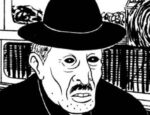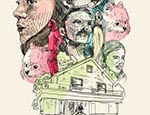


In our penultimate interview for the 2026 Broken Frontier ‘Six to Watch’ our subject is Francis Todd, the artist behind the form-pushing anthology Caribou and the founder of exciting new alt comics micropress Blue Funnel Books. When shortlisting for this year’s intake Francis’s practice appealed to me because of its experimental style, its continuing interrogation of the page, and his ongoing evolution as an artist. Also he has a very cool hat. We like hats here at BF.
I chatted with him recently about his influences and inspirations, collaborating with his peers at the Camberwell Comic Club, and the ethos and publishing plans for Blue Funnel Books…
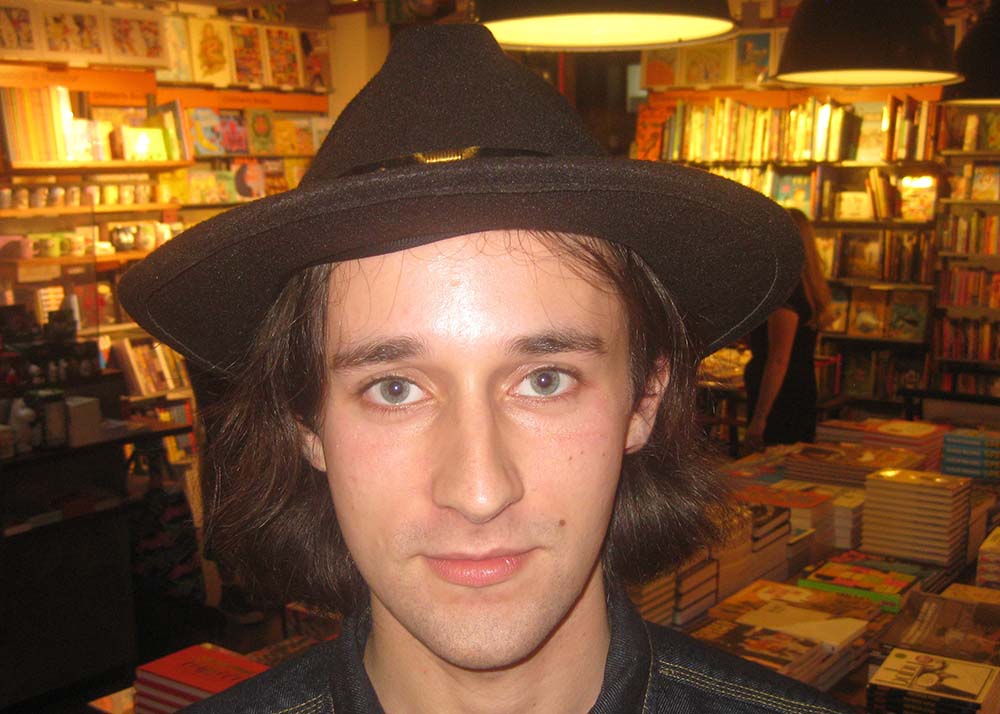
ANDY OLIVER: As one of this year’s 2026 Six to Watch creators let’s begin by asking you to introduce yourself to our readers and tell us a little bit about your wider artistic background?
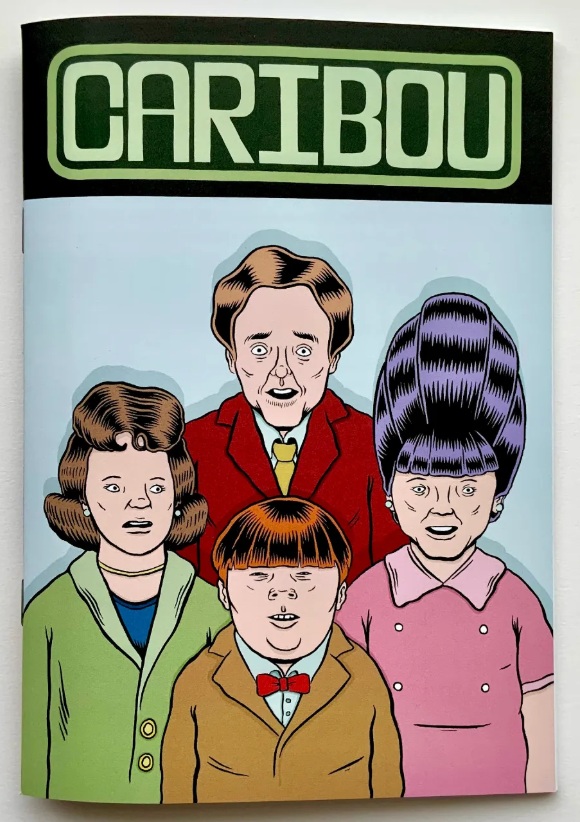
FRANCIS TODD: My name is Francis Todd and I am a comic creator from Liverpool originally, but I now live in London. I started self-publishing a series called Caribou a couple of years ago, but have now started a small publisher called Blue Funnel Books, where I self-publish my own work and others’. I find it difficult to find a current thread within my work, but probably the most obvious one to those who know me is a general interest in the past. I’m particularly interested in the histories of Liverpool and London, and in ghosts, churches and the stories attached to old buildings and places.
AO: What was your entry point into comics?
TODD: My entry point into comics was the comics that my parents left lying around the house growing up. My dad had a substantial collection of superhero comics by creators like Frank Miller and Alan Moore, so those books were a big part of shaping my tastes. As I got older, I started reading the weirder comics that my mum had lying around, in particular the paperback RAW issues, where I was introduced to people like Yoshiharu Tsuge, Chris Ware, Jerry Moriarty and Art Spiegelman. There were also odd issues of Acme Novelty Library lying around, and after getting interested in that, I started using paper round money to buy all the issues of things like Eightball, Black Hole, Crickets by Sammy Harkham and, in particular, Yummy Fur by Chester Brown.
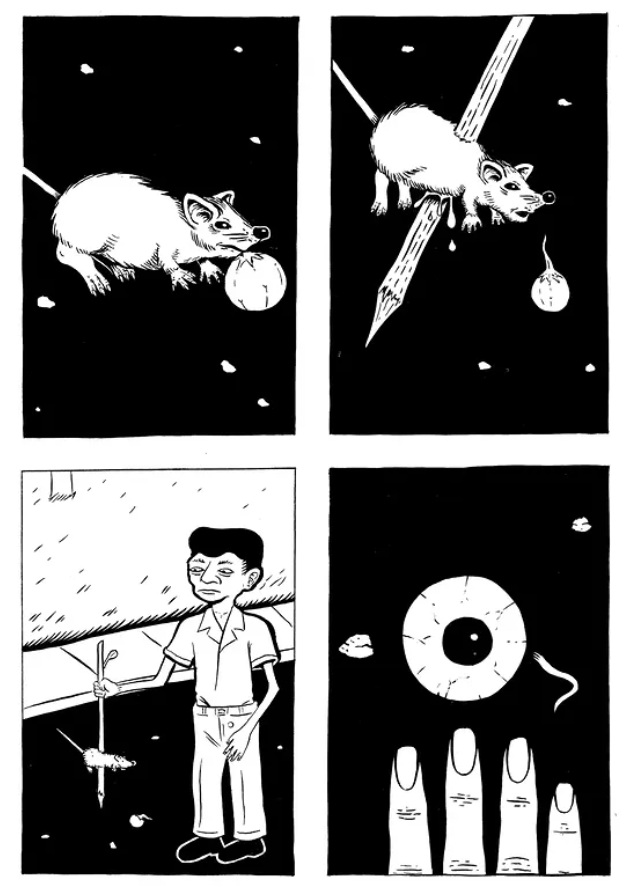
AO: Reading your ongoing series Caribou there are a couple of artists that spring to mind as influences. Who do you count among your inspirations and why?
TODD: When I started, it was definitely Chester Brown, Clowes and Burns, but I don’t know if I could say that’s the case anymore. It’s kind of sickening looking at my work from a couple of years ago, because I can see my influences so obviously, and I don’t even really read many of those guys’ comics anymore. The comics I like more nowadays are by cartoonists like Frank Santoro, Yoshiharu Tsuge and Jerry Moriarty. I also love the work of Zoe Taylor, despite how little of it is actually out there. My biggest influences now are my friends and the other comic creators around me, like Geoff (ZEEL) and Joe Kessler, who help run Camberwell Comic Club (at Camberwell College of Arts, UAL), and a lot of my drive to make work is so that I can show my pals at comic club each week.
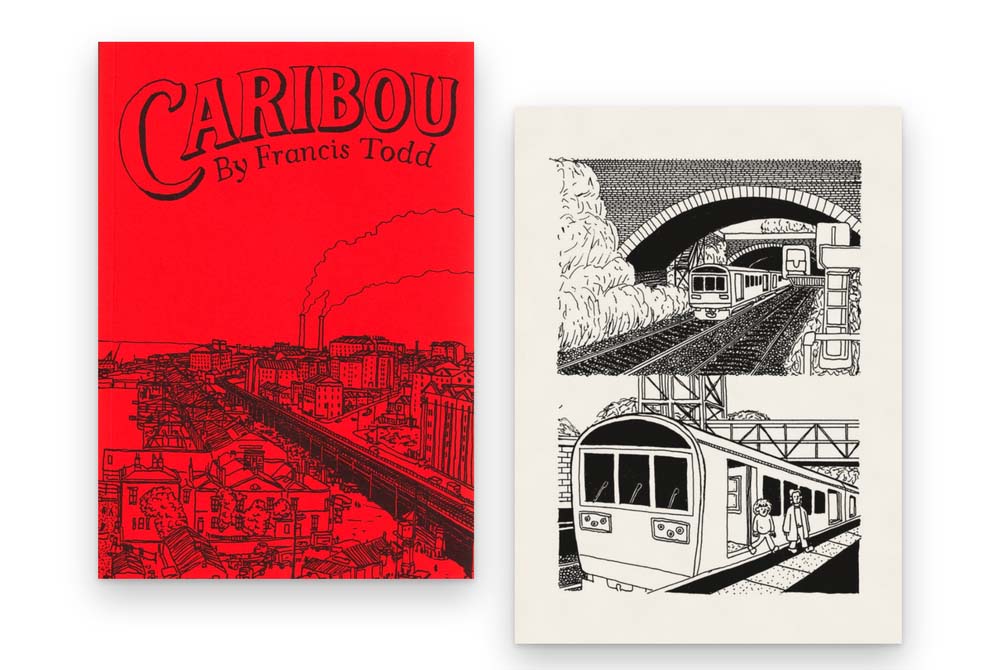
AO: Caribou is a mix of ongoing serialised comics and one-off stories. How would you describe it as a platform for your work?
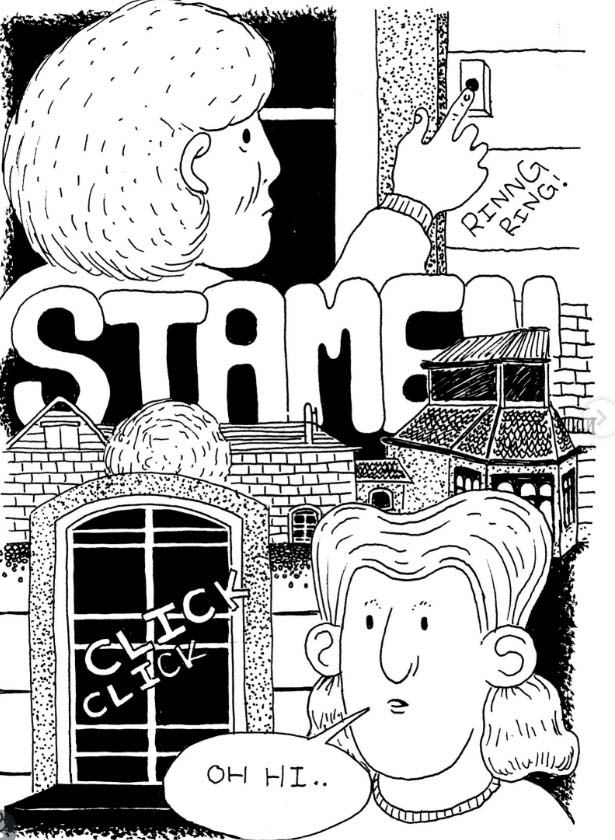
TODD: To be honest, I don’t really know what it is anymore. Issue #4 was a bit of an irregular entry compared to the others, as my work has changed a lot since issue #3. It’s a 108-page book rather than a 36-page floppy, and it was drawn in a completely different way. I’m curious myself to see whether I’ll do another issue of Caribou, really, as I’ve started seeing the main story, ‘Stamen’, as more of a book than a serialised story. Ultimately, like many anthologies, Caribou is whatever the hell I want it to be.
AO: What strikes me immediately about that serialised comic ‘Stamen’ in Caribou is that you’re unafraid to make the reader work and, as a result, really interact with the page in piecing events together. What are the themes you’re looking to explore with the strip? And what kind of narrative relationship you are looking to form with readers?
TODD: In ‘Stamen’ there are two main boys who are best friends but use and abuse each other in a lot of ways, which reflects the dynamics I saw between friends when I was in school. In many ways it’s a middle finger to the shallow optimism of a lot of YA fiction, particularly things like Heartstopper, though I think it’s probably become a bit bigger in scope now, and it’s also attempting to make a point about the shifting position and alienation of young men.
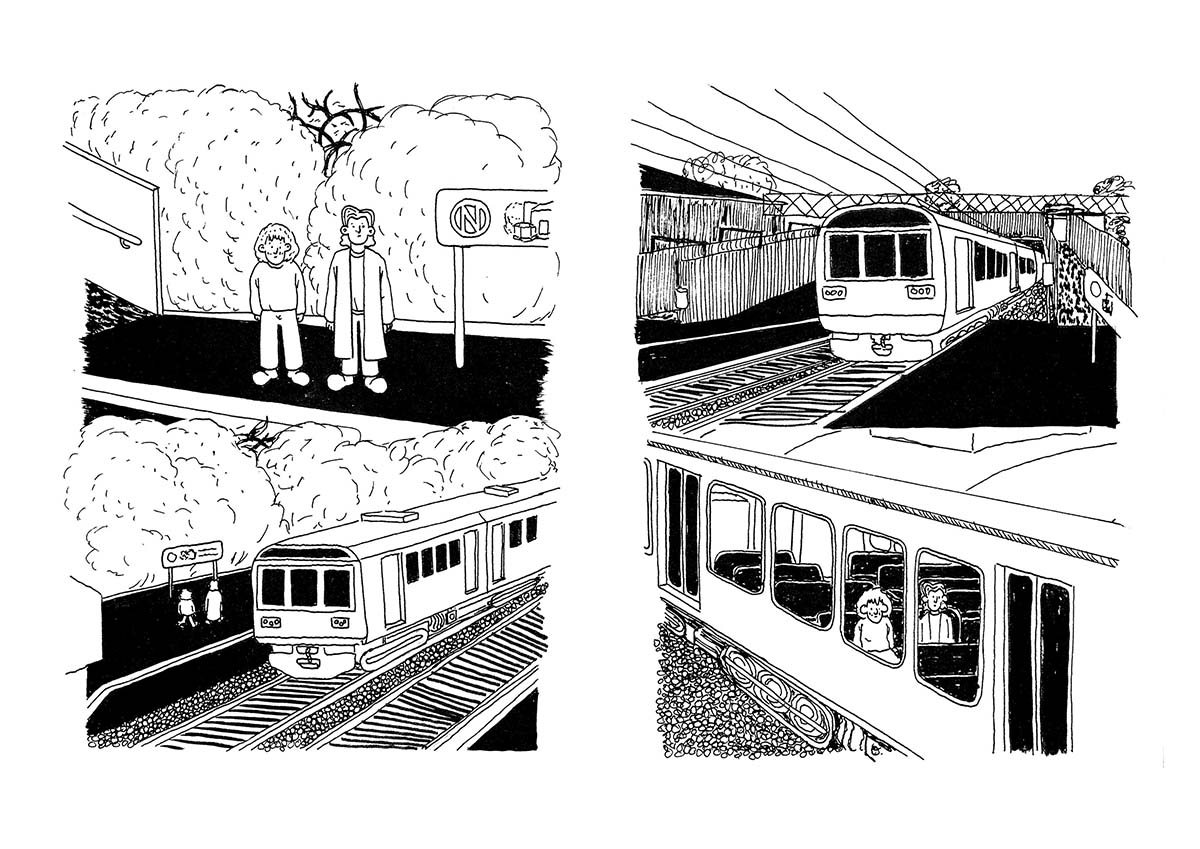
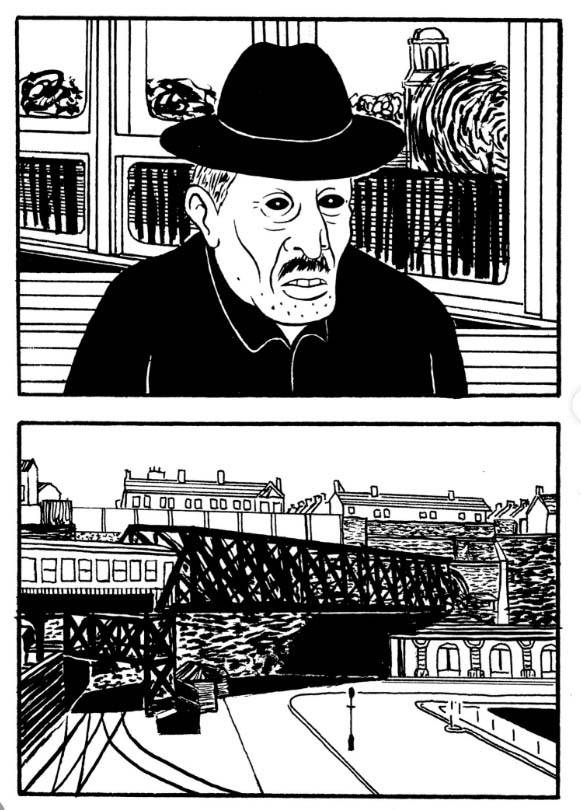
I’m really scared of insulting the audience, but it can be difficult to walk the line between subtle and readable. I really hope people read my comics multiple times, especially my newest one, Caribou #4. It’s wordless and has quite a few characters whose relationships, and the meaning of those relationships, maybe aren’t completely obvious.
AO: As mentioned there’s a noticeable shift in direction in Caribou #4. What were the reasons for that?
TODD: The change in direction came from a lot of different things. Initially, I just wanted to find a different way of drawing the comic, because I felt my use of a brush was holding my drawing back. From there I started experimenting with all kinds of image-making, and ended up changing the way I was drawing on almost every spread. It’s a thematic shift as well, as most of the book takes place a hundred years before the rest of the series. That was partly to broaden the scope of the book, but it also coincided with a growing interest in history.
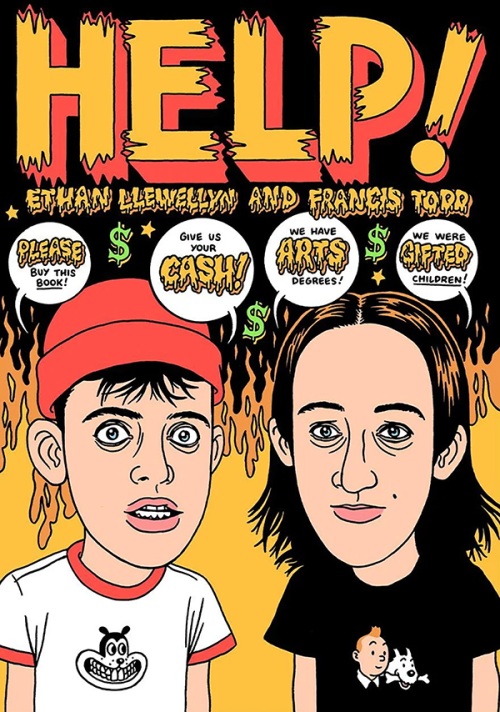
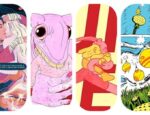
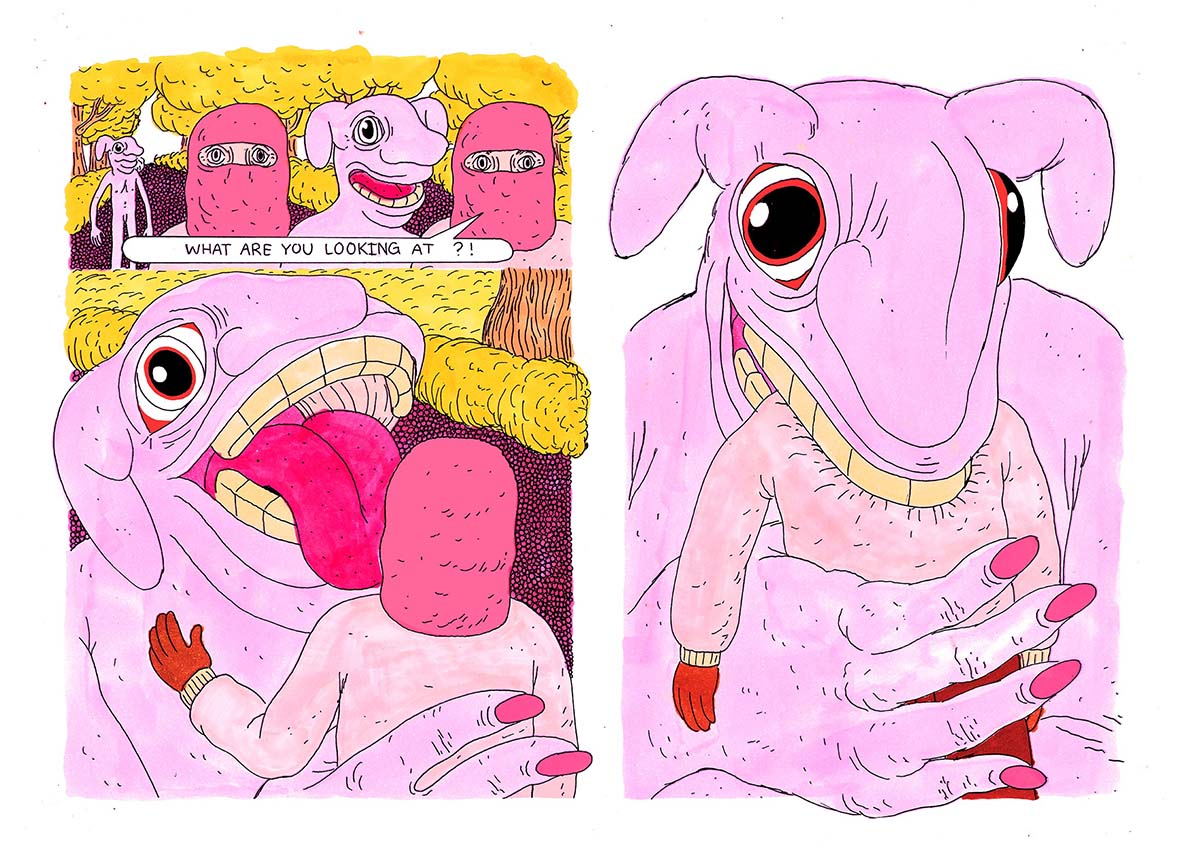
Ethan Llewellyn’s cover to Help!
AO: You also collaborated with Ethan Llewellyn on the one-shot anthology Help!. What were you hoping to achieve with that tonal juxtaposition of different cartooning styles?
TODD: It was originally Ethan’s idea. When I agreed to it, our work was probably more similar than it is now, and the book was a way for us to bounce ideas off each other. For me, the style of my work in the book came out of experimentation, as I hadn’t done very much colour work at that point. Since then we’ve both moved in quite different directions, so the book feels like a snapshot of a particular moment for both of us. I’m not sure I had a clear aim with the juxtaposition of styles. It grew out of the collaboration itself.
AO How important is that constant sense of experimentation to you in your practice?
TODD: Experimentation has been integral to my development over the past year or two. I love comics that use the drawing itself to convey ideas, themes and action, where the way something is drawn is part of what it says. Books like Joe Kessler’s The Gull Yettin, which use different ways of drawing and different materials to shape the reader’s experience, are really special to me, because they make full use of what the medium can do. It’s also a way of keeping the process of drawing a book interesting for me.
My next comic, perhaps unexpectedly, is a return to a more formalist style of storytelling, in an attempt to push myself to find a balance. I’m always trying to take something away from each project.
AO: You’ve recently launched your micropress Blue Funnel books. How would you define its ethos and what other upcoming projects can we expect to see launched via Blue Funnel?
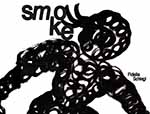
TODD: I want Blue Funnel to be a publisher that reflects the little world of comics that I’m part of: my friends, the cartoonists around me, and the work we’re all making and reading. So far that has meant publishing my own comics alongside other people’s, like Fidelia Schlegl’s Smoke and Kira McGillivray’s Knockout. At the same time, I want it to be big in scope, with room for lots of different kinds of comics and ambitious, larger-scale books, rather than being limited to one style or type of project.
Next up is a pretty big anthology, which I’m editing. It’s difficult to talk about at this stage, but it already has around 24 contributors, so it’s a substantial book, and fingers crossed it makes a bit of a splash. I think it’s going to be really good.
AO: Give us some insights into your creative process. What mediums do you work in?
TODD: I’m almost exclusively a cartoonist, working in pen on paper, and at heart I’m a storyteller. I don’t really use scripts, and I usually only have a very rough idea of how a story will turn out, so I’m always adding and removing things as I go. Caribou #4 took me over a year, and by the end I had as many pages I didn’t use as I did. I do illustration work occasionally too, though I’m happiest making comics. Most of my other pursuits sit outside the world of art: history is a huge interest of mine, and I spend as much time as possible exploring this wonderful city. In a lot of ways, that’s the biggest influence on my creative process, and I see collecting this knowledge as a huge part of my creative practice. I love taking people around London and explaining the places and the stories behind them, and I’d love to lead tours at some point.
AO: As an emerging voice on the scene do you have any thoughts for those considering self-publishing about reaching a readership for your work and building an audience?
TODD: My advice is just to do it. Put your work out there, give it to people, talk to them about it, and be willing to listen to criticism and learn from it.
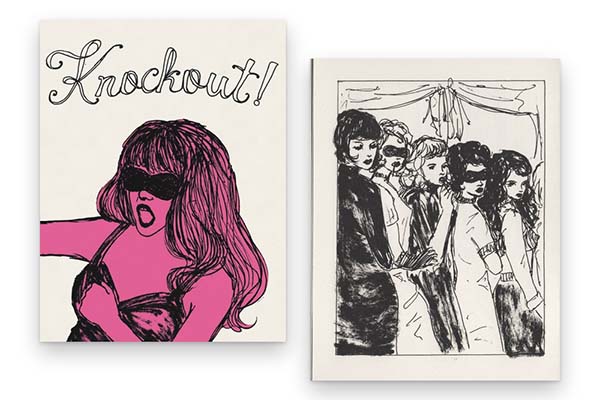
Kira McGillivray’s ‘Knockout!’ also from Blue Funnel Books
AO: And, finally, are there any other upcoming projects you can tease? And where can we expect to see you next at events?
TODD: The new books that just launched at Thought Bubble should be online soon. After that there should be one or two floppy books by some really cool people, and then the big anthology I’ve been working on for a while, which will hopefully launch at ARC 2, if that happens. I don’t have any tables organised before the end of 2026, and nothing booked for 2027 just yet, but I’m sure you’ll see me around.
Visit the Blue Funnel Books store online here
Interview by Andy Oliver