

There is an interesting theory about horror and Japan, which suggests that the reason it is so good is because the genre plays on fears that are already prevalent among its audience in that country. There could be several reasons for this, ranging from the influence of local myths and folktales to generational trauma associated with the terrors of war. One can also consider the differences between how East and West approach tropes usually associated with horror — life and death, for instance, or animate versus inanimate objects.
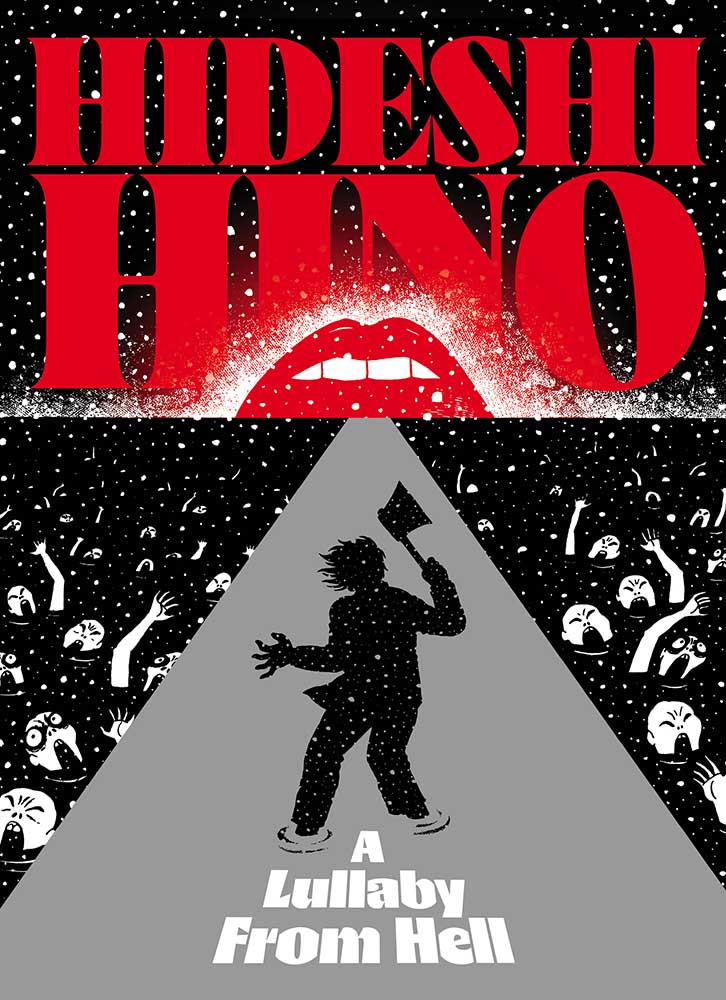
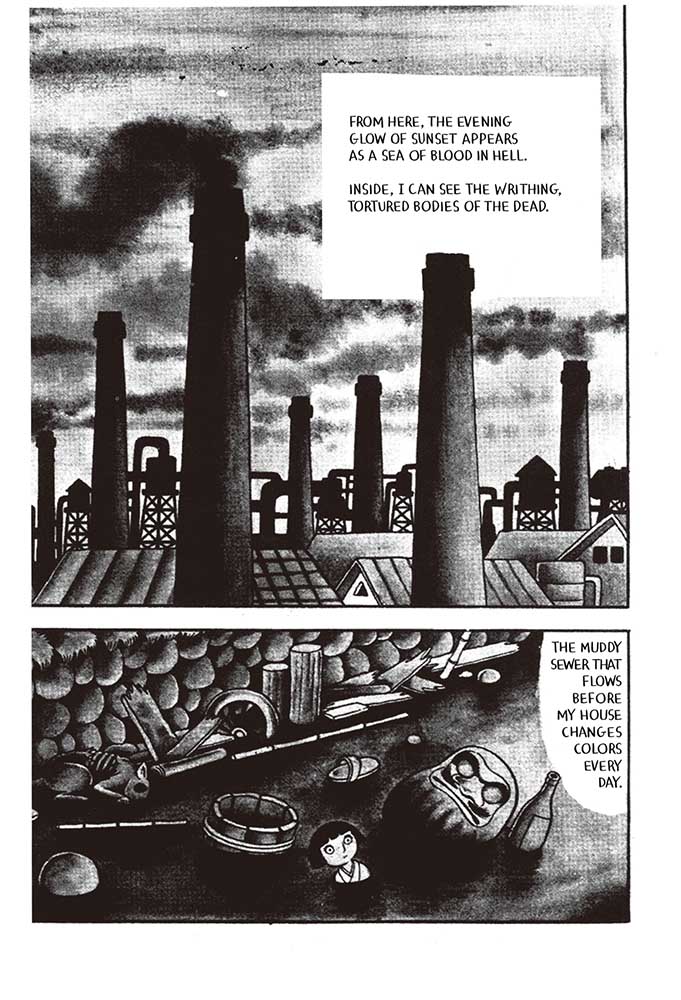
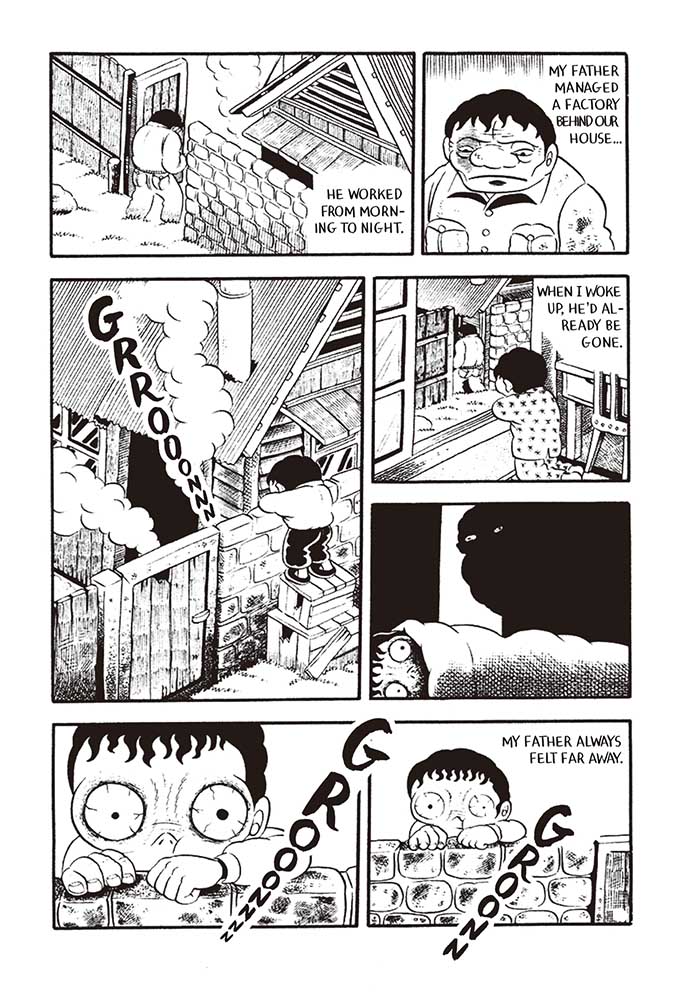
All these ideas converge in some way or another in the stories of Hino Hideshi, who has spent more than six decades exploring the thin membrane that separates us from other beings as well as other states of existence. Long acknowledged as a master of the form, Hino’s art, at first glance, manages to be charming as well as unnerving, until one starts to read the stories themselves. It is only then that the true depths of his characters’ depravity rise to the surface, alongside decapitated heads, severed body parts floating in rivers of blood, and every imaginable fluid that makes up the human form.
Zack Davisson, who has translated this first of two planned volumes, uses his foreword to warn readers that Hino is a “rarified taste”. The foreword is helpful because of how it places these stories in the context of their creator’s early life, specifically his family’s flight from Qiqihar, China (where Hino was born), to Busan, and finally Japan in the wake of World War II. One can draw a line from those early days of hunger and despair to the torment expressed by the protagonists of these stories.
An interesting aspect of these macabre tales is how they incorporate something essentially humane, from the need for love to the celebration of beauty that is as much a part of the world as its darkness. Many of the stories also centre upon artists or outcasts, either unloved by their families or by society at large. That feature appears almost immediately in the first tale, ‘Zoroku’s Strange Disease’, about an unwanted child who is afflicted by a disease that slowly turns him into a monster. Ostracized by the village, he is left to rot, quite literally, in a forest, where he uses his body to paint pictures before transforming into something inexplicable.
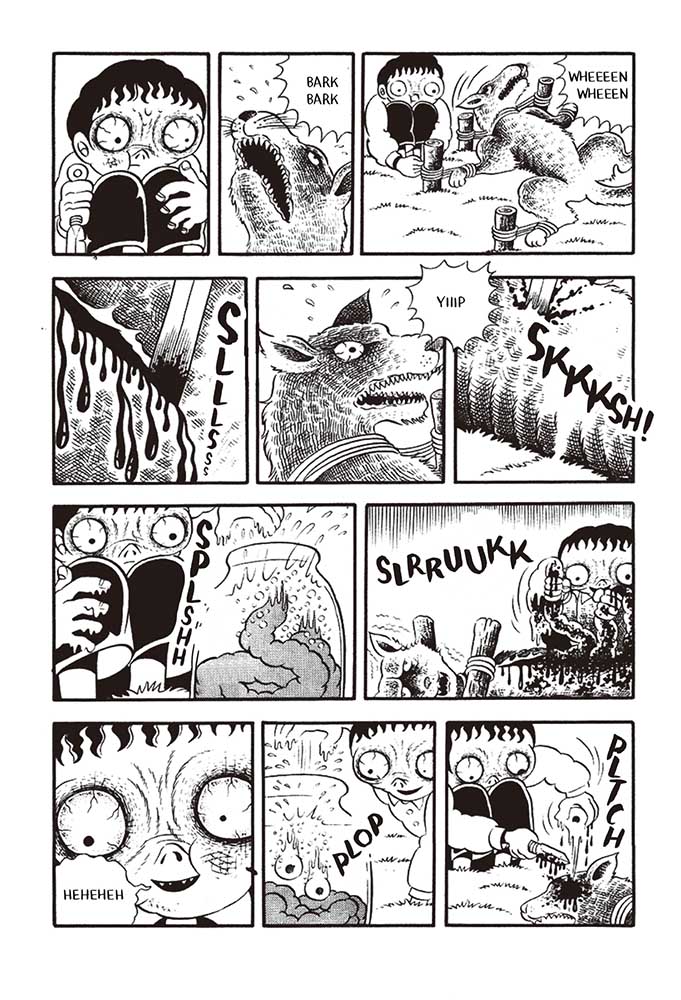
In ‘Lullaby from Hell’, a child deprived of parental love and attention learns that whatever he draws can come to pass and uses that ability to unleash all manner of torments on people who cause him pain. This ends with retribution on his parents too and, like most other stories here, there is no promise of redemption. Many of the protagonists are also children who have been wronged, which is a telling comment on what drives Hino to plumb these depths. If there is one quibble, it is Davisson’s decision to lend some of the characters a dialect that is drawn distinctly from the American South, even if that doesn’t take anything away from the narratives themselves.
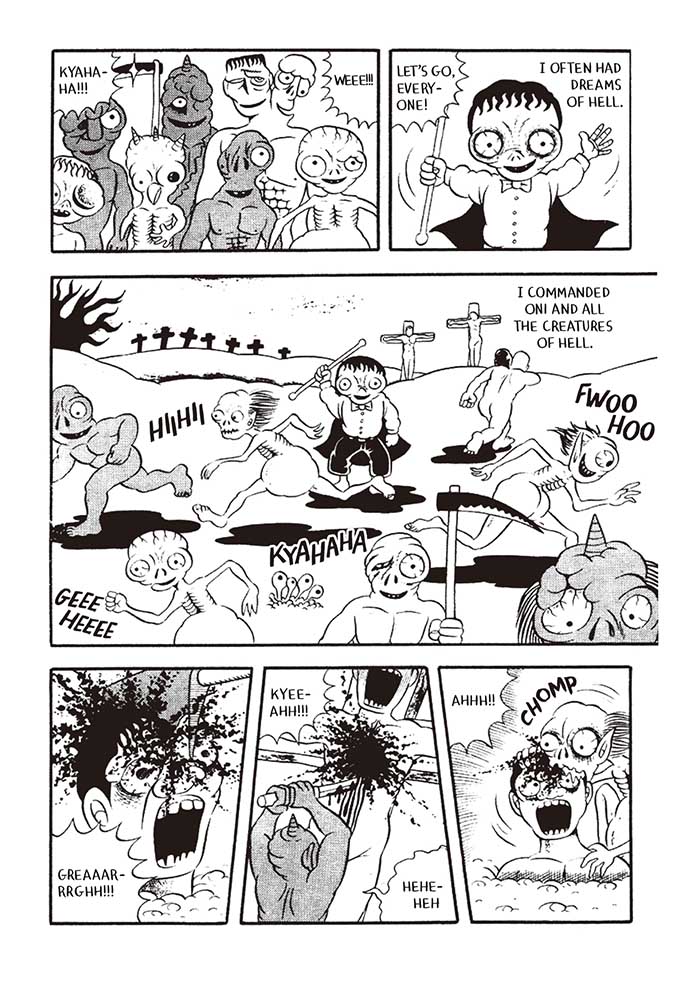
It may be hard to understand why these disturbed folk are drawn in ways that make them seem almost lovable. Then again, it’s probably because Hino wants us to try and empathise with them despite their obvious immorality. Perhaps his work is ultimately about getting a reader to acknowledge and accept that these stories may be horrifying, but they come from something that lies within each of us. That simple premise alone may explain why his books continue to be loved and admired.
Hideshi Hino (W/A), Zack Davisson (T) • Drawn & Quarterly, $25.00
Buy online from Gosh! Comics here
Review by Lindsay Pereira