

Way back between the years of 2003 and 2005, there was one indie comic in particular that stands out in my memory as something completely distinct. Simone Lia’s Fluffy, published in four parts before being compiled into one volume by Jonathan Cape, is a mixture between classic cartoons and a graphic novel, focusing on the life of titular character Fluffy, a young rabbit who thinks he’s a human, and his dad, Michael. Full of wonderful childlike perspective, humour and warmth, Lia’s Fluffy proved popular for generations to come. So much so, that in late 2025, Lia published a sequel: How to Make Life Better When It Feels Like It’s Getting Worse, again with Jonathan Cape.
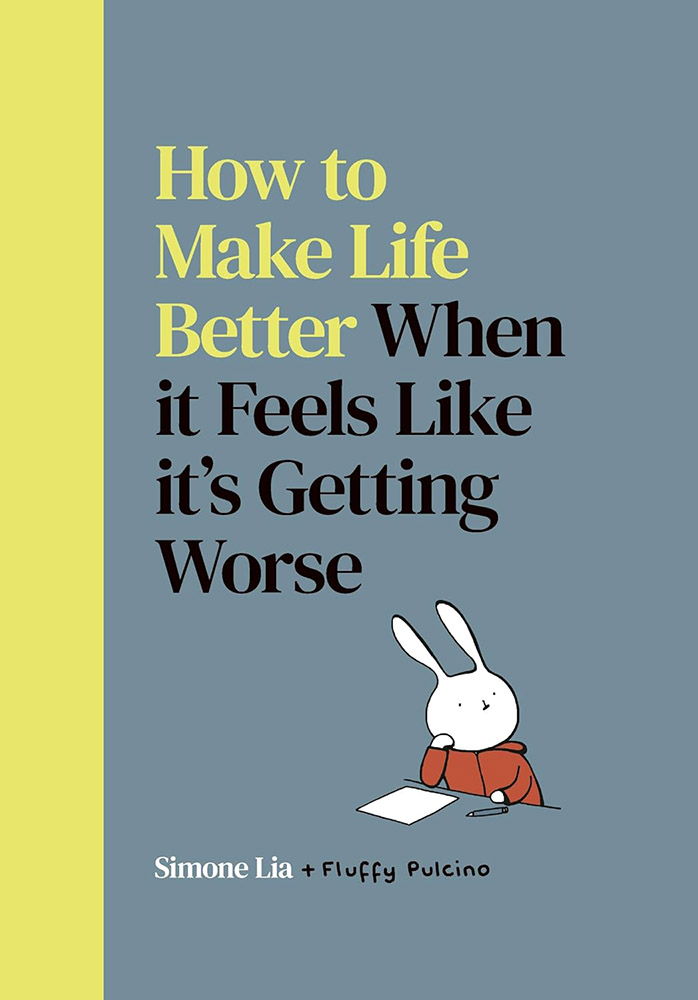
For die-hard Fluffy lovers, the question of whether this treat would be added to our baskets feels obvious (personally, I went to Gosh Comics and got the signed edition with a mini Fluffy print!). However, if you’re expecting How to Make Life Better to pick up where Lia left on in 2005, you’ll be in for a surprise. Like readers, Fluffy has grown and evolved over the past 20 years. No longer the naïve, silly rabbit we once knew, Fluffy is all grown up (nearly), and navigating his early twenties; unlike the last time we encountered him, he’s not in denial about being a bunny (a notion focused on regularly in the original comics).
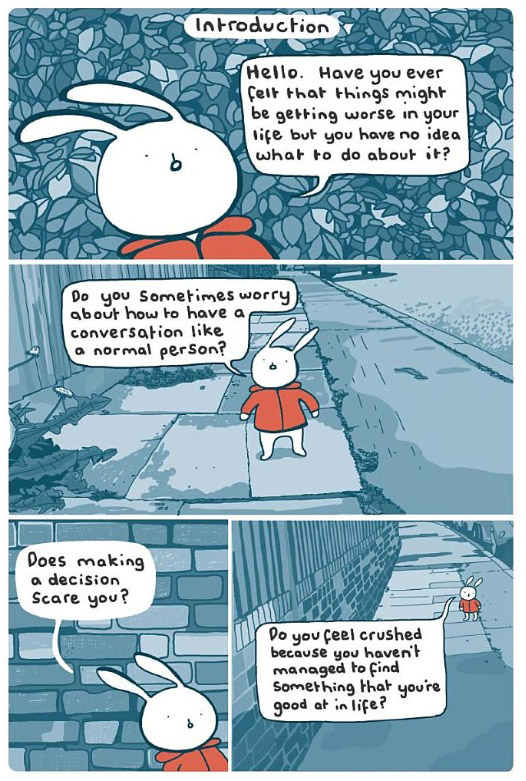
Tonally very different from its 2005 counterpart, the general storyline of HTMLBWIFLIGW is more serious, focused around Fluffy finding his place in the adult world, and attempting to write his own self-help book. This is made quite difficult of course, by the fact that he is, well, a rabbit. And some people can’t resist treating him as such, picking him up and stroking his ears. In all honestly, Fluffy’s book is just as much a guide for himself as it is for readers – he has SO many questions, and the world can be incredibly confusing and pressurising when you’re trying to find your place.
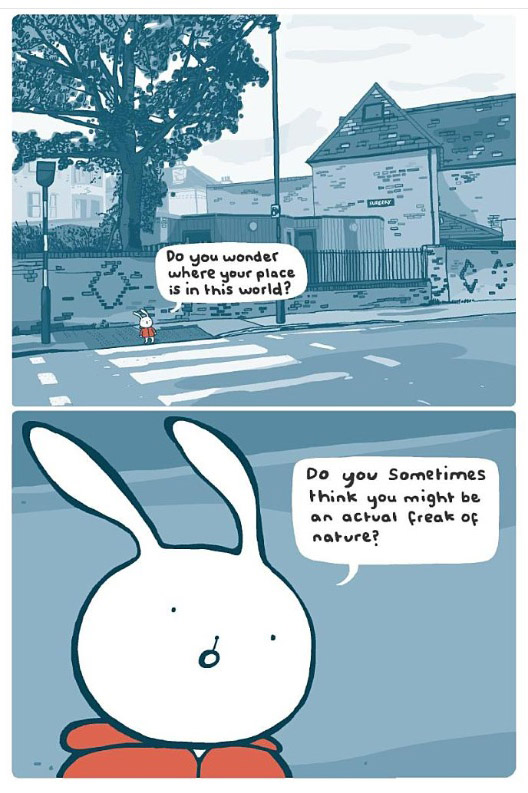
Whilst HTMLBWIFLIGW packs less humour into its volume than the original Fluffy, its new focus on the very real struggles of adulthood, painful truths and working out what the heck you were put on earth to do, make it a very worthy successor, with reader’s able to identify and empathise with Fluffy’s struggles, having grown up alongside him. We even get a peek at Fluffy’s adolescent years (who knew a bunny could be so moody?), and how he coped with some very big life changes since we last saw him, including the outbreak of COVID-19; a life-changing, and hugely isolating period for everyone.
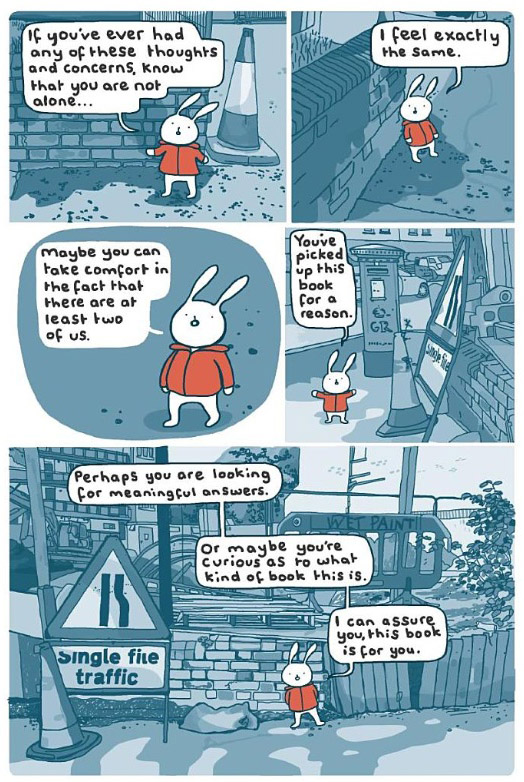
Lia uses a distinct style for this book, adapting the wonderful cartoonish silliness of the original black-and-white sketched Fluffy, and anchoring him in the reality of the adult world by using dark blue, highly detailed backgrounds, giving a distinct depth to the panels. Fluffy stands out from the details behind him with the formally mentioned stylistic differences, but also the colour palate – Fluffy is consistently white with a red jacket, standing out against the shades of blue. Thematically following the overall message of the story, Fluffy is simultaneously part of the bustling world around him but clearly distinct from it.
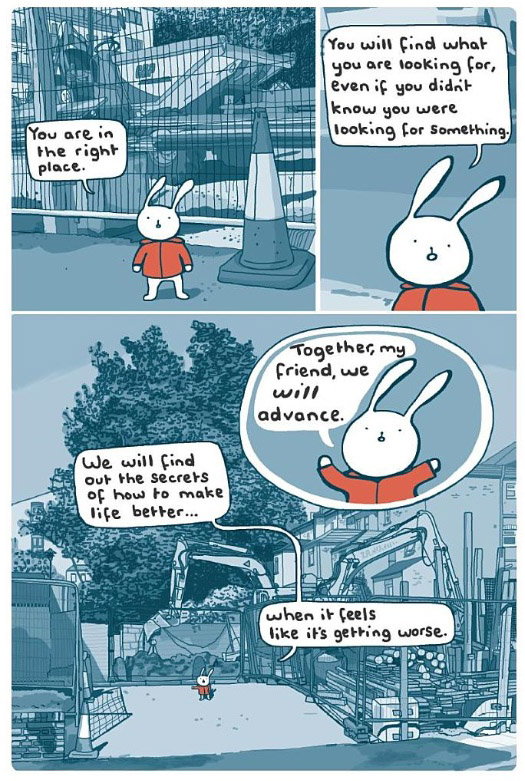
This is a gorgeous coming-of-age story, and a triumphant return to a much beloved character, full of sharp wit and gentle humour. With an invite to become a pen pal of Fluffy’s at the very back of the book, one can only hope that the legacy of Fluffy Pulcino will continue to live on. After all, if Fluffy can get a full-length graphic novel 20 years on, who’s to say what he’ll do next!?
Simone Lia (W/A) • Jonathan Cape, £20.00
Review by Lydia Turner