

PRIDE MONTH 2026! Irish comics creator AJ O’Neill’s breakout moment on the UK small press comics scene came two years ago with the powerful autobiographical comic The Kid in the Cave. Already a contributor to WIP Comics anthologies, AJ has gone on to self-publish more comics including the alluringly weird Hole and the nightmarishly relevant Never Mind It’s Only the Fucking Apocalypse. As part of our ongoing Pride celebrations at Broken Frontier I talked to AJ about the challenges of autobio, the opportunities for experimental narrative in comics and what we can expect next from this exciting emerging voice…
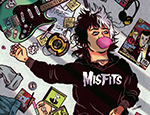
(Top art from queer zine Reunion)
ANDY OLIVER: One of the aims of our Pride Month interviews is to bring featured creators to a wider audience so let’s start by asking you about yourself, your creative background and your route into comics?
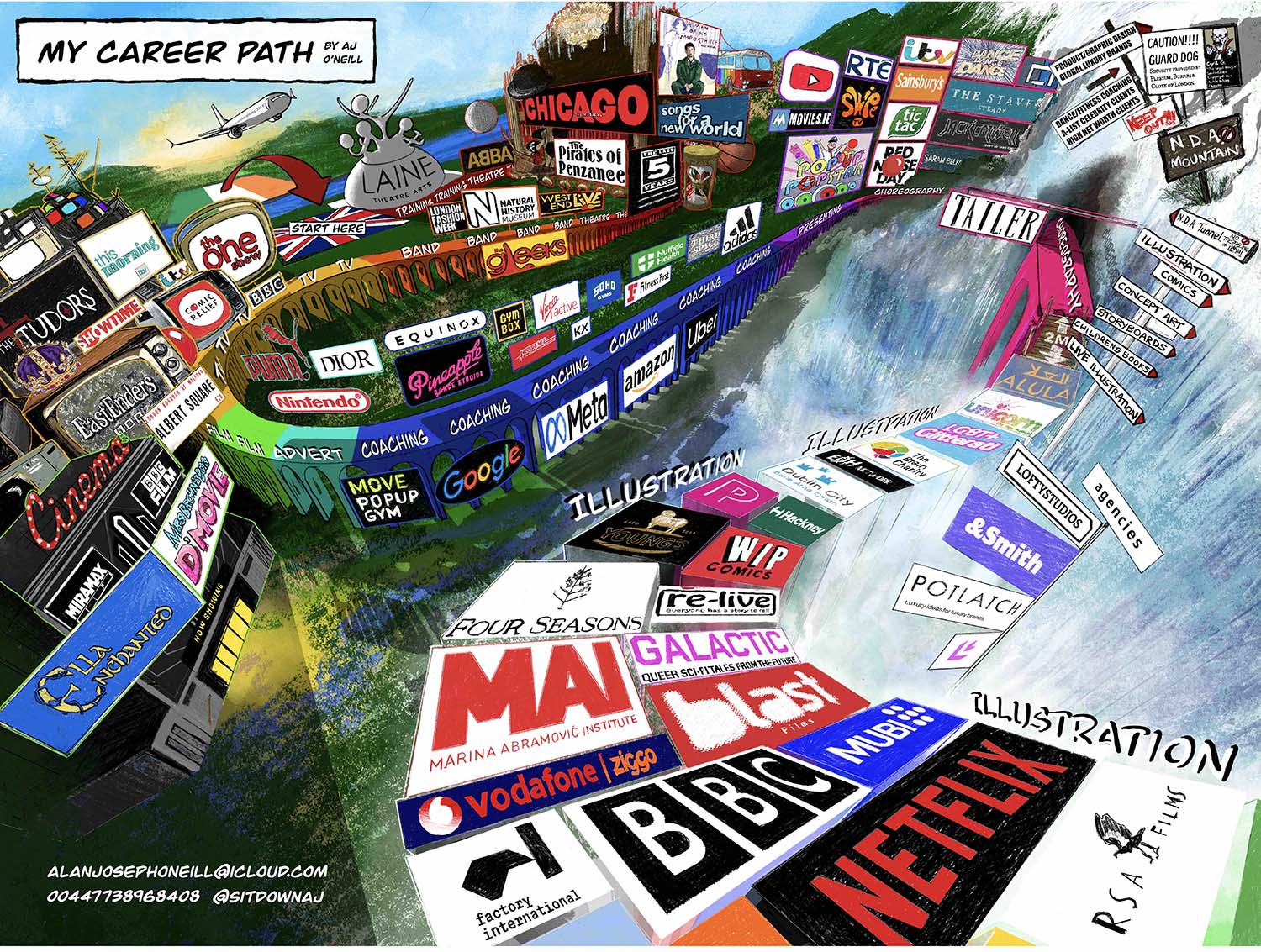
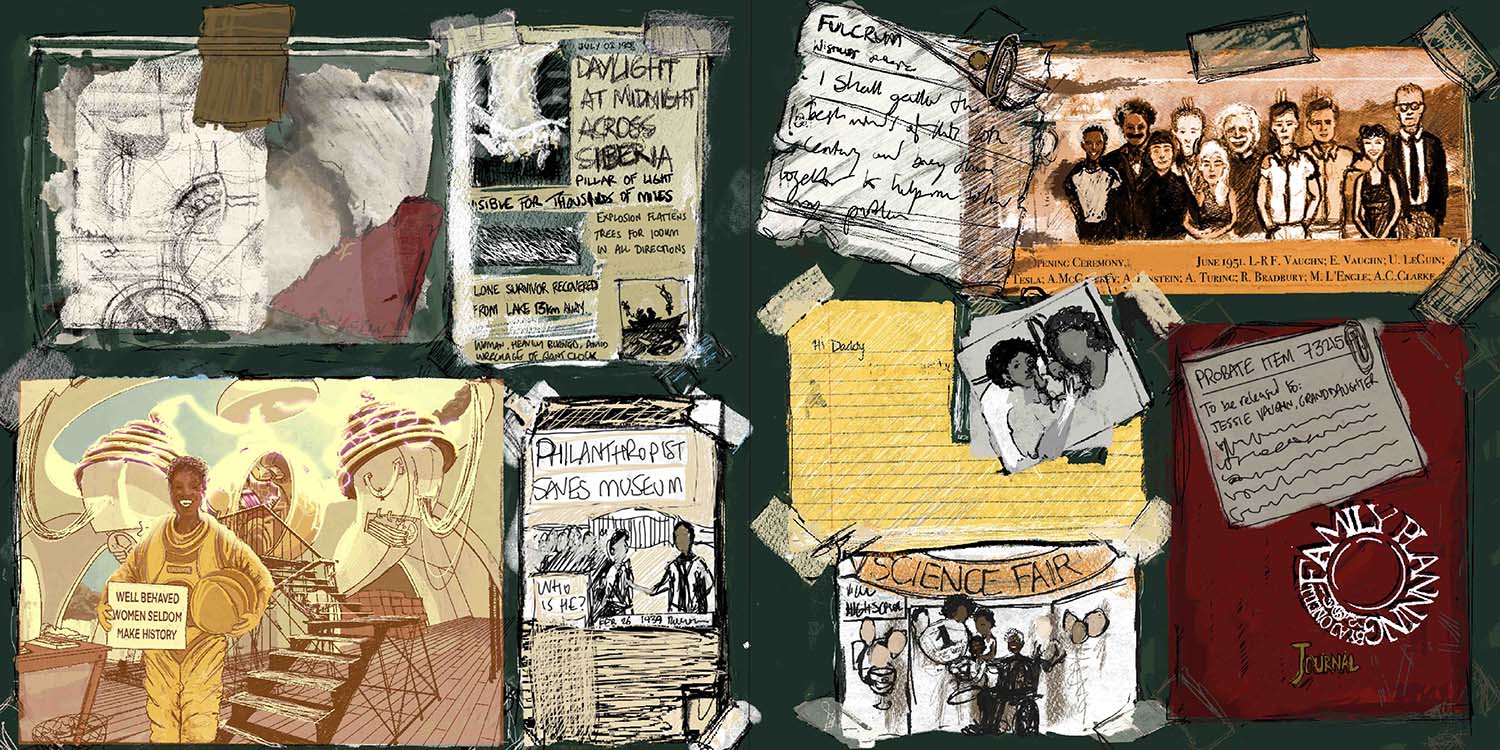
AJ O’NEILL: Hi Andy! Thanks so much for asking. My name’s AJ O’Neill. I’m a non-binary, sober Irish creative with AuDHD and I’ve lived in London mostly for the last 20 years since coming to join the cast of Chicago in the West End and forgetting to leave. Rather than bore you with a list, I’ve drawn my career path for you. (See below) At the moment I’m focused on illustration and writing. My very talented (and successful) comic maker friend Ed Firth got me into comics a few years ago by telling me ‘You write stories. You can draw. YOU HAVE NO EXCUSE NOT TO!’ And… he was right. Ed’s always been really supportive since before I knew I could do it. And once I was introduced to the community I met some great new friends and caught the indie comics bug.
AO: Can you give us a quick overview of your self-published comics work to date?
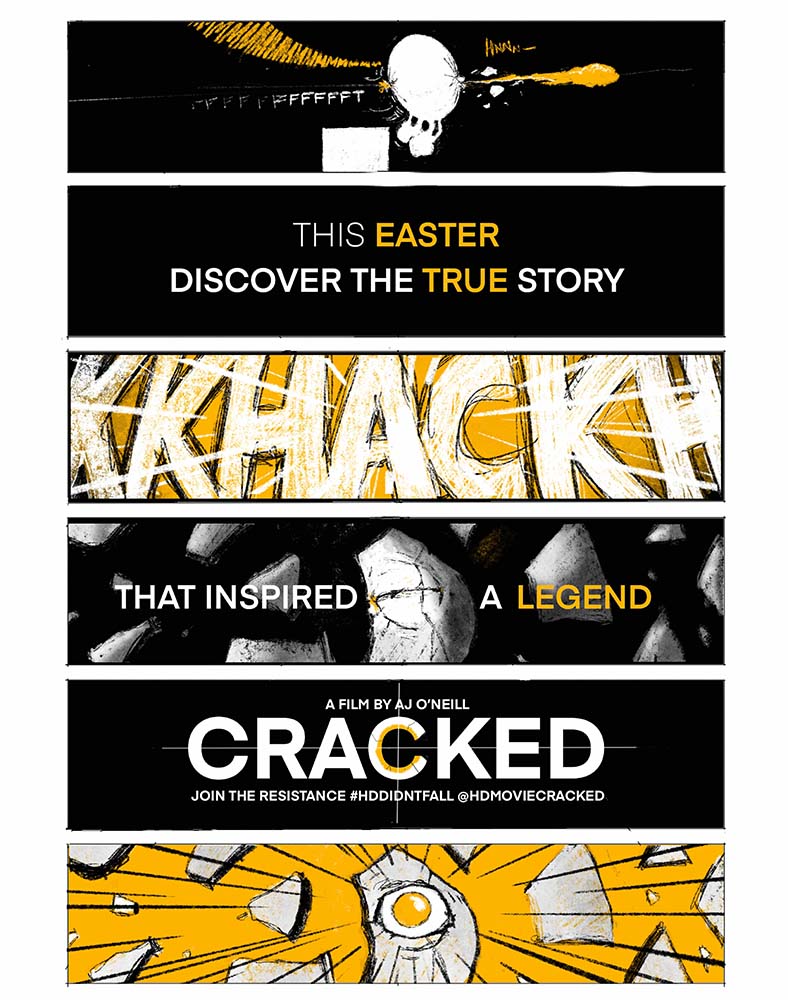
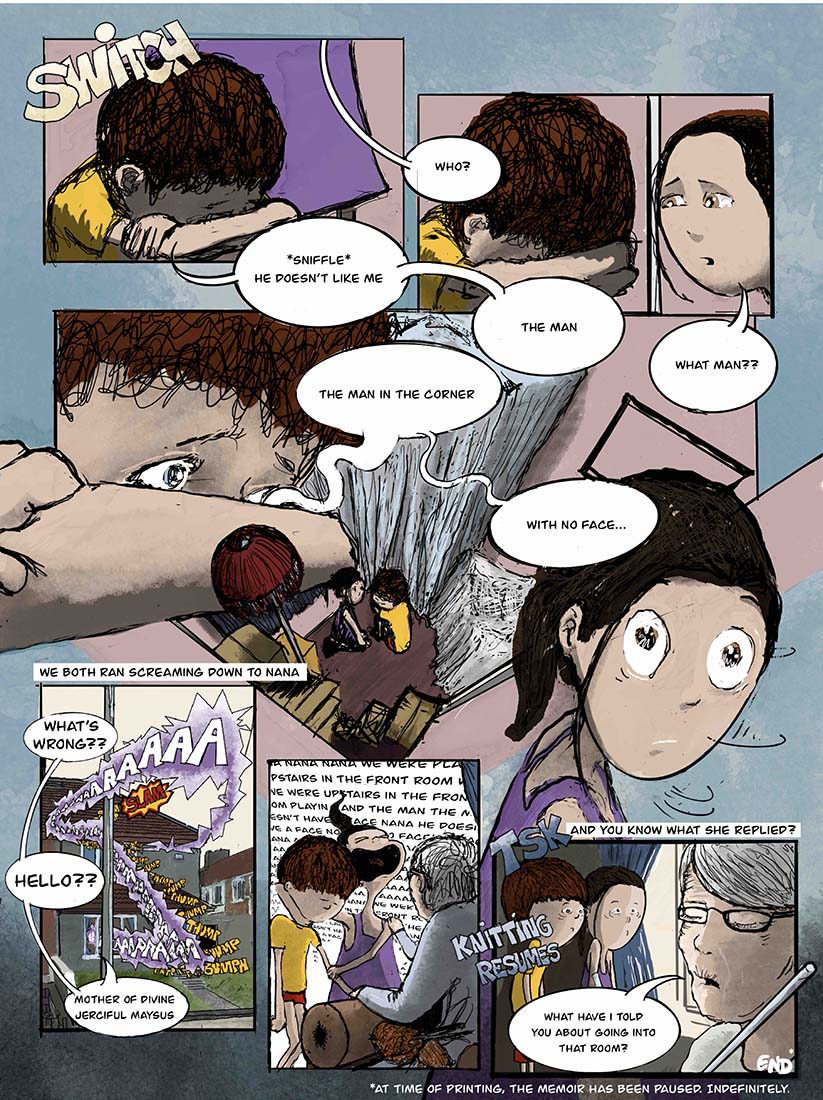
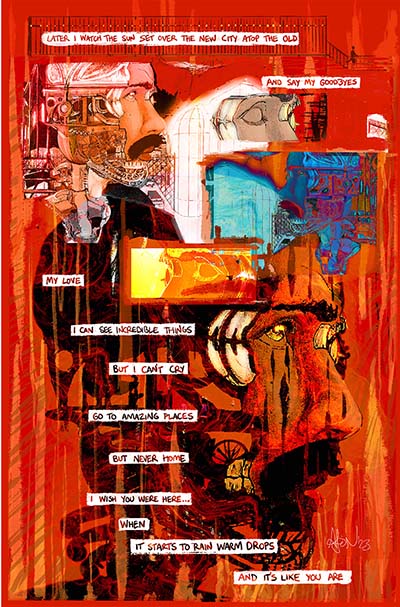
O’NEILL: I wrote and illustrated stories for all of the WIP Comics anthologies since their Change book in I think 2023. I also did the art for a trippy story by Simon Birch for the last one and wrote and curated another about the multiverse with each panel done by a different artist in their own style to represent the different ways a life could go. That was really fun actually. I’ve a story in ZUNT5, ‘Egg’ (below left), which just came out and a true story horror comic entitled ‘Hide and Seek’ (below right) was web-published by Galactic comics last Hallow’een. I’ve self-published the comics The Kid in the Cave, Hole and Never Mind It’s Only the Fucking Apocalypse, the last of which started life as a digital comic for the LDC Comics Fair in Summer 2025 but I printed in December for a limited run.
AO: Focussing in on that first comic, The Kid in the Cave (reviewed here at BF) explored themes of queerness and neurodivergence. It’s a standard question when talking about autobio work but how much of a sense of vulnerability was there in putting something so personal out there? Or, conversely, was it a cathartic exercise in creation?
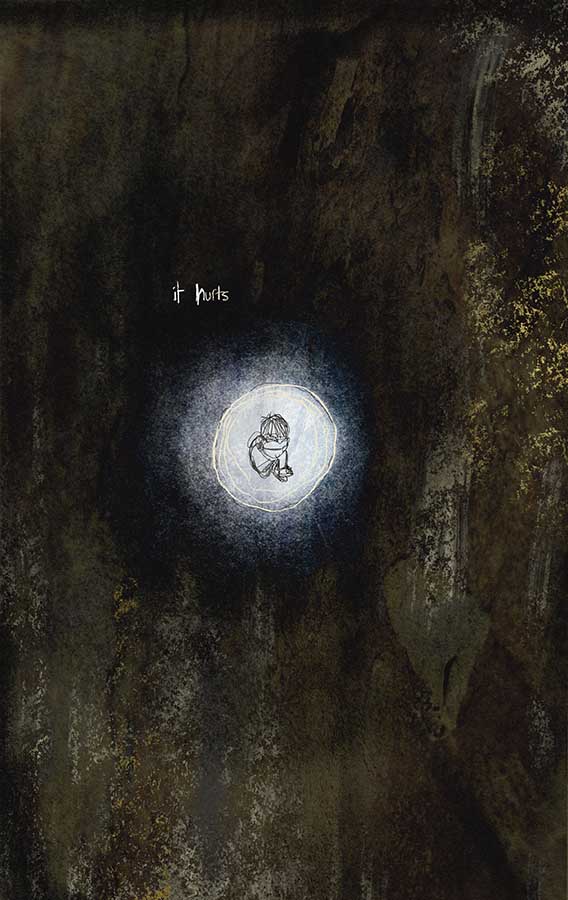
O’NEILL: I would say both – I drew the first half of that comic sitting in Hyde Park trying to process the first day of a queer trauma recovery course and the second half after we finished the last day so it’s really raw and really exposing. I felt like I’d rescued a part of myself by the end of that course and that comic, in all its messy simplicity, really captures that feeling and communicates it in a way I’m still proud of. I drew it for myself to have somewhere to put how I was feeling with no intention of publishing it originally.
Art from The Kid in the Cave
I showed my friends, most of whom are queer and/or neurodiverse and was really touched by how much people cried and connected with it and that was why, when I offered to run the community table for inQ – London’s first queer comics fair, the second of which is coming up at the end of the Summer! – I decided to print it to have something of my own to share. Seeing people well up at the table skimming through it was really gorgeous. I got lots of hugs. Can’t ask for more than that. Oh, money. It would be nice to… make some money.
From the WIP Comics anthology Change
AO: Never Mind It’s Only the Fucking Apocalypse was your “queer fever dream” comic which I described as embodying “our every contemporary fear of societal collapse though, all filtered through a determinedly queer lens.” What is it about comics for you that makes it such a connective medium when it comes to communicating socially relevant ideas?
O’NEILL: Not to be too basic but if a picture tells a thousand words, I suppose a picture with words tells a fewwww more? *toots horn* One thing I adore about comics is that they can show us the Thing (world/person/idea… not Ben Grimm) and then comment on it in the same panel, condensing pages of description and detail in a flash and giving us the opportunity, because it’s static and intentionally framed, to spend as long as we need with it. We get to feel our emotional response at the image and read our way to a mental one. My favourite comics creators juxtapose image and text in a way that often changes the emotional resonance of the image, often with devastating consequences.
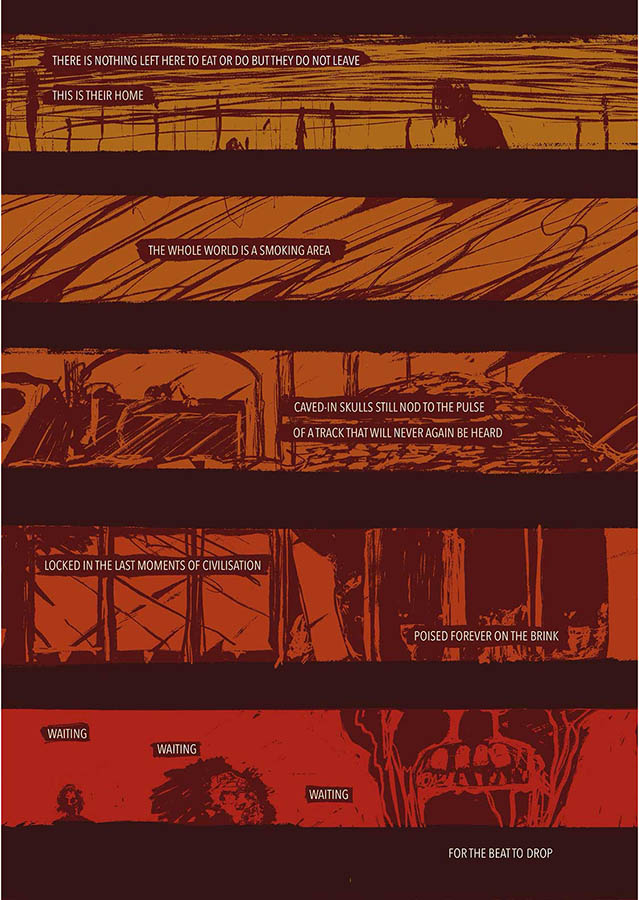
Art from Never Mind It’s Only the Fucking Apocalypse
Film can be similar but because it is constantly moving on, it removes the ability of the reader to sit in each moment, to revisit them and re-examine our own responses, to sort of stick our tongue into the gap where the tooth should be and taste the weirdness. When communicating a personal take on a big social concept, I find it effective to show readers a picture of that world that makes instant emotional sense and then build on it with text. It’s storytelling shorthand and every little helps. Maybe it’s just how my brain works.
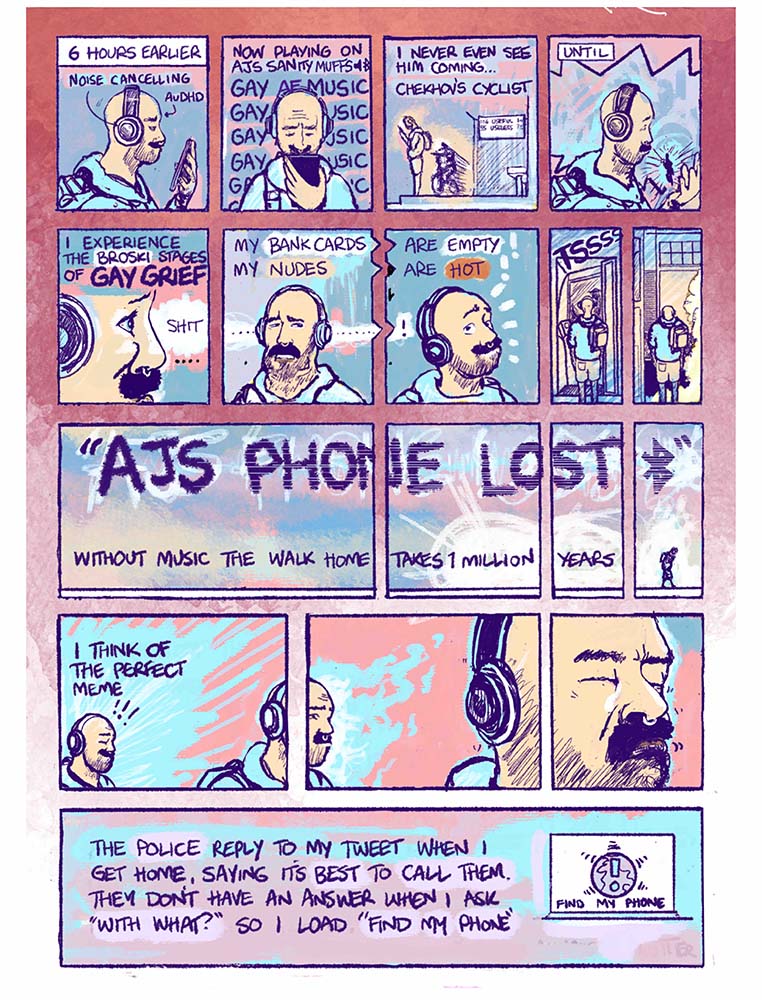
From the WIP Comics Tall Tales anthology
AO: Hole is a series in progress from you. Can you tell us about the premise of the story and how, in particular, you set about using lettering to create a sense of atmosphere and emotion?
O’NEILL: Hole is the result of a real life conversation I had with my lovely friend, comics guru Lucy Sullivan, author of Barking. She was trying to move house for what felt like a decade and when I asked how the move was going she told me it had been put on hold because ‘they found a void under the house’. Now, I don’t know about you Andy but when someone tells me they have a Void under their house, my brain goes to a certain place. A cosmic, Lovecraftian-without-the-
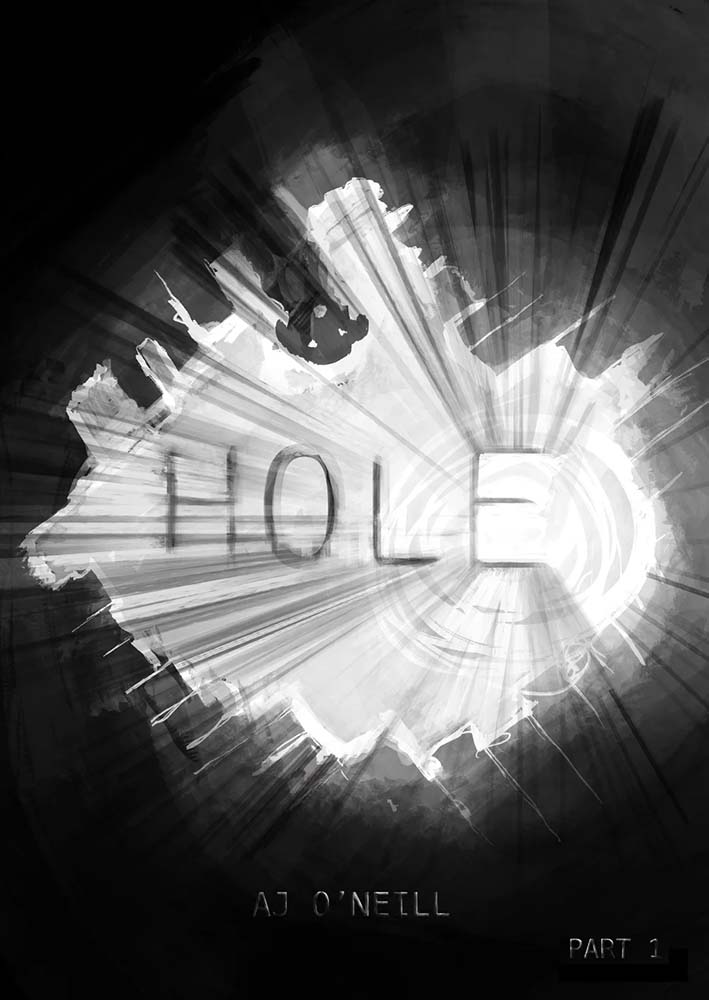
It actually ended up being much more of a light-hearted chat between fictionalised versions of us about life, laughter and magical basement holes whilst I tried using a fixed ‘camera’ for the first time. Each page is the view from within the hole as the narrative flits back and forth in time between the two friends catching up and the relayed story of discovery of the hole and its unusual properties. I liked playing with the negative space which seemed fitting given the subject matter so it made sense to keep it black and white. Originally titled Void, I told Lucy we could call it Hole and we both laughed for… longer than was necessary. So here we are. Oh and since I exorcised the Hole with that story, Lucy has since moved house successfully. Did I manifest it? Who can say.
I did start on a sequel which – spoilers – had DINOSAURS in it but I feel pretty happy with Part 1 as its own weird self-contained slice of arty weirdness whether or not people ever get to meet the dinos. Even reading this back makes me wonder if I should up my medication.
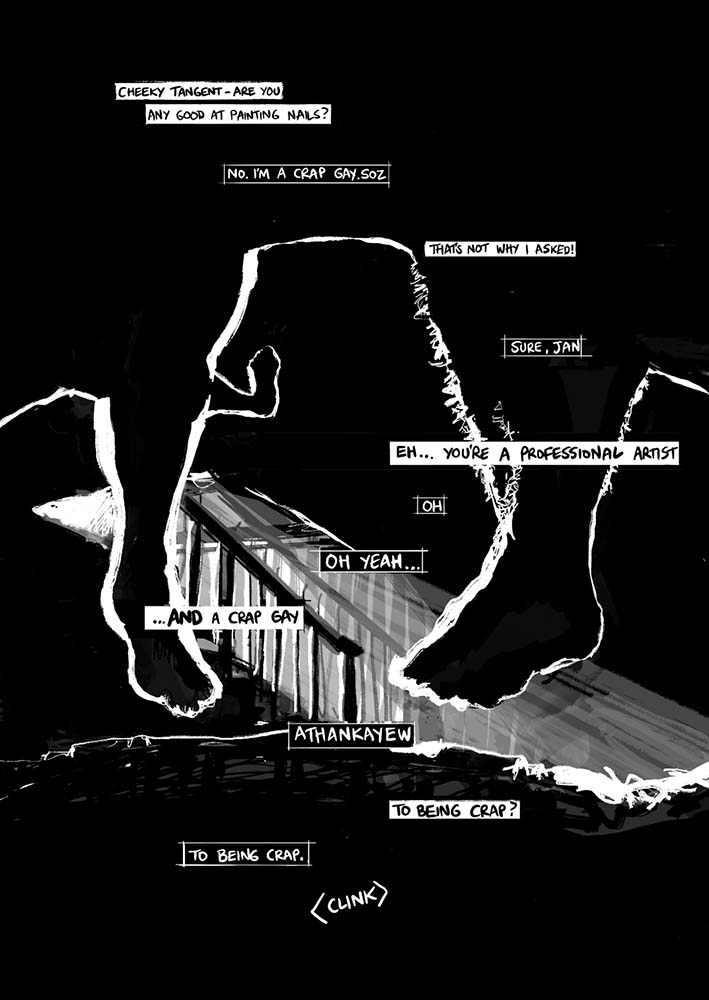
Regarding the text, I wanted to keep it handwritten as that feels much more personal to me, and I love anything where you can tell who is speaking from the way the text is formatted – be it colour, font, whatever. So in this story the two person chat is delineated by opposite colours so you always know who is talking and the flow of the chat is determined by the way I have laid out and spaced the text. It should read the way it would sound with larger gaps between the boxes requiring a fractionally longer time to move to the next one so you can sort of hear the flow of it in your head. That’s the hope, in any case.
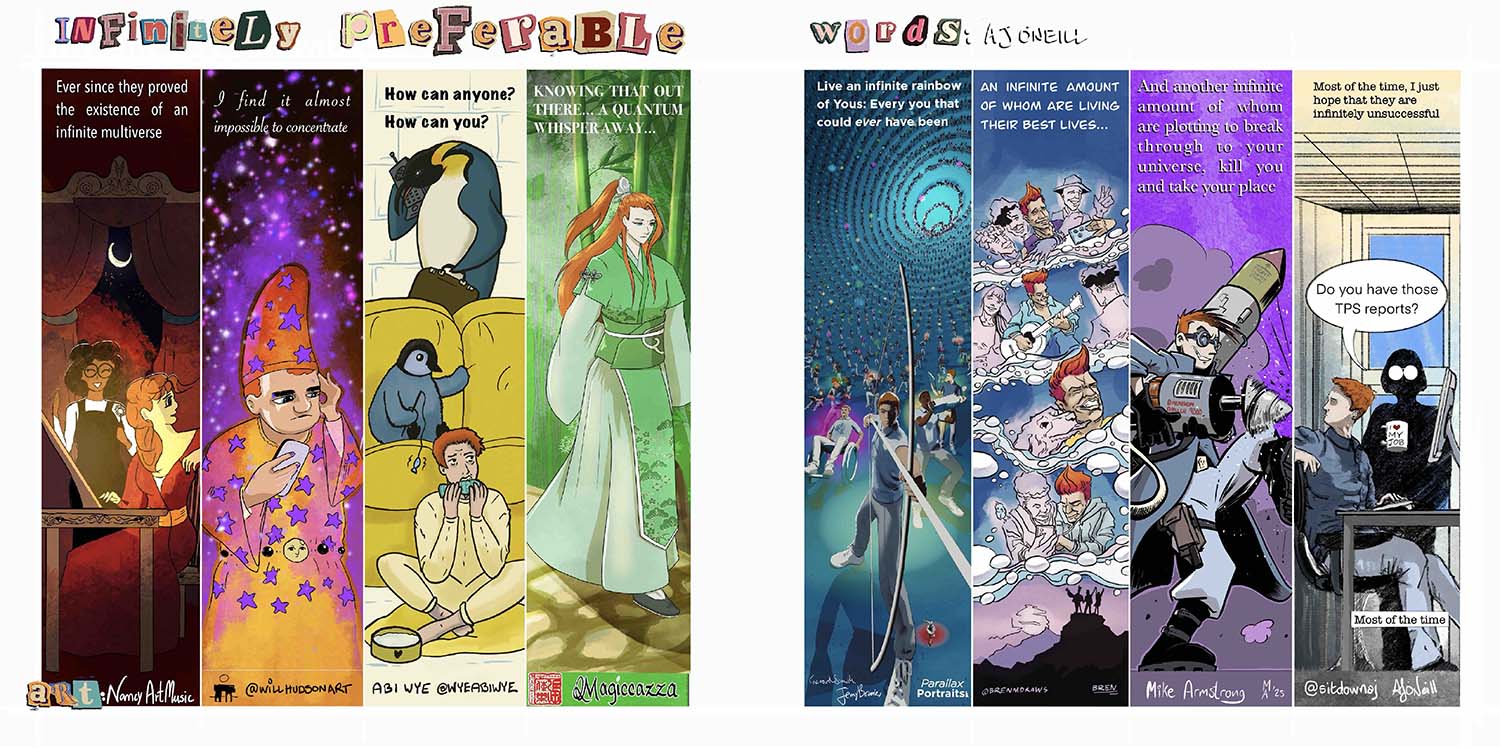
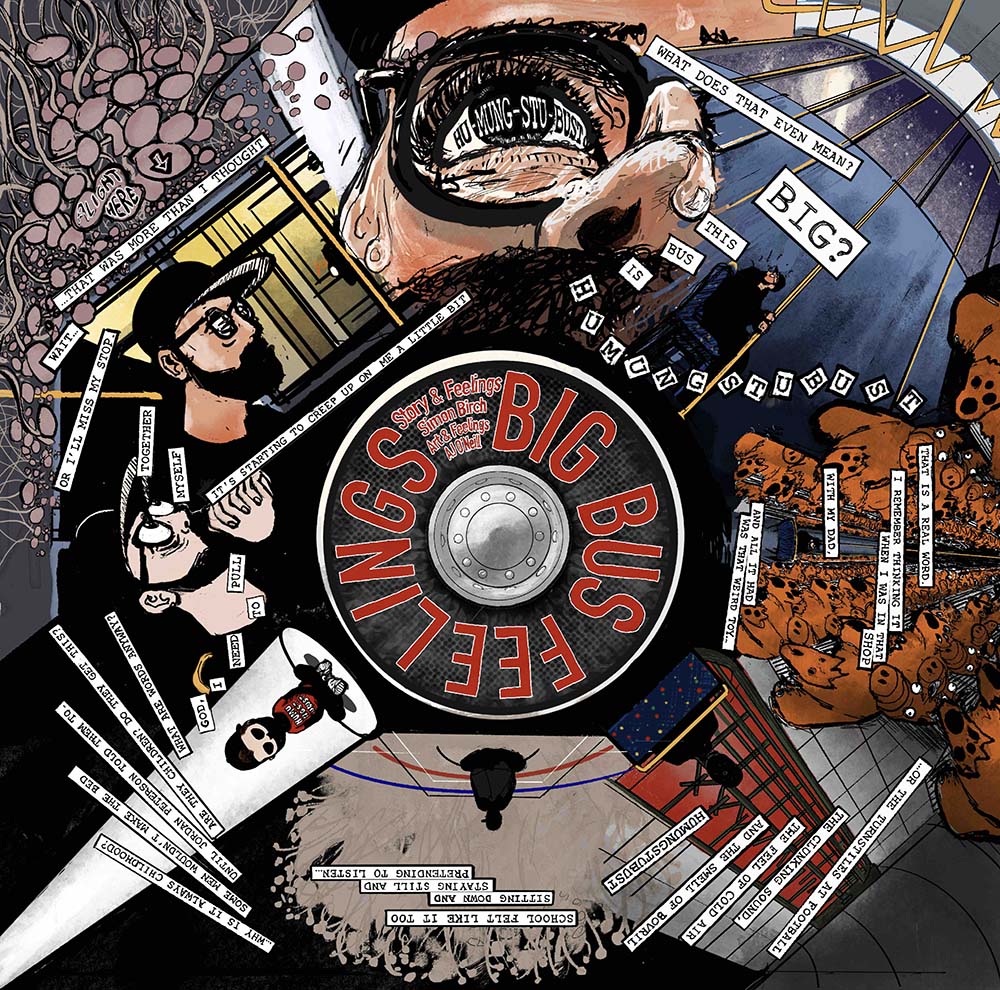
From the WIP Comics Infinity anthology (top solo entry, middle collaboration with multiple artists, bottom with Simon Birch)
AO: Outside of self-publishing you were a part of the second Coming Home anthology giving accounts of veterans’ experience with mental health issues. How did your involvement come about and how did you work with Re-Live and the veterans concerned in bringing their stories to the page?
O’NEILL: I was recommended to the charity by Ed who I mentioned above when they were looking for more queer artists. They showed my work to Steve, whose story I would end up telling, and he must have liked some of it because I was invited to meet the wonderful folk who run the charity and then Steve as well, all over Zoom as they are in Wales. I was honoured to be trusted with it. I found his story – being entrapped into admitting his homosexuality by his superiors and then ending up in prison because he refused on principle to be given special treatment – deeply moving and I wanted to do it justice.
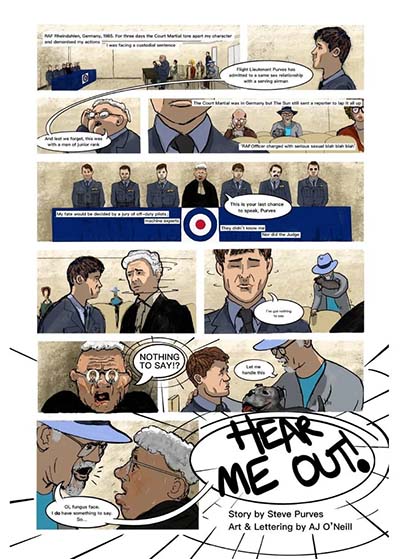
Art from Coming Home
We had an evolving script as the editors worked through his life story with Steve and both myself and the other artists involved were given huge swathes of visual references. That was necessary because I have no personal awareness of military uniforms or ranks or machinery and the stories were full of such detail. It was a bit of a trial by fire for a first professional comic artist gig but I was glad to be able to add a layer of emotional storytelling with layouts – for example, cracking the page under the weight of the Judge’s gavel as he was convicted and having that visibly splinter all that followed – which the team and Steve really appreciated. I also ended up lettering that story myself using what I was told afterwards is called Concrete Poetry and it has influenced how I letter everything since.
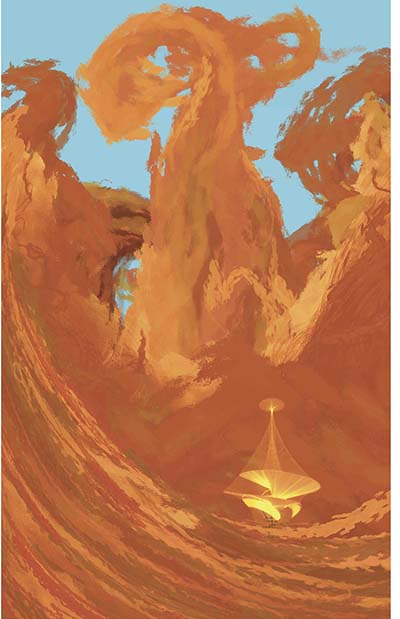
Echoes – a sci-fi/horror work-in-progress
AO: Your work often has a visibly experimental approach that gives it such a distinctive voice. Could you talk about your creative process and the mediums you work in to achieve this?
O’NEILL: Aw thank you. I sometimes worry that I have no distinctive voice because my style changes so dramatically between projects but that gives me hope that I’m finding something cohesive in the madness. I try and follow the rule of one of my heroes, the legendary musical theatre composer/lyricist Stephen Sondheim: ‘Content Dictates Form’. He was referring to songwriting but I believe that that is true of all art. If I want to communicate something visually as successfully as possible, I try to find a visual style/form that best suits that story, that idea.
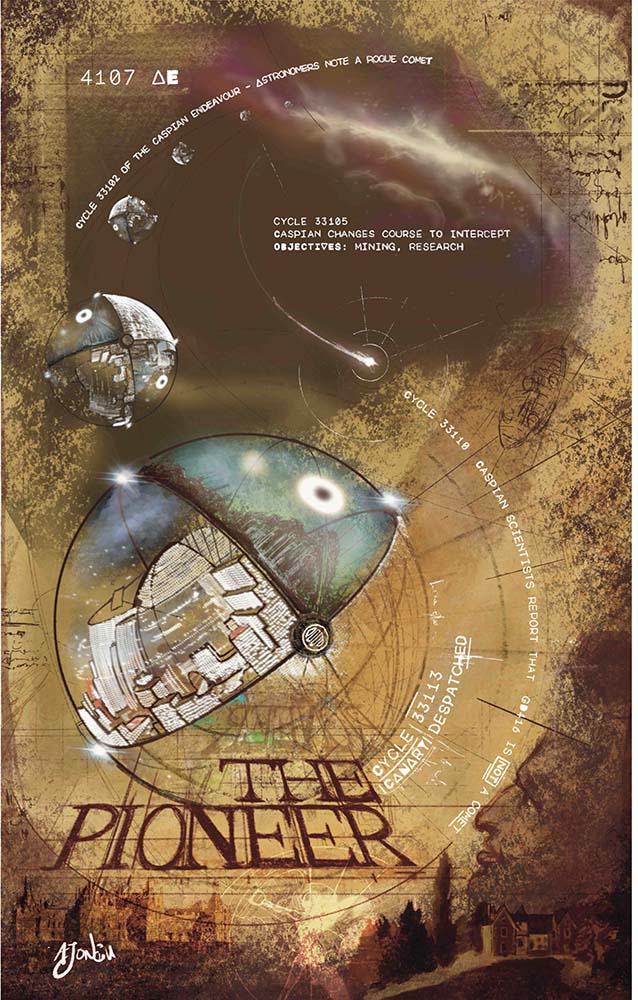
The Pioneer
The Kid in the Cave is drawn digitally using the scratchiest pencil I could make on top of photos I took of a really disgusting but fascinating wall in one of the tube stations that I then painted and warped and layered to make it unrecognisable. The story starts off in darkness with muted greens and scratchy, pained white text and, as the main character is rescued, the pages blossom into full colour and the writing becomes kinder and less jagged. The drawing is all digital in that piece but I like to use analogue looking tools in procreate so it conveys texture and something about the texture of the wall photograph underneath really tickles my brain.
Some of my work incorporates ink drawings I did over a decade ago that I have scanned and then augmented or coloured digitally (see example). My upcoming autobiography is drawn digitally but is a heavily multilayered mix of ink and watercolour and type and it looks like how my brain feels… for better or worse.
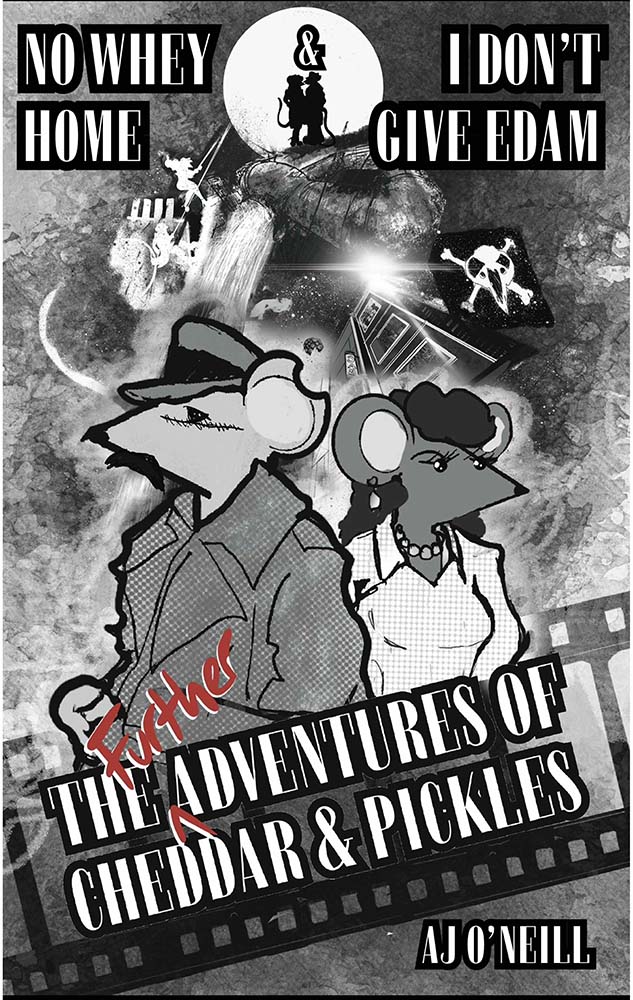
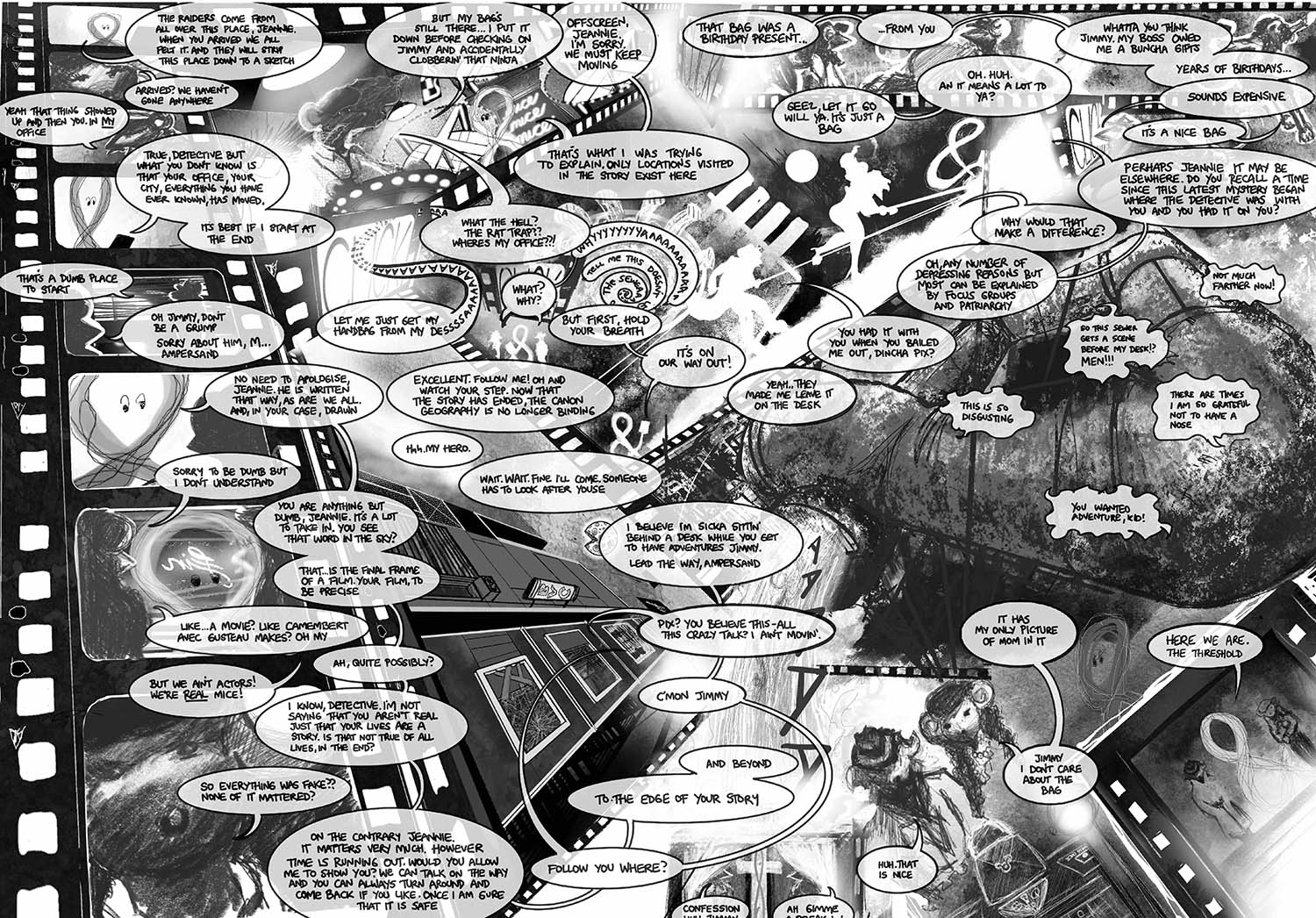
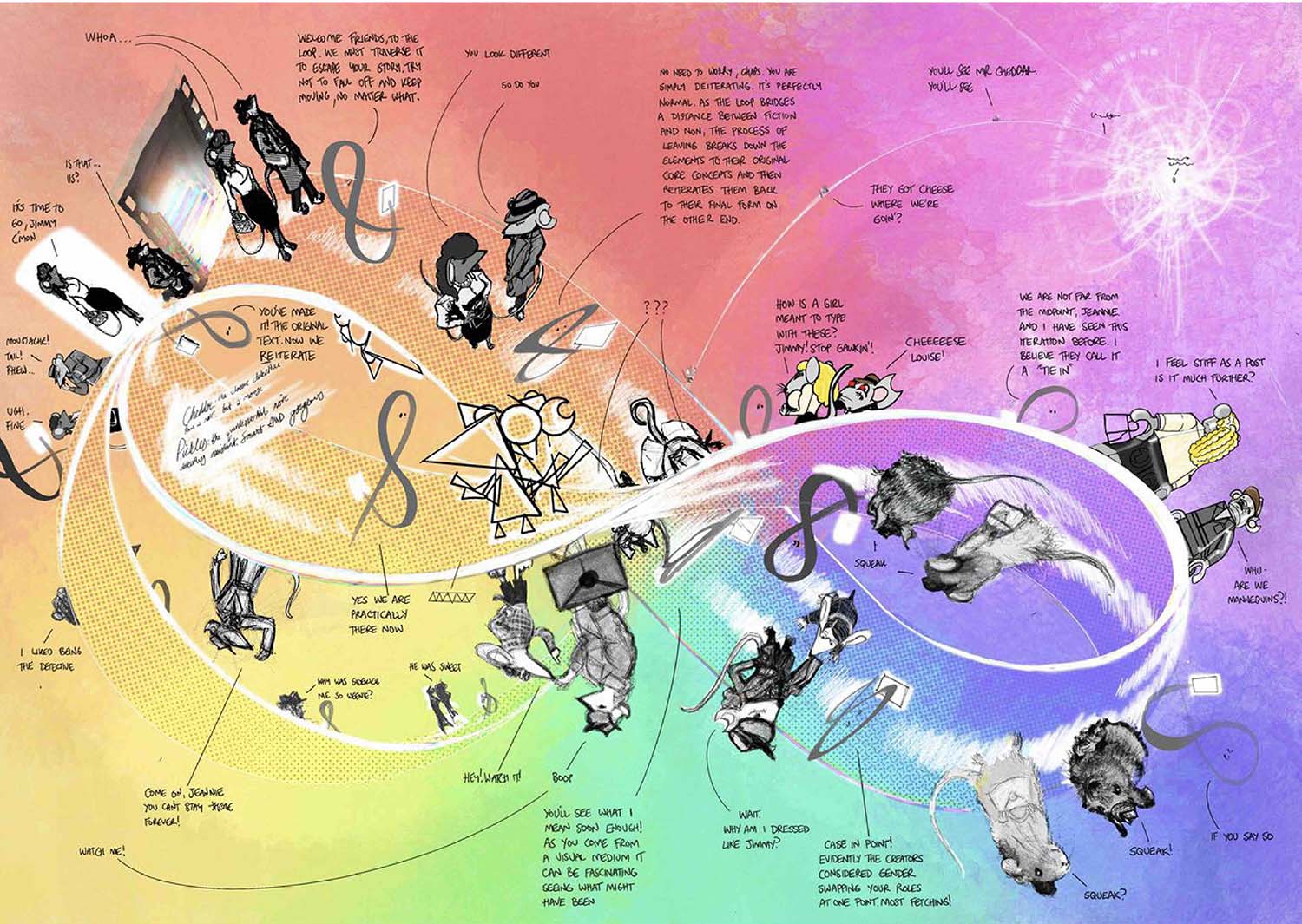
Art from Cheddar & Pickles
AO: You’re a newer voice on the comics scene so what have been the main challenges of getting your work seen by wider audiences? Do you have any advice for would-be comics self-publishers?
O’NEILL: It’s really hard to do alone. Find other nerds who do it, nerds like me, and befriend them. Body doubling – an ADHD survival tool where you get a buddy to just exist with you while you try to do the work – really helps. And so does community. Don’t let perfect be the enemy of done – finish things. Even if you think they’re crap. Finish them and put them out there and move on to the next thing. You’ll never get going on the next thing if you spend your life trying to revisit and fix that one thing. And there is something soooo magical about having made A Thing. Every time a new lil package arrives in the post I get a thrill and you deserve those. Life is hard, you guys. Be thrilled where possible.
AO: And, finally, what are you currently working on? What can we expect next from AJ O’Neill?
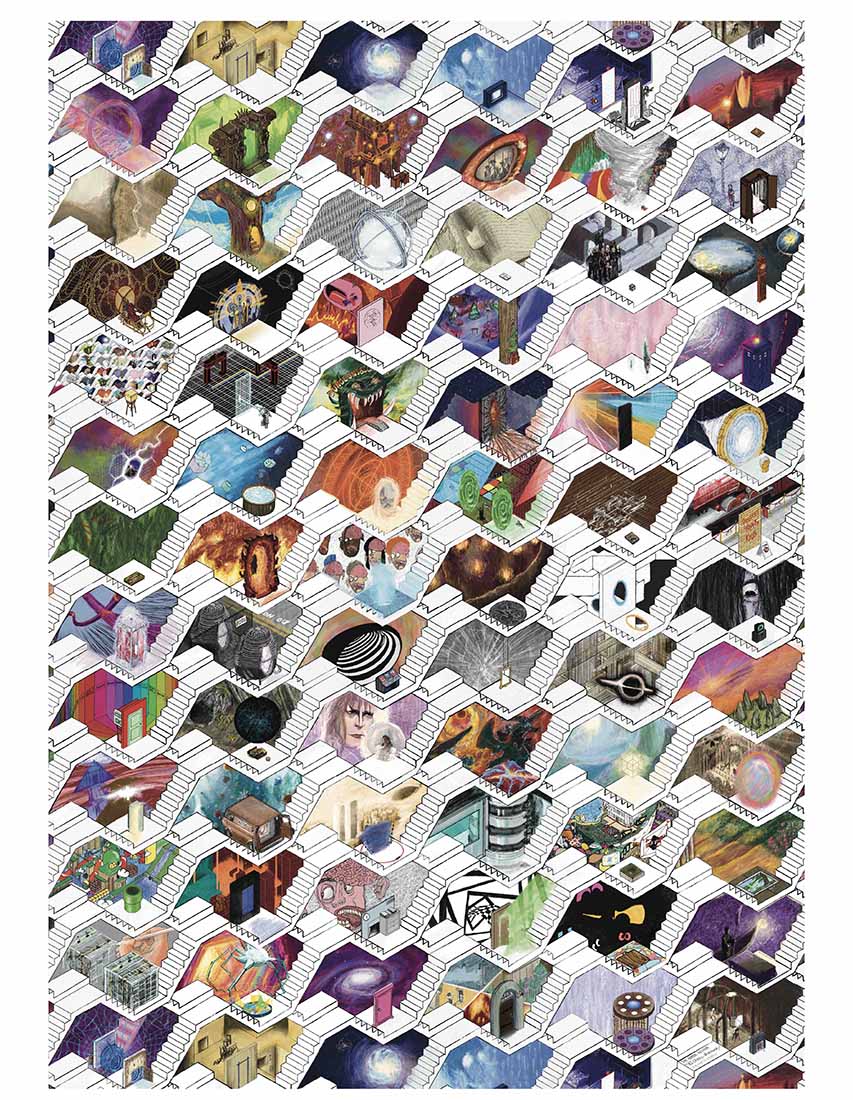
O’NEILL: Ooh well I have an autobioGraphic novel, Shrapnel, that I am going to publish in the next few months. It’s the longest thing I’ve done by a mile and it’s yet again deeply personal so I’m hoping people connect with it. I just finished drawing an obscenely detailed A2 print of all the most famous portals in pop culture, literature, film, TV and games so I’m getting ready to release prints of that which is exciting. Possibly only to me. Lol.
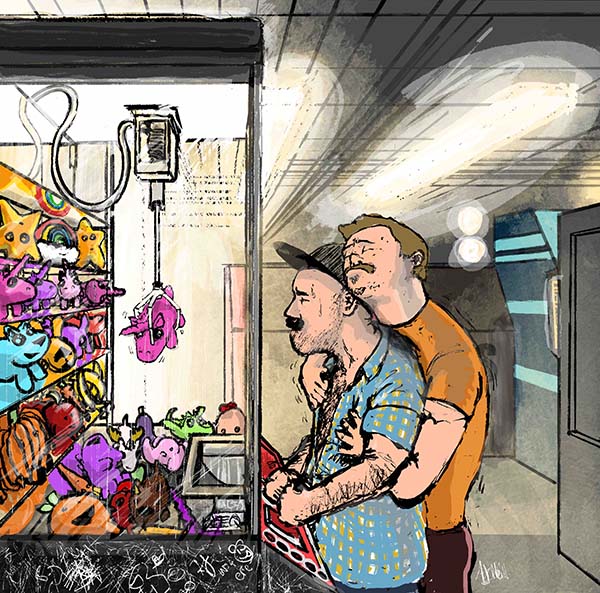
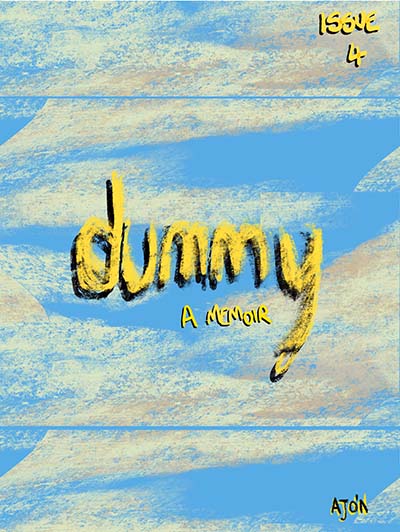
I am finishing the script and songs for Unicorn, a trans-centric musical I am cowriting with an amazing team and we hope to actually finish this year. I have a zine of queer erotic drawings titled Reunion which should be out in the next few months too and a verrrry esoteric Simpsons-inspired art book/comic titled Dummy that’s 400 pages long and that I have had ready to go for a few years now. I would like to see it out in the world this year too. In the meantime, you can see two shows I did the concept art for – Surviving Black Hawk Down and The Murder of Rachel Nickell – on Netflix.
Visit AJ’s site here and online store here
Interview by Andy Oliver