

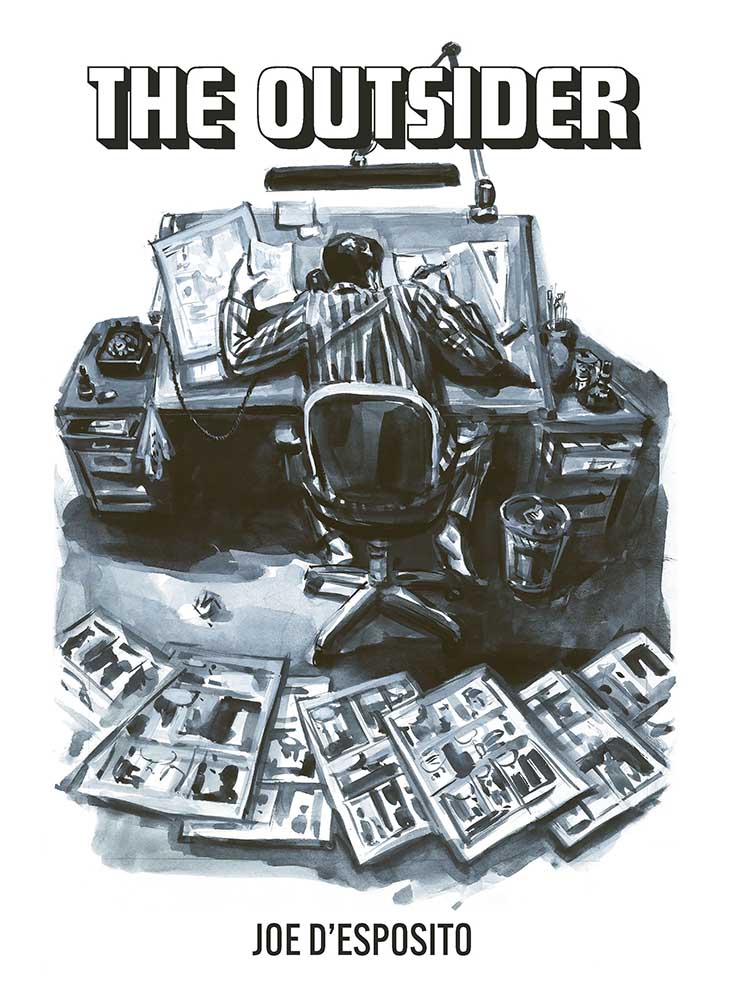
FANTAGRAPHICS AT 50! Years in the making, Joe D’Esposito’s The Outsider comes to us next month from Fantagraphics detailing the life, career and struggles of the legendary EC Comics artist Bernie Krigstein. It’s a haunting, often melancholy portrait of the man and the comics industry of the era that is uncompromising in depicting the realities he faced as an artist. You can see a review of The Outsider on the site very soon. In the meantime, though, we have this interview with Joe about the book where he talks about biographical responsibility, how the themes of The Outsider are still relevant now, and his tome working as Neal Adams’s assistant…
ANDY OLIVER: Can we start by asking you about your early years in comics, your time at Continuity as part of the Crusty Bunkers, your work as a colorist, and your illustrative practice in other media?
JOE D’ESPOSITO: I was Neal’s assistant right after high school from ‘76 to ‘81. My friend Josef Rubinstein was Neal’s assistant, so when Joe moved on to become a pro, I took his job! I couldn’t believe I would ever be sitting right next to Neal Adams. Dick Giodano was still there too, and I would help him if needed. I started out at the bottom rung there that first summer mostly making deliveries, mopping floors, and running the photostat machine (very badly). I eventually moved on to help with color guides for comics with Doc Martin Dyes. I was erasing pages, laying down zip-a-tone, or coloring storyboards. First, just laying down flat colors, and then graduating to doing fully colored frames with Neal adding a few masterly touches to the frame.
I became a top colorist there. I’m not sure it was a Crusty Bunker job, but I was asked to draw the boots on the first Kiss comic. The boots had a lot of detail and took forever to draw and ink. I also helped on the great Superman vs Muhammad Ali comic book! That’s another great thing about working there at Continuity. I met so many great artists there, it’s a long list.
The front room there would be Neal of course, in the center with stacks of paper and penciled pages. He was finishing Superman vs Muhammad Ali at the time. There were also Carl Potts, Joe Brozowski, Joe Barney, Lynn Varley, Vincente Alcazar, and Russ Heath who had a permanent table. Later on, there was Jack Sparling helping out, drawing anything that came in: comic art, storyboards, whatever!
Working in the studio was Larry Hama, Cary Bates, Terry Austin, and Bob Wiacek. Terry and Bob shared a very tiny office. Jack Abel was in the center room holding court as he grumbled about all the tiny figures on a George Perez job he was inking. In the back rooms were my pals Marshall Rogers, who was getting attention for his brilliant run on Batman, and at the other drawing table was the great cartoonist, Bobby London. Further back was the brilliant sci-fi artist Mike Hinge. Passing through the offices of Continuity were Wally Wood, Gray Morrow, Barry Smith, Bernie Wrightson, Michael Kaluta, Harlan Ellison, and many more.
In terms of my illustrative practice, it comes from my years of painting from the figure that I brought to work I did for Neal, and to the books I colored for Marshall Rogers, Scorpio Rose, and I am Coyote for Eclipse Comics.
AO: The Outsider has been a work-in-progress for a few years. What first drew you to Bernie Krigstein’s story as a subject for a graphic novel?
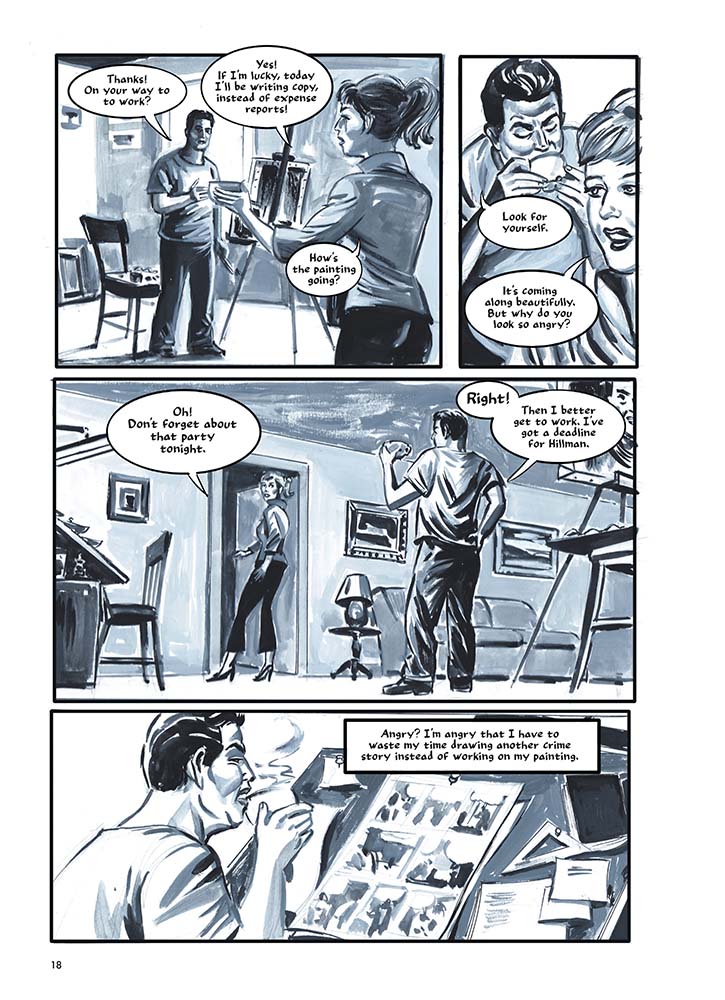
D’ESPOSITO: I picked up a copy of Greg Sadowski’s book B. Krigstein at a used bookstore in the West Village. I was somewhat aware of his frustration with his experience and struggle as an artist. I was having my own frustration at that time, having to draw some awful storyboards for Lysol. I just sat there and thought I’m better than this!
I saw so many wonderfully illustrated graphic novels coming out, and I always wanted to draw one! Krigstein was a frustrated painter having to draw comics to support his family, I was a frustrated painter who had to draw storyboards to support my family. I felt an instant connection with Bernie. I knew him and had him as an art teacher at the High School of Art and Design. He was a great teacher, but also a ballbuster! That’s what they called him when he was drawing comic books too.
AO: Could you detail some of the research process for The Outsider? What kind of different sources did you use to piece the book’s narrative together?
D’ESPOSITO: Obviously, B. Krigstein by Greg Sadowski gave me a lot of useful information. The Ten-Cent Plague by David Haduj about the Great Comic Scare of the 1950s detailed the persecution of comic book companies and the moral panic surrounding juvenile delinquency that was part of the tapestry of events that changed comic books forever. A Marvelous Life by Danny Fingeroth, which is a terrific book on Stan Lee and how the comics industry worked at that time.
An influence that is not a book was a story told to me by Neal Adams. The last time I saw Neal, he told me a story about running into Krigstein at the High School of Art and Design and asking if he was Bernie Krigstein the Comic Book Artist. Krigstein’s response totally disappointed Neal because he said he was Bernie Krigstein the Painter. One last favor from Neal was that story!
AO: As you continued your research into Bernie’s story, were there any details that surprised you? Any moments of revelation along the way about his story that you weren’t expecting?
D’ESPOSITO: I knew Krigstein was a brilliant comic book artist, but I didn’t realize the zeal and determination he brought to create a guild. Krigstein’s and other artists’ determination for a guild to give artists and writers more rights and benefits, plus getting their original art back was inspiring. I also didn’t realize how much I had in common with Krigstein. As I worked on this book, I started realizing the affinity I had with Bernie and his struggle to be taken seriously and recognized as an artist.
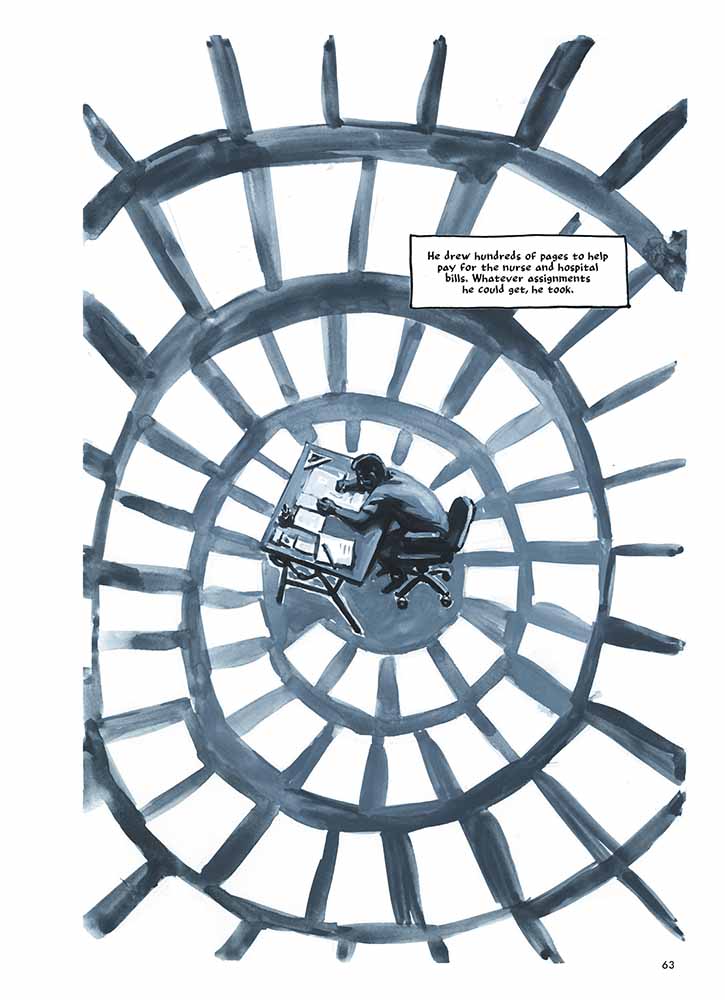
AO: Obviously, you’re using elements of the speculative to detail the thoughts and feelings of real people in the graphic novel. How did you approach that in terms of the ethics and responsibility involved?
D’ESPOSITO: My approach was while respecting their lives, I wanted to tell a greater story about what it was like to deal with forces that were fighting Krigstein’s crusade to make comics a legitimate and respected artform. To do so, I needed to mold aspects of the lives of characters in my graphic novel that were based on real people in an effort to tell a greater truth. I like to think being an artist gave me the insight and empathy to do this.
AO: With its painterly approach The Outsider is a highly atmospheric book with a very distinctive and moody look. Can you give us some insights into your creative process and the medium you were working in?
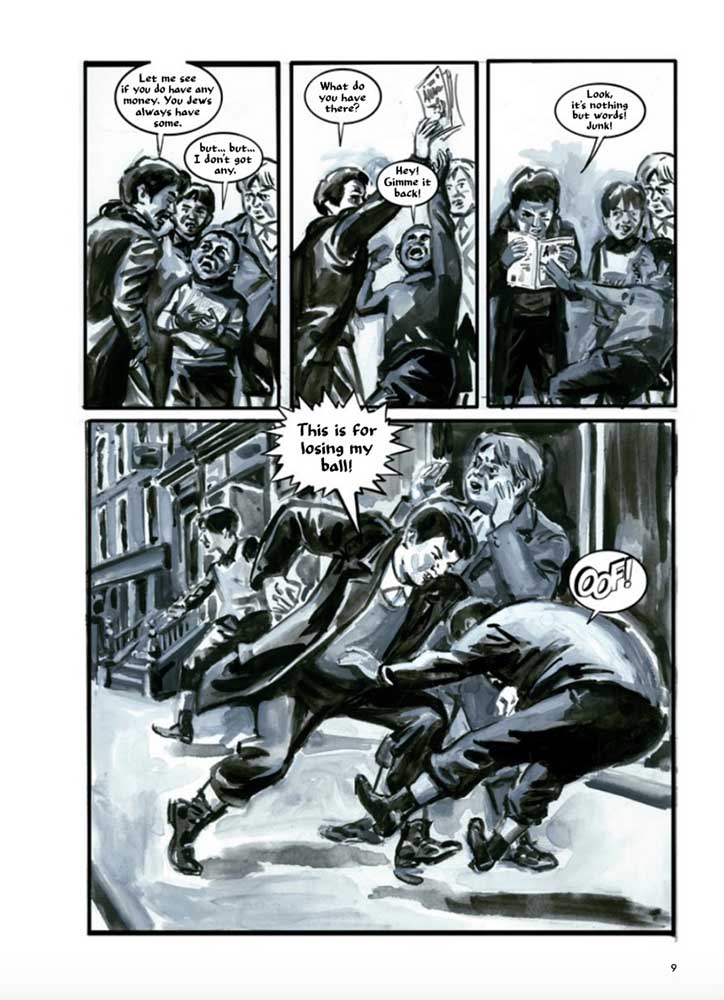
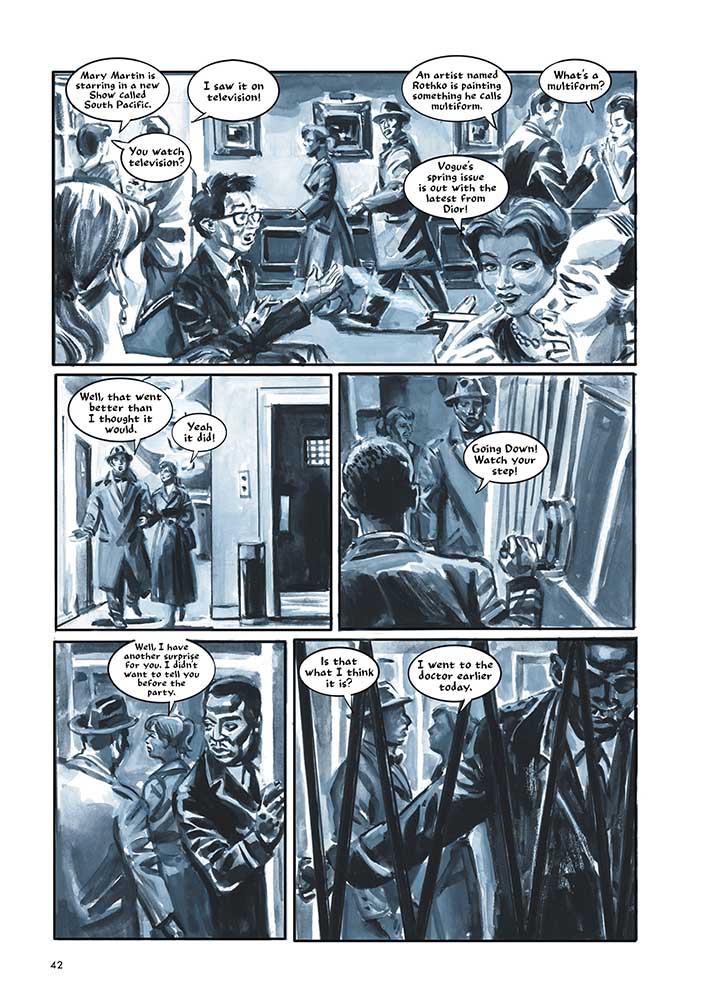
D’ESPOSITO: Since The Outsider took place in the 1950s, I wanted to give it that film-noir quality of the black & white movies I loved watching growing up when I was a kid like Casablanca, Citizen Kane, and White Heat. I painted with black and white gouache on a four-ply plate finish Strathmore paper, which allowed me to manipulate the paint, make corrections, and give depth to the work.
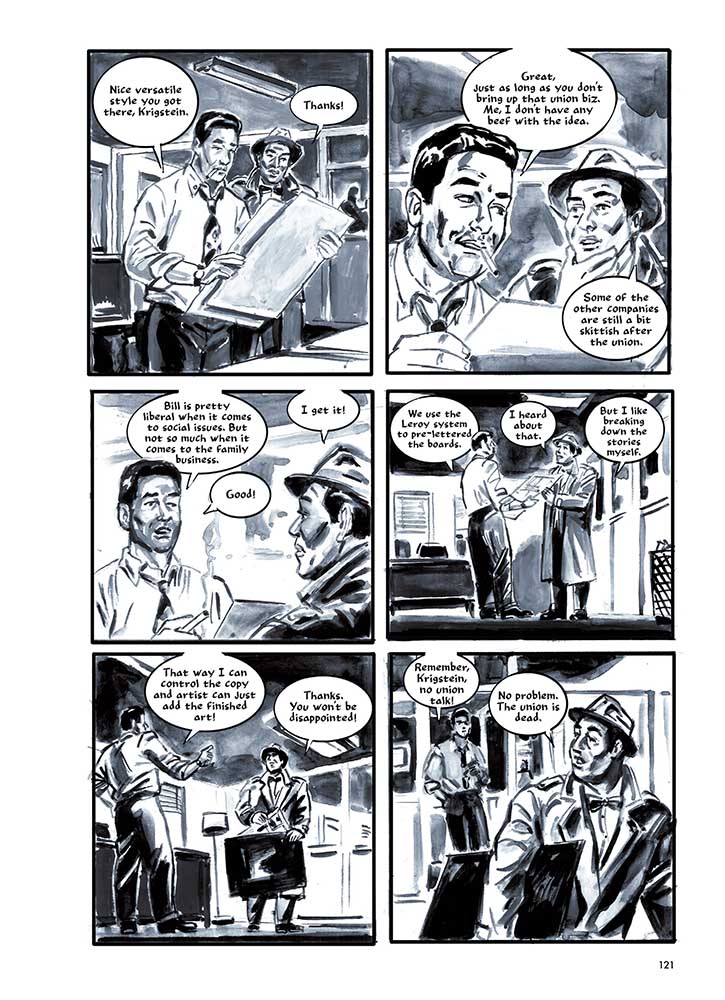
AO: There are a lot of themes explored here that sit broadly in the category of social commentary in terms of the stories of marginalized creators, the struggle for artistic recognition, and the need to organize against repressive working conditions. To what degree did you find the historical events of The Outsider still paralleling the world we live in today?
D’ESPOSITO: Great question! Health insurance is something many people in this country do not have or can barely afford. In The Outsider, the impetus for Krigstein starting a union was because management got healthcare, and everybody else was work-for-hire and did not get any benefits.
Censorship is a huge issue today as well, especially comes to comics and graphic novels. For the last few years, the number #1 banned book in the United States was Gender Queer by Maia Kobabe, a graphic memoir about the author’s understanding of eir gender identity throughout eir life. Other graphic novels and comics that have been banned over the years were Maus by Art Spiegelman and Persepolis by the late Marjane Satrapi.
I think it’s important to stick up for the rights of comic creators to have their work recognized and express themselves on and off the page. I believe The Outsider does a good job of portraying what this may look like.
AO: And, finally, what else are you working on right now, either in comics or outside of it?
D’ESPOSITO: Right now, I’m working on a graphic novel about my time living and working in comics in the late 70s while living in the East Village and that particular time in New York City.
Interview by Andy Oliver
Fantagraphics at 50 Month runs through August at Broken Frontier. You can see articles as they’re published in one tagged list here.