


PRIDE MONTH 2026! A little over a decade ago, the American Canadian historian Rachel Hope Cleves published a book titled Charity and Sylvia: A Same-Sex Marriage in Early America. It documented the lives of two ordinary American women who, despite huge odds, managed to live an unusual life together in a country that struggled (and still does) to accept the LGBTQ community.
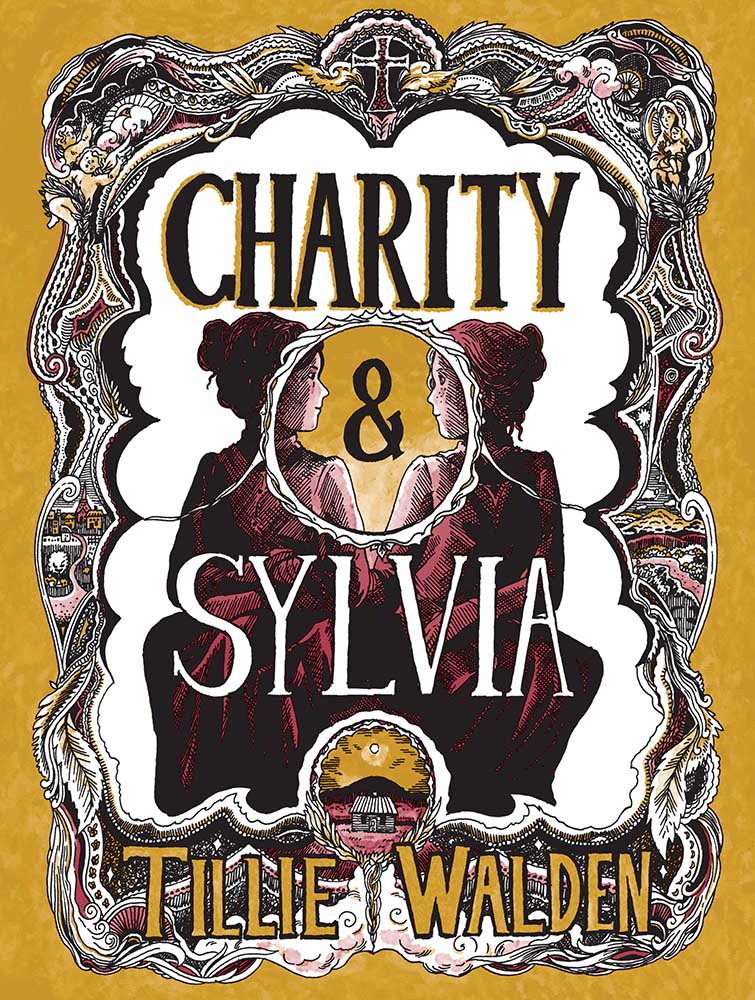
It’s obvious that the book resonated with Tillie Walden in some way, but the depth of that resonance only becomes obvious as one turns the last page of her fabulous graphic version of Charity Bryant and Sylvia Drake’s story. This is because her afterword allows one to fully appreciate the lightness of touch with which she brings that period to life. A lot of history is unpacked here, but with a subtlety that only someone with a firm grasp of the comics medium could pull off. Walden has been that person for a long time now.
There’s much to admire about Charity & Sylvia, starting with the scope of what it sets out to accomplish. Walden effortlessly balances the personal with the political, dispensing facts about America while chronicling the struggle faced by all women to conform in the face of barely disguised misogyny.
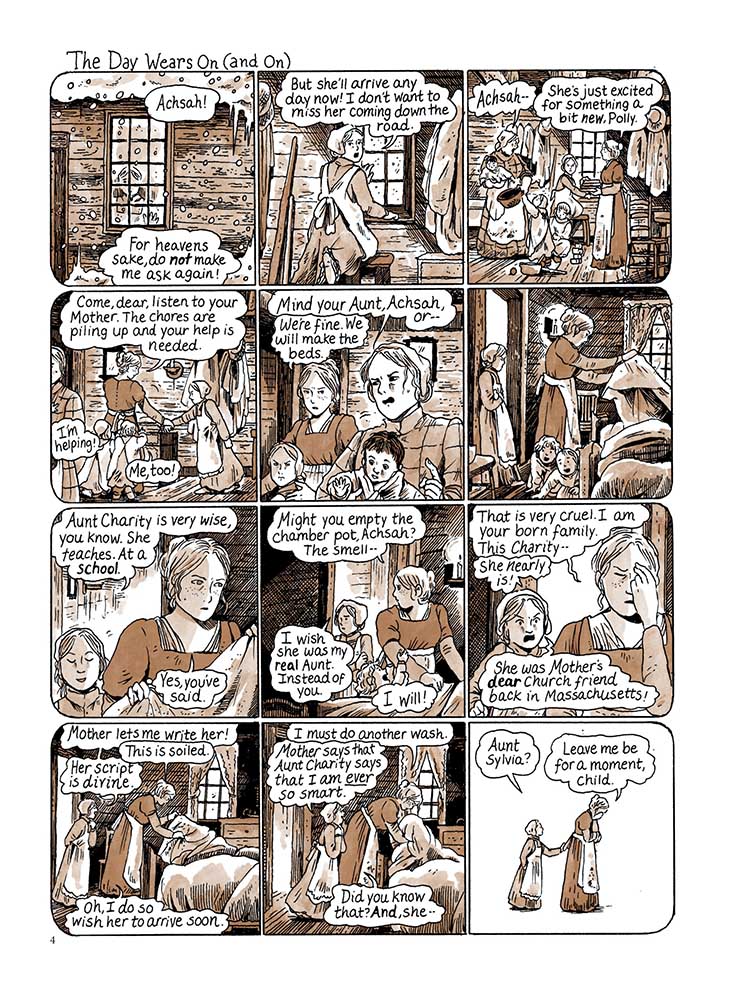
The tale opens with the arrival of Miss Bryant from Easton in Massachusetts to Weybridge in Vermont and unfolds as she is introduced to Miss Drake and recognises a kindred spirit. As the idea of building a life with this younger woman takes hold, they both grapple with the decision as well as its impact on those who know them. This isn’t only because women living together was an alien concept, but on account of the harshness 19th-century America, when life expectancy at birth was roughly 40 years.
Their story plays out in short chapters, interspersing Charity and Sylvia’s lives with those of their families, friends, and neighbours. There are little asides: single-page chapters that function as footnotes, documenting the evolution of a country being stitched together from disparate states. Charity and Sylvia confront mortality at every turn, and Walden doesn’t shy away from depicting everything from infectious diseases to complications during childbirth. She also makes repeated references to larger societal evils, from slavery to the displacement and ethnic cleansing of Native Americans.
Then there’s the art. Given the sheer number of characters involved, it is commendable how Walden imparts a sense of individuality to these women and men. It takes a while to get used to but, eventually, telling one from the other becomes possible thanks to her ability to make their faces so evocative. She also packs in a great deal of emotion with the simplest lines, even when characters are sometimes reduced to just silhouettes.
Interestingly, there isn’t much said about how America viewed same-sex desire. This was an era of religious morality, after all, and rules that Charity and Sylvia acknowledge and try living up to, but it also meant that homosexuality was looked at as unnatural and a sin. Sylvia struggles with this, to some extent, but there’s little attention given to the legal framework or even how American physicians began labelling same-sex desire as a medical or psychological disorder. That quibble aside, what Walden pulls off is impressive by getting one to empathize with the day-to-day lives of two ordinary women.
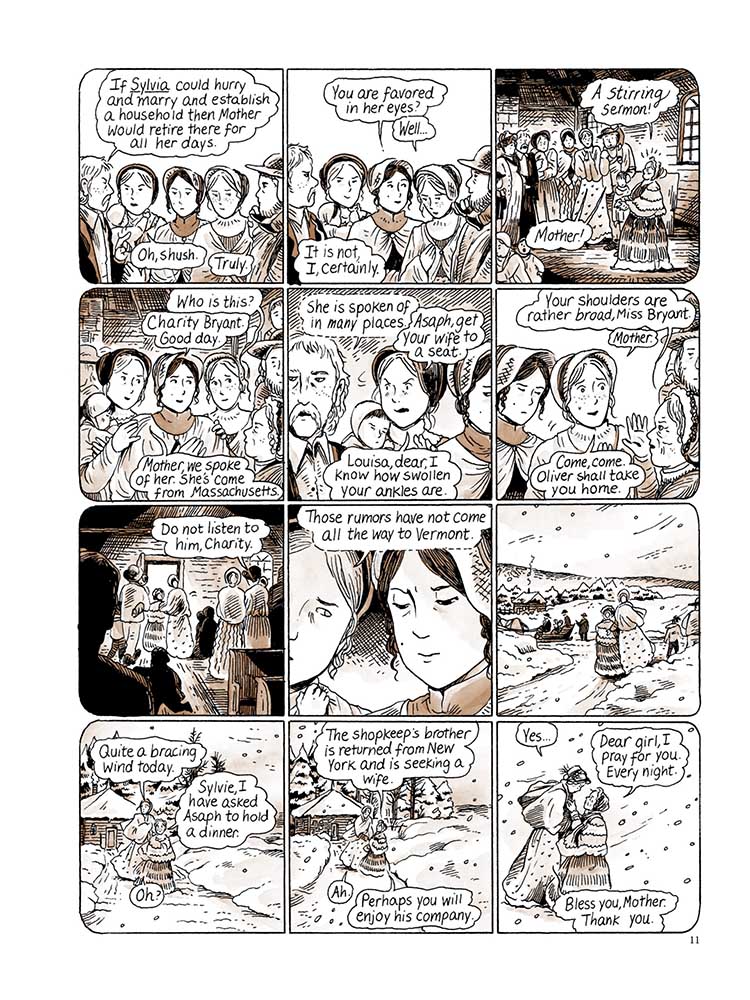
It takes a bit of time to get into Charity & Sylvia and make sense of the intricacies involving their familial and social situation. Eventually though, one comes to the point Walden is presumably making, of the universality of love and the human experience. What this couple accomplish in their own small way is beautiful and profound. They figure out what they want from each other, and from their little worlds, and do what it takes to obtain it. It is this journey that makes them superheroes and this book an unqualified success. It is, arguably, one of the best things you will read this year.
Tillie Walden (W/A) • Drawn & Quarterly, $38.00
Buy online from Gosh! Comics here
Review by Lindsay Pereira