

FANTAGRAPHICS AT 50! As part of our celebration of 50 years of Fantagraphics, we’re highlighting their most revolutionary, their most out there, their most individual graphic novels of the last 50 years. Despite being a recent addition, Fungae from Wojtek Wawszczyk and Tomasz Lew Leśniak can surely take its well-deserved place amongst them. Published only in May of this year, Fungae follows a family fighting through a near-impenetrable physical and psychic terrain in a metaphorical parable of life in the 21st century. They’ve been walking for a long time, through the rotting, dark jungle, with no respite in sight. But is finding respite the only thing they should be worried about, or does something more sinister lurk within the shadows?
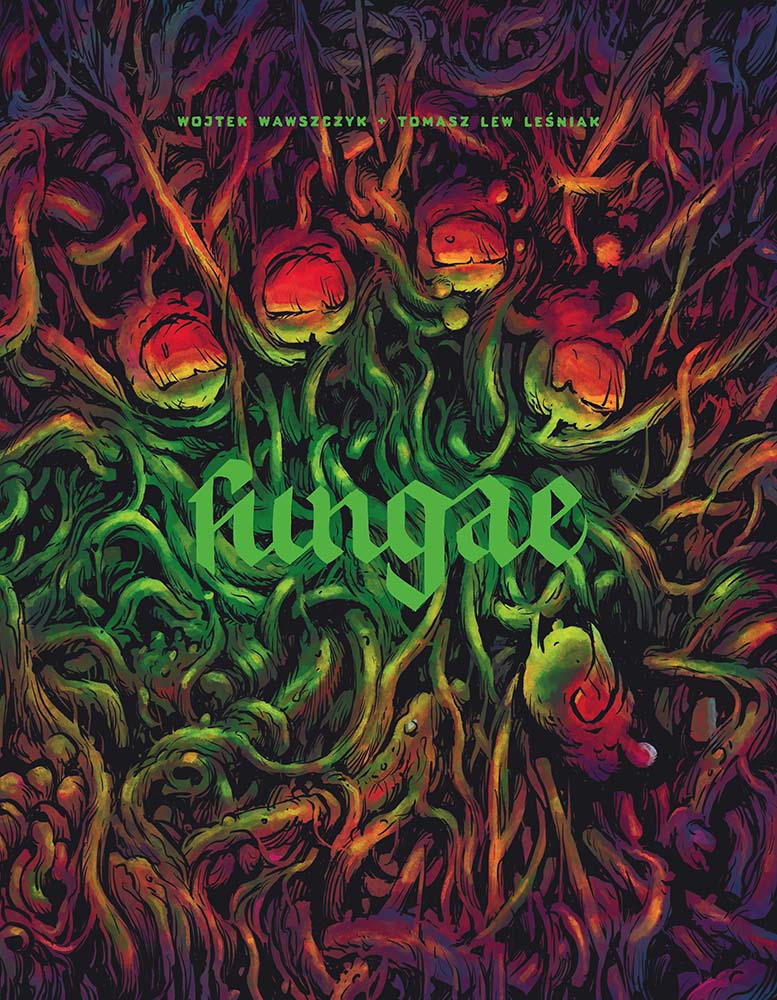
Pages of textured inky blacks and reds drop us from the tops of a forest of trees, down through the gnarling trunks, the smothering vines and the damp mossy swamps, until a man claws himself through the vines, collapsing almost immediately. His family follows soon after; a wife and child, who looks back at the dark, gaping gap they’ve just emerged from with horror. Traipsing through the forest with dad as their leader, the family are clearly low on energy. So much so, that they don’t appear to know they’re being watched. That is, until a fly the size of a horse descends from above, attacking the youngest son. Just about managing to fight it off, the family continue, brushing it off as ‘it’s just a fly’. It’s clear that, wherever we are, there’s something very, very wrong, and the animals are not the worst of it. Rather, it’s the fungus, seeming to grow wilder with every step, and even beginning to grow on the family themselves…
There’s something deeply unsettling about the way Fungae builds its world. We’re given very little explanation of where this family has come from or exactly where they’re going, and yet the oppressive environment feels immediately tangible. The jungle is less a setting than a force acting upon them, constantly threatening to swallow them up. Every step forward seems to bring another obstacle, another creature, another strange mutation or another indication that this place is not simply somewhere they are passing through. It is changing them.
As we continue our trek through the jungle, the family dynamics become clearer; the father would like his son to be strong and courageous, rather than snivelling and being afraid of what lurks in the jungle. His mother, however, wants to protect the child, to nurture and shield him from the toxic world they’ve found themselves in. The story is focused on the violent world around them, but this is also internalised in their family struggle. Whilst they are nearly choking on the fungus spores, their family is also being squeezed apart at the seams by their fundamental differences in handling their predicament. Neither approach feels entirely right, and the book refuses to offer an easy answer: Do you teach someone to survive a world that is becoming increasingly hostile, or do you try to protect them from it for as long as you possibly can?
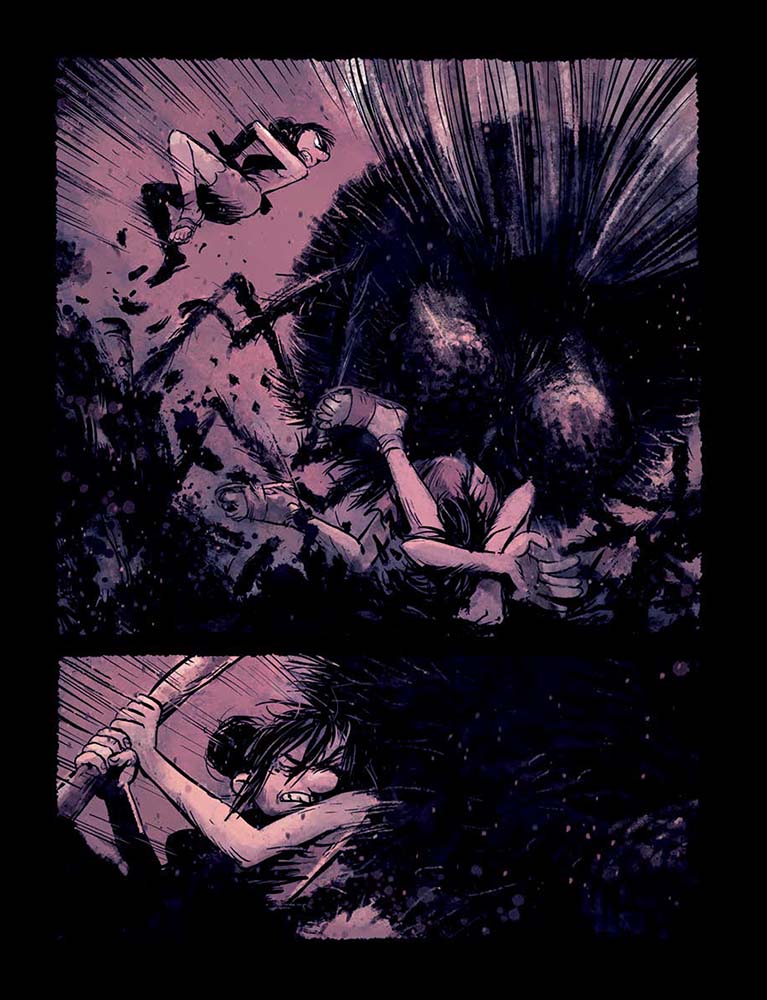
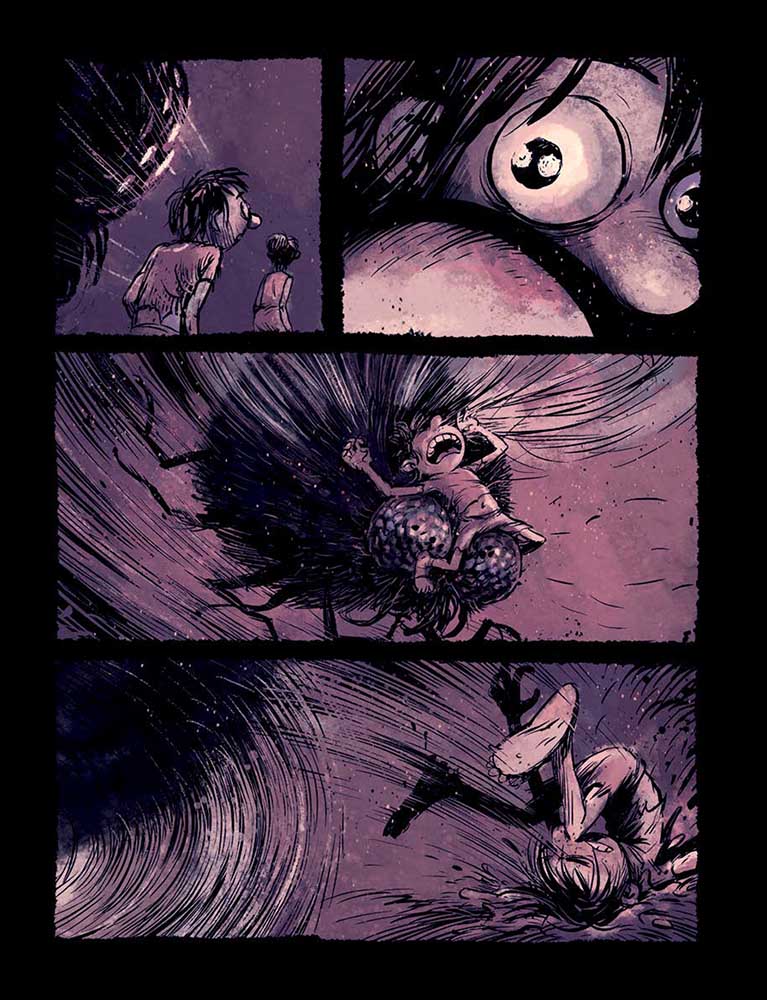
Visually, Fungae is absolutely extraordinary. One thing I really enjoyed was how the colour palettes changed from chapter to chapter. Whilst the first was red and inky black, the second was cool blues, indicative of the coolness of the cave the family will spend the night in. Every chapter adapts to the habitat it takes place in, even down to an entire chapter lit only by the embers of a fire around which the family is having food. The colour becomes part of the storytelling rather than simply an aesthetic choice; you can almost feel the temperature changing as the family moves from one environment to the next.
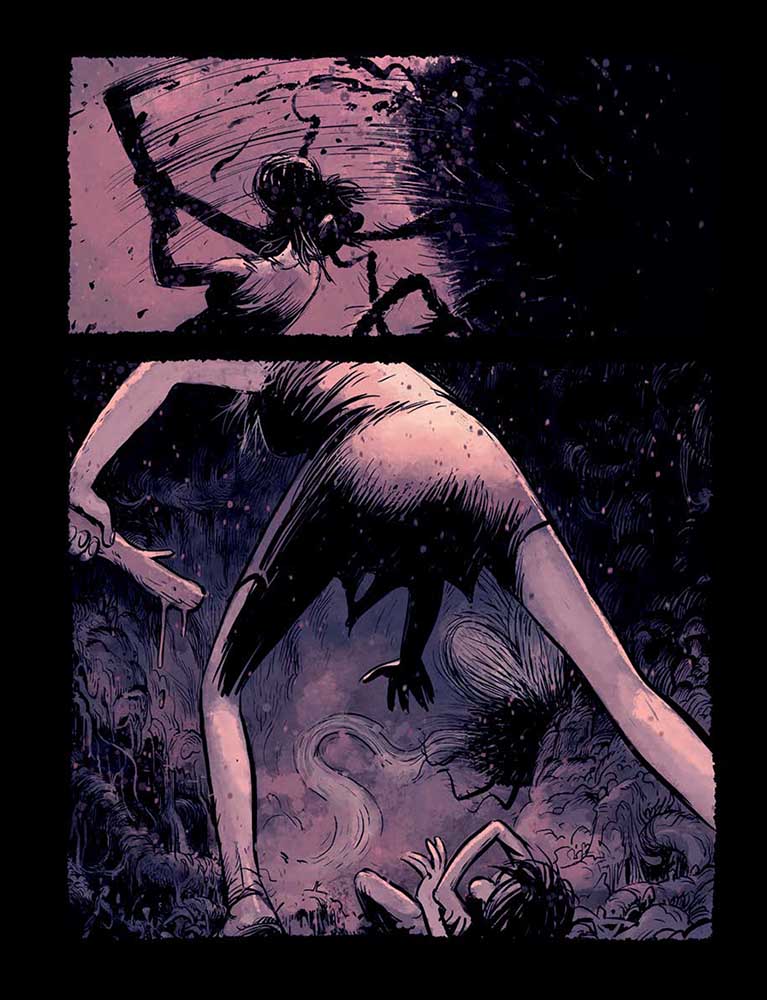
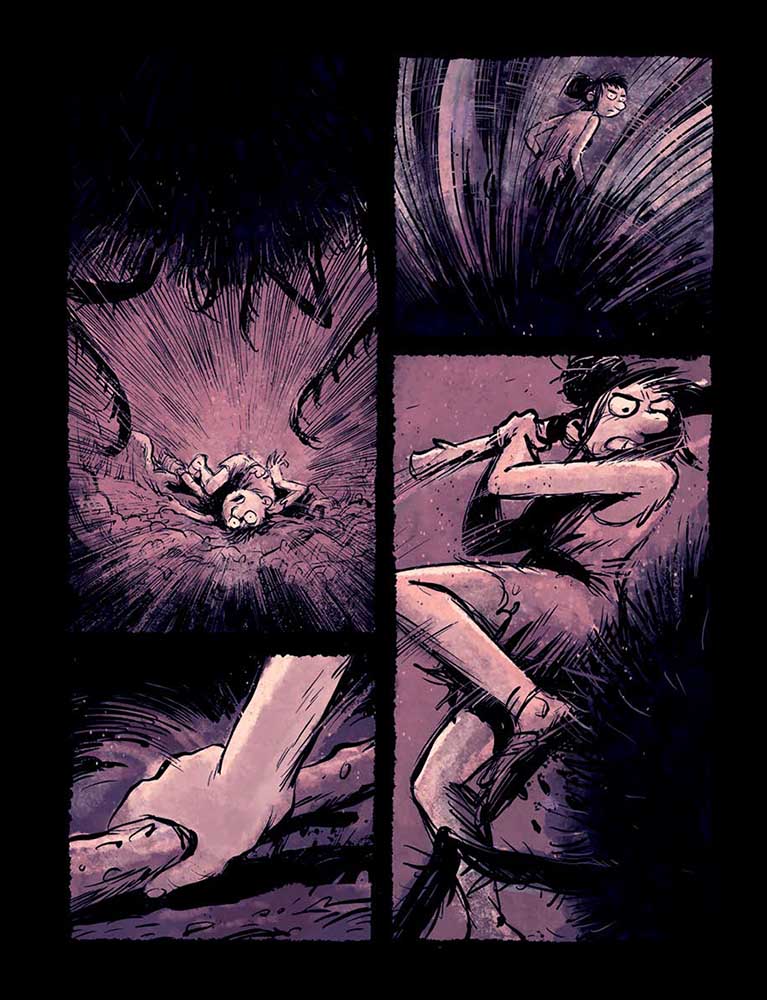
The pages are packed with texture, too. Thick, scratchy blacks, smoky washes and tangled lines make the jungle feel almost physically impenetrable. Vines twist into bodies, branches become indistinguishable from limbs, and fungus seems to spread across the page in much the same way that it spreads across the world of the story. There’s a constant sense that the artwork itself might start crawling out of the panels. Even the use of the panels contributes to this feeling, with the dense environments often seeming to press in around the characters.
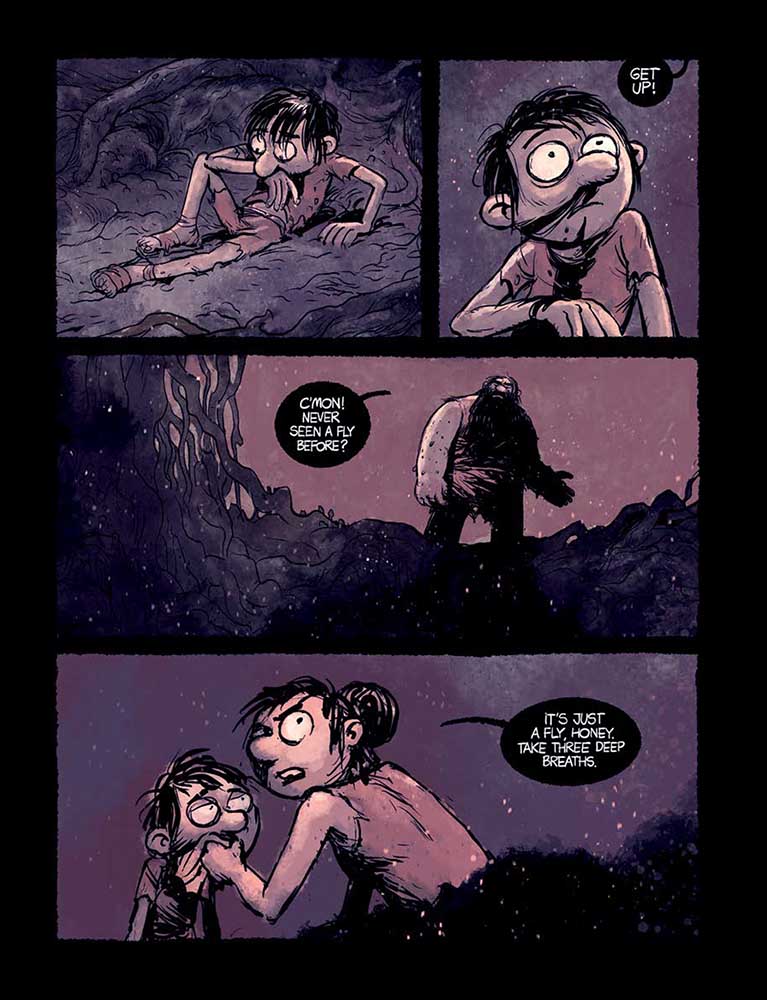
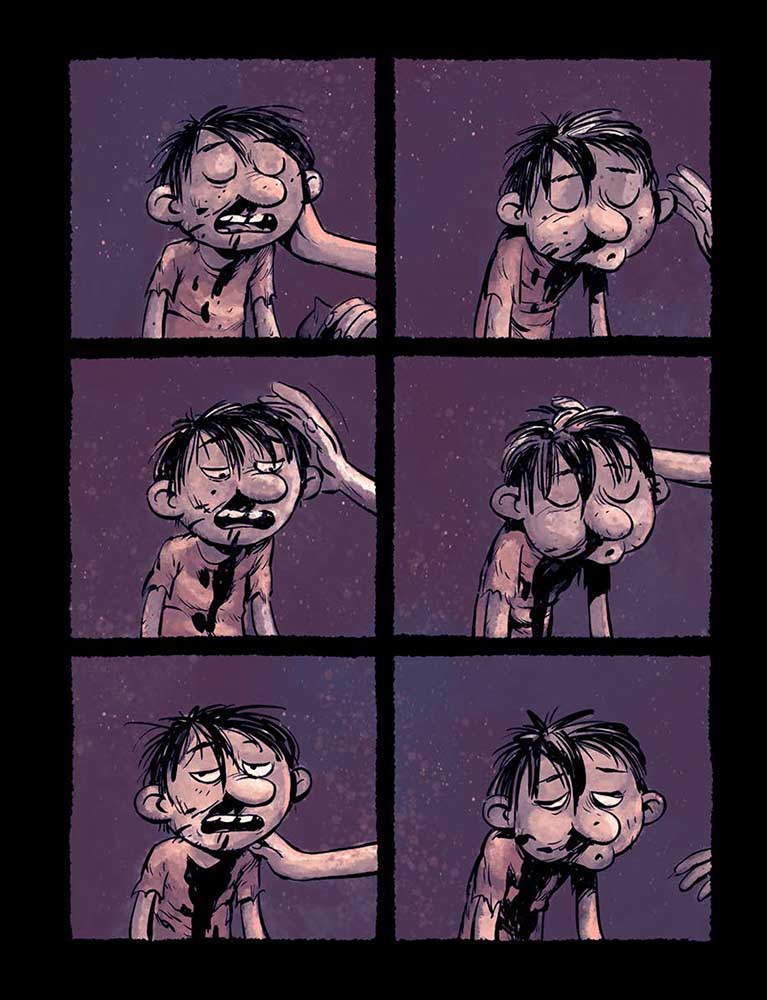
Then there are the characters themselves. The almost cartoony art-style of the family absolutely contrasts with the visceral space they are in, and cleverly so; it just highlights how out-of-place they are. Their exaggerated faces and expressions can be funny one moment and deeply disturbing the next, making them feel simultaneously familiar and alien. Against the grotesque, almost nightmarish environments, they look like ordinary people who have somehow wandered into the wrong story.
The minimal dialogue throughout not only gives the sparse speech more insightful meaning, but also allows these gorgeous backgrounds to truly shine. Silence becomes just as important as what the characters say. A look, a gesture or a tiny exchange can tell us more about the family than a page of exposition ever could. It also leaves us with space to sit in the discomfort of the world around them.
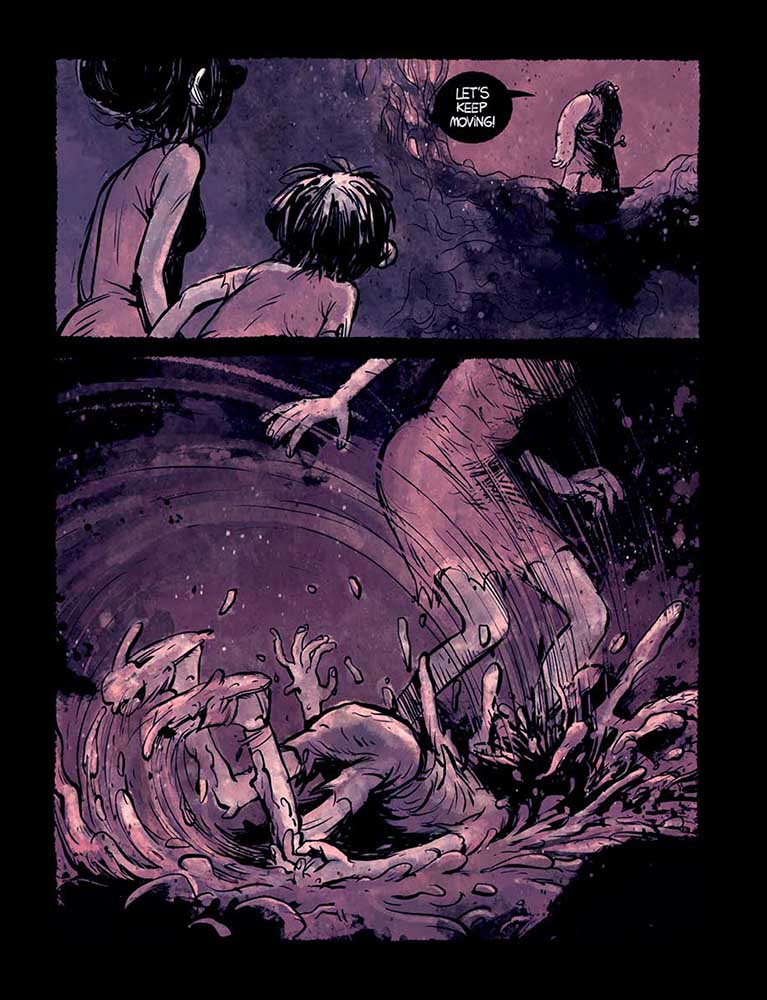
There’s a strange rhythm to Fungae, too. At times it feels like a nightmare, at others like a darkly comic family adventure, and then suddenly it becomes something much more unsettling. The book is constantly shifting beneath your feet, much like the terrain its characters are trying to cross. You’re never quite sure whether you’re supposed to laugh, recoil or worry, and that uncertainty is part of what makes it so compelling.
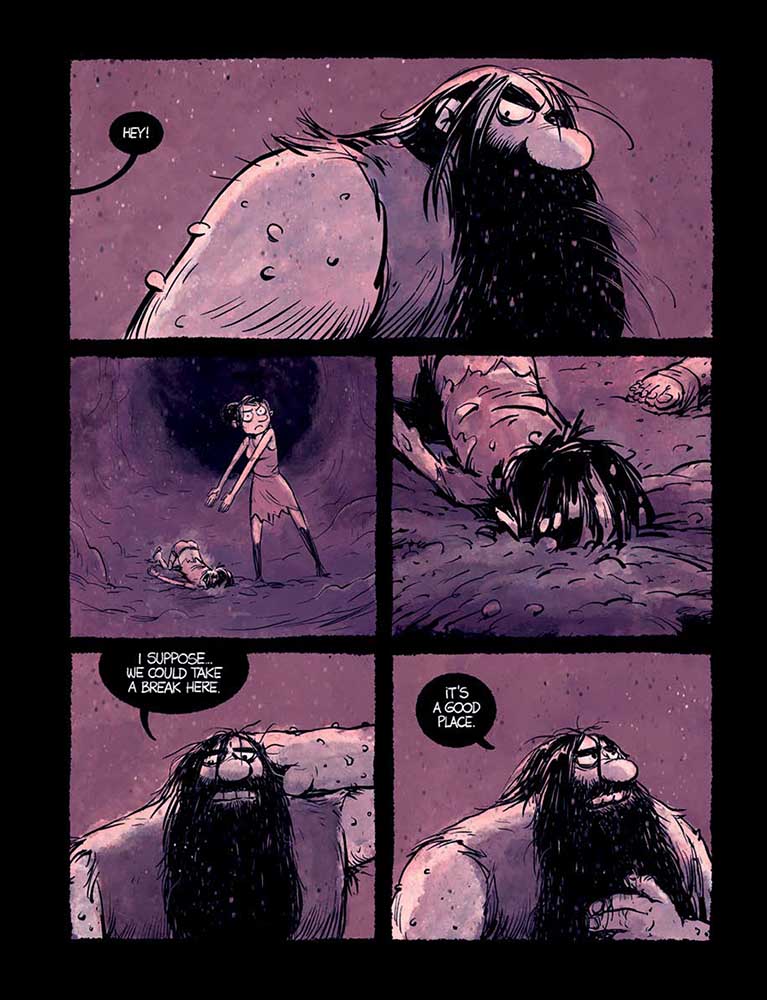
It’s strange, grotesque, funny, unsettling and visually spectacular, exactly the kind of singular, difficult-to-categorise work that feels at home in Fantagraphics’ catalogue. Fungae may be one of their newest books, but it already feels like it belongs in a celebration of everything Fantagraphics has championed over the last 50 years: comics that are uncompromisingly individual, that push at what the medium can look like, and that leave you feeling slightly changed after you’ve closed the book.
Wojtek Wawszczyk & Tomasz Lew Leśniak • Fantagraphics Books, $40.00
Review by Lydia Turner
Fantagraphics at 50 Month runs through August at Broken Frontier. You can see articles as they’re published in one tagged list here.