

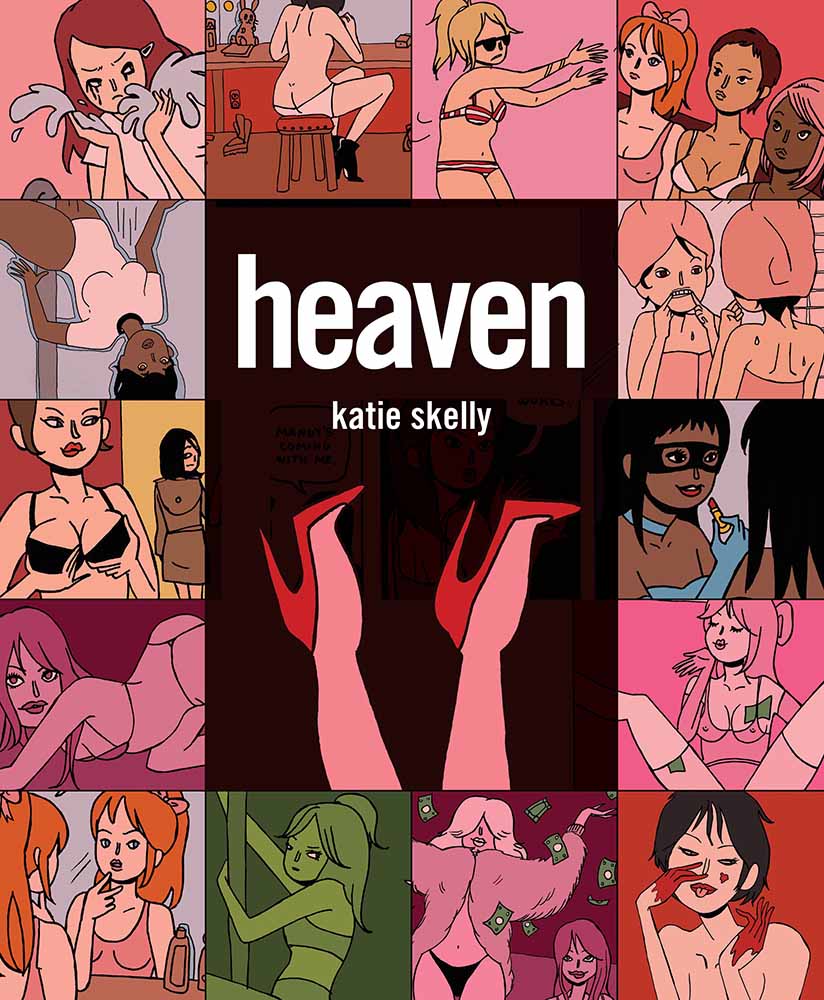
FANTAGRAPHICS AT 50! Katie Skelly’s Heaven focuses on the tantalising mystery of a strip club that seems to appear and disappear at will. As the story unfolds, its focus shifts towards the women at its centre – their friendships, ambitions, agency and sense of identity. Blending mystery, horror, coming-of-age and erotica with Skelly’s distinctive visual style, Heaven is a story that resists easy categorisation. Here, Skelly talks about creating the mythology of Heaven, the camaraderie between working women, developing the book’s striking colour palette, and why she prefers to let readers experience a story rather than simply giving them all the answers.

Photo by Jaime Hernandez
BROKEN FRONTIER: Heaven initially looks like it might be a story about a mysterious strip club, but as the story unfolds, it becomes much more interested in the women who work there. What drew you to a strip club as the setting for a story about female power, friendship and identity?
KATIE SKELLY: I like starting with a broad concept — nurses in space, vampire in the city, maids who kill, etc. — and work from there. I think my stories can boil down to the elements you mentioned because that’s what’s front of mind for me a lot of the time.
BF: You portray the dancers as having agency, genuine friendships and pride in what they do, rather than simply presenting them through the male gaze. Was that something you were particularly conscious of while creating the book?
SKELLY: I aimed to write what I’ve experienced and witnessed in real life, which is the camaraderie between working women. It isn’t necessarily present in every work situation, but when it is, it’s very compelling and powerful. I like to try to write from a place of power, even if it can start from a hurt place or feeling a lack of something.
BF: The club almost feels like a character in its own right – mysterious, seductive and slightly threatening. How did you go about creating the mythology surrounding Heaven?
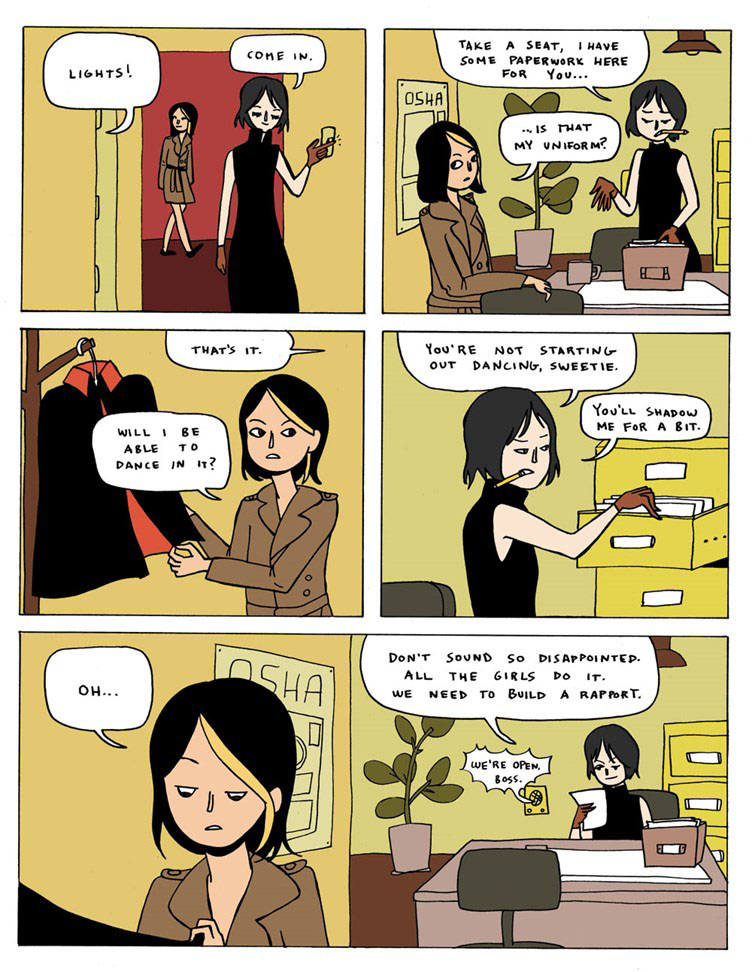
SKELLY: It’s sort of a physical representation of what I’d like my comics to be — mysterious, seductive, and slightly threatening! All I knew is I wanted it to be so elusive that even I didn’t even know when it might appear.
BF: Like Maids, Heaven is quite patient with its mysteries. You give readers clues and let them gradually piece things together alongside Dolly. What do you enjoy about making readers wait for the answers?
SKELLY: I’m pacing my stories out the way I’d like to experience them as a reader. I’m not sure I enjoy making readers wait for answers so much. It’s more that I enjoy taking them on a ride.
BF: The colour palette does so much storytelling in Heaven, from the warm pinks, reds and aquas to the sudden flashes of crimson and deep black. How did you develop the book’s visual language?
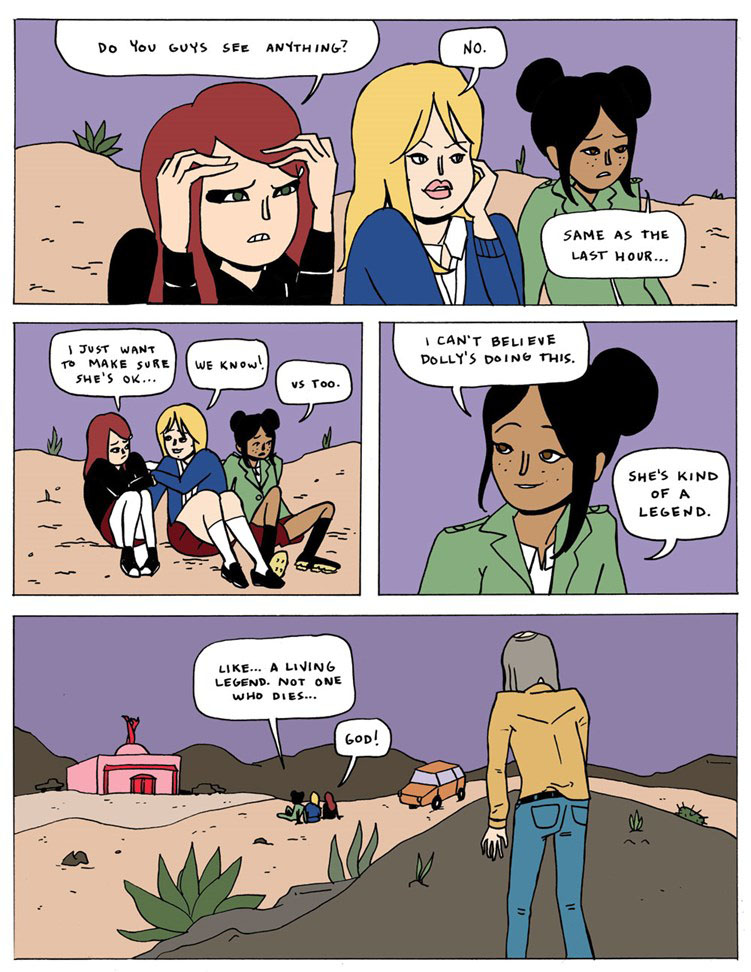
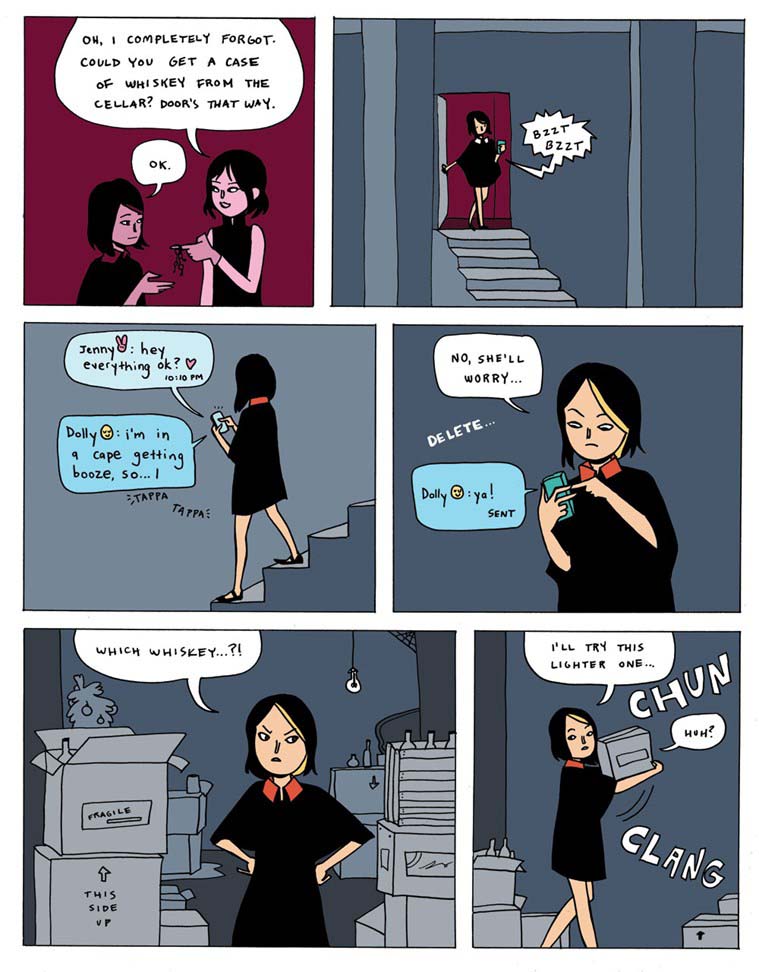
SKELLY: I started with the Heaven sign with the neon legs in the air and built everything else out around that. The Heaven world is lurid whereas Dolly’s world is beige and constrained. The rest of the details worked out from there.
BF: Readers who loved Maids will probably recognise your distinctive visual style in Heaven, but the stories feel quite different. What do you think has changed most in your work between the two books?
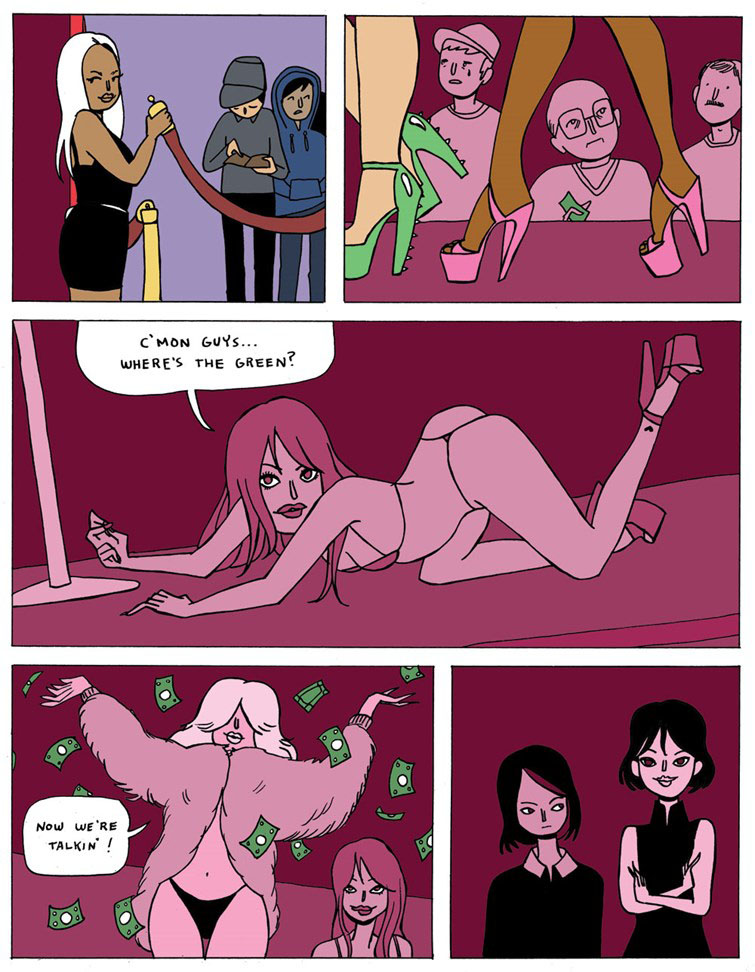
SKELLY: The dialogue is more naturalistic than Maids. More things get said that can be thrown off because it’s just kids talking. Maids had to be more exacting because that was the nature of the characters’ lives.
BF: Your books are often described in terms of genre – horror, mystery, crime, erotica, coming-of-age – but Heaven seems deliberately difficult to put in one box. Do you think about genre while you’re writing, or do you prefer to let the story become whatever it wants to be?
SKELLY: I have found it impossible to create and analyze at the same time so I just work to get to a flow state and trust myself when I’m there.
Buy online from Gosh! Comics here
Interview by Lydia Turner
Fantagraphics at 50 Month runs through August at Broken Frontier. You can see articles as they’re published in one tagged list here.