

Drawing your attention to work that is notably distinctive in voice, and playful with format and presentation, is one of the core aims of Broken Frontier as a platform. When that practice also includes comics and zines that tap into important seams of social commentary that coverage becomes even more vital. Today at BF we’re chatting to a micropress that encompasses all of those points. Kutty Press is run by Bhavani Balasubramanyam and Deepesh Sangtani and describes itself as “a mini publishing experiment rooted in the spirit of play, process, and print.” As a prelude to a look at some of their minicomics and zines here on the site I chatted with the team about the potential of tactile publishing, the accessibility of zines in communicating lived experiences, and what we can be looking forward to from their direction this year…
ANDY OLIVER: Let’s start by asking you about the origins of Kutty Press, who makes up the team and what the name means?
KUTTY PRESS: Kutty Press is an independent publishing and print initiative that focuses on experimental, self-published formats, including zines, artist books, and printed ephemera. Taking its name from the Tamil word ‘kutty’, meaning small or tiny, the press celebrates the handmade, the imperfect, and the personal through books, zines, prints, and objects.
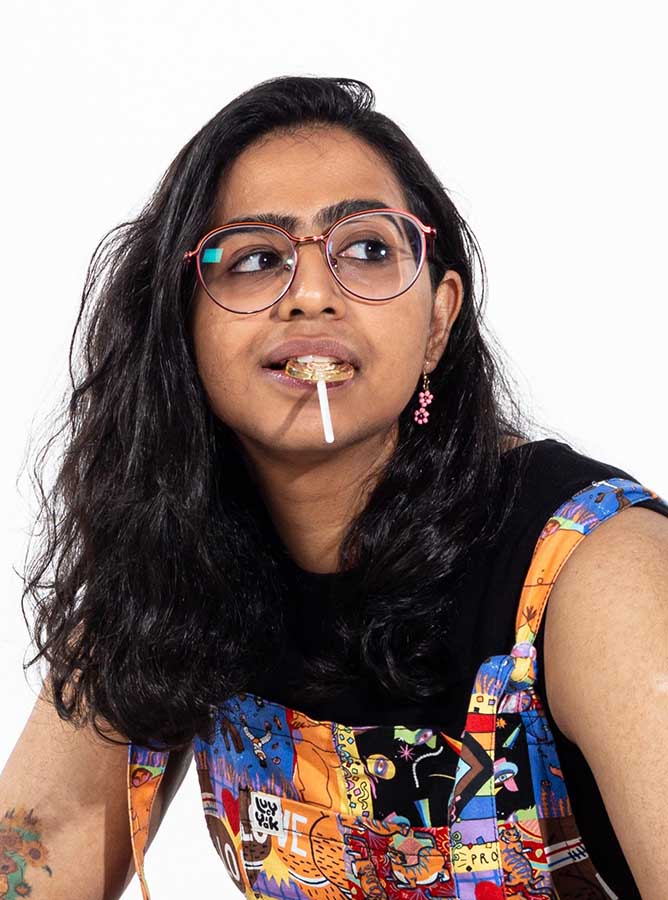
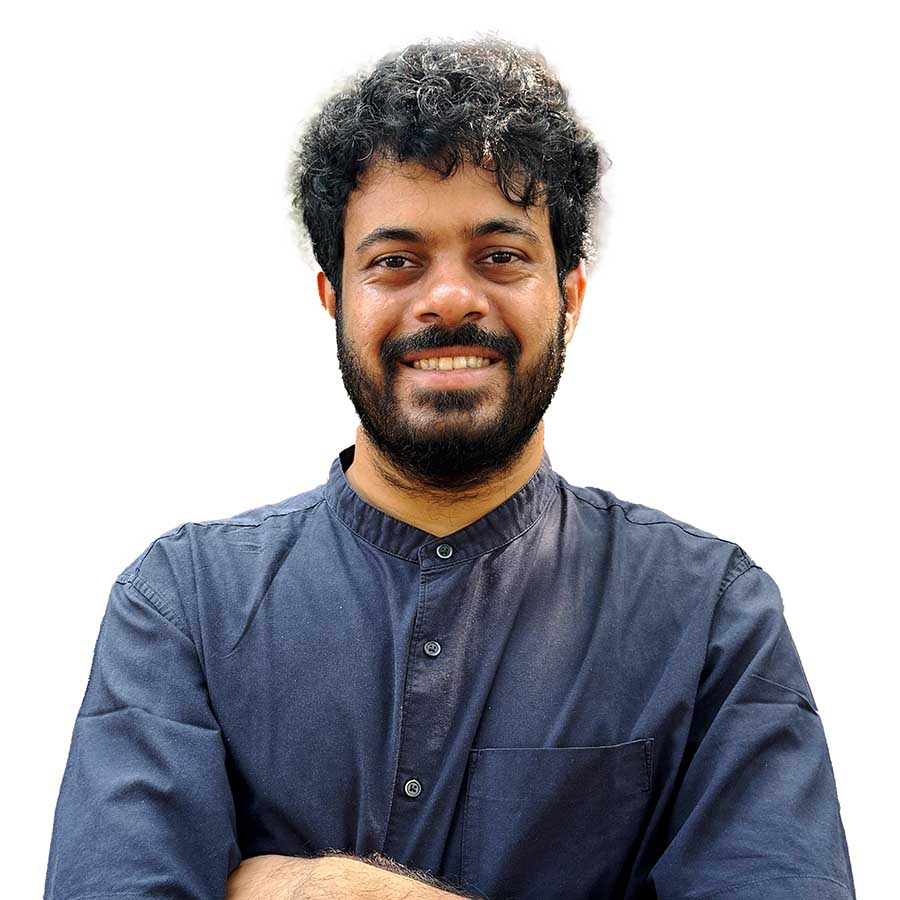
Bhavani Balasubramanyam and Deepesh Sangtani
We started in August 2025 as a fun project between two friends and as a way to tell stories in a playful, experimental way. The founders, Bhavani Balasubramanyam and Deepesh Sangtani, are two former architecture undergrads turned communication design postgrads, with a shared love of printmaking, jugaad, and bad puns.
Bhavani (she/they) is the Artistic Director and “ideals gal” of the operation. A Glasgow-based visual storyteller and facilitator from India, they create comics and zines that explore South Asian identity, mental health, and queer narratives, often featuring their cat, Kevin. Through printmaking and zine-making, Bhavani reflects on history, colonial legacy, and community, while their improvisational theatre practice fosters collective storytelling and play. Outside of these shenanigans, she plays video games and TTRPGs and has strong opinions on film.
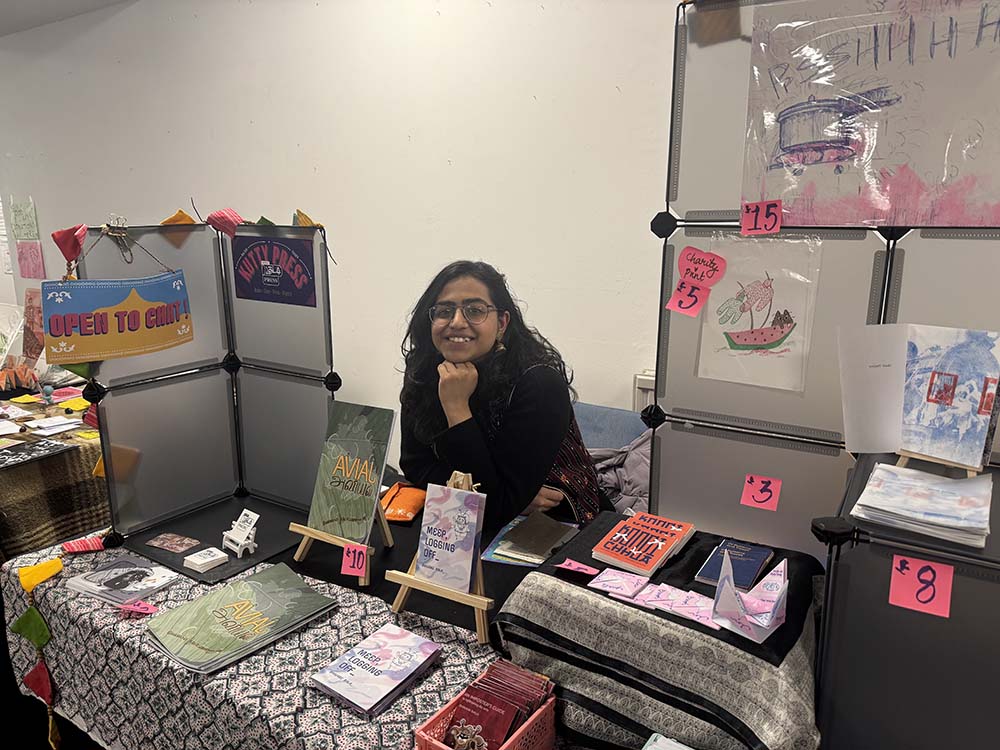
Bhavani at Dundee Zine Fest
Deepesh Sangtani (he/him) is the Creative Producer and the duo’s resident “I know a guy” guy. He is an interdisciplinary designer and maker from New Delhi, India, and his practice sits at the intersection of visual arts and graphic design, exploring space, place, and print through tactile making. He works across experimental printmaking, bookmaking, and publication design, using visual storytelling to reflect cultural and community-led narratives. Outside of work, he’s a musician, a collector of maps and design ephemera, and a competitive sportsperson.
We also collaborate with artists, researchers, and nonprofits to design, produce, and circulate publications. These collaborations are envisioned as supportive frameworks that enable artists to retain authorship and creative control while creating a transparent, flexible, and supportive process for artist exploration. We are in the process of creating a series of photo books through this system.
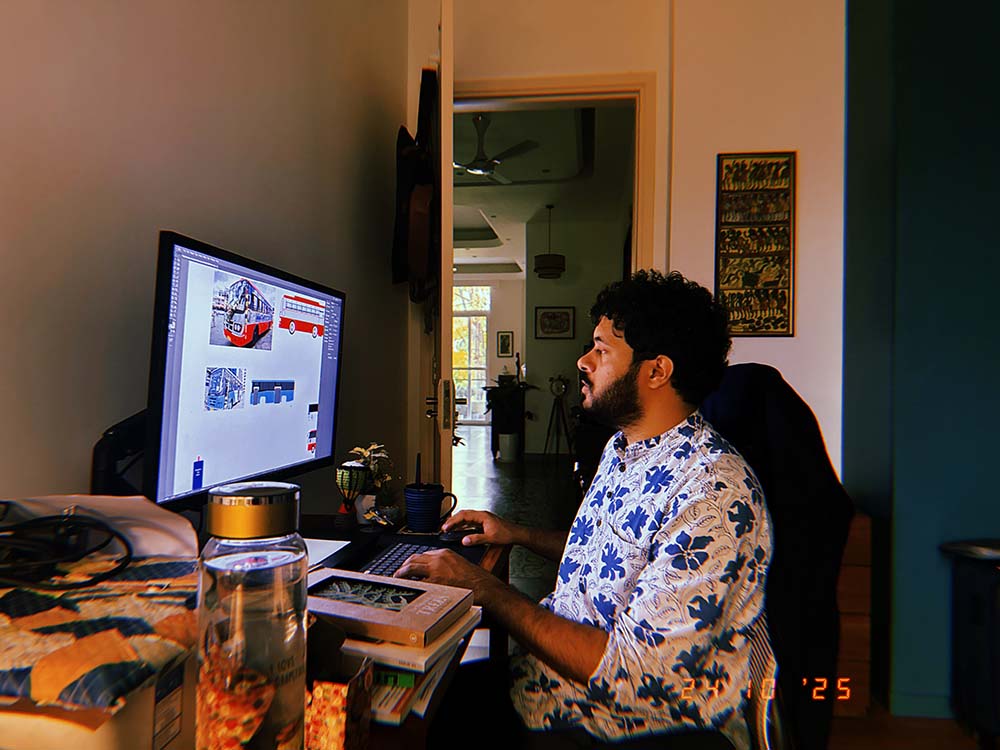
Deepesh at work
In addition to all of this, we run workshops on zine-making and storytelling, and table at festivals and zine fairs.
AO: How would you describe the aims and ethos of Kutty Press? What sort of work are you looking to publish in terms of the themes it covers?
KUTTY PRESS: Kutty in Tamil means “small”, but is also a term of endearment in many families. This is essentially the ethos of what we do, producing small, accessible publications that are endearing pieces of art and storytelling. Our work is rooted in South Asian identity and community-led histories, and weaves together visual storytelling, political reflection, and the tactile joy of printmaking and bookmaking.
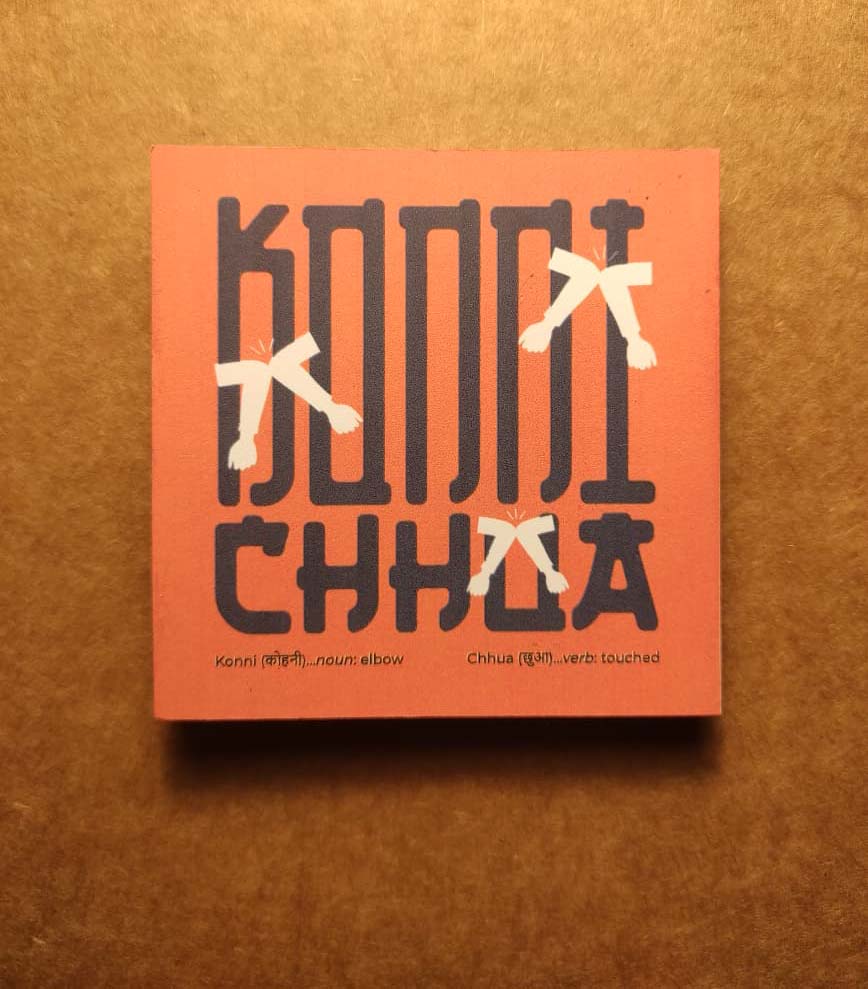
Konni Chhua
Our themes range from historic identity to fun everyday moments of reflection; it is about speaking about lived experience from a heartfelt perspective, really.
AO: What are some of the titles Kutty Press have published so far?
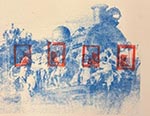
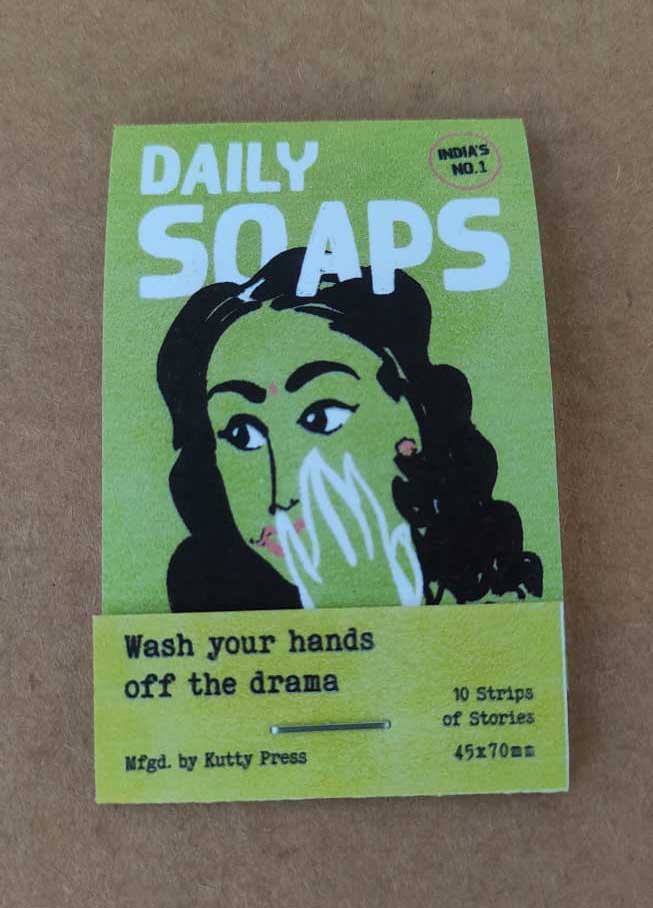
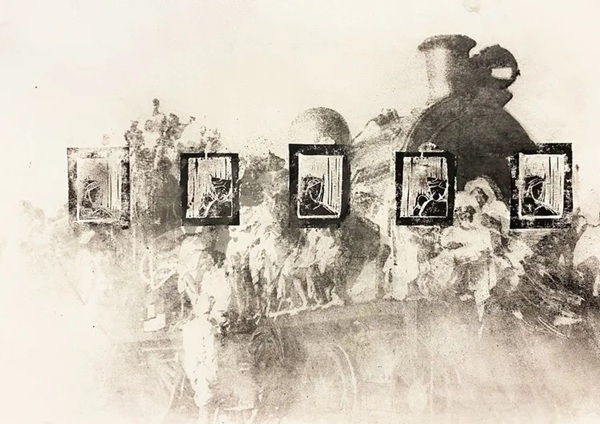
KUTTY PRESS: So far, we’ve published works that explore archives (e.g., Of Patterns and Traces, a zine documenting hand-painted signage in India) or the ongoing legacies of empire (Ghost Trains speaks to the violent mass migrations during the Partition of India and Pakistan). We also make fun stuff crowd-sourced from our community, like the water-soluble zine Daily Soaps, which lays out a series of dramatic, true family stories in the form of a mini-matchbook. This one is particularly popular! We have since sent out a call for a 2.0 version, detailing juicy office gossip.
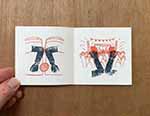
AO: Looking at your publications to date there’s very much a feeling of the tactile to them – zines that do things that can only be experienced physically, like the intricate folds of Love Stories in Parts or the concertina effect of Konni Chhua. How important is that idea of experimentation in print presentation to you?
KUTTY PRESS: Both of our backgrounds in architecture have a lot to thank for this fascination with form; zines have the potential to not just be 2-D, but can be objects in their own right. It is very important to us that the form of the zine not only reflects the content, but tells a story in the very act of its existence. They also invite the reader to play with them and change the way the story is told in the way the zine is presented; for example, our zine, Daily Soaps, is printed on water-soluble paper to reflect the soap paper that was the inspiration for the design, but also to invite our readers to “wash their hands of” the gossip. There is a very real possibility that the zine may dissolve by accident!
We also want our creative processes to be fun; it’s not just about figuring out how to tell the story, but also about how we can tell it in ways that make us giggle and spark joy.
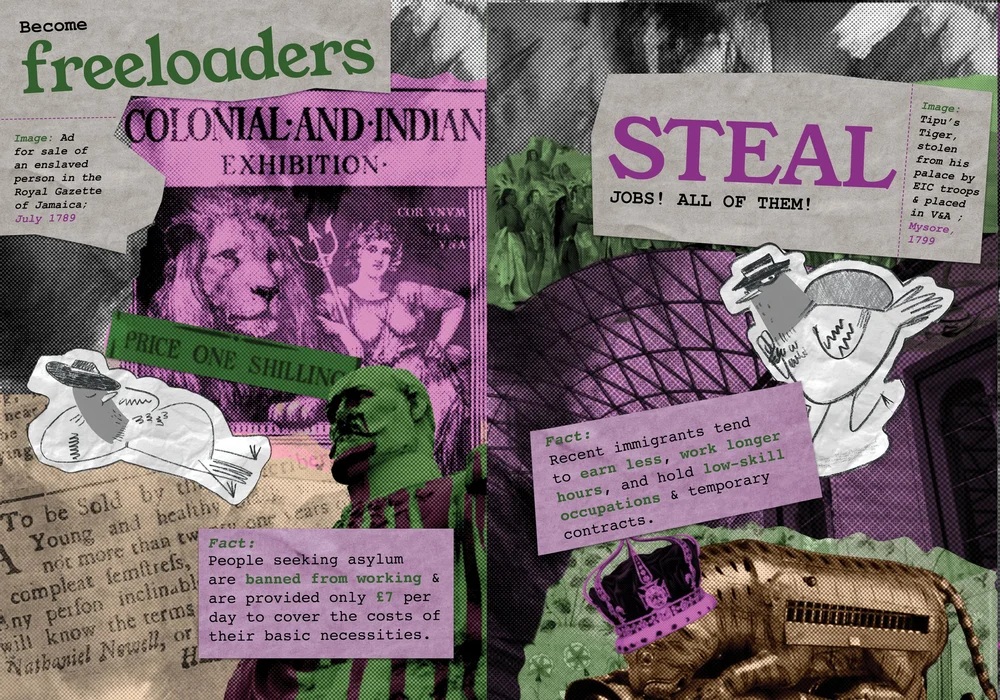
AO: Your zines often have important things to say in terms of social commentary, like the Immigrants Guide to Infiltrating a Place that you describe as work that “that interrogates UK immigration rhetoric” or the aforementioned Ghost Trains which examines the violence and trauma experienced by the refugees of the Partition of India and Pakistan. Why do you think zines, in particular, are such a connective and eloquent method of delivery to communicate these kinds of experiences?
KUTTY PRESS: Historically, zines started as a low-cost, accessible method of protest; along the way, some of that initial accessibility was lost as production values rose, but zines remain one of the easiest ways to disseminate information in print. The thing we love about zines is that they can be about anything and take whatever form we so choose.
For Bhavani, history has always been a favoured subject, but she never felt that it was taught in a way that was a. interesting and b. accessible. Being able to meld media, topics, and art forms ensured the topic could be communicated in a fun and open way, even when the content was heavy. It is also easy to hide a heavy topic about immigration inside a fun zine about pigeons, and nobody bats an eye.
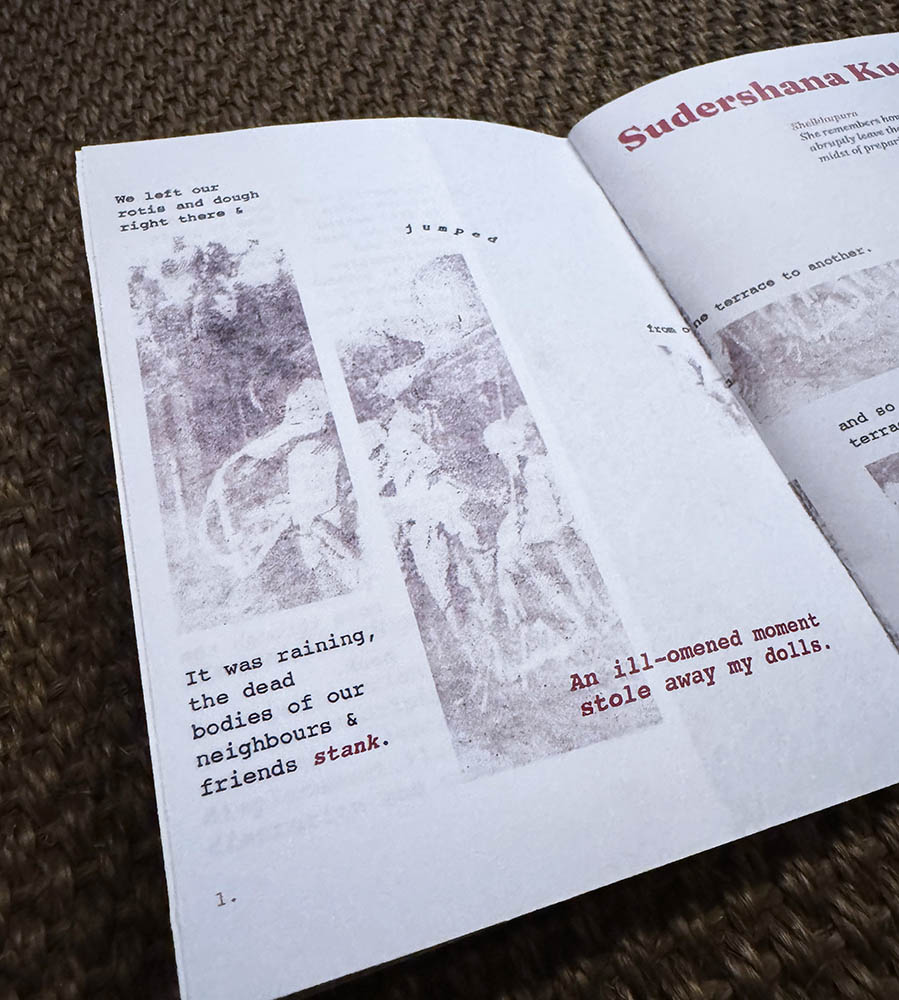
Ghost Trains
AO: What has been some of the most rewarding feedback to date on the Kutty Press publications from readers?
KUTTY PRESS: This is an easy one to answer! Bhavani was at the Glasgow Zine Fest last year, and someone approached them to discuss Ghost Trains. She mentioned that her grandparents were on those trains and had to hide under other corpses to escape safely. However, because the British education system doesn’t teach it, and her family doesn’t want to talk about the trauma of that time, she only learned about this formative part of her history well into her 20s. She thanked her for telling these stories. It was a truly humbling experience.
Avial
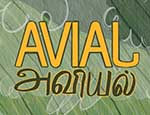
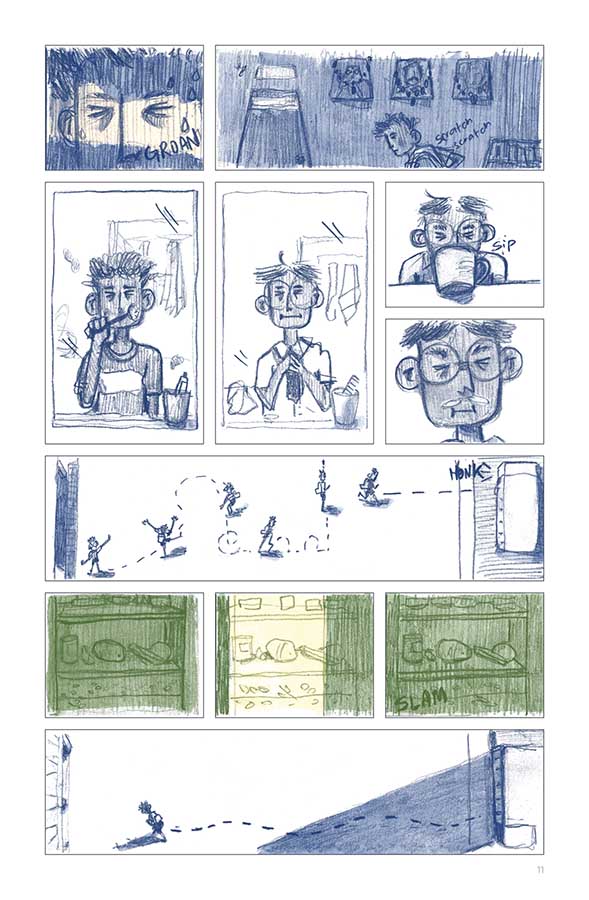
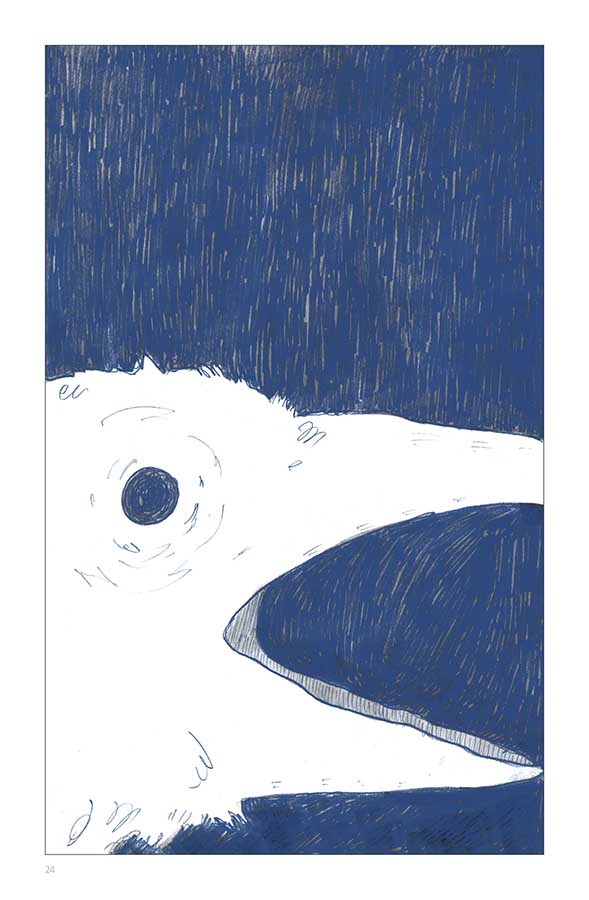
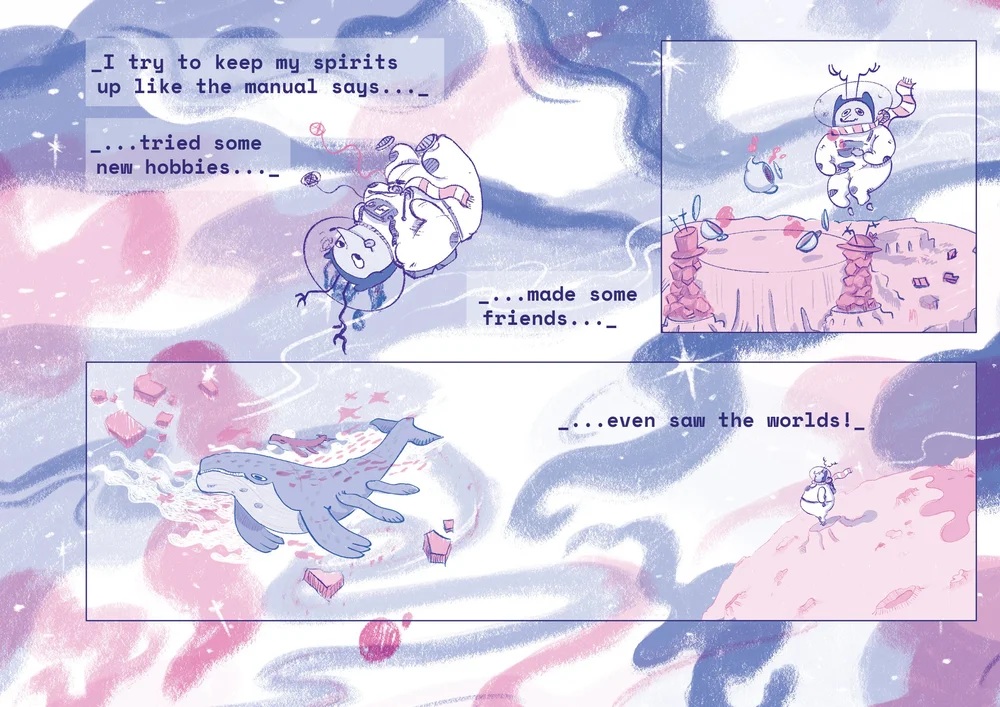
AO: Bhavani, I first reviewed your comics work in your short comic Avial in 2024 which impressed me for its sound–effects led intuitive use of the language of comics. I was similarly impressed with your short comic Meep, Logging Off_ so I’d like to ask you about the decisions you made there in narrative terms and how you used the physicality of the comic to enhance its narrative and themes of mental health awareness?
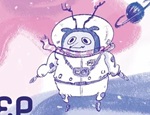
KUTTY PRESS: Thank you! Meep came from a deep-rooted loneliness. which I once described to a therapist as “feeling untethered in the expanse of space”. You try to go through the motions of a normal life, but can’t shake this crushing feeling that accompanies you wherever you go. I was working within the limits of accessible print media; however, the final panel was a full A3 sheet to drive home how alone and small Meep felt in that final moment. If I had access to a larger sheet, I would have loved to make that panel as big as I could possibly go. Not to be my own worst critic, but with the new zine methods I have since learned, I would love to experiment more with the feeling of untethered-ness in a zine format.
Meep, Logging Off_
AO: Tell us about the historical themes youʼre exploring in one of your newer comics Empire Biscuit?
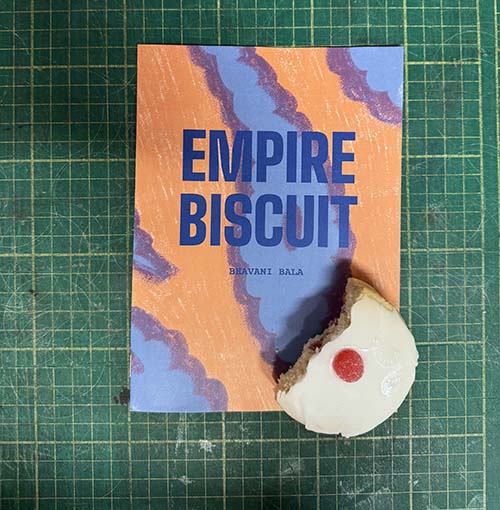
KUTTY PRESS: Empire Biscuit is envisioned as a journey through imagined histories of looted artefacts from the British Raj. Blending fact and fiction, the comic explores identity, reclamation, and the enduring impact of cultural inheritance in the shadow of empire. I’m exploring the complex themes of identity and colonial legacy in the modern-day diaspora from the subcontinent, though in a way that is also light-hearted and grounded in reality. As both a second- and first-generation immigrant, I was brought up with keywords like dignity, self-respect, and cultural integrity in the face of the myriad of cultures I’ve been privy to over the years. This comic will also explore that aspect of cultural identity, and how the final outcome is often greater than the sum of its parts.
AO: In terms of comics art what mediums do you work in? Can you tell us about your creative process in that regard?
KUTTY PRESS: My process is a little bit all over the place, if I’m being honest. The ideas spawn from whatever the most recent thing has affected me emotionally, and the seeds of a comic build from there. The sketches follow; I rarely write a script, the characters come first, and I use their motivations and designs to build the world and the story after. I visualise storytelling as film stills – I took a lot of film electives in my undergrad, and I approach the comic process similarly – establishing shots, push in, close-ups – that sort of thing. As I’m sketching, I also think about the form the comic will take, whether it will be a digital sketch or something more analogue, with printmaking or collage styles. I try to vary it up and let the form of the publication inform the content.
For e.g., in Empire Biscuit, the protagonist’s imagined history is realised in a collage of historical images and sketches – a nod to the fact that she is cobbling together these scenes from her imagination and her limited knowledge of the event itself, while the “present day” scenes are done in a sketched style.
Ghost Trains
AO: And, finally, what next from Kutty Press? And where can readers see you events-wise this year?
KUTTY PRESS: It has been so incredible to see our growth over the last 8 months; we started in August 2025 and have since released 6 -7 zines, had our books in 3 bookstores, and are due to run quite a few workshops in the coming months.
Bhavani will host a workshop and table at the Glasgow Zine Fest (23-24 May) and will make appearances at Cymera Festival (7th June), the National Festival of Making (4 July) and Thought Bubble Comic Arts Festival (14-15th November). She also pitched our Kutty Korner at the Creative Glasgow Pitch Pot on 14th May.
These are just the ones we’re allowed to tell you about so far.
Deepesh just wrapped up an incredible exhibition titled “Jugaading through live” in collaboration with South Asian Salon and will be featuring our work at the Pulp Bazaar in Delhi. (6 June-24th July) He is working hard to get more Kutty Press publications in bookstores in India. In addition, he will be facilitating a bunch of community-led creative Sunday events and leading zine-making and printmaking workshops.
We are truly grateful for the response to our work, and are super excited to see what the future holds!
For more on Kutty Press follow them on Instagram here. Their titles are available from Hot Cock Soup and Good Press.
Interview by Andy Oliver