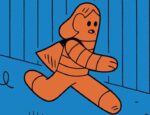


I have never read anything quite like Joana Mosi’s quietly powerful new graphic novel The Mongoose, from Pow Pow Press. The book follows a young woman named Julia who lives with her struggling older brother and mom in a scenic beach house that once belonged to their late grandmother. While the environment should be peaceful, Julia’s experiences become anything but. In the midst of her grief, she begins to be haunted by visions of a mongoose that no one else believes exists. The small animal who messes up her garden begins tormenting her everywhere she goes. His daily visits cause a persistent sense of distress. His absence impacts her just as much as his presence. Very soon every time the mongoose disappeared from the white frames, I felt uneasy. Where did he go? When will he come back? Why does no one else care? Are we going to be okay?
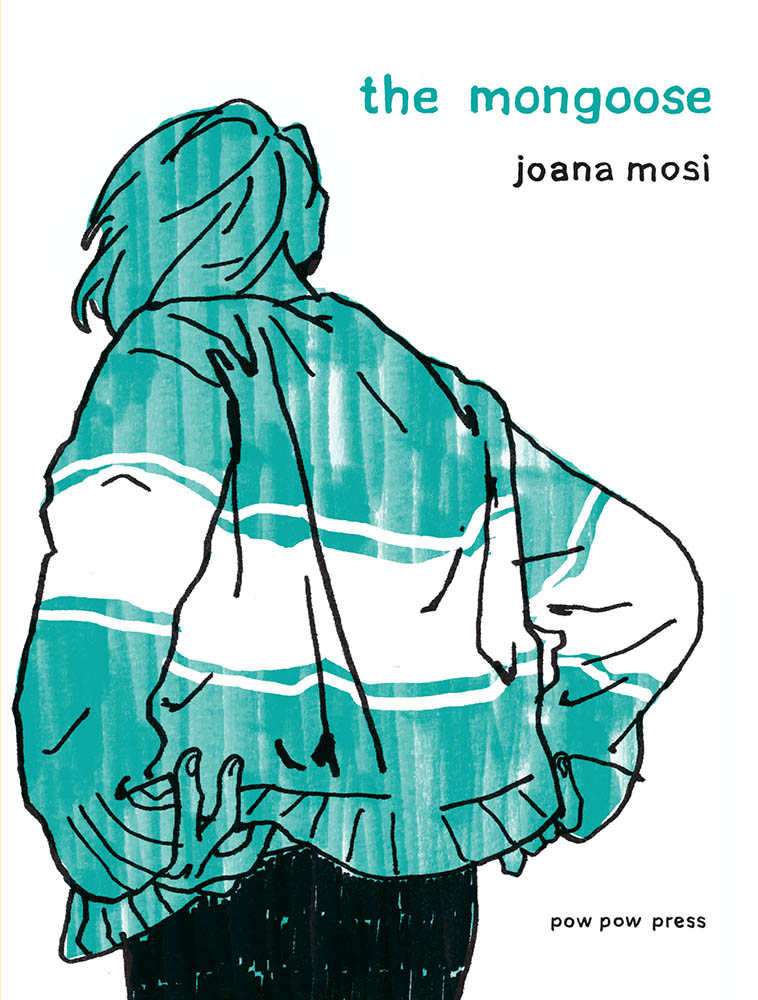
Through her uniquely crafted layouts, Mosi makes us just as emotionally invested in the creature as Julia is. Similar to how the film Midsommar messes with the audience, so too does this cartoonist pull us into the interiority of her protagonist. While the narrator had been an unreliable witness from the beginning, I found myself more and more beginning to trust her than the other cast of characters who frequently doubted her experiences. Of course the mongoose was real. Of course he was behind the chaos. Of course the trap wouldn’t work. Of course anyone who didn’t see it was crazy. I loved how even despite the low stakes the tension continues to build in each drawing. In the wake of loss, death continues to shape Julia’s life. I tabbed a lot of pages I found innovative or unusual. This is a comic unlike others I’ve seen before. Mosi isn’t afraid to take risks. She continually challenges our expectations on the page.
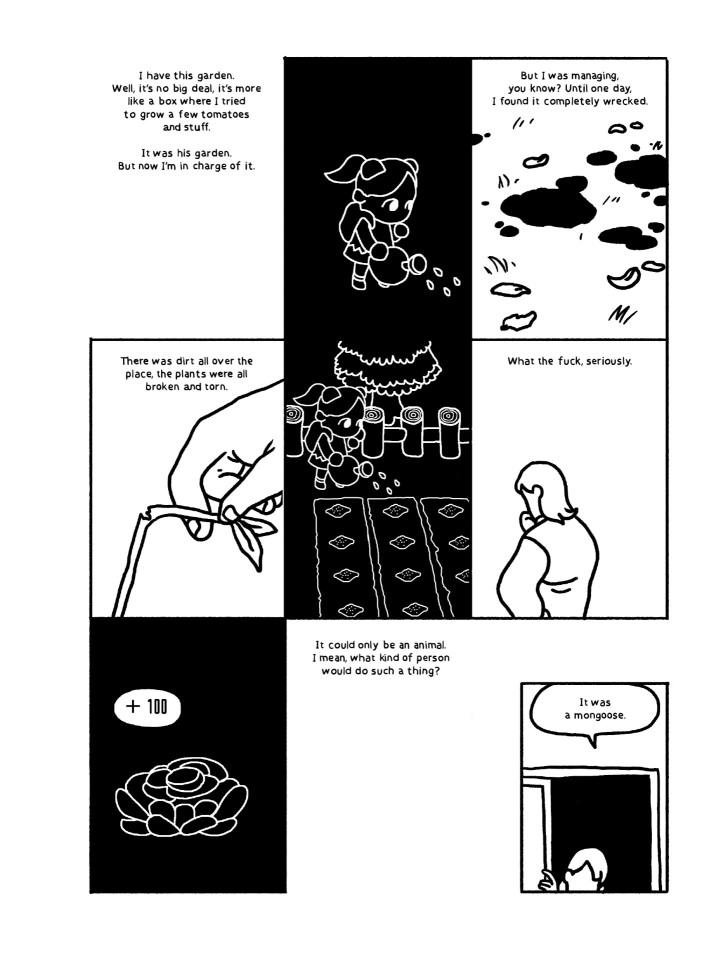
One reason why I love discovering new comics from outside of America is because they aren’t afraid to experiment with the possibilities of the medium in surprising ways. This narrative in particular demands close reading. I often found myself rereading panels and pages at a slower pace. It is not dependent on a high stakes narrative to draw your interest. I quickly fell in love with the minimalist style used to bring out strong emotions in the reader. The artist lets us really get into the protagonist’s headspace and lose ourselves in the problems of her everyday life.
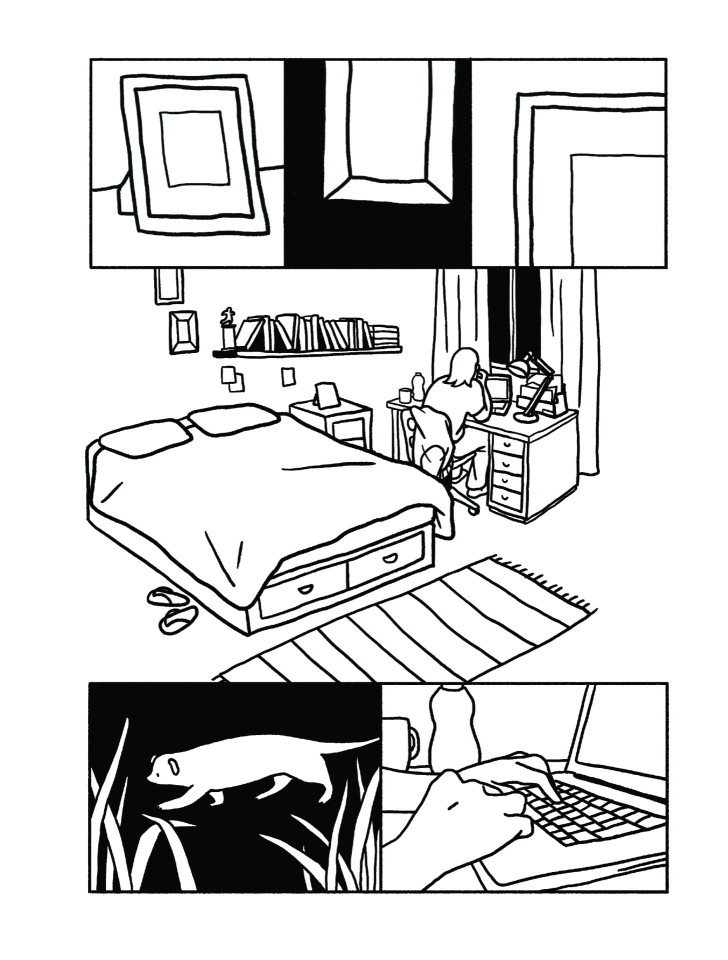
Mosi uses white space to build a sense of paranoia that develops throughout the narrative. With a literary touch, she tells a story driven by character choices rather than plot. Wherever Julia goes, her grief follows. Others just can’t always see it. Another formal technique Mosi employs is the lack of captions. There is no guiding voice to tell us what to feel above the scenes. Only actions drive us forward. When captions are employed, they make the voice all the more powerful due to how rarely she uses them, such as on page 18, beneath the two page panel spread of the beach, in which Julia tells us of her research about mongooses, “It’s weird because, although no one I know has ever seen or heard of mongooses, they’re still a pretty common species. It’s not like they’re endangered or anything.” The wide vacant setting caught me off guard and drives home the point of how isolated Julia feels from people around her, contrasted with her confession of no one else around her witnessing the same chaotic trickster that she does.
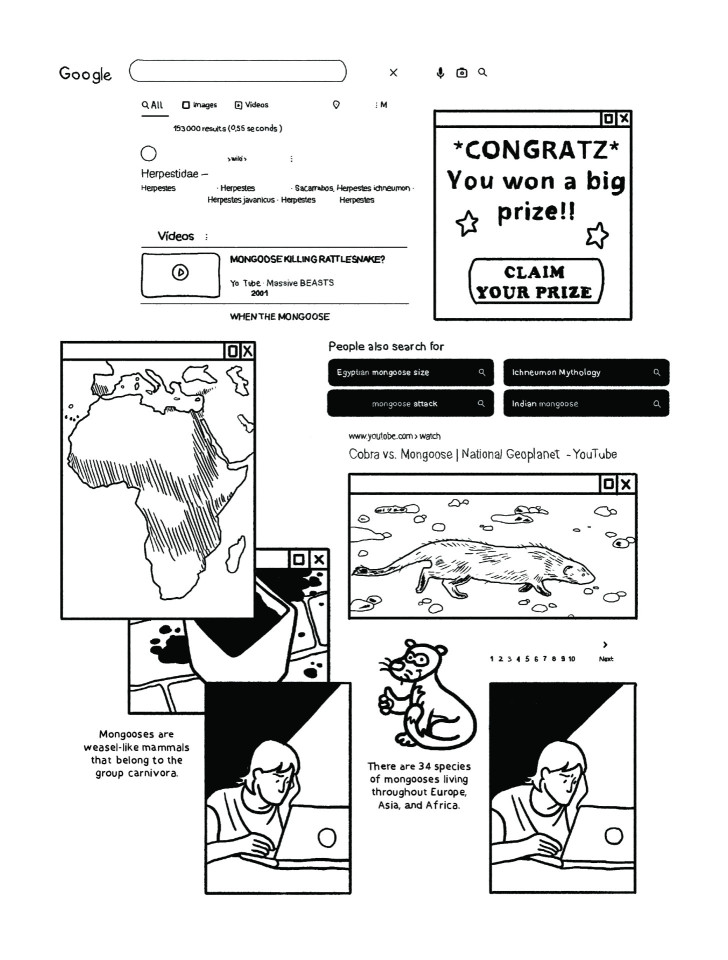
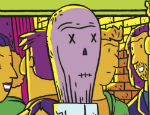
The constant visual variety captivated my attention. I never knew what to expect when I turned the next page and Mosi’s formal experimentation never failed to keep me engaged in the emotionally impactful narrative being developed. I loved how in scenes of disarray in the story, the faces around Julia become blank. They have no decipherable expression to the dialogue being presented, their bodies reduced to blank canvases or talking heads, sometimes even just hands, fingers, other instances merely vague black and white silhouettes of what had once been there. Mosi excels at using her simple yet bold style to tell a subtle tale of the subtle absurdity of loss.
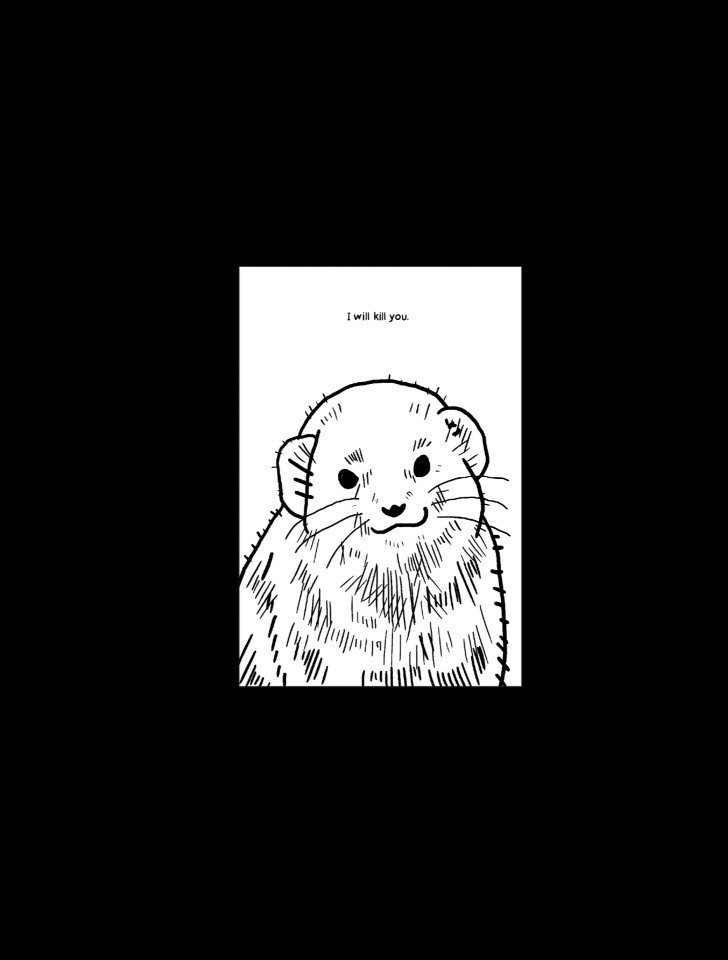
Joana Mosi (W/A) • Pow Pow Press, $29.95
Review by Lara Boyle