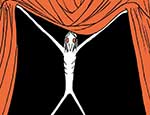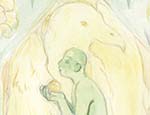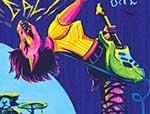


Sometime in 1983, Americans were treated to a television series about a superhero called Manimal. It featured a shape-shifting man who could turn himself into any animal he chose, and he would use this uncanny ability to help solve crimes. The series didn’t last long, was gently mocked on late-night television, and disappeared after just eight episodes. Somewhere in France though, for reasons one can’t always explain, the cartoonist Anouk Ricard watched the show and liked what she saw. Years later, it prompted her to create an homage, and here we are.
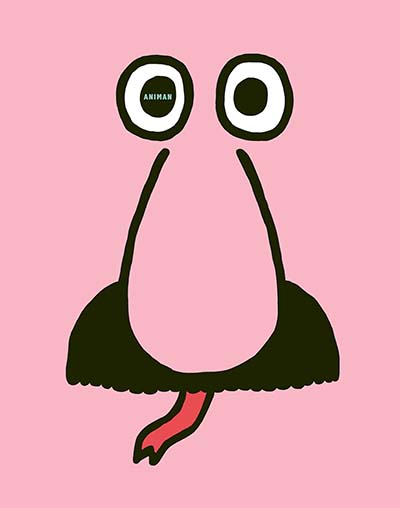
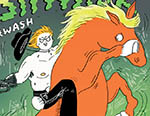
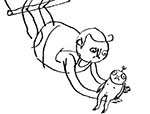
First published in France a year ago, the English translation of Animan by Montana Kane is out now and is an absolute delight. The tone for what one can expect is set at the start, when Animan is introduced as ‘a man just like any other’ who happens to live with a frog and possesses the ability to turn into anything. He becomes a grasshopper and, seven panels later, helps the police catch a thief. It all happens so quickly that the silliness of what has occurred takes a couple of minutes to sink in.
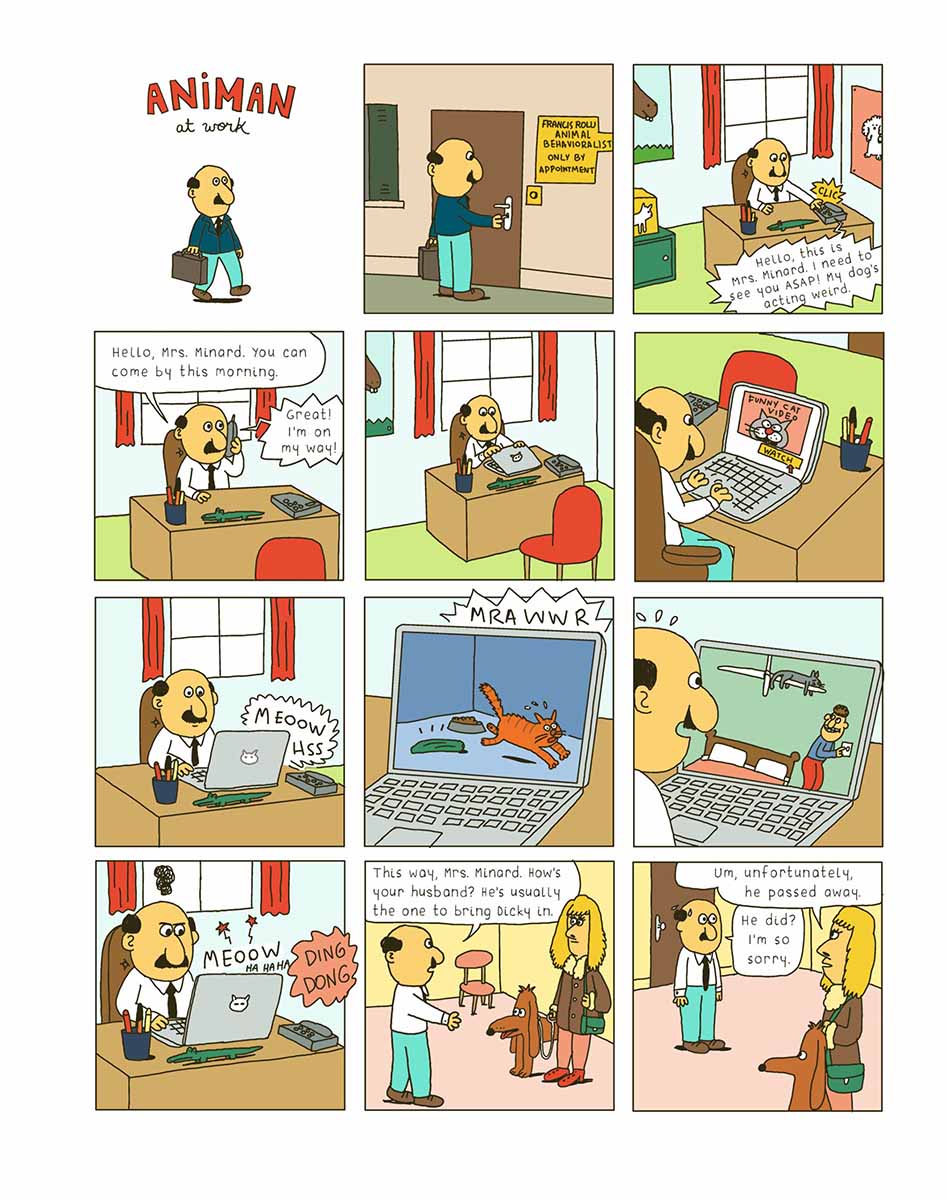
Then again, for those who have been following Ricard’s career long before she was awarded the Grand Prix de BD d’Angoulême in 2025, Animan won’t seem like much of a leap at all. There is a long-established fondness for the absurd in her Anna and Froga books, and she has spoken of treating anthropomorphic characters as humans with normal behaviour, allowing her to play with differences in shape and colour. Animan continues that tradition with tongue firmly in cheek, and one of the funniest things Ricard does is make her protagonist so defiantly unlike a superhero. He’s balding, has tufts of hair for a mustache and sides, and displays none of the traits one would traditionally associate with a crimefighter. Even his friend-turned-arch-rival Objecto is more bumbling antihero than true nemesis.
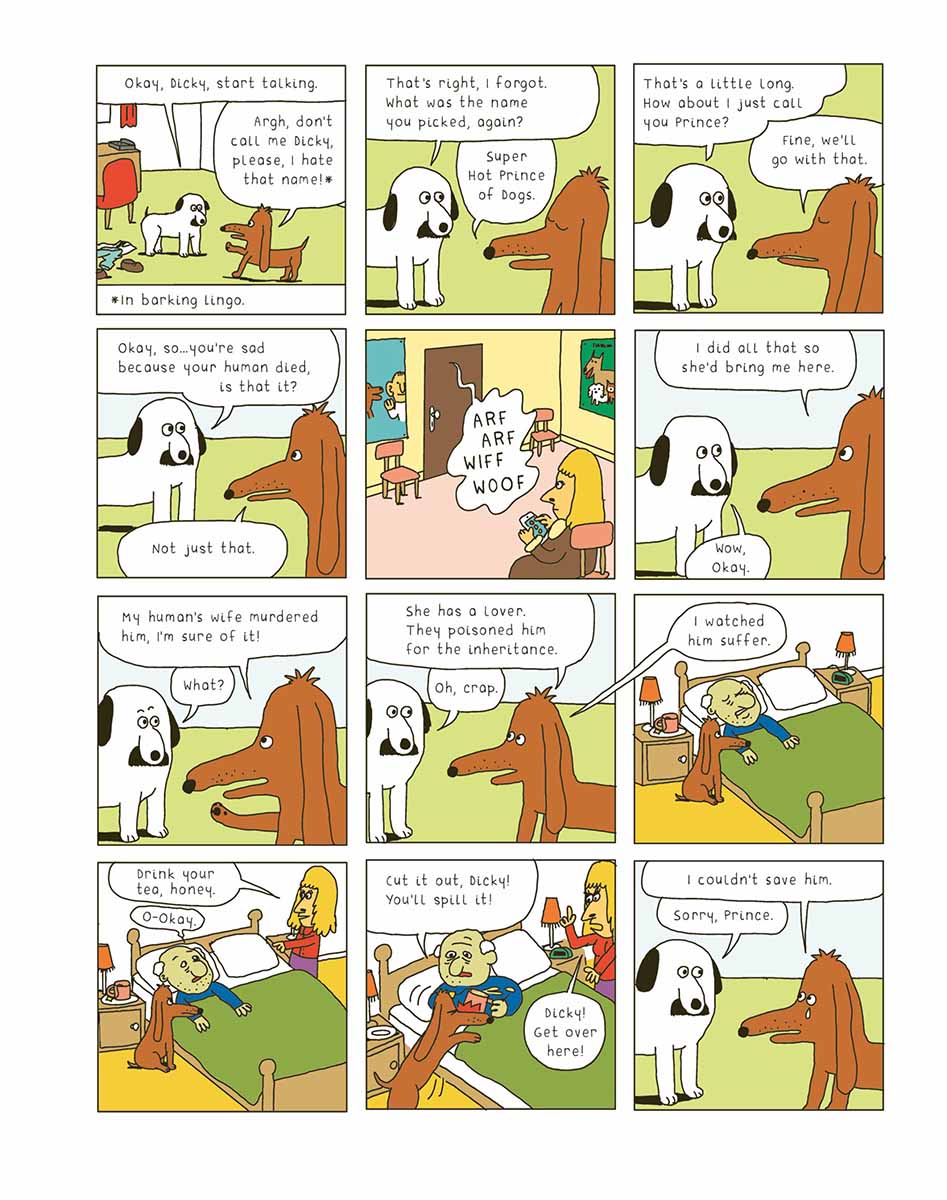
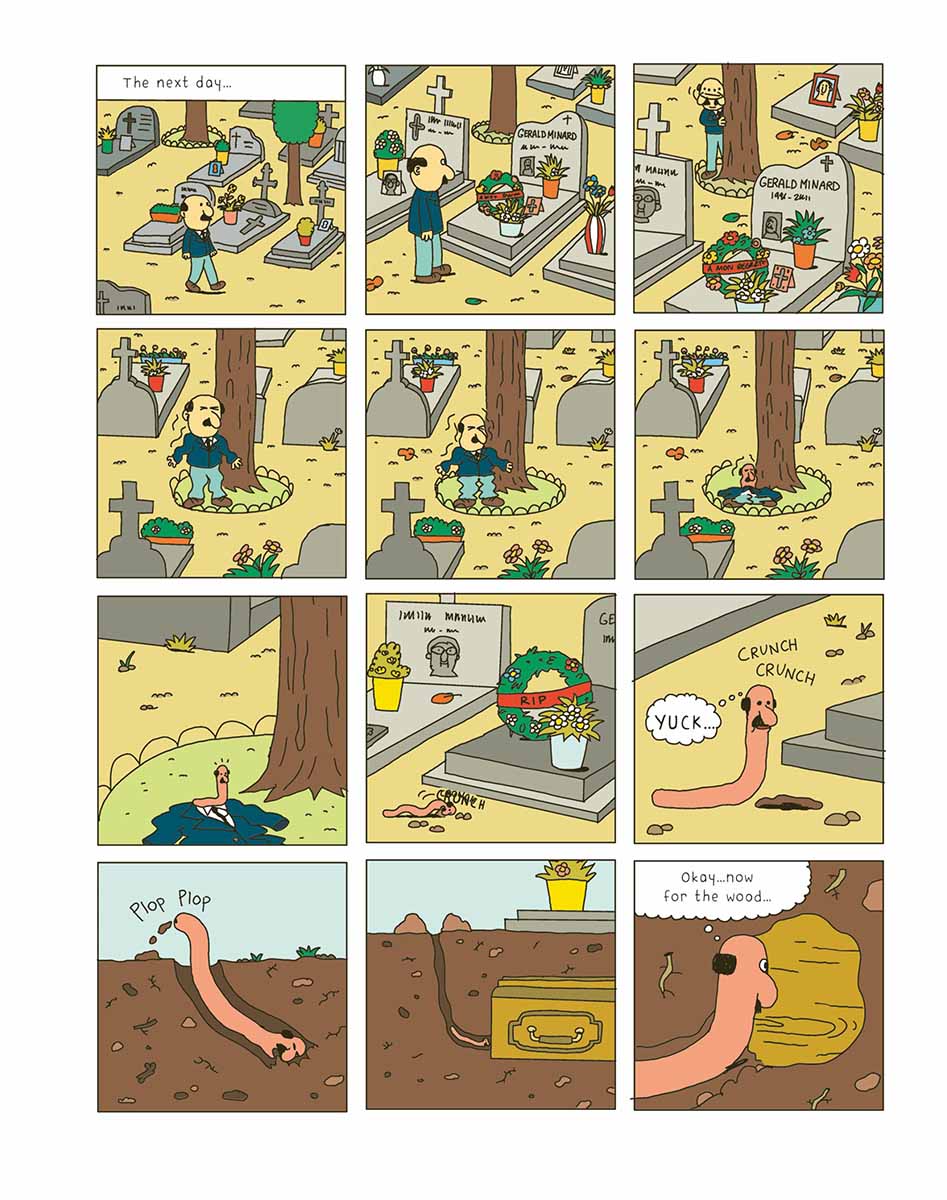
Perhaps that’s the point, because there are multiple ways of looking at this book. It can be treated as pure parody, where comic tropes are gently dismantled, or as just an anthropomorphic fantasy that exists because it can, and because comics have revelled in this form for eons. Anthropomorphic characters have, traditionally in literature, been used not only to examine cultural perceptions of class or gender, but also to exaggerate stereotypes and generate humour in the process. Animan does all of this and more, but with a lot more wit and charm. Ricard has an almost uncanny ability to pack a lot of jokes into tight spaces, why is why the story feels short yet simultaneously immersive.
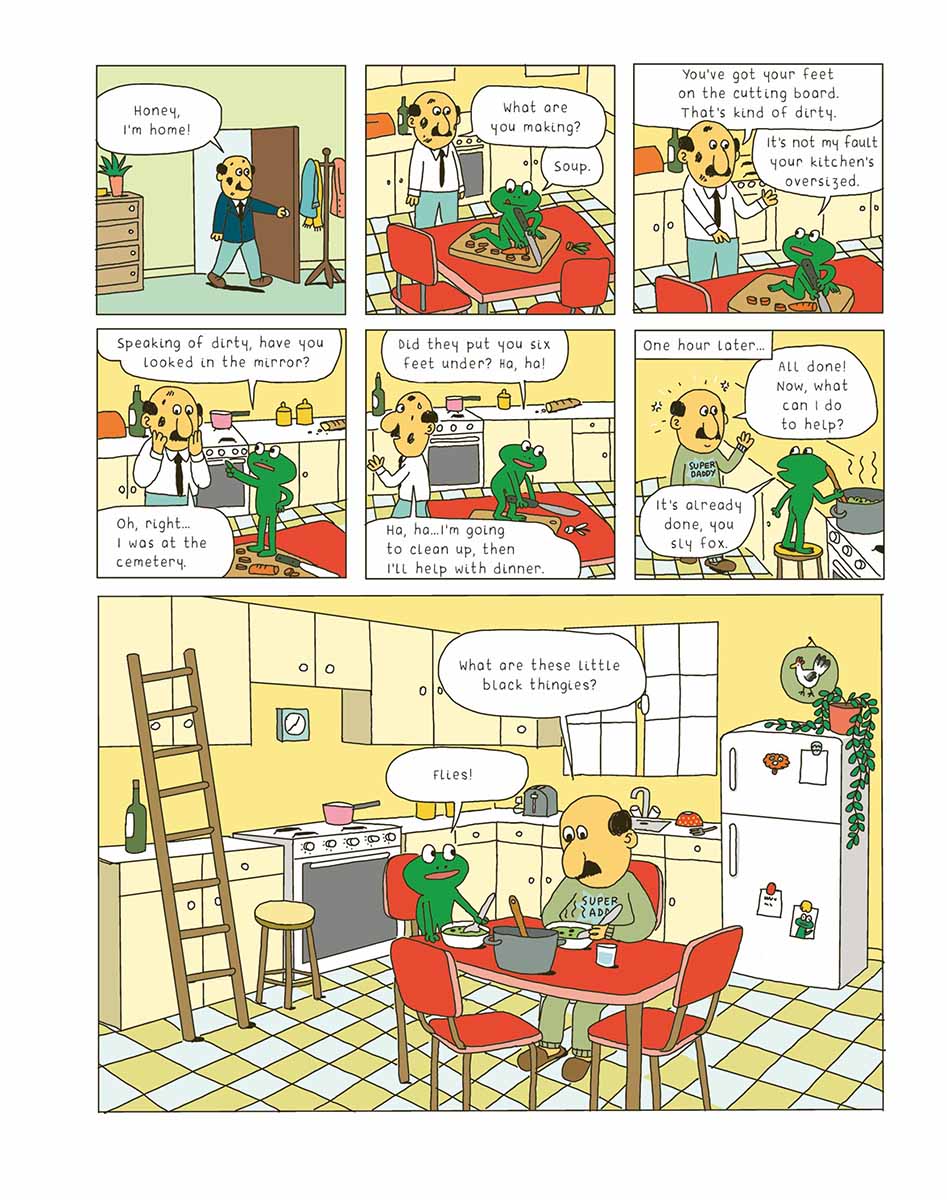
It’s also easy to see why children as well as adults love what Ricard does. She revels in whimsy but doesn’t lose sight of what makes her characters so relatable. For example, when Animan’s partner Fabienne the frog is revealed to have a secret life of her own, the predominant emotion on the page is love. In those moments, one finds that one is no longer looking at a shapeshifter and a frog; it’s just two well-etched characters who evoke a smile the way all great comics have always done.
After Animan is introduced, we are slowly let into his wider world as smaller stories gather into something larger. It is a testament to how well Ricard understands her medium and pushes it. Animan is a smart, funny work that is well worth your time. It’s also the kind of tale that may go on to have a longer life, should its creator feel the need. One can only hope.
Anouk Ricard (W/A), Montana Kane (T) • Drawn & Quarterly, $22.00
Review by Lindsay Pereira