

As a child, I devoured books about heroes who went on great adventures. I was the weird kid who spent more lunches than I cared to admit in the library, hunched over any novel with a sword on the cover where I could escape into another world in which magic was real and schoolyard problems seemed miniscule compared to dark lords or monsters in the woods. There existed a palpable joy in the escape offered by fiction, like the author had cast a spell to cure everything wrong with me. The author C.S. Lewis once wrote that “Some day, you will be old enough to start reading fairy tales again.” Candice Purwin’s knock-out graphic novel The Book of Murmurs, designed by Kayla E. at Fantagraphics, reminds readers why we should all return to fantasy for the magic of storytelling.
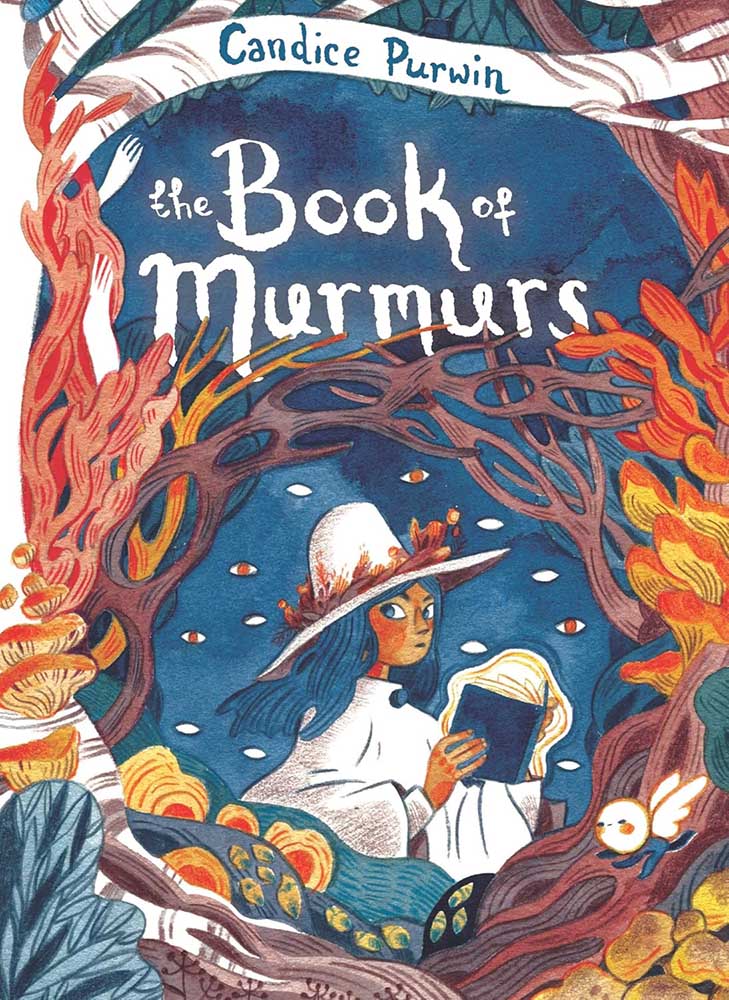
The Book of Murmurs is pure art on every level and one of the most beautiful comics I have ever read. I am in awe of Purwin’s ability to create a whole world out of lines on paper. It’s a visual masterpiece, a tactile experience parallel to the feeling of pulling tarot cards, driven by curiosity and a sense that some force behind the scenes beckons us into conversation with something we can’t even comprehend. From the cover to the back, the team at Fantagraphics understands what alternative comics fans want, and they know exactly how to blow you away.
Readers will get a sense of the whimsical, expansive, mysterious world in Purwin’s work the minute the book lands in their hands, for when they open up the inside flaps, which are covered with the flame-like woods surrounded by blue, they’ll find red eyes watching them next, daring them to step into the unknown, the fool wandering off the cliff. The striking orange and blue color palette adds to the aesthetic pleasure of the artifact while the contrast develops a sense of intrigue and unease. This is an object you want on your shelf, a pleasure to flip through again and again.
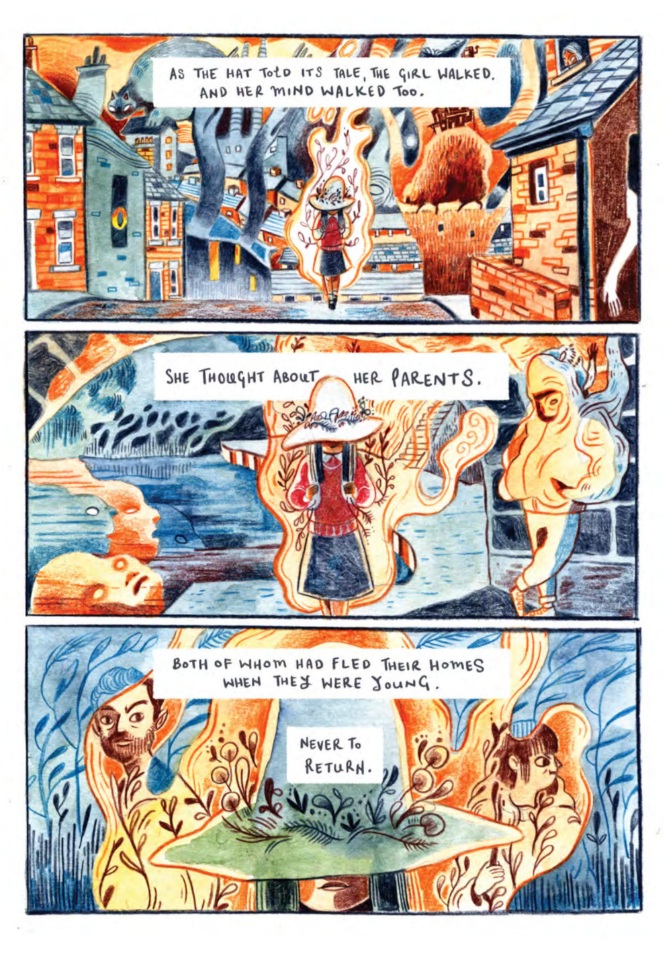
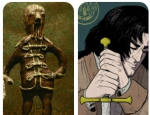
On her blog, Purwin says she began writing The Book of Murmurs “as a stream of consciousness” in 2018. I was surprised to learn the story originally began in black and white, and had been self-published before being picked up by Fantagraphics Books as the graphic novel it is today, 8 years later. The length of time the artist took to create the work shows in every way. The enchanting narrative follows our protagonist, Little Moon, a curious girl with a knack for getting into trouble. Her iconic design makes her instantly memorable: long blue hair, a white cloak, a matching hat, big eyes that always seem slanted in our direction, as if she’s holding back a secret.
The catalyst for Little Moon’s story begins, of course, when her mother’s inherited book of spells gets stolen by an unknown culprit and her parents disappear. This event leads her on a journey into a strange new world called The Fault, where life takes a turn for the weird (and the worse). But even despite the constant sense of danger, wonder pulls her toward a better future. She’ll soon discover that she has friends in low places, even if they are friends she didn’t expect.
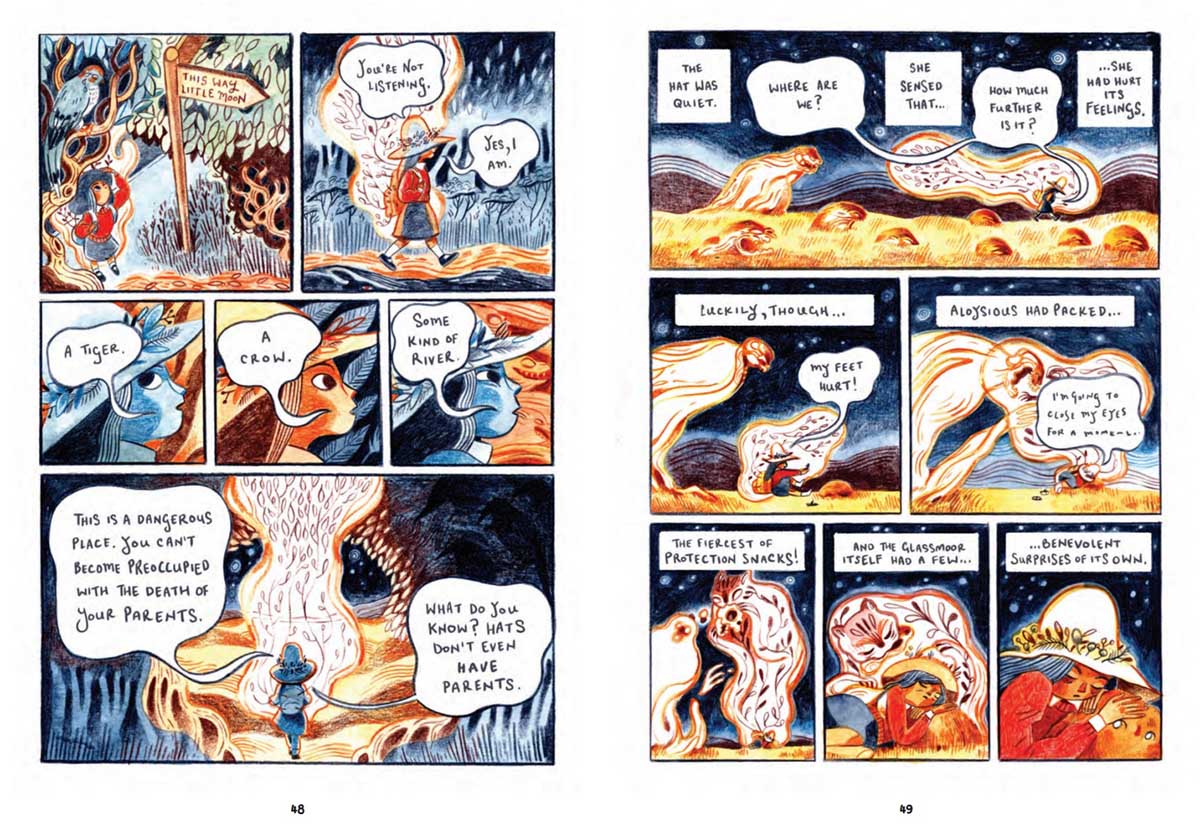
The epic we accompany her on often feels poetically allegoric, one in which a deeper meaning lurks beneath the story on the surface. After leaving behind her ordinary life and now missing parents, Little Moon soon befriends a catwitch, a trickster, shapeshifter, fae-like creature in search of their true name and memories, parts of themself stolen from them by an unknown curse. They hope to find what they seek by helping her retrieve the spellbook, The Book of Murmurs.
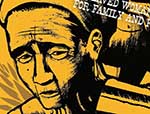
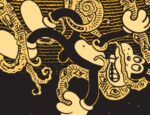
At first, the colors are disarmingly light and cheerful. We are disarmed into a false sense of comfort by the bright greens, yellows, and blues, pulled into a kid’s bedroom. Here, in the normal world, more white space surrounds the panels, though not without a distinct whimsy in the loose lines and lavenders, the aesthetic of analog coloring and shading, the human feeling of pencil against paper. Even the speech bubbles feel alive, characters in their own right, strange as crow heads. The deeper we go into the Fault, the more colors swirl over the pages entirely. They get darker, more absurd, more delightful, more odd. I loved everything about the style.
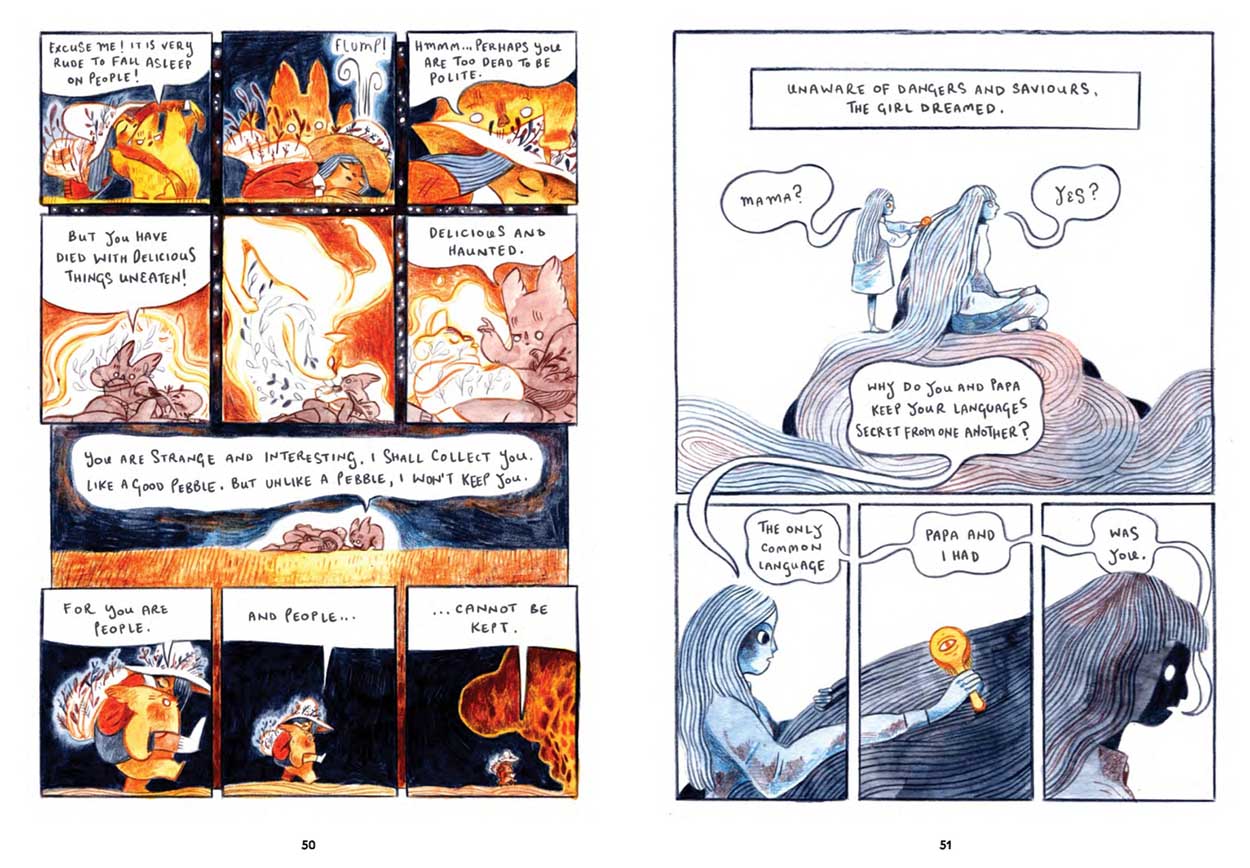
The Book of Murmurs consists of twelve beautifully constructed chapters. The Shenk kicks off Little Moon’s Heroes Journey, introducing us to the stolen book and the magic she needs to recover within herself. The Tiger and The Crow, drawn in black and white, offers the protagonist a stark warning, not to be easily dismissed, “The path you have chosen is rotten. And if you do not read lightly, it will crumble from under you.” Each following segment further unravels the vast and startling universe Purwin has created like an intricately woven spider’s web, spinning a tale full of wonder and shenks and shadows and giants and goblins and catwitches and faeries and wishes and old ones and hope in the face of darkness within and without us, reminding readers of the magic of storytelling and the power in a name.
Beneath all of this, though, is a profound and necessary meditation on why we make art: “One of life’s great tragedies,” writes Purwin. “Is not knowing how the stories of the people we love go on without us.” In The Book of Murmurs, Little Moon, Catwich, and the goblin learn that while people may try to destroy their unique gifts and steal their names, stories will always lead them home again.
Candice Purwin (W/A), Kayla E (D) • Fantagraphics Books, $18.99
Review by Lara Boyle